Filmmaker RaMell Ross Unapologetically Breaks Screenwriting Rules with the Exceptional ‘Nickel Boys’ Film — Nabbing a Golden Globe Best Picture Nomination Along the Way

RaMell Ross isn’t preoccupied with filmmaking conventions — the first-time fictional feature director/documentarian, photographer, and writer says there is no wrong or right way to experience the film.

From L to R: Ethan Herisse as Elwood Curtis and Brandon Wilson as Jack Turner in ‘Nickel Boys’ Photo: Orion Pictures/Amazon/MGM Studios.

So, what’s Nickel Boys about, and why is it generating Oscar buzz already?

Adapted from Colson Whitehead’s Pulitzer-prize-winning book for fiction in 2020 with the same name, Nickel Boys begins with fractured images of Elwood Curtis’ (Ethan Herisse, When They See Us) life, a prominent theme throughout that begs the viewer to interpret the story as they’re viewing it instead of it being spoonfed. Elwood, a promising Black teen in the Jim Crow era, makes a fateful mistake on his way to a free college for gifted Black students, leading to incarceration in a brutal reformatory school known as the Nickel Academy for law-breaking boys.

At the Nickel Acadamy, he forges a friendship with a streetsmart, jaded youth named Jack Turner (Brandon Wilson, The Way Back). Steeped in the Civil Rights movement, the film juxtaposes images of Dr. Martin Luther King (one of Elwood’s heroes) and actual documents from the actual Dozier school in Tallahassee, Florida.

Over 100 boys, Black and white, died at the school, many buried in unmarked graves. It’s heartwrenching and infuriating to learn about the abuses the school engaged in. Still, Ross, with his visual storytelling tapestry, evokes empathy and hope in these characters, unlike any other film in its genre addressing trauma and injustice in Black culture.

I chatted with RaMell Ross, who directed the 2019 Oscar-nominated documentary Hale County This Morning, This Evening, right before Nicole Boy’s theatrical release to discuss the film’s exploration of visuals to aid the storytelling, the shift in narrative point-of-view and the absence of dialogue close to the end of the first act.
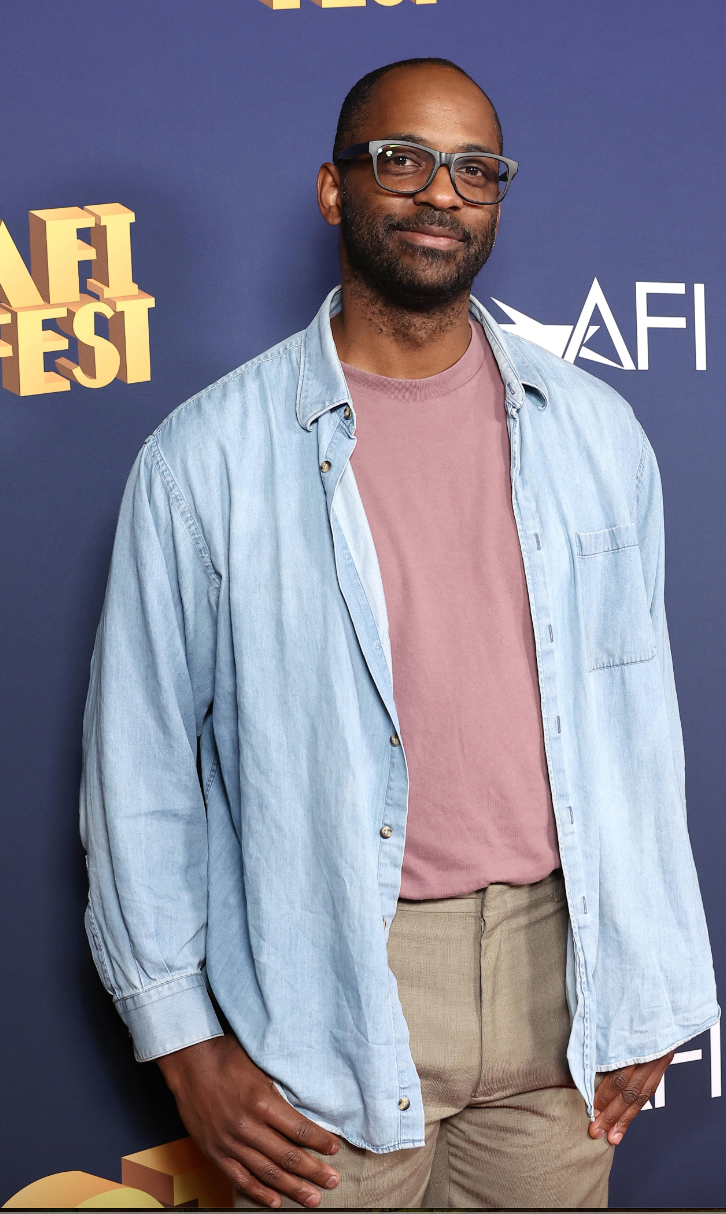
Filmmaker RaMell Ross: Photo: IMDB.

MV: Why did you approach the visual components vs. a dialogue-driven narrative, and what kind of response have you received from audiences?

RR: The film elicits such a subjective response — it has a plethora of images from across time and ones created on set, dealing with real events. The range of reactions has not been the same; some people have reacted to the wordlessness, while others have praised it. The film taps into people’s relationships to trauma, imagining other people’s agency, their own agency, and how they received information in the past, which is a bit of a mind bend. The default in cinema has been to show the visuals outright as far as depicting trauma. The point-of-view in this film does something that’s off-edge.

MV: Plan B approached you to write and direct this film. It’s quite a unique position, where the money backers are soliciting you instead of being the other way around. What was your take on making this film before and after reading the book?

RR: I was hesitant in general. I’m a hesitant maker. It takes a lot to make something, especially if it doesn’t originate from me or my writing process. Before reading the book, I thought, hey, it’s Plan B. They’ve done a lot of incredible work and supported artists. Then I read the book, realized its impact, thought about methods to adapt it, and started conversing with Joslyn Barnes (This Changes Everything), my co-writer and producer, who I sought. Trouble-shooting the point-of-view of the film and researching the Dozier School documents. Everything started to build itself out. In the context of the Dozier School boy’s story, this form and these ideas seem to be an unprecedented connection between form and content. That could have powerful ripples.

MV: When writing the screenplay, did you and Joslyn consult with author Colson Whitehead on the script’s development or your process for writing it?

RR: His involvement was non-existent. Colson Whitehead had no role in developing the screenplay. He, Dede Garder, and Jeremy Kleiner (Producers and co-presidents of Plan B) chose me to direct the film after seeing Hale County This Morning, This Evening. I sent him a Thank you note and was gushing about his talents. Whitehead responded with, “Go luck, man. You got it.” Which was great. In essence, giving me permission to execute my vision.

MV: In retrospect, after watching dailies and working with the team you had, is there anything you would’ve done differently conceptually when creating this film?

RR: Perhaps if the film is well received and makes AFI’s (American Film Institute) top 10 films, I would have included a clause in my contract to pay me more money, like 5 million (laughs). It’s easy to say in hindsight. I can’t imagine making this film with another DP, production, costume designer, producer, or co-writer. The film has many hands in it, and there are so many brushstrokes from creatives I trust. I think it would’ve collapsed had we approached it differently. It’s a pretty fickle relationship between elements. And this film works because of a marriage of 20 different elements.

MV: What do you think the reaction will be in Florida and other places to Nickel Boys that ignore and try to ban stories, whether in books or cinema, dealing with marginalized people and their experiences?

RR: It’s crazy to me that the book burning was part of our past, and now we’re dealing with it again. In Florida, especially where the Dozier school existed, the government acknowledged wrongdoing and awful truths but didn’t apologize. There’s this erasure of narratives taking place openly. And art, especially through Colson’s book and now the Nickel Boys adaptation, is emerging while powers that be are trying to suppress it. The hope is that people start having conversations about the past and continue to be inspired to make art that addresses these topics and gives way to new voices!

MV: Given your success as a documentarian and now feature filmmaker, what advice would you give first-time and seasoned filmmakers?

RR: Find Jesus and pray! (laughs). I respectfully say this to seasoned directors: the more specific, personal, idiosyncratic, and intimate to your own life and vision, the better the art will be. As unique as your films are, like your footprints, fingerprints, or brainwaves, that’s interesting and missing from mainstream cinema. Suppose people were making profoundly personal and deeply specific films in the commercial space. In that case, I think the world would be genuinely different because we would have access to the types of truths that are as singular as human beings and not the squished-down truths accessible and palatable for folks for the sake of watching the next show or film.

Watch Nickel Boys, an evocative and visually stimulating experimental film that lets viewers interpret the narrative through their imagination and lived experiences with a stellar cast that inhabited these characters so naturally; they were born to play these roles, especially Aunjanue Ellis-Taylor (Hattie, King Richard)—now playing in select theaters nationwide. Click here to see movie schedules and times.

CEO And Entrepreneur, Sandra Campos, Gets Candid About Life After DVF, Her New Startup, And Embracing Her Latin Heritage

Photo: Sandra Campos’ Instagram

Women in the C-suite are having quite a moment. As of this year, 37 women are leading Fortune 500 firms – up 12% from last year. Progress, certainly. But what about women of color, primarily Black and Latina women holding these leadership roles? That stat has dropped to 0%? Dismal, sure, even after the resurgence of the Black Lives Matter movement this past summer, with corporations “committing and pledging” to diversifying their workforce and hiring minorities to executive positions. Seems like the enthusiasm and solidarity has died down, hasn’t it? But, the good news is that women-owned businesses, specifically those of color are starting businesses faster than anyone else, according to Fast Company. Women of color account for 89% (1,625) of the new businesses opened daily for the last year. And they are just getting warmed up!

Women-owned businesses generate 1.8 trillion a year. This year, Latina-owned businesses grew more than 87%, as evidenced by statistical data. Women in business are the driving force in our nation’s economy. A testament to this fact is former and the first Latina CEO of Diane Von Furstenberg, Sandra Campos. Under her leadership, the veteran fashion executive has restructured 6 contemporary women’s brands for the Global Brands Group – popular labels such Juicy Couture and the BCBG.  We recently chatted with Sandra Campos to discuss the current state of fashion and her next career venture in the continuously evolving industry.

You’ve recently parted ways with Diane von Furstenberg (DVF). Can you go into detail about the split?

Yes, I left in mid-June, or rather resigned. It was completely amicable. COVID has impacted retail significantly. There has been a plethora of bankruptcies. With DVF, we had a complicated turnaround – which is why I was brought into the company.  COVID presented an opportunity, as a private company, to change their business strategy – and it needed to for a while. Diane was looking at the future – to maintain and leave a legacy; the business model was changing; it didn’t make sense to have a CEO, especially with DVF becoming an IP business and transitioning into a small company by early 2021. We’re still on good terms. I’m a big believer of DVF’s “Women In Charge” mission – if you are around it, you become it. Whatever we can do as women to help other women become more confident is the biggest priority for me.  Since then, I founded a fashion startup called Fashion Launchpad – a digital online continuing education platform for fashion and retail. It’s a Master class-type of micro courses that really touch upon every aspect of the industry and it is all continuing education. Fashion Launchpad will be up and running early 2021.

Photo: Sandra Campos’ Instagram

That’s fantastic for individuals looking to get into the fashion business. Can you walk us through your career trajectory, some of the milestones you’ve had?

I’m first-generation. Both my parents are from Mexico, my mother from Mexico City D.F. and my father from Zacatecas. I was raised 1 of 6 kids in Texas. When I was growing up, for whatever reason, I had a very strong interest in color, prints, sewing and fashion. I was changing my mother’s drapes, making slipcovers. I went to college in Western Texas – Texas Tech University. Not at all a fashion mecca. I was making clothes for friends and sisters and forcing everyone to wear my stuff. I thought I wanted to be a designer, but instead, I went into a pattern-making internship and decided design was not for me.  So I pursued a job in New York City. I had never traveled New York City and I was so naïve. I knew I had to go to the fashion capital of the world. I was making 17,000 year as a salary, so I had to have 3 jobs to live in the city. I was working at a retail store, the buying office, and in sales. It was all fashion-oriented, more business than design. With that, I was always motivated to become a CEO.  I knew I wanted to be a VP young, and hit these different title milestones sooner rather than later. At that time, presidents and CEOs in fashion and retail had come out of sales. My career trajectory was one in product merchandising, being in stores, really understanding the consumer, then in sales, understanding the clients from a retailer’s standpoint: planning, financial analysis. And, eventually I worked my way up to becoming CEO of Diane von Furstenberg, prior to accepting this role, I held executive roles within Donna Karen, Ralph Lauren, and a license of Oscar de la Renta. I also had my own company a couple of times as well. I had corporate and entrepreneurial experience. The entrepreneurial experience more than anything else gave me exposure to all things. When you’re running your own business, you are all things to everyone. I was going out and pitching, doing the press releases. I was customer service, production, and manufacturing. It helped my understanding of business, my corporate roles, and how to build a brand and generate awareness and engagement from the customers.

It can be very gratifying, if you’ve worked in every facet of production and are privy to the ins-and-outs of any given department and what makes it tick.

That’s exactly why I’m launching Fashion Launchpad. It is all about knowledge and understanding your industry, inside-and-out. There used to be some training programs that allowed you the flexibility to be in the warehouse and understand how that operates, on the sales floor of a retail store, then go back into the financial office and be in sales showroom – and get to experience all the different aspects of the business. Not anymore. And if you’re in a silo you don’t know what goes on in other areas and unless there’s a lot of cross-functional partnerships, it’s very hard for somebody to understand the business as a whole and become a well-rounded individual. These courses will be taught by top industry executives – executives who are operating businesses on a day-to-day basis, therefore individuals will be able to really understand – in-depth – what a merchandising life plan is, what an PNO means? All kinds of things people need to comprehend; whether they are starting out in the industry or still in the C-suite level; crucial elements people should possess to be a team player, a better collaborator and the ability to run a profitable business.

As you ascended into your executive roles with various fashion brands, did you ever encounter obstacles because of your Latin background as opposed to your white counterparts in Texas or New York City?

I’ve thought about this topic a lot recently. There’s 2 parts right now that create barriers: 1) One is being woman 2) The other is being a minority.  For me, I saw the impact and bias against women more than I saw the bias against Latinos. That said, I was very unaware, until 5 years ago, I was told that when I joined my sorority, they actually had a conversation on whether or not they wanted a Mexican in their sorority. Now, I didn’t know that at the time.  I became a member of that sorority and became one of their leadership VPs. I love that sorority and I’m so involved with it. You don’t really know what people are thinking and what those racial biases might be – the undertones of that. Really some of it is subconscious as well. As a female, you see a lot more of that because there are a lot of men in my industry – especially in the C-suite and board-level executives. Thankfully, that’s changing. There is focus on building and supporting women to get to the C-suite – which is incredible; there are quite a few organizations and memberships helping women by providing so many resources and tools to succeed. That didn’t exist when I was starting out in the industry. I’ve put aside my own inhibitions of being Latina and decided to move out of Texas, because at the time, it wasn’t diverse enough. I wanted to be part of the diverse melting pot that makes up New York City.

Photo: Sandra Campos’ Instagram

Latino consumer buying power will be reaching 1.7 trillion within the next year. Shouldn’t luxury brands and other mega brands make a concerted effort to reach this huge demographic with this kind of disposable income?

There are so many conversations happening right now about race and racial bias, and not just with Latinos; Latinos start 80% of startup businesses, exactly to your point of representing a huge percentage of consumer spending power. Change needs to start from the top in a couple of different ways. First and foremost: we have to push to have more diverse boards in companies, more diverse leadership. When I say diverse – it’s not just about Latinos, but diversity in general, male and female. Unless you have diverse C-suites and a diverse group of leaders that understand and empathize with consumers’ needs, things won’t change. They have to be able to really walk the walk, instead of saying: Hey! Here’s a segment – a group on a piece of paper we’re targeting. That’s futile. Instead, let’s try: truly understanding this segment by making them part of the corporate community, the board, and executive suite reflecting the group(s) targeted.

As far as Latinos demanding representation in advertising and entertainment with real diversity to reflect their increasing spending power, do you think Latinos from different nationalities lack a united front?

That has definitely something to do with it. We are all so separated in a way. We should be able to figure out a way to come together, because together we are more powerful and a stronger force. That has an impact, sure!

Have you confronted colorism biases within your personal and professional life as a Latina as you’ve paved your way into the C-suite?

Absolutely. It’s not a conversation I’ve had a lot of discussion about. Honestly speaking it’s there. Skin tone has been a topic since I can remember. I’ve never really embraced my Latina heritage until 5, 8 years ago. Only then because of my own kids – seeing my oldest daughter embrace her Latina heritage, feeling more Latina than I did. And I thought: Why is that? I realized it was because I grew up in a situation where I had lighter skin than the Mayans, Mexicans growing up in my area. My last name wasn’t specifically Latino. Campos could be from Spain, European and I felt that it put me in a situation where I could walk away from certain responsibilities of being a Latina. I lightened my hair. People would say I looked Greek, Italian or from Spain. No one ever said you look like a Mexican. I felt I needed to cover that up throughout my career and life to move upwards. I didn’t embrace my Latin heritage. That was an issue I didn’t address. Now, the conversations are so much more prevalent. I see first and second-generations, like my kids, part of Generation Z that are activists and being prideful of their heritage, I look at that and I realize that girls can’t be what they don’t see. So I have a responsibility to share my story and help the next generation not have that level of prejudice I dealt with. 

Sandra Campos is among the many Latina pioneers consistently breaking barriers in their respective industries after achieving many firsts in business, government and heads of households. It the responsibility of the next generation to receive and pass the torch of opportunity, forge ahead and fight for seats at the decision-making tables in every aspect of our lives. We must harness our voices for the collective advancement of Latinas in the United States to impact change and see true representation of multidimensional cultures claiming our over due space in this country.