The Brooklyn Museum Honors Black Revolutionary Artist Elizabeth Catlett — Activist, Trailblazer, and Champion of Mexican Art with a Stunning Retrospective Exhibit Spanning Almost a Century

Hispanic Heritage Month has ended, but the legacy left behind by one of its prominent allies, who advocated for social justice, women’s rights, and Mexican creative culture, lives on with the prolific artist’s artwork.
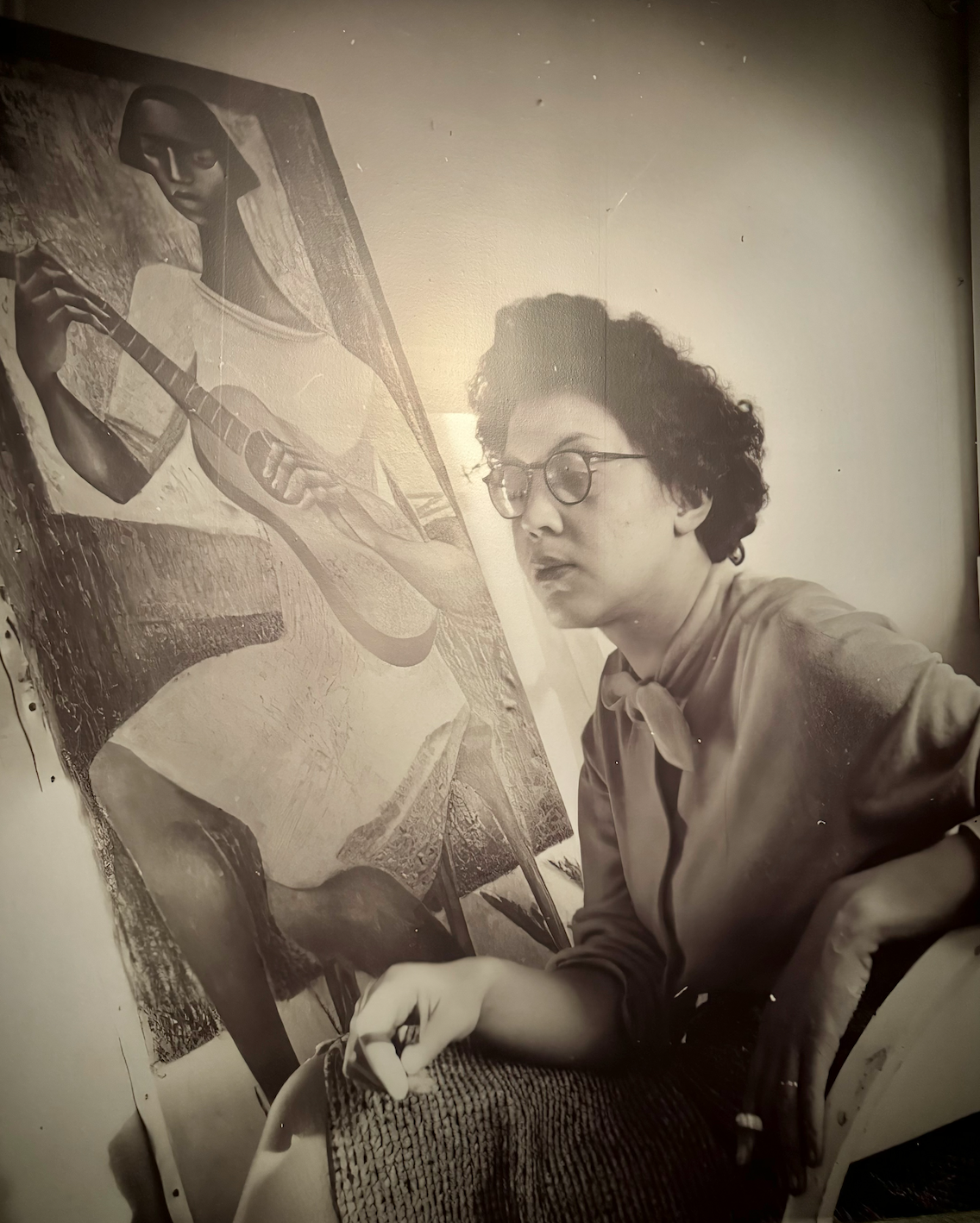
Artist Elizabeth Catlett in Mexico; Photo: From ‘Elizabeth Catlett: A Black Revolutionary Artist and All That It Implies’; Photo courtesy of Brooklyn Museum.

Elizabeth Catlett, born in Washington D.C. in 1915, was a naturally gifted artist and fearless activist. In her teens, she carved an elephant out of a bar of soap and kept developing her craft. She began protesting lynchings in front of the U.S. Supreme Court with a noose around her neck, symbolizing the violent demise Black citizens were experiencing. She was arrested but later released, becoming a beacon of hope and change for people of color. Catlett became the first student to earn a Master of Fine Arts in the U.S. from the University of Iowa in 1940 and completed her undergrad at Howard University, quite a feat for a Black woman in the Jim Crow era, rife with segregation, oppression, and unspeakable cruelty toward Black Americans.

Catlett’s art reflected the turbulence of that era, developing her sculpting and clay modeling techniques during the Black Chicago and Harlem Renaissance. One of her most iconic works: “The Negro Woman,” later renamed “Black Woman,” depicts beautiful solemn Black women at work (as nannies, servants, and field workers) through extraordinarily composed lithographs, paintings, and sculptures. When you look at these pieces, you can’t help but feel the ancestral pain of Black women who endured the limitations of their time yet possessed an unrelenting reserve of optimism.
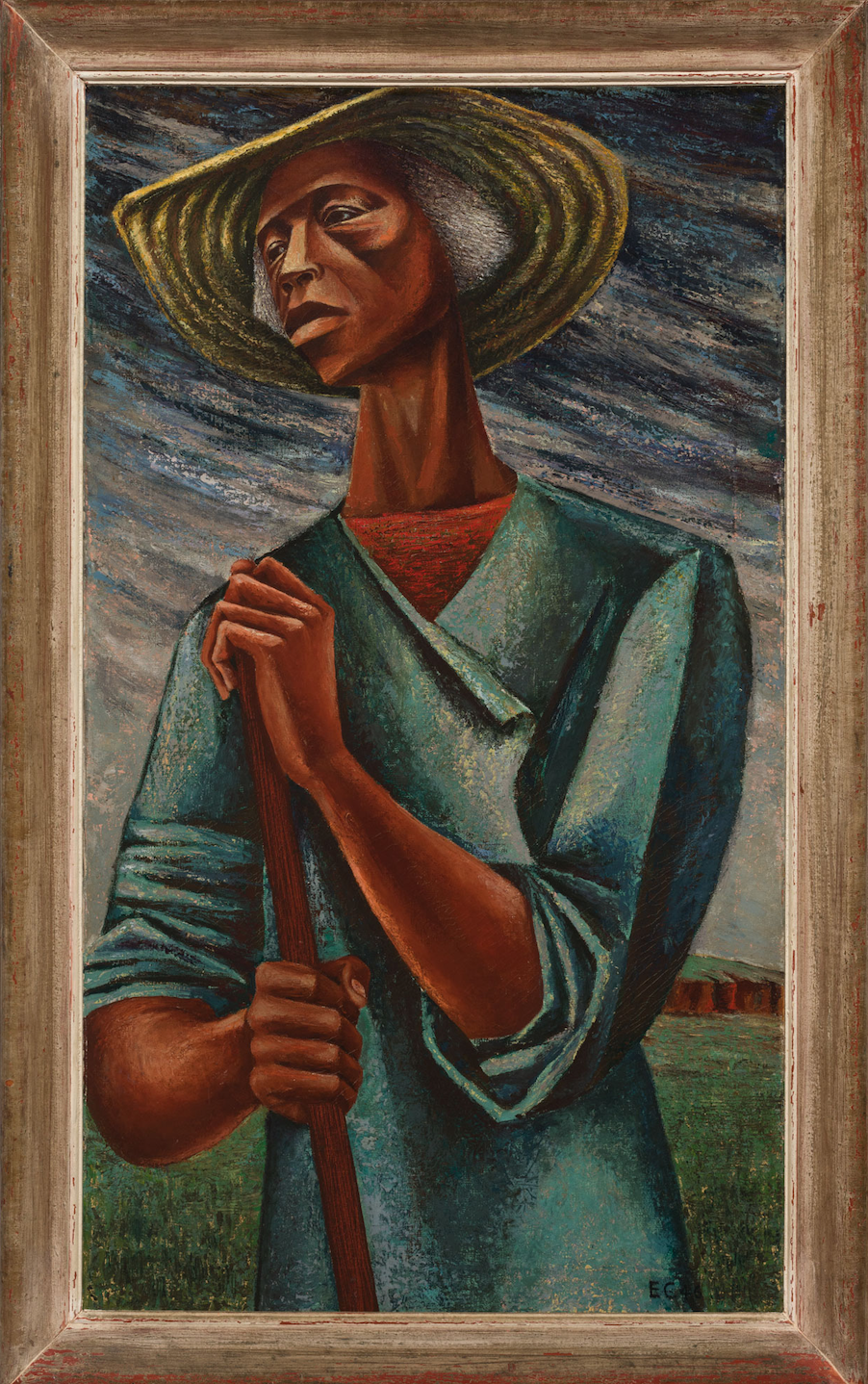
Sharecropper, 1946. Oil on canvas. Collection of John and Hortense Russell.
© 2024 Mora-Catlett Family / Licensed by VAGAat Artists Rights Society (ARS),
NY. Photo: Wes Magyar/Brooklyn Museum.

Serving on the Arts Committee of the National Negro Congress (NNC), an organization committed to advocating for Black liberation and prompting Catlett to publish political cartoons and subsequently finding her social advocacy stride collaborating with Taller de Gráfica Popular in Mexico (TGP), an artist printmaking collective dedicated to social causes in the form of prints. Mexico is where Catlett would refine her “Black Woman” series, study terra-cotta sculpture under acclaimed artist Francisco Zúñiga, and call the country home for the next six decades after marrying her creative partner and renowned Mexican artist Francisco “Pancho” Mora, a celebrated printmaking and graphic creator who shuttled back and forth with Catlett to showcase their work in distinguished galleries around the U.S.

But, it wasn’t all accolades and fanfare for the artist couple.

As Catlett became more involved with the TGP’s mission, she gained notoriety back home. Spearheading and contributing to a series titled: “Against Discrimination in the U.S.,” showcasing African American heroes like Harriet Tubman and Ida B. Wells put a target on her back. Shortly after, incessant CIA and FBI monitoring of Catlett during the Cold War fear-mongering McCarthy era led to the artist’s citizenship being rescinded. And it wouldn’t be reinstated until 2002. Nonetheless, the courageous Elizabeth Catlett fought for workers’ rights, especially working-class Mexican women, advocating for railroad workers, teachers, and doctors to strike and support the country’s anticolonial movements of the 70s.
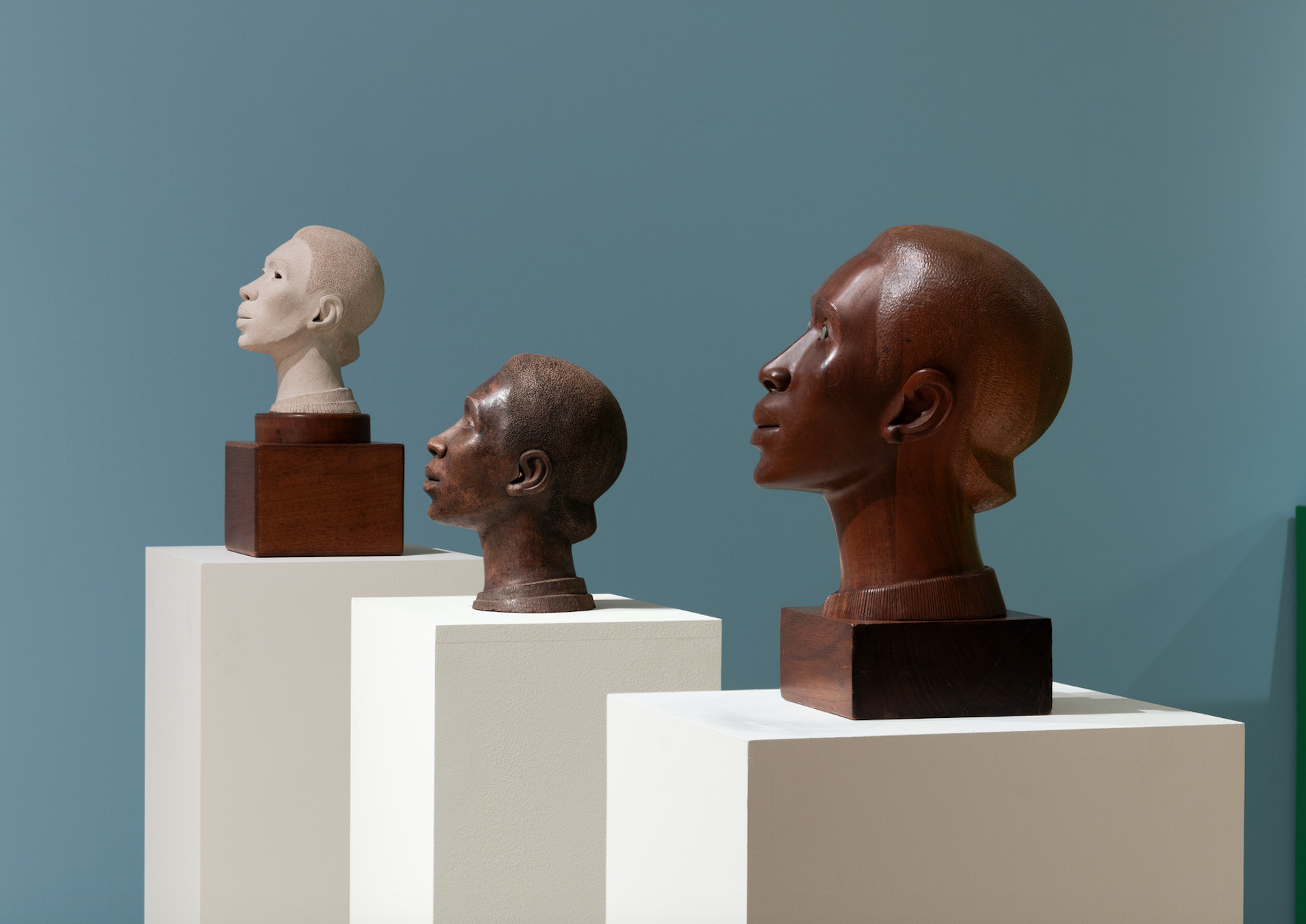
Installation View of ‘Elizabeth Catlett: A Black Revolutionary Artist and All That It Implies’ Exhibit. Photo: Paula Abreu Pita/Brooklyn Museum.

Elizabeth Catlett is a monumental figure in Black and Mexican artistic culture. She’s lived through historic upheavals and milestones, all documented in this breathtaking exhibition. Visit the Brooklyn Museum for tickets to view Elizabeth Catlett: A Black Revolutionary Artist and All That It Implies exhibit (including over 200+ pieces), running through January 2025!

Love Him, Misunderstand Him, or Intrigued by Him: Spike Lee’s Creative Resources Exhibit at the Brooklyn Museum Invites You to Explore the Acclaimed Filmmaker’s Monumental Body of Work in Film — and the People, Places, and Concepts That Served as Catalysts for his Cinematic Art

The expansive exhibit on director Spike Lee’s career and inspiration to create ground-breaking films on African-American culture is a multi-media tapestry of the artist’s creative journey, spanning almost 40 years.

Spike Lee: Creative Resources Exhibit; Photo: Paula Abreu Pita/Brooklyn Museum.

As soon as you enter the Spike Lee Creative Resources exhibit, Denzel Washington’s Malcolm X character’s infamous fiery 1964 speech from the film permeates the room. The scene, audio, costumes, and other colorful props from the movie, released in 1992, engulf your senses and prime you for what’s next.

A nostalgic visual stimulation that gives you front-row access to Lee’s early life.

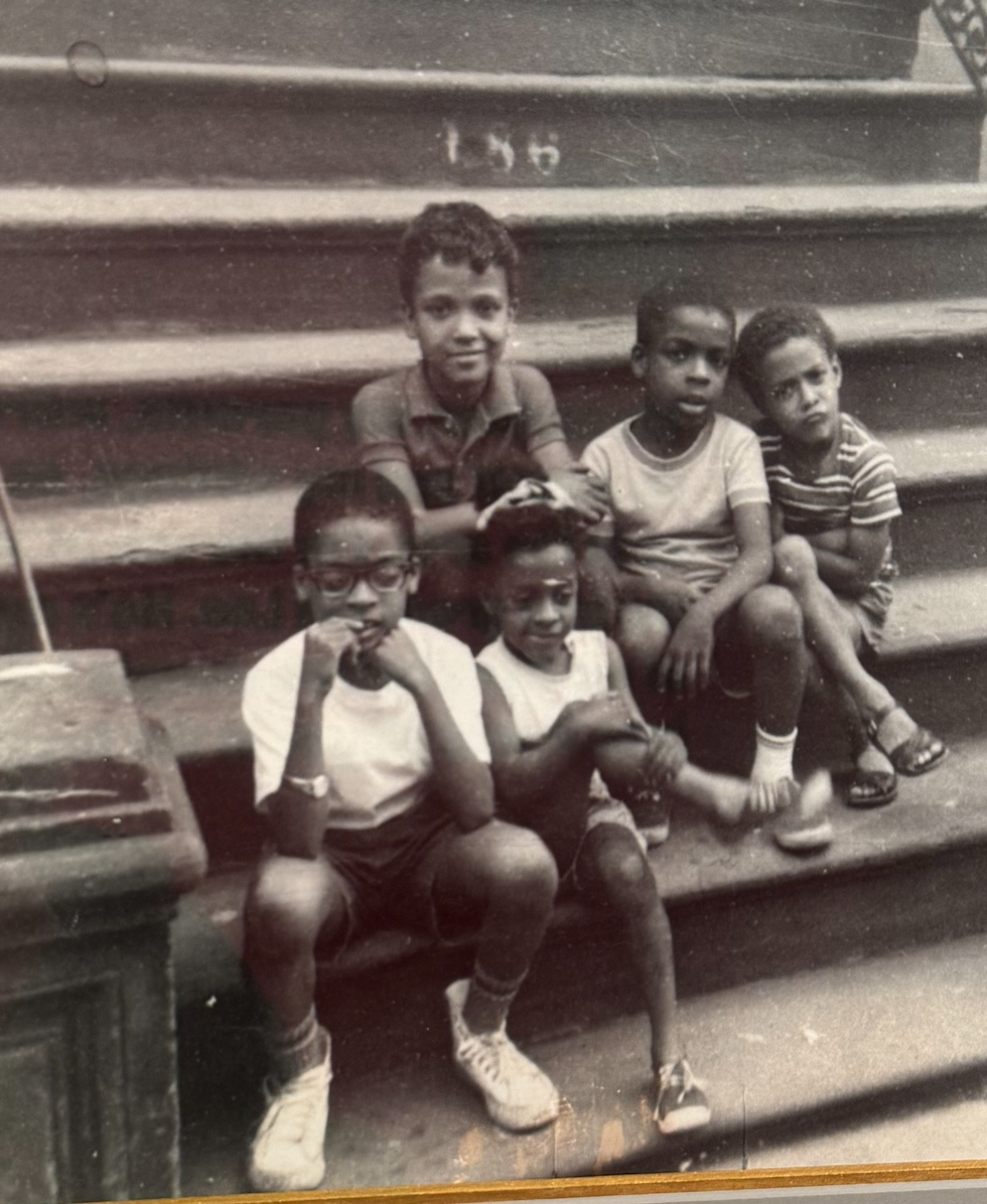
Clockwise: Spike, Joie, David, Cinqué, and Christopher Lee at 186 Warren Street, Cobble Hill, circa 1967–1970; Photo: Unknown Artist.

In this room, there’s a collection of paintings in color and black and white of Spike Lee’s family — from his siblings as kids on the stoop of his beloved Brooklyn neighborhoods (an abstract character present in Lee’s films) to portraits of his dad, Bill, a renowned jazz bassist and composer, heavily influencing the filmmaker’s taste in music and scoring many of his films, like the critically-acclaimed Inside Man, where you can hear the theme song, play intermittently throughout the exhibit to photos with Lee and his children. Family played a pivotal role in shaping Lee’s love for the arts and the narratives of the projects he’s brought — and continues to bring — to life.

Next up: Do the Right Thing’s Immersive Experience

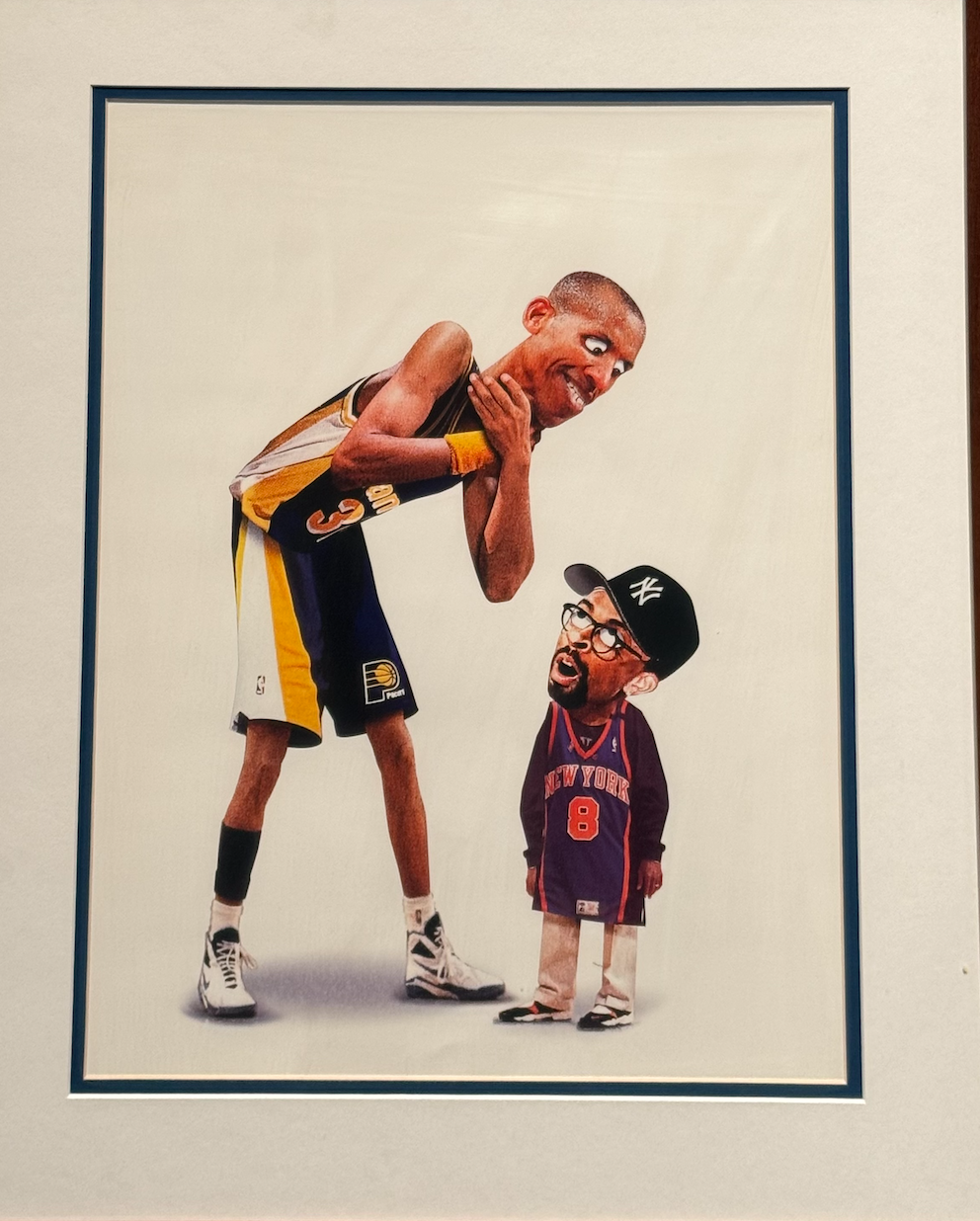
L to R: Illustration of Reggie Miller’s Infamous choking gesture, taunting Spike Lee; Image: Spike Lee’s archives/Brooklyn Museum.

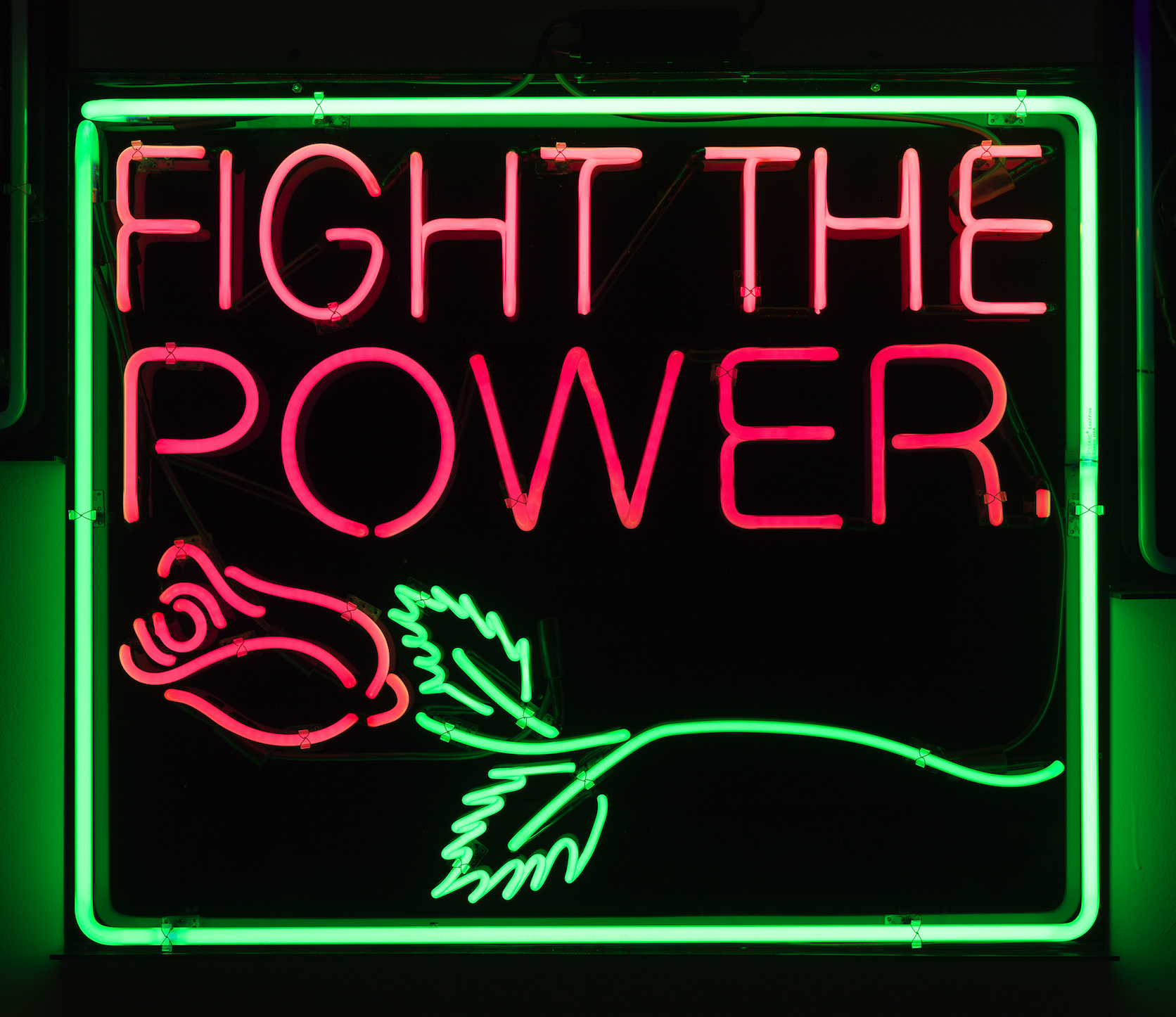
From the neon “Fight the Power” sign to an encased Sal’s pizza box prop hanging on the wall and a movie clip of Rosie Perez’s opening scene of Do the Right Thing, where she’s grooving and shaking to Public Enemy’s “Fight the Power”— a song that changed rap music forever with its powerful lyrics and inconvenient social truths that drew legions of fans, including myself, to love the music genre, and cemented the film’s influence not only in Hollywood but in American culture.

The Sports Wing — There’s a Lot!

You’ll see scores of photographs and athlete jerseys from one of Lee’s favorite teams, The New York Knicks, where Spike Lee has been a fan since practically the womb. And as an avid sports memorabilia collector and once aspiring baseball player, there’s an array of news clippings of images showcasing his controversial court-side antics, signed autographs from the likes of Michael Jordan, young and old, to illustrations of Knick nemesis Reggie Miller (Indiana Pacers) infamous choking gesture, a nod to the Knicks/Pacers rivalry. Lee’s fusion of sports narratives into his films while celebrating the Black sports figures breaking records and acquiring the highest accolades in their respective fields is a testament to Lee’s unwavering commitment to amplifying excellence in Black culture.

L to R: Illustration of Reggie Miller’s Infamous choking gesture, taunting Spike Lee; Image: Spike Lee’s archives/Brooklyn Museum.

The Music and Film Poster Rooms

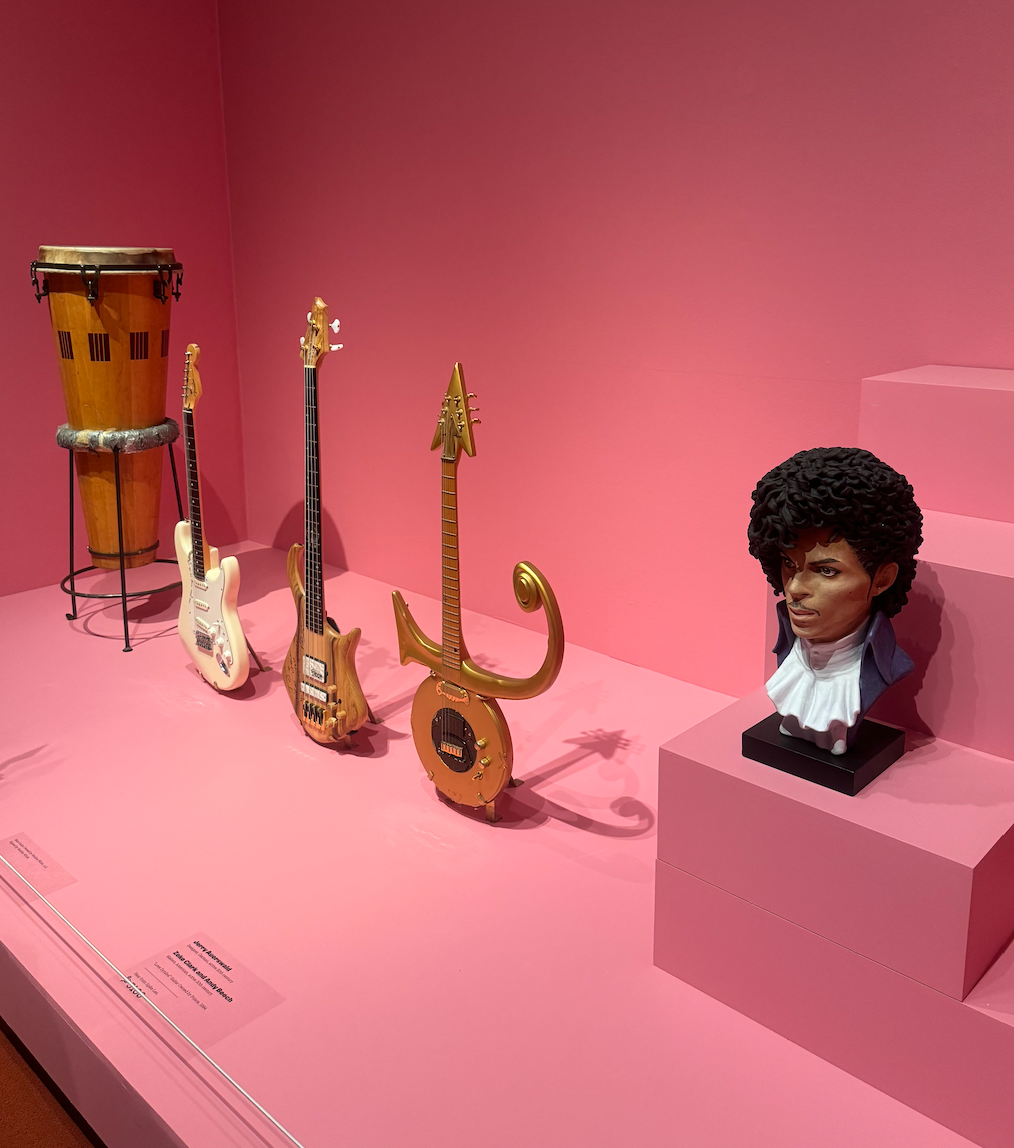
Lee’s mom, Jacquelyn Shelton Lee, introduced him to movies and musicals when he was young, fomenting his interest in entertainment. Visitors can soak in the filmmaker’s extensive musical instrument collection, including Prince’s guitars, one-of-a-kind record players, and the movie posters he’s amassed. Posters reflecting all movie genres, from Jaws and The Deer Hunter to Raging Bull and North by Northwest, and photographs of Spike Lee with cinema greats, actors Robert Deniro and Joe Pesci, and filmmaker Martin Scorsese, fill the hall.

Spike Lee’s collection of Prince’s guitars.

There are seven sections to the Spike Lee: Creative Sources exhibit to blow you away. I won’t share any more details because you should run, not walk, to this comprehensive, educational, and awe-inspiring collection of 350 pieces, organized by Kimberli Gant, Curator, Modern and Contemporary Art, with Indira A. Abiskaroon, Curatorial Assistant, Modern and Contemporary Art. The exhibit displays many facets of Lee: his advocacy for justice and homage to the African American titans who came before and after him, who have challenged the status quo and have made a mark in every aspect of American life, and last but not least, his playful side.

Spike Lee: Creative Sources will be running through February 4thClick here to get your get tickets to see this extraordinary exhibit!