‘Wednesday’ Season 2 Leans into the Disturbing. Dark. Stirs Up Family Drama — And Embraces its Latinness

Netflix’s newest adaptation of the Addams family is currently the number one series, bringing back kooky cast members and new oddballs you’ll love to hate.

Cast of ‘Wednesday’ Season 2; Photo courtesy of Netflix.

Goth teen with the mostest, Wednesday Addams, is back for another year at Nevermore Academy. This time, she’s wiser, more defiant, and ready to solve a new murder in the fictional town of Jericho, Vermont. She also contends with uncontrollable, disturbing visions of her roommate Enid’s death and black tears descending from her eyes. Adding to Wednesday’s distress is the loss of Goody’s book (spiritual guide from a deceased Addams relative), which Wednesday’s mother, Morticia Addams, confiscated, fearing she’d succumb to madness like her sister, Orphelia. Throw in a stalker to Wednesday’s turmoil, who seems to be three steps ahead of her at every turn.

Jenna Ortega (Beetlejuice, BeetlejuiceScream) reprises her role as Wednesday Addams, along with Luis Guzman (Dumb and DumberCarlito’s Way) as Gomez Addams, Catherine Zeta-Jones (Ocean’s 12The Mask of Zorro), as Morticia Addams, Isaac Ordoñez (A Wrinkle in Time) as Pugsley Addams and Fred Armisen (PortlandiaSNL) as Uncle Fester. What’s super exciting about this version of the beloved show created by Charles Addams in 1938 as a single-panel cartoon that appeared in The New Yorker, and later adapted to a television show in 1964.
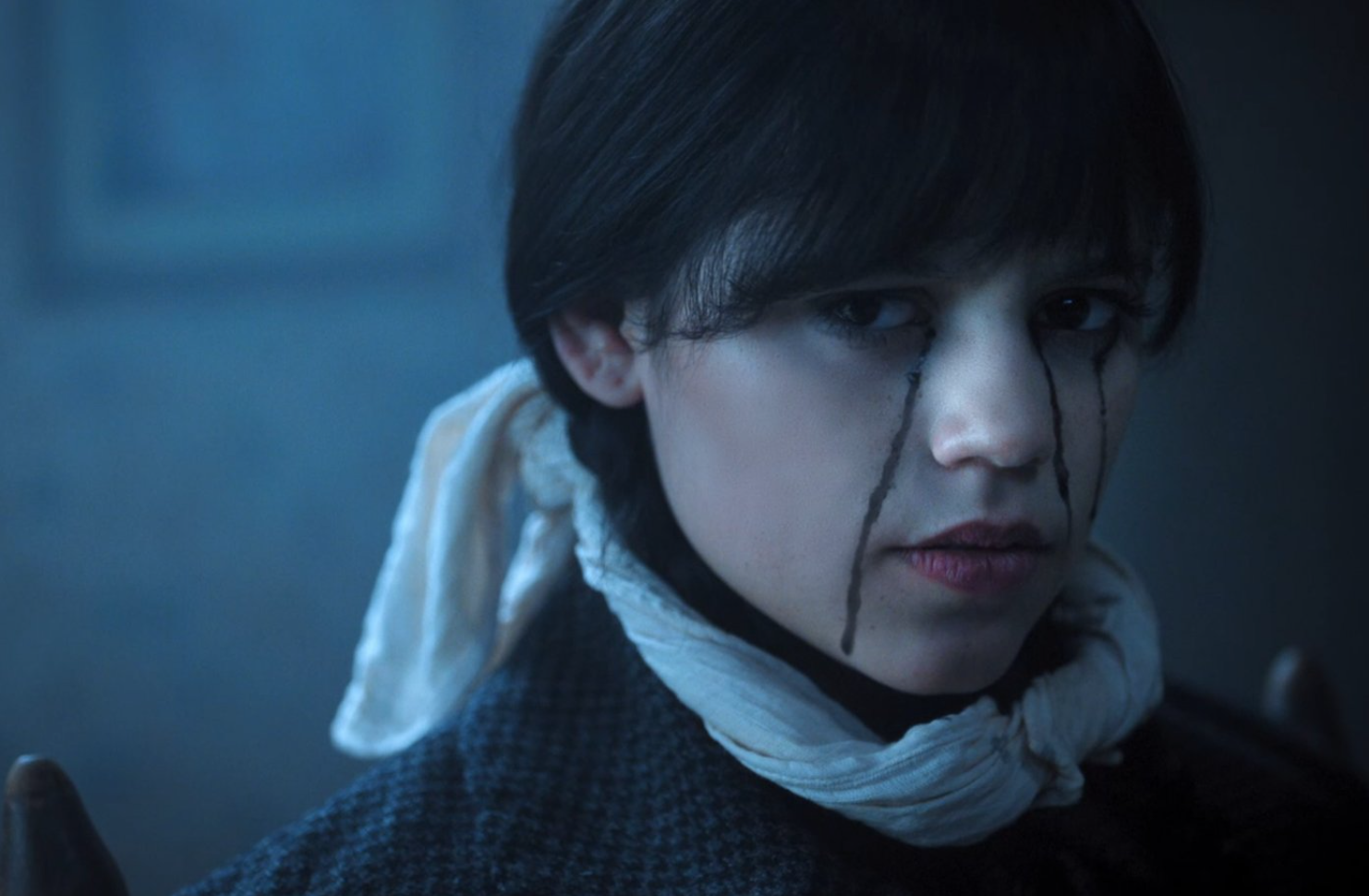
Jenna Ortega as Wednesday Addams in ‘Wednesday’ Season 2; Photo: Courtesy of Netflix.

According to showrunners and principal writers Alfred Gough and Miles Millar, they wanted to emphasize Wednesday’s Latin heritage in the series, a representation often not seen in popular series or films:

“It’s so rare to find an iconic [Latina] character of this stature. We really try to find ways to [highlight that] authentically. What would Wednesday listen to when she was growing up? What would Gomez be playing? And finding moments where we could really make it feel like a girl who’s grown up in New Jersey with a Latino parent, and how would that resonate with her as a teen? Certainly, this season we’re looking for more ways to explore that.”

Season 2 of Wednesday does just that. We see Gomez (Luis Guzman) utter sayings like “Cara Mia” (signature Gomez phrase) and listen to “Besame Mucho” (the most sung Mexican song in history) by Mexican singer Consuelo Veláquez, recorded in 1941, during a shower scene. But more than these common Spanish-language interludes, there are noticeable Spanish dialogue sprinkled throughout the series. Phrases like “mi cariño” (my sweety), “lobo” (wolf), “tormenta” (storm). It’s refreshing and essential to the family dynamic to see Spanish dialogue sprinkled throughout, solidifying Wednesday’s roots.
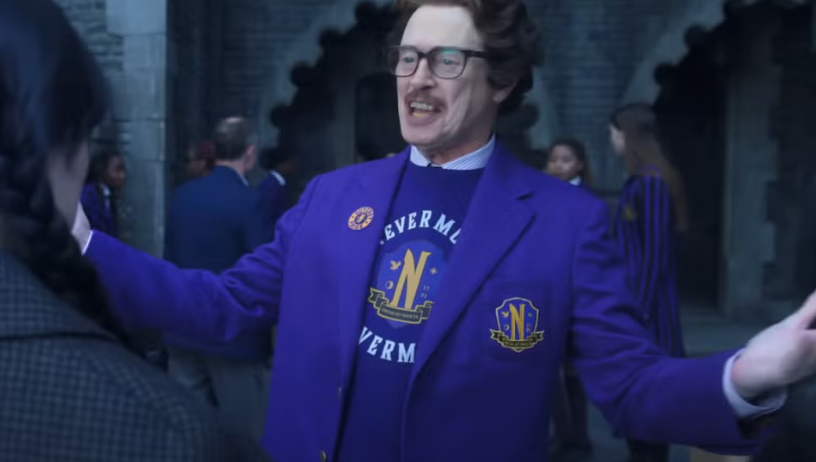
Steve Buscemi as Principal Barry Dort in ‘Wednesday’ Season 2; Photo courtesy of Netflix.

But Wednesday is more than her ancestry; the character is 3-dimensional in that she’s an admirer of literary titans like Voltaire and Sylvia Plath, often quoting them, and laser-focused on taking down the patriarchy while saving the day in a hilarious student camp scene. Wednesday admonishes fitting in, especially when Nevermore’s new enthusiastic principal Barry Dort suggests so, played to perfection by character actor Steve Bucsemi (FargoThe Sopranos). He’s eccentric, pushy, yet likable with a pyrotechnic ability. He asks Wednesday if she ever suffers from FOMO when not participating in camp activities, to which she replies, “No, I suffer from FOBI (Fear of Being Included) instead.” It’s quintessential Wednesday Addams, and Jenna Ortega nails her character to a tee. Her brother Pugsly has more screen time in season 2, joining his sister at Nevermore and developing his electrokinetic powers. He unearths a buried zombie with an insatiable appetite for brains, whom he keeps as a pet, naming him Slurp. Slurp is grotesque and can’t give up his taste for the mushy matter.

The first four episodes of Wednesday Season 2 do not disappoint. Stream it now on Netflix. Stay tuned for the next final four, dropping on September 3rd, with Lady Gaga making a guest appearance!

‘Strange Darling,’ A Film That Will Equally Delight and Disgust You — But Not for the Reasons You May Think

Writer-director JT Mollner flips the horror script on its cinematic head with this unconventional film.

Willa Fitzgerald as the Lady in ‘Strange Darling’; Photo: Magenta Light Studios.

Strange Darling begins with a young woman or “the Lady” as she’s known in the film (Willa Fitzgerald, ReacherThe Fall of the House of Usher) sporting a bandage on her left ear running across a wooded area in a red jumpsuit, clearly distressed. It is a recognizable image, sure, seemingly fitting the horror film trope of the lone woman escaping the deranged killer. And we meet the presumed killer, “the Demon” (Kyle Gallner, SmileDinner in America), soon after chasing the young woman, a modern-looking redneck in a plaid jacket with dirty blonde-haired hair and an almost handlebar mustache carrying a shotgun ready to pounce on his victim, yelling, “Here, Kitty Kitty.”

There is no dialogue for almost 10 minutes of the film. Action sequences, yes. That lead to suspension and pure anxiety. Elements that adequately compensate for the nonverbal visuals to keep the viewer engaged.

Kyle Gallner as the Demon in ‘Strange Darling’; Photo: Magenta Light Studios.

Filmmaker JT Mollner (Outlaws and Angels) prefaces the film with a narrated backstory with accompanying words about an elusive serial killer who’s been killing people for years and how the carnage came to an end by revealing the story in the course of six chapters in the movie. Yet, Mollner starts the film with chapter three and continuously goes back and forth between chapters to give the audience more information, excruciatingly fun and unpredictably horrific. It’s a wildly effective storytelling technique reminiscent of Quentin Tarantino’s ground-breaking story-structure-disrupting film Pulp Fiction. In addition, the gore factor is relatively high in Strange Darling. Tarantino would be proud.

Strange Darling even resorts to scrolling red text on a black background, a color scheme synonymous with many a horror film, especially one of my favorites: John Carpenter’s 1978 Halloween, ominous factor, check!

But the horror tropes keep coming.

Kyle Gallner as the Demon and Willa Fitzgerald as the Lady in ‘Strange Darling’; Photo: Magenta Light Studios.

The audience thinks they know who the serial killer is, but our theory is ground to a screeching halt when several bloodbaths ensue, leaving innocent people in the murderer’s wake, which “the Demon” may or may not have committed. It’s terrifying. It’s unanticipated and gives way to nuanced and exciting storytelling audiences crave. The film’s point of view shifts between killer and victim/and/or victims, and it’s magical to watch as the series of events unravels.

I won’t share any spoilers because Strange Darling, produced by Giovanni Ribisi (Lost in Translation, Sneaky Pete) and served as cinematographeris a must-watch. It made my top five horror movies of the last decade. Yeah, it’s that good. Watch it now on Prime Video.

Other notable horror flicks with fantastic twists to add to your film repertoire:

  1. Midsommar — written and directed by Ari Aster.

2. Thanksgiving (couldn’t be more seasonal) — co-written and directed by Eli Roth.

Why Glenn Close’s Character is So Controversial in ‘The Deliverance’ — and Director Lee Daniels Unapologetically Celebrates it

Inspired by actual events, Daniels’s new Black drama rattles viewers with the enigmatic veteran actress’s portrayal of Alberta.

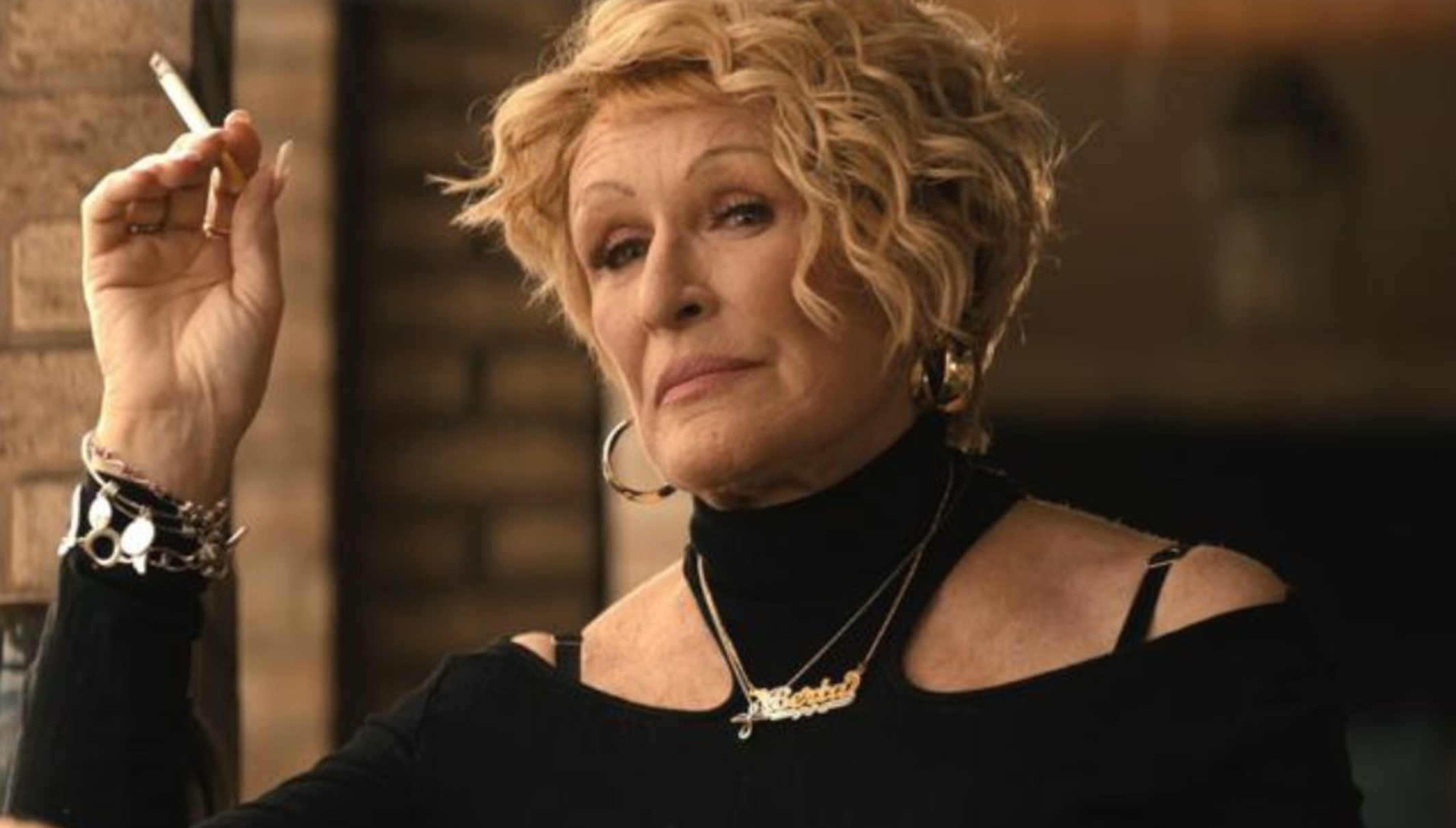
Glenn Close as Alberta in ‘The Deliverance’; Photo courtesy of Netflix.

Alberta (Glenn Close, Fatal AttractionThe Wife) is the domineering white mother to her mixed-race daughter, Ebony Jackson (Andra Day, The United States vs. Billie HolidayMarshall). A single mother of three, she moves her kids to a new home in Indiana, where the residence seems occupied by demonic forces. She resigns herself to finding an unorthodox solution to the problem, often through horror genre-infused tropes that are entertaining (kids speaking in satanic voices and levitating) but also through spiritual guidance that seems to temper the demons.

What’s so bad about the house?

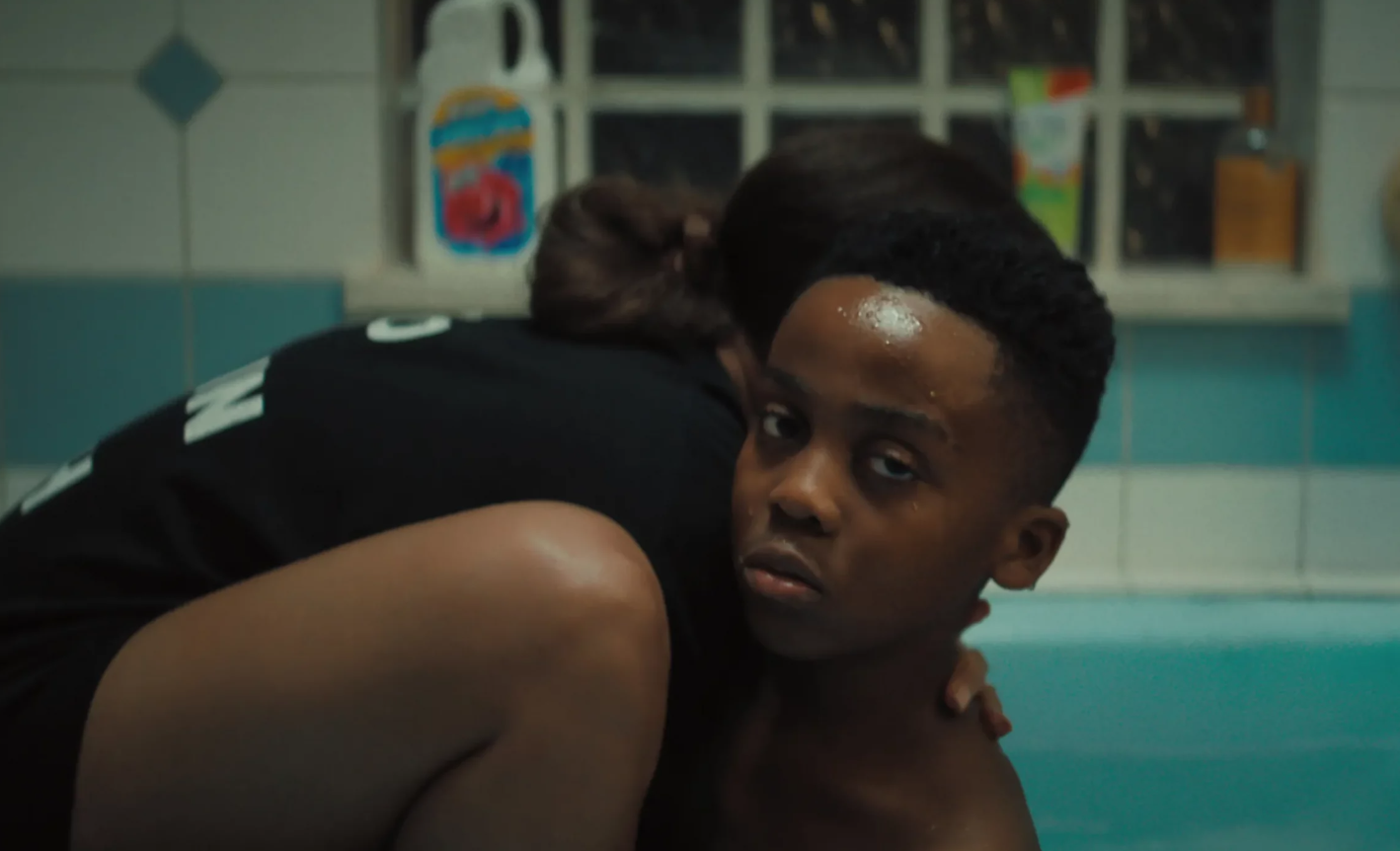
Andra Day as Ebony Jackson and Anthony B. Jenkins in ‘The Deliverance.’; Photo courtesy of Netflix.

Ebony starts noticing strange behavior in her children: trance-like states, communicating with people who aren’t there, and unexplained bruises on their bodies. To make matters worse, Ebony is struggling financially, trying to stay sober, and battling with her mother, Alberta, who doesn’t hold back when Ebony messes up. Not to mention, Child Services is keeping a close eye on Ebony because of her past child endangerment issues. Constantly reminded by the agency’s rep, Cynthia Henry (played by Oscar-winning actress Mo’Nique, (Precious, and The Parkers), that she must put them first and be a responsible parent, Ebony feels trapped.

But back to Glen Close.

I watched the film without IMDB-ing or Googling the cast. At first glance, I didn’t recognize the actress playing Alberta (Close) until I started focusing on her voice and mannerisms. It’s Glenn Close like I’ve never seen or heard before. Ghetto-fabulous sassy. Critical. Bat-wielding protector. And owning the mean-spirited attributes sometimes single mothers possess when faced with poverty and lack of support. Resentment. Despair. And addiction passed down to their children. In this instance, it’s Alberta and Ebony’s dynamic. Generational trauma plays out on-screen between them, and viewers will cringe at the numerous mother-daughter showdowns. One explicit scene of their relationship, which has social media in an uproar, has Alberta (resurfacing as a Nosferatu-like creature) saying: “I can smell your nappy p*%@y.” Yeah, it’s an intense line. Granted. However, according to Daniels:

Andra Day as Ebony Jackson and Glenn Close as Alberta in ‘The Deliverance.’; Photo courtesy of Netflix.

“I had to do it. Every Black person knows an Alberta. She’s part of the fabric of our community, but we’ve never seen her on screen before,” Lee told CNN.

One of those never-before-seen moments viewers can anticipate is watching Alberta (mid-to-late 70s) flirt with a much younger (Omar Epps, Love & BasketballHigher Learning) while receiving chemotherapy. Dressed in a revealing blouse, wearing lots of makeup, and confidently flirty for days, Glenn Close perfected the role to a tee. Cheers to that! We need more sexagenarians and septuagenarians strutting their stuff on screen playing sirens, not seniors ready for the afterlife. It makes for exciting cinema. Stream The Deliverance, based on Latoya Ammons’s experience with the haunting of her house in 2011, on Netflix!