It’s National Lampoon Vacation meets Midsommar. The film keeps you laughing and on your toes throughout with a strangely fun who-dun-it twist.
From L to R: Nick Frost (Richard), Sebastian Croft (Sam), Maisie Ayers ( Jessie), and Aisling Bea ( Susan) in ‘Get Away’; Photo: IMDB.
As a horror and comedy film buff, I’ve never thought that, as some film critics and historians attest, both genres could coexist in one film and do so seamlessly. I found a movie that pulled off this medium mashup, made me laugh, and had scary scenes sans the cheesiness factor. It is almost impossible for contemporary horror films to pull off.
And that film is Get Away.
It stars British actor and comedian Nick Frost, who also wrote and produced the movie. You may know him from Cuban Fury (one of my favorites by Frost), Shaun of the Dead, and Paul, where he co-stars with his best friend and fellow writer/actor, Simon Pegg, who helped launch Nick Frost’s film career.
In Get Away, Frost plays Richard, the patriarch of the Smith family. They are on their way to the isolated Swedish island of Svälta, where locals are about to celebrate their traditional annual event, Karantan. The residents have no interest in foreigners participating in their rituals and do everything they can to deter the Smiths from enjoying their vacation.
Sure, there are horror film tropes that audiences will recognize: the strange and rude shopowners insisting the Smiths miss their ferry to the island; the ominous old lady at Svälta chanting Swedish sayings and continually hissing at the family; and the creepy Airbnb host, with a penchant for young girls and boys, eagerly shows Jessie (Maise Ayers, Criminal Record) around the house while getting inappropriately close.
Maisie Ayers (Jessie) and Eero Milonoff (Matts) in ‘Get Away’; Photo: IMDB.
What starts as a familiar family road trip with annoying teenagers in the back seat, complaining about snacks, boredom, and engaging in sibling banter takes a turn from the expected to the surprisingly gory. Richard, an unassuming, mild-mannered father, wants the family to have a good time. The obliging mom (Aisling Bea, This Way Up)is ready to embark on an island where her ancestors may have caused mayhem and the demise of its citizens. The story does a complete 180 in the most unhinged and unexpected way. I won’t give you any spoilers. Some reviewers and audiences may have seen the carnage coming. But others, like me, did not and enjoyed every bit of the 86-minute slasher/comedic ride.
And I think you will, too. Steffen Haars (New Kids) directs. Frost and Haars also teamed up for the 2024 film Krazy House, starring Alice Silverstone, where Russian criminals posing as workers threaten a fictional sitcom family, and chaos and gore ensue. If you’re ready to laugh and succumb to some thrilling scares, stream Get Away on Apple TV.
Secret operative missions, stand-up comedy, and a who-dun-it; Netflix enthralls viewers with a new batch of titillating entertainment.
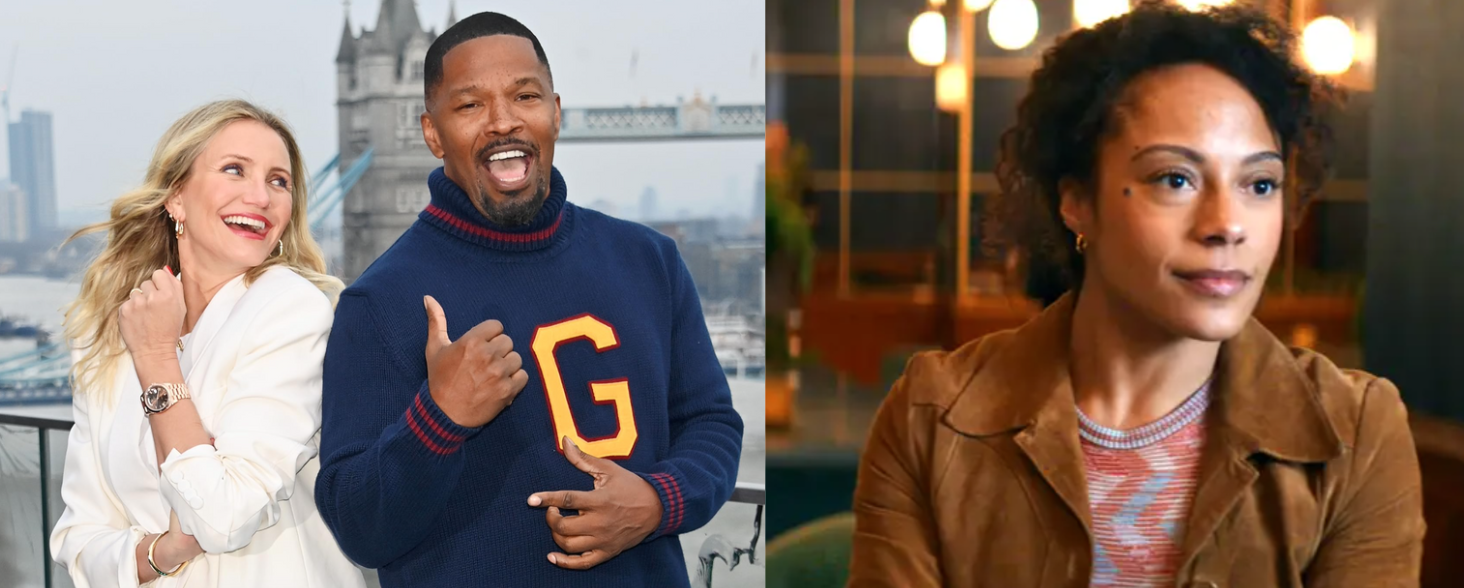
From L to R: Cameron Diaz, Jamie Foxx, and Rosalind Eleazar; Photo Credit: Netflix.
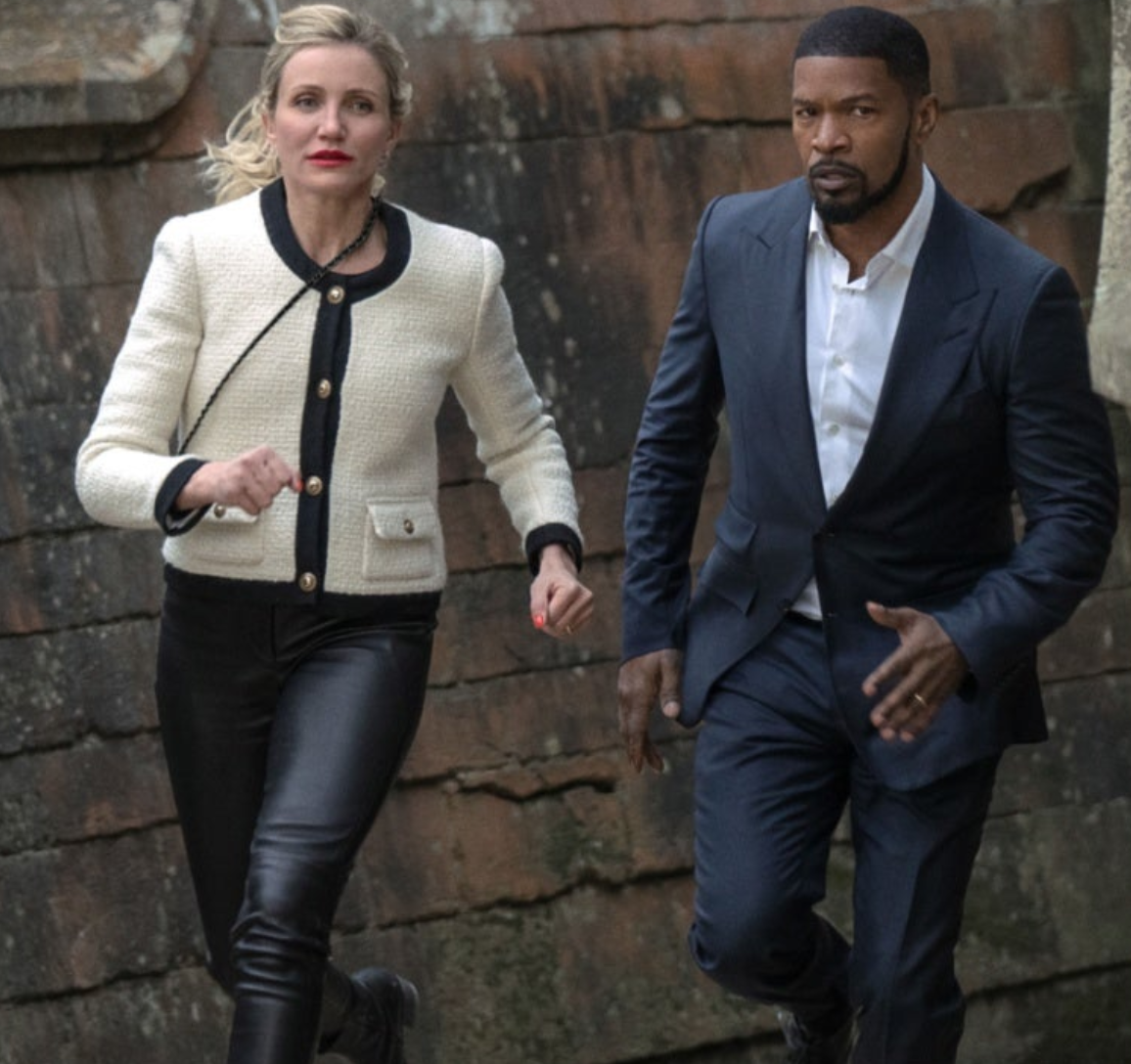
Superstars Cameron Diaz (Emily) and Jamie Foxx (Matt) make a splashy comeback with their spy thriller Back in Action. The couple plays a pair of brilliant CIA spies in a clandestine relationship. Once Diaz finds out she’s pregnant with their child, they decide to disappear, assume new identities, marry, and move to the suburbs until their cover is blown. Forced to return to the world of espionage with precocious teens in tow, they battle oligarchs and their henchmen until their family is safe. Glenn Close (Fatal Attraction, The Wife) plays Cameron Diaz’s estranged mother, whose actions allude to being a former spy, and she’s glorious as usual! An actor’s actor.
Both actors are in great shape, and we buy their roles as GenX martial experts who haven’t lost their edge. Back in Action marks Diaz and Foxx’s return to cinema. Diaz hasn’t starred in films since 2014, and in the middle of shooting the action-comedy, Foxx had a medical emergency that left him out of the spotlight for a few years. The two stars have dynamic chemistry and a natural comedic ability. Cameron Diaz’s Emily is reminiscent of Natalie Cook’s graceful fight scenes from the Charlie’s Angel franchise (2000–2003), while Foxx channels his Django character’s stealth moves.
Cameron Diaz and Jamie Foxx proved their bankable stars as Back in Action remains the top film on Netflix.
Cameron Diaz and Jamie Foxx in ‘Back in Action’; Photo Credit: Netflix.
Clearing the air and setting the record straight on his hiatus from TV and Film, Foxx stars in his poignant and hilarious comedy special What Had Happened Was. Rumors and conspiracies stating that P. Diddy drugged Foxx to him becoming a paraplegic were debunked by Foxx. The truth, as confirmed by the actor, is that he had a brain bleed, leading to a stroke that doctors had a hard time diagnosing, and his sister stepped in to advocate for further analysis. Foxx addresses the severity of his condition and epiphanies, makes jokes, and sings in this hilarious and poignant one-hour show. Foxx still got it, but more importantly, never lost it.
Lastly, Harlan Coben returns with his book adaptation series, Missing You. And use John Waite’s hit 80s song “Missing You” as the musical backdrop.
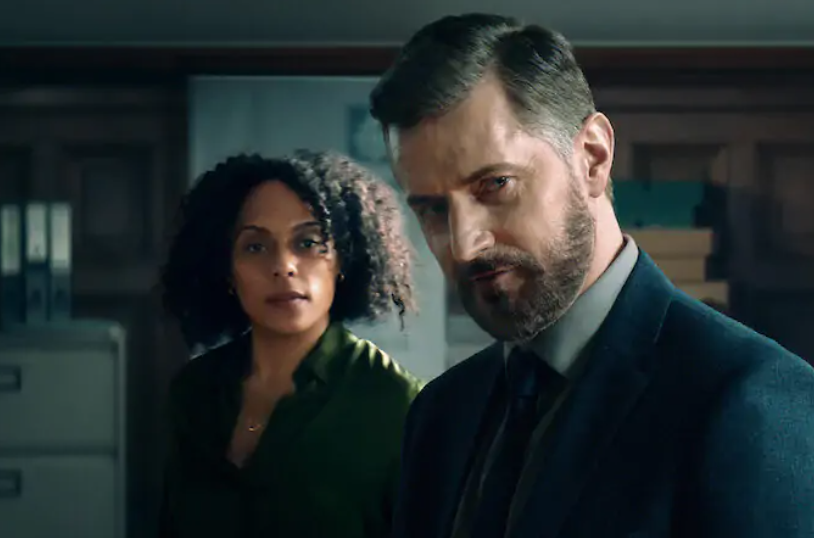
Rosalind Eleazar (Kat) and Richard Armitage (Stagger) in ‘Missing You’; Photo Credit: Netflix.
Missing You follows Kat Donovan (Rosalind Eleazar, Slow Horses, Deep Water), a detective inspector in the U.K. whose fiance broke off their engagement and went off the grid for 11 years. To make matters worse, Kat learns her father’s murderer is about to die and visits him to find out why he murdered him, a former policeman. In true Harlan Corben fashion, there are more winding twists and turns than the steepest stairwell in a centuries-old European castle in this story. And fans of the suspense-thriller author will love it! Not to mention the diverse multinational cast and Coben favorite and veteran British actor Richard Armitage (Fool Me Once, The Stranger) as Donovan’s boss, Ellis Stagger.
Fluff up your couch and prepare your favorite snacks for a superb TV viewing this weekend or next. Back in Action, directed by Seth Gordon (Horrible Bosses, Identity Thief). It’s Netflix’s highest-grossing film to date. Jamie Foxx’s honest Golden Globe-nominated special What Had HappenedWas, detailing his recovery, is ripe with impersonations, storytelling, and singing extravaganza. If you’re looking for more than a contained show or film, check out the 5-episode limited suspenseful series Missing You.
RaMell Ross isn’t preoccupied with filmmaking conventions — the first-time fictional feature director/documentarian, photographer, and writer says there is no wrong or right way to experience the film.
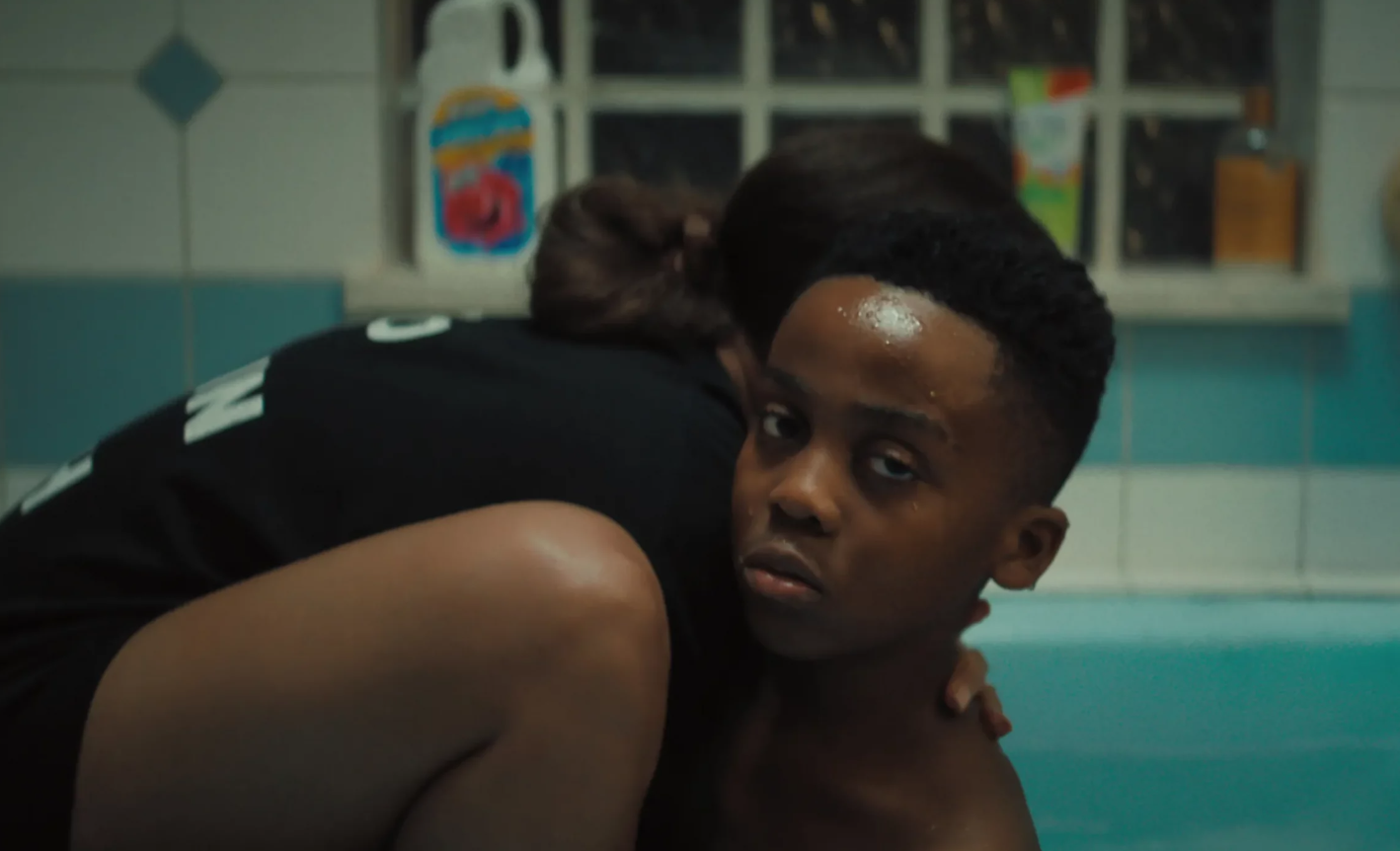
From L to R: Ethan Herisse as Elwood Curtis and Brandon Wilson as Jack Turner in ‘Nickel Boys’ Photo: Orion Pictures/Amazon/MGM Studios.
So, what’s Nickel Boys about, and why is it generating Oscar buzz already?
Adapted from Colson Whitehead’s Pulitzer-prize-winning book for fiction in 2020 with the same name, Nickel Boys begins with fractured images of Elwood Curtis’ (Ethan Herisse, When They See Us) life, a prominent theme throughout that begs the viewer to interpret the story as they’re viewing it instead of it being spoonfed. Elwood, a promising Black teen in the Jim Crow era, makes a fateful mistake on his way to a free college for gifted Black students, leading to incarceration in a brutal reformatory school known as the Nickel Academy for law-breaking boys.
At the Nickel Acadamy, he forges a friendship with a streetsmart, jaded youth named Jack Turner (Brandon Wilson, The Way Back). Steeped in the Civil Rights movement, the film juxtaposes images of Dr. Martin Luther King (one of Elwood’s heroes) and actual documents from the actual Dozier school in Tallahassee, Florida.
Over 100 boys, Black and white, died at the school, many buried in unmarked graves. It’s heartwrenching and infuriating to learn about the abuses the school engaged in. Still, Ross, with his visual storytelling tapestry, evokes empathy and hope in these characters, unlike any other film in its genre addressing trauma and injustice in Black culture.
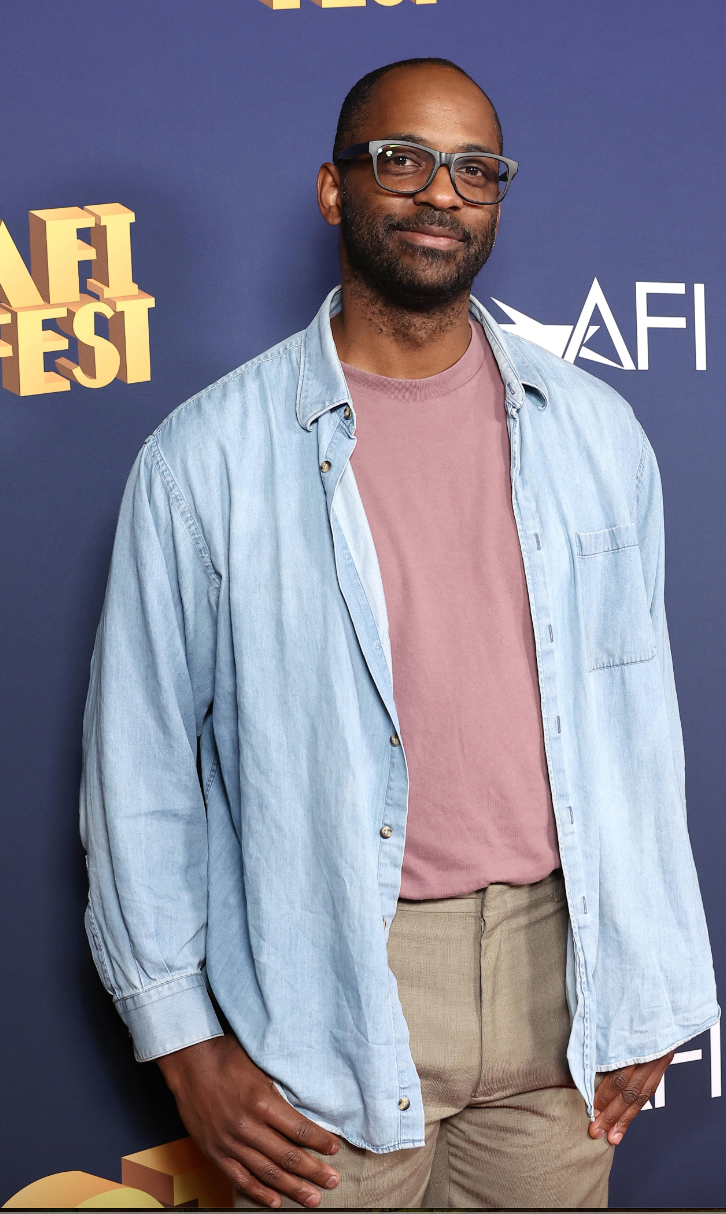
I chatted with RaMell Ross, who directed the 2019 Oscar-nominated documentary Hale County This Morning, This Evening, right before Nicole Boy’s theatrical release to discuss the film’s exploration of visuals to aid the storytelling, the shift in narrative point-of-view and the absence of dialogue close to the end of the first act.
Filmmaker RaMell Ross: Photo: IMDB.
MV: Why did you approach the visual components vs. a dialogue-driven narrative, and what kind of response have you received from audiences?
RR: The film elicits such a subjective response — it has a plethora of images from across time and ones created on set, dealing with real events. The range of reactions has not been the same; some people have reacted to the wordlessness, while others have praised it. The film taps into people’s relationships to trauma, imagining other people’s agency, their own agency, and how they received information in the past, which is a bit of a mind bend. The default in cinema has been to show the visuals outright as far as depicting trauma. The point-of-view in this film does something that’s off-edge.
MV: Plan B approached you to write and direct this film. It’s quite a unique position, where the money backers are soliciting you instead of being the other way around. What was your take on making this film before and after reading the book?
RR: I was hesitant in general. I’m a hesitant maker. It takes a lot to make something, especially if it doesn’t originate from me or my writing process. Before reading the book, I thought, hey, it’s Plan B. They’ve done a lot of incredible work and supported artists. Then I read the book, realized its impact, thought about methods to adapt it, and started conversing with Joslyn Barnes (This Changes Everything), my co-writer and producer, who I sought. Trouble-shooting the point-of-view of the film and researching the Dozier School documents. Everything started to build itself out. In the context of the Dozier School boy’s story, this form and these ideas seem to be an unprecedented connection between form and content. That could have powerful ripples.
MV: When writing the screenplay, did you and Joslyn consult with author Colson Whitehead on the script’s development or your process for writing it?
RR: His involvement was non-existent. Colson Whitehead had no role in developing the screenplay. He, Dede Garder, and Jeremy Kleiner (Producers and co-presidents of Plan B) chose me to direct the film after seeing Hale County This Morning, This Evening. I sent him a Thank you note and was gushing about his talents. Whitehead responded with, “Go luck, man. You got it.” Which was great. In essence, giving me permission to execute my vision.
MV: In retrospect, after watching dailies and working with the team you had, is there anything you would’ve done differently conceptually when creating this film?
RR: Perhaps if the film is well received and makes AFI’s (American Film Institute) top 10 films, I would have included a clause in my contract to pay me more money, like 5 million (laughs). It’s easy to say in hindsight. I can’t imagine making this film with another DP, production, costume designer, producer, or co-writer. The film has many hands in it, and there are so many brushstrokes from creatives I trust. I think it would’ve collapsed had we approached it differently. It’s a pretty fickle relationship between elements. And this film works because of a marriage of 20 different elements.
MV: What do you think the reaction will be in Florida and other places to Nickel Boys that ignore and try to ban stories, whether in books or cinema, dealing with marginalized people and their experiences?
RR: It’s crazy to me that the book burning was part of our past, and now we’re dealing with it again. In Florida, especially where the Dozier school existed, the government acknowledged wrongdoing and awful truths but didn’t apologize. There’s this erasure of narratives taking place openly. And art, especially through Colson’s book and now the Nickel Boys adaptation, is emerging while powers that be are trying to suppress it. The hope is that people start having conversations about the past and continue to be inspired to make art that addresses these topics and gives way to new voices!
MV: Given your success as a documentarian and now feature filmmaker, what advice would you give first-time and seasoned filmmakers?
RR: Find Jesus and pray! (laughs). I respectfully say this to seasoned directors: the more specific, personal, idiosyncratic, and intimate to your own life and vision, the better the art will be. As unique as your films are, like your footprints, fingerprints, or brainwaves, that’s interesting and missing from mainstream cinema. Suppose people were making profoundly personal and deeply specific films in the commercial space. In that case, I think the world would be genuinely different because we would have access to the types of truths that are as singular as human beings and not the squished-down truths accessible and palatable for folks for the sake of watching the next show or film.
Watch Nickel Boys, an evocative and visually stimulating experimental film that lets viewers interpret the narrative through their imagination and lived experiences with a stellar cast that inhabited these characters so naturally; they were born to play these roles, especially Aunjanue Ellis-Taylor (Hattie, King Richard)—now playing in select theaters nationwide. Click here to see movie schedules and times.
Writer-director JT Mollner flips the horror script on its cinematic head with this unconventional film.
Willa Fitzgerald as the Lady in ‘Strange Darling’; Photo: Magenta Light Studios.
Strange Darling begins with a young woman or “the Lady” as she’s known in the film (Willa Fitzgerald, Reacher, The Fall of the House of Usher) sporting a bandage on her left ear running across a wooded area in a red jumpsuit, clearly distressed. It is a recognizable image, sure, seemingly fitting the horror film trope of the lone woman escaping the deranged killer. And we meet the presumed killer, “the Demon” (Kyle Gallner, Smile, Dinner in America), soon after chasing the young woman, a modern-looking redneck in a plaid jacket with dirty blonde-haired hair and an almost handlebar mustache carrying a shotgun ready to pounce on his victim, yelling, “Here, Kitty Kitty.”
There is no dialogue for almost 10 minutes of the film. Action sequences, yes. That lead to suspension and pure anxiety. Elements that adequately compensate for the nonverbal visuals to keep the viewer engaged.
Kyle Gallner as the Demon in ‘Strange Darling’; Photo: Magenta Light Studios.
Filmmaker JT Mollner (Outlaws and Angels) prefaces the film with a narrated backstory with accompanying words about an elusive serial killer who’s been killing people for years and how the carnage came to an end by revealing the story in the course of six chapters in the movie. Yet, Mollner starts the film with chapter three and continuously goes back and forth between chapters to give the audience more information, excruciatingly fun and unpredictably horrific. It’s a wildly effective storytelling technique reminiscent of Quentin Tarantino’s ground-breaking story-structure-disrupting film Pulp Fiction. In addition, the gore factor is relatively high in Strange Darling. Tarantino would be proud.
Strange Darling even resorts to scrolling red text on a black background, a color scheme synonymous with many a horror film, especially one of my favorites: John Carpenter’s 1978 Halloween, ominous factor, check!
But the horror tropes keep coming.
Kyle Gallner as the Demon and Willa Fitzgerald as the Lady in ‘Strange Darling’; Photo: Magenta Light Studios.
The audience thinks they know who the serial killer is, but our theory is ground to a screeching halt when several bloodbaths ensue, leaving innocent people in the murderer’s wake, which “the Demon” may or may not have committed. It’s terrifying. It’s unanticipated and gives way to nuanced and exciting storytelling audiences crave. The film’s point of view shifts between killer and victim/and/or victims, and it’s magical to watch as the series of events unravels.
I won’t share any spoilers because Strange Darling, produced by Giovanni Ribisi (Lost in Translation, Sneaky Pete) and served as cinematographer, is a must-watch. It made my top five horror movies of the last decade. Yeah, it’s that good. Watch it now on Prime Video.
Other notable horror flicks with fantastic twists to add to your film repertoire:
Inspired by actual events, Daniels’s new Black drama rattles viewers with the enigmatic veteran actress’s portrayal of Alberta.
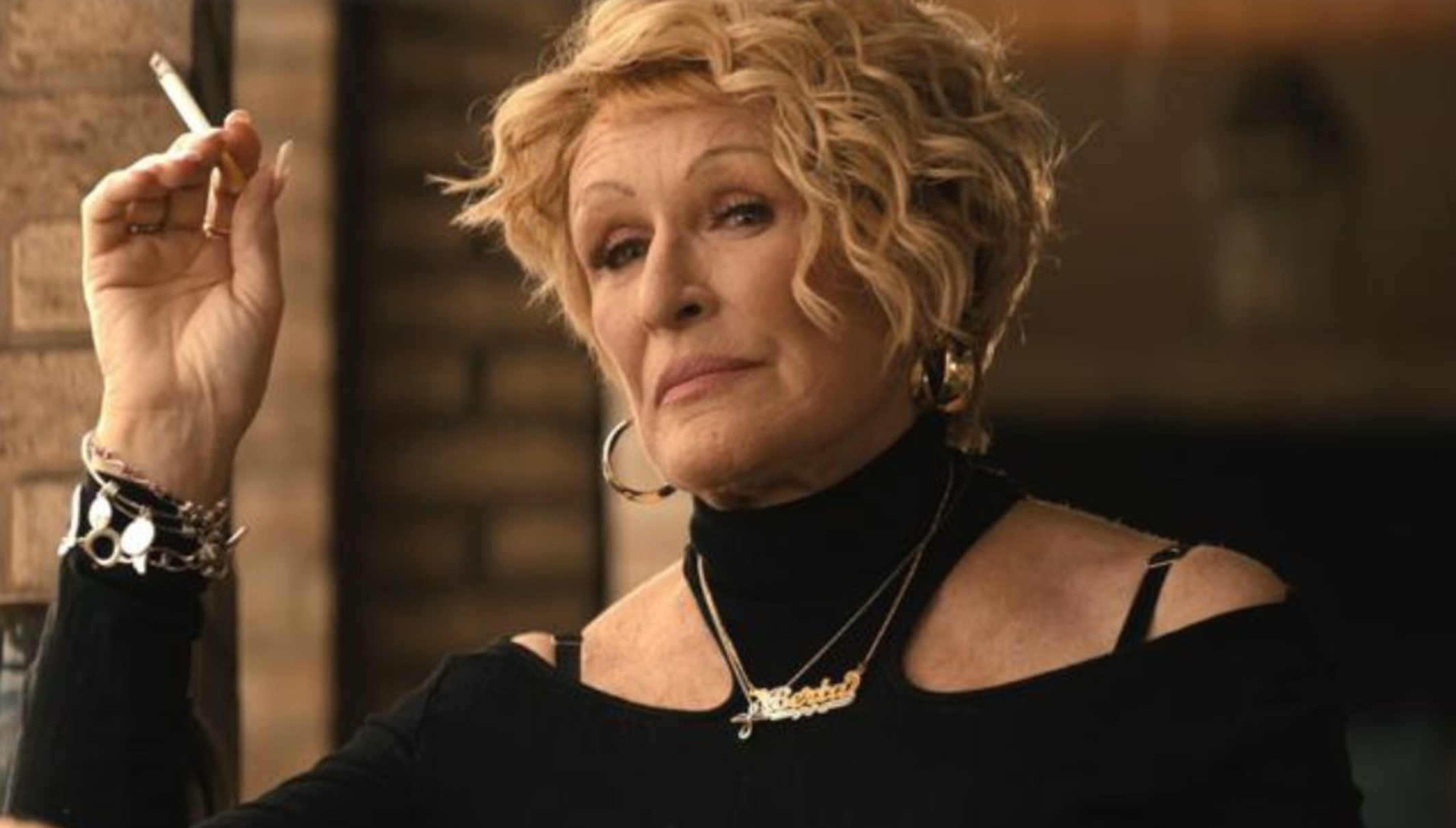
Glenn Close as Alberta in ‘The Deliverance’; Photo courtesy of Netflix.
Alberta (Glenn Close, Fatal Attraction, The Wife) is the domineering white mother to her mixed-race daughter, Ebony Jackson (Andra Day, The United Statesvs. Billie Holiday, Marshall). A single mother of three, she moves her kids to a new home in Indiana, where the residence seems occupied by demonic forces. She resigns herself to finding an unorthodox solution to the problem, often through horror genre-infused tropes that are entertaining (kids speaking in satanic voices and levitating) but also through spiritual guidance that seems to temper the demons.
What’s so bad about the house?
Andra Day as Ebony Jackson and Anthony B. Jenkins in ‘The Deliverance.’; Photo courtesy of Netflix.
Ebony starts noticing strange behavior in her children: trance-like states, communicating with people who aren’t there, and unexplained bruises on their bodies. To make matters worse, Ebony is struggling financially, trying to stay sober, and battling with her mother, Alberta, who doesn’t hold back when Ebony messes up. Not to mention, Child Services is keeping a close eye on Ebony because of her past child endangerment issues. Constantly reminded by the agency’s rep, Cynthia Henry (played by Oscar-winning actress Mo’Nique, (Precious, and The Parkers), that she must put them first and be a responsible parent, Ebony feels trapped.
But back to Glen Close.
I watched the film without IMDB-ing or Googling the cast. At first glance, I didn’t recognize the actress playing Alberta (Close) until I started focusing on her voice and mannerisms. It’s Glenn Close like I’ve never seen or heard before. Ghetto-fabulous sassy. Critical. Bat-wielding protector. And owning the mean-spirited attributes sometimes single mothers possess when faced with poverty and lack of support. Resentment. Despair. And addiction passed down to their children. In this instance, it’s Alberta and Ebony’s dynamic. Generational trauma plays out on-screen between them, and viewers will cringe at the numerous mother-daughter showdowns. One explicit scene of their relationship, which has social media in an uproar, has Alberta (resurfacing as a Nosferatu-like creature) saying: “I can smell your nappy p*%@y.” Yeah, it’s an intense line. Granted. However, according to Daniels:
Andra Day as Ebony Jackson and Glenn Close as Alberta in ‘The Deliverance.’; Photo courtesy of Netflix.
“I had to do it. Every Black person knows an Alberta. She’s part of the fabric of our community, but we’ve never seen her on screen before,” Lee told CNN.
One of those never-before-seen moments viewers can anticipate is watching Alberta (mid-to-late 70s) flirt with a much younger (Omar Epps, Love & Basketball, Higher Learning) while receiving chemotherapy. Dressed in a revealing blouse, wearing lots of makeup, and confidently flirty for days, Glenn Close perfected the role to a tee. Cheers to that! We need more sexagenarians and septuagenarians strutting their stuff on screen playing sirens, not seniors ready for the afterlife. It makes for exciting cinema. Stream The Deliverance, based on Latoya Ammons’s experience with the haunting of her house in 2011, on Netflix!
The familiar scoring and characters will take you towards a welcomed trip down movie memory lane.
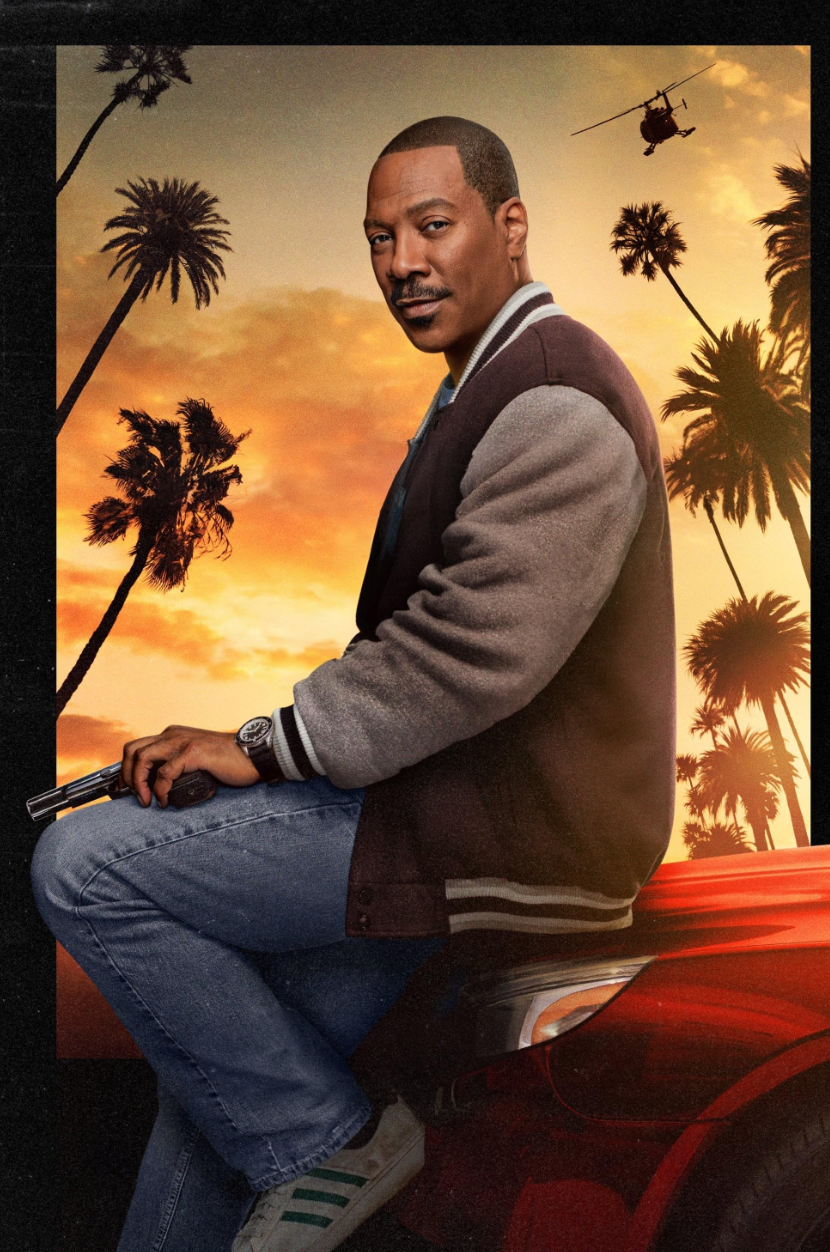
Eddie Murphy as Axel Foley in Beverly Hills Cop: Axel F; Photo: Netflix.
Eddie Murphy reprises his role as Axel Foley, the Detroit street-smart former con-turned-cop who, in the first film, went to Beverly Hills to figure out who killed his friend Mikey, ends up tracking down the killers, and befriends officers Billy Rosewood (Judge Reinhold, Fast Times at Ridgemont High, Stripes) and John Taggart (John Ashton, Gone Baby Gone, Midnight Run), who initially took him into custody for trespassing the would-be killer’s businesses.
John Ashton as John Taggart, Eddie Murphy as Axel Foley, and Judge Reinhold as Billy Rosewood in Beverly Hills Cop: Axel F; Photo; Netflix.
Flash-forward to forty years later, and Axel Foley is still fighting crime and chasing criminals, especially early in the film. He suspects a robbery is about to go down at a Detroit Red Wings game he’s attending with a fellow cop. Foley’s policeman’s intuition pays off. After confronting the robbers at the stadium, a chase ensues. In true Foley fashion, he barrels down Detroit streets in a snow plow, eventually apprehending the criminals, but not without a slew of destroyed cars, traffic signs, poles, and terrified pedestrians in the midst. Foley’s now captain, formerly a detective in the original Beverly Hills Cop, is semi-furious and tired, played by funnyman Paul Reiser (Mad About You, Stranger Things); he’s over Foley’s antics and is ready to retire. Axel is about to challenge his captain when he receives a call from Billy Rosewood saying his daughter is in trouble. Foley’s daughter (Taylour Paige, Zola, Boogie), Jane Saunders, is a defense attorney in Beverly Hills and may be defending the “wrong” guy, according to the Beverly Hills Police Department.
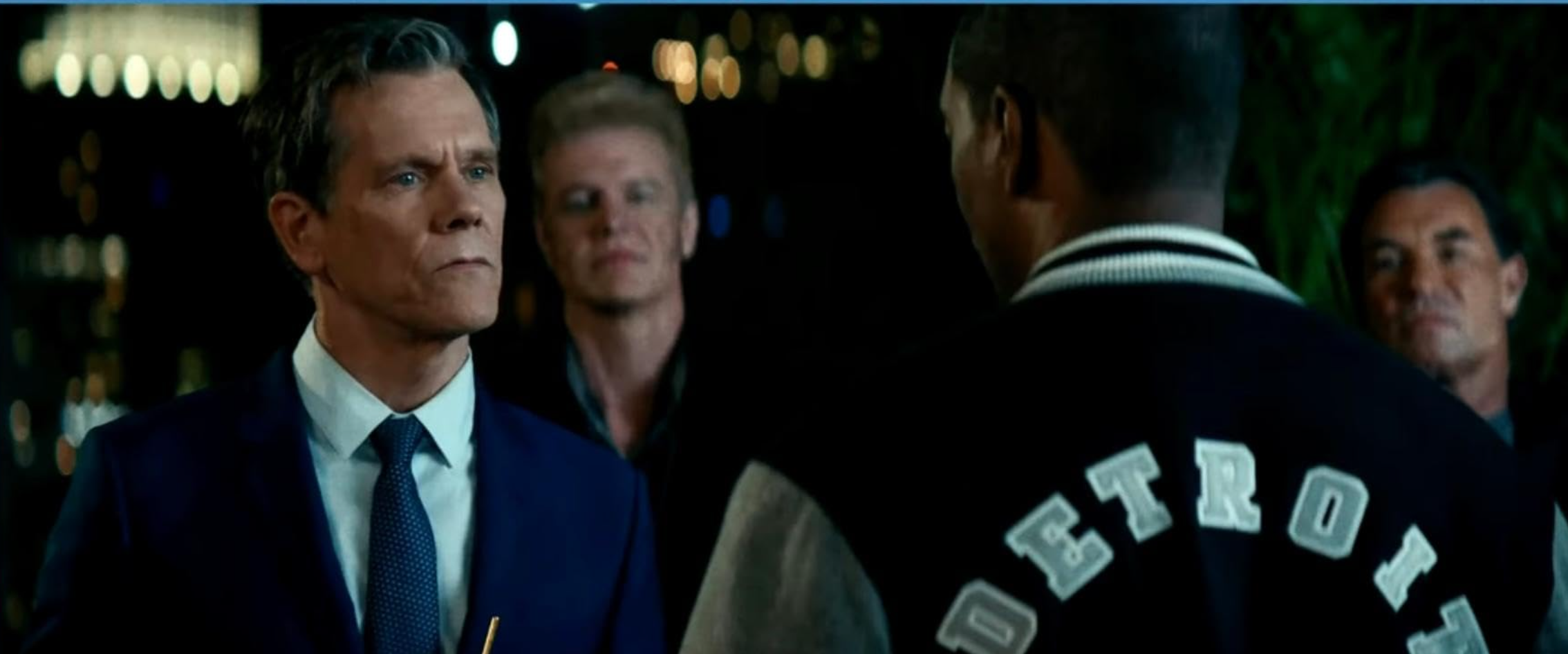
Kevin Bacon as Captain Grant in Beverly Hills Cop: Axel F; Photo: Netflix.
Axel Foley finds himself again in Beverly Hills, ready to expedite the wheels of justice, cunningly and entertainingly. Upon entering the Beverly Hills precinct, we learn Taggart is now chief, and Officer Rosewood has become a private investigator — on the heels of exposing crooked Los Angeles cops. Enter Kevin Bacon’s character, Captain Grant. Oozing enough smarm and finesse, he can make playing a crooked cop an Olympic sport. And Kevin Bacon always seems to add a layer of depth to any film he’s in. Debate me if you’d like.
Eddie Murphy as Axel Foley and Taylor Paige as Jane Saunders in Beverly Hills Cop: Axel F; Photo: Netflix.
But Foley’s return isn’t smooth sailing. His daughter wants nothing to do with him since they are estranged. Foley’s daughter, Jane, works for a prestigious firm defending criminals; this time, it seems to be a cop-killer. There’s a big conflict of interest between father and daughter.
Bronson Pinchot as Serge in Beverly Hills Cop: Axel F; Photo: Netflix.
Although Foley and his daughter are at odds, they team up with other favorite characters like Bronson Pinchot’s (Perfect Strangers, Risky Business) Serge, who’s still as funny and eccentric as ever. And newcomer to the Beverly Hills Cop franchise, Joseph Gordon-Levitt (Don Jon, Looper). He’s ditched his clean-shaven, boyish look for a bearded mid-thirties millennial cop with daddy issues. Then there’s Axel Foley’s theme song that will be permanently etched in your brain as it was for me since childhood when I played it on my synthesizer.
Watch this fun, action-packed Eddie Murphy flick, which is just as enjoyable as the first film forty years later. Don’t believe me? Rotten Tomatoes audience members gave it a higher rating than the original! Stream it now on Netflix!
Giamatti, the two-time Oscar nominee, conjures up all the feels from audiences in the film. Disdain. Sympathy. Anger. Revulsion. Laughter.
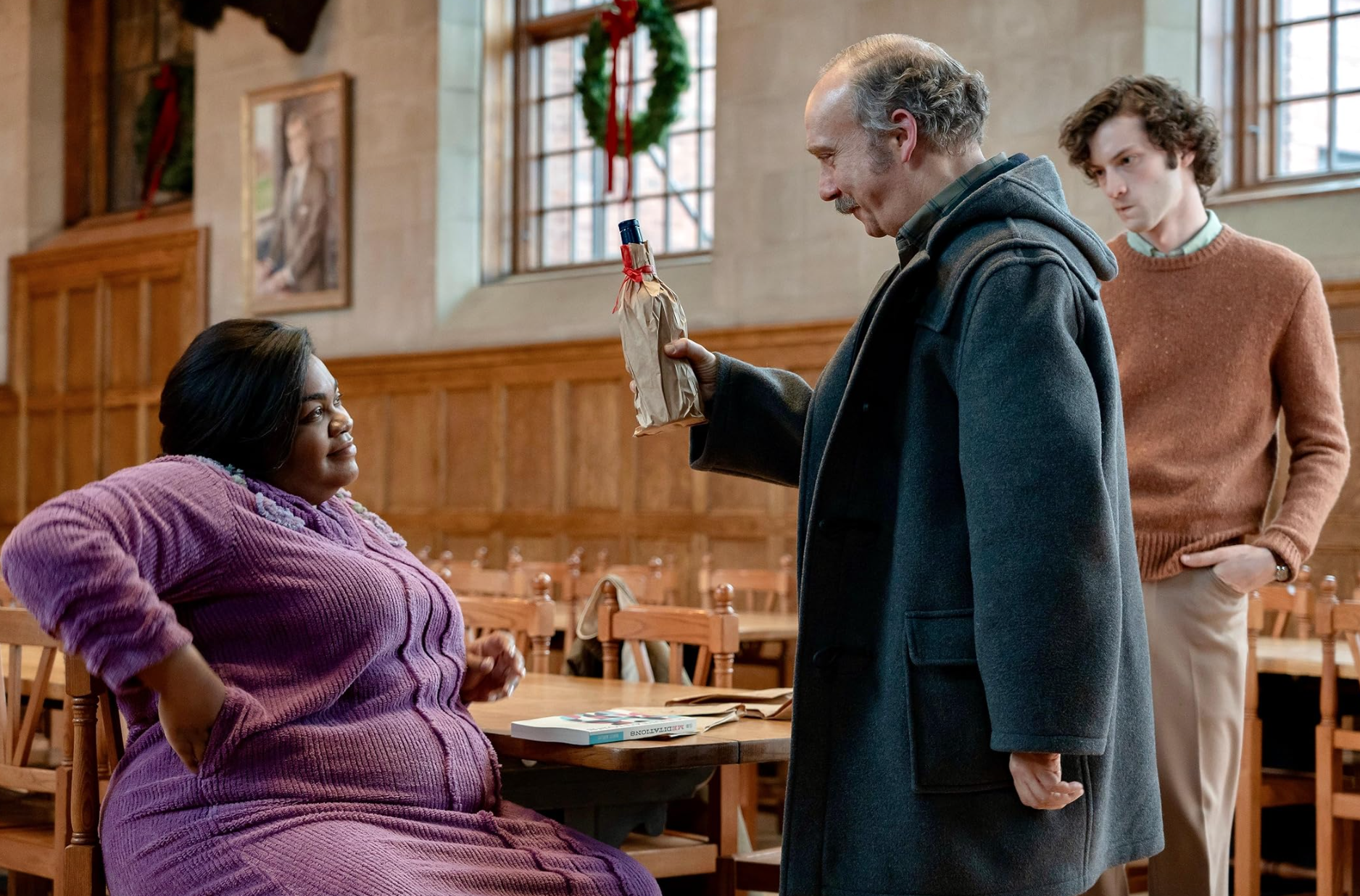
Paul Giamatti as Paul Hunham in ‘The Holdovers’; photo courtesy of Focus Features.
There hasn’t been one Paul Giamatti film that has left me disappointed. And the latest Alexander Payne-directed film is no exception. It’s Paul Giamatti at his best. His brand of know-it-all, feigning righteousness, flawed, non-handsome yet alluring, often funny characters that make terrible decisions but somehow come out on top is on full display. In The Holdovers, it comes in the form of Paul Hunham, a New England classics prep school teacher who’s a misanthrope tasked with babysitting a group of students with no place to go during Christmas break in 1970. Punishment or payback from the school headmaster for Mr. Hunham not passing a legacy student from an influential and powerful family.
Da’Vine Joy Randolph as Mary Lamb, Paul Giamatti as Paul Hunham, and Dominic Sessa as Angus Tully in ‘The Holdovers’; photo courtesy of Focus Features.
When most of the group is rescued by a fellow student’s well-to-do parent, whisking them off to a family winter escapade via helicopter on school grounds, all but one student is left behind. Angus Tully, a smart and troubled 17-year-old, played by Dominic Sessa (debut role), can’t bear his fate and makes the situation unbearable for Mr. Hunham. Rounding out the crew of stragglers at the prep school is Mary Lamb, the head cook who serves as a buffer between teacher and student, played subdued and empathetically by Da’Vine Joy Randolph (Ghost on Broadway, Dolemite), who also received an Oscar nom for Best Supporting Actress in the film.
The Giamatti Effect
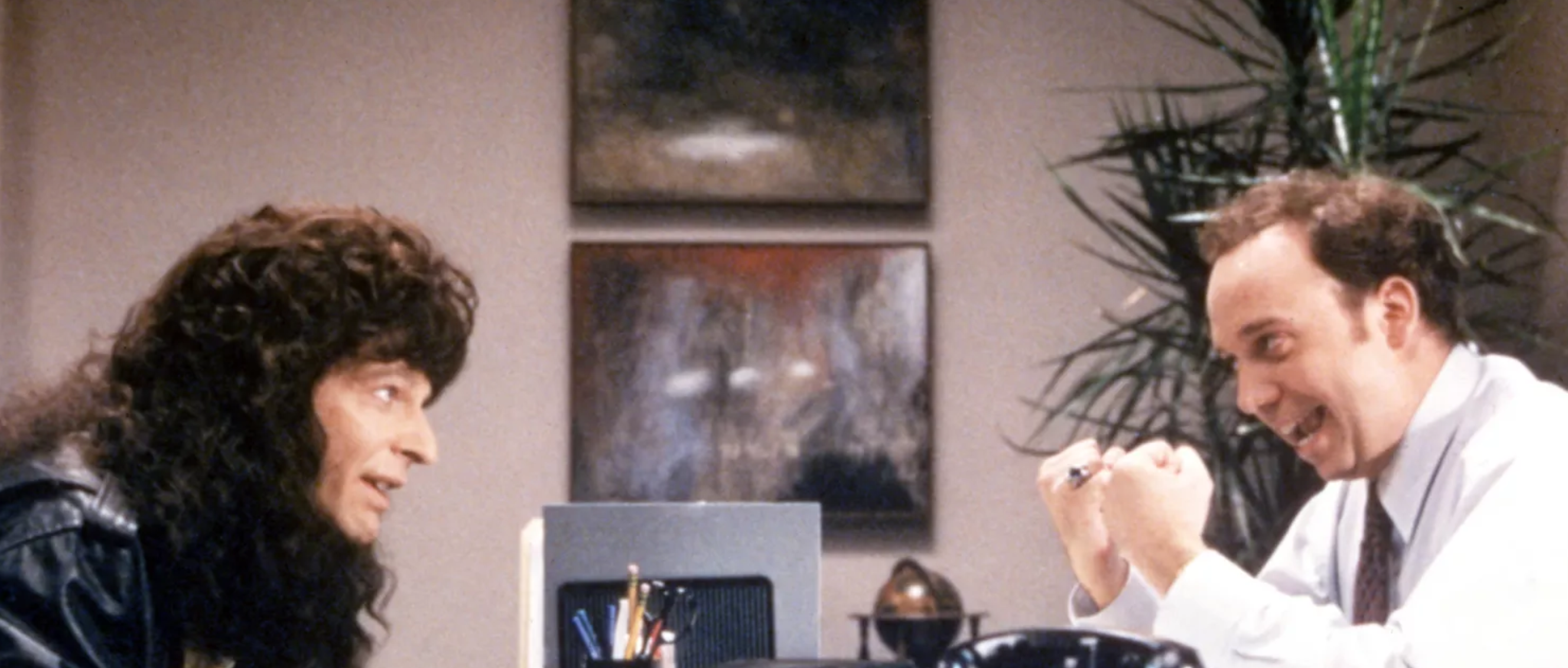
I first saw Paul Giamatti as Kenny “Pig Vomit” Rushton on the screen. A nickname unaffectionally bestowed by Howard Stern in his autobiographical 1997 film Private Parts. In the film, Giamatti’s character is the shock jock’s boss at WNBC radio station. He is as annoying as he is entertainingly comical, constantly harassing Stern to watch his language on air and to identify the station’s call letters with more pizzaz. Pig Vomit epitomizes nightmarish, quirky, micromanaging bosses, and Giamatti plays him to insolent perfection. A role believed by critics to upstage Howard Stern’s character in the film, with which I wholeheartedly agree. Giamatti’s “W-NNN-B-C” is one of the most memorable lines from the movie that catapulted his acting career.
Howard Stern as himself and Paul Giamatti as Kenny “Pig Vomit” Rushton in ‘Private Parts’; photo courtesy of Paramount Pictures.
Other Giamatti Gems
Alexander Payne and Paul Giamatti first collaborated on the critically acclaimed Sideways, where Giamatti plays a divorced middle-aged English professor (even though he was 36 at the time) and aspiring writer who takes a road trip through California’s wine country with his actor-best friend (Thomas Haden Church, Wings, Twisted Metal) right before his wedding. Both characters are loathsome as they are loveable and engage in absurd, funny situations. It’s the perfect pair of f@*k-ups you can’t get enough of.
Next up: The Illusionist, where Giamatti plays Inspector Uhl, a curiously skeptical officer and music lover during turn-of-the-century Vienna, who is on the heels of arresting Eisenhem (Edward Norton, Fight Club, American History X), a master magician with abilities to bring back people from the dead and hypnotize audiences while pining for his childhood love, Duchess Sophie (Jessica Biel, Candy, The Sinner), who is out of his economic class. Giamatti brings so much depth to the role and is delightfully enigmatic as the inspector. You can’t imagine any other actor in the role.
3 Fun Facts About Paul Giamatti:
Giamatti wore a prosthetic eye to emphasize The Holdovers’ Paul Hunham character’s lazy eye defect.
Giamatti went to Yale for theatre, and his father, Dr. Bart Giamatti, was president at the Ivy League college before becoming the 7th baseball commissioner for MLB.
Paul Giamatti, Edward Norton, and Ron Livingston went to Yale, studied theater together, and remained good friends.
In theatres, you can watch Paul Giamatti’s latest heartfelt dramedy, The Holdovers, written by David Hemingson (Whiskey Cavalier, Kitchen Confidential), or stream it on Amazon Prime.
The star-studded cast breathes new life into the much-needed comedy genre.
From L to R: Sandra Oh and Awkwafina in ‘Quiz Lady’; Photo: Courtesy of 20th Century Studios.
Quiz Lady follows Anne Yum (Awkwafina, Crazy Rich Asians, Ocean’s 8), an introverted, game-show-loving woman whose penchant for the show Can’t Stop the Quiz, hosted by whimsical and quirky Terry McTeer (Will Ferrell, Barbie, Elf), begins at a young age while her mother gambles and her dad drinks, and her actress-wannabe older sister chases fame. It’s the latch-key kid syndrome all over again — this time for the millennial generation. Anne continues to preoccupy her time with the show and grows to be an unassuming accountant her coworkers barely pay any mind to.
One day, Anne’s mother’s assisted living residence calls to let her know her mother has fled the facility and they don’t really want her back if and when she’s found. To make matters worse, Anne’s mother’s gambling vice hasn’t subsided with age, and she owes 80 grand to a gangster named Ken, who’s kidnapped Anne’s beloved dog, Mr. Linguini until Anne can settle the debt. The pug is living the life. Anne fears he may not want to return to her after experiencing a lavish lifestyle, and she panics. Jenny, Anne’s sister (Sandra Oh, Grey’s Anatomy, Killing Eve), visits indefinitely, as she’s financially unstable and unrelentingly impulsive and has a strained relationship with her younger sister. Anne isn’t happy.
Sandra Oh as Jenny Yum, holding Mr. Linguini in ‘Quiz Lady’; Photo: courtesy of 20th Century Studios.
Jenny secretly films Anne’s rapid-fire succession of correct answers to the questions on Can’t Stop the Quiz and posts the video on the Internet, which goes viral. Suddenly thrust into the spotlight, Anne must contend with becoming a contestant and beating the reigning champion, Ron Heacock, played smarmily with just the right amount of dislike-ability as only Jason Schwartzman (Rushmore, Asteroid City) can pull off. Can’t Stop the Quiz’s Will Ferrell mirrors his SNL days as Alex Trebek and other game show hosts he’s masterfully assumed on SNL with deadpan panache.
Will Ferrell as Terry McTeer on ‘Quiz Lady’: Photo: courtesy of 20th Century Studios.
Both Awkwafina and Sandra Oh give standout performances. But it’s Oh’s departure from serious, complex, and sarcastic characters that make her quirky and funny portrayal of Jenny shine — a testament to Oh’s acting range. Directed by Jessica Yu, written by Jen D’Angelo, and produced by Will Ferrell, Quiz Lady is a funny, heartfelt, relatable sister relationship movie you don’t want to miss. Watch it on Hulu now!
Award-winning veteran actor Jeffrey Wright (Westworld, The Batman) is at the helm of the multi-layered cast. He concocts a social, literary experiment that pits him against Black stereotypes and his scholarly ethics.
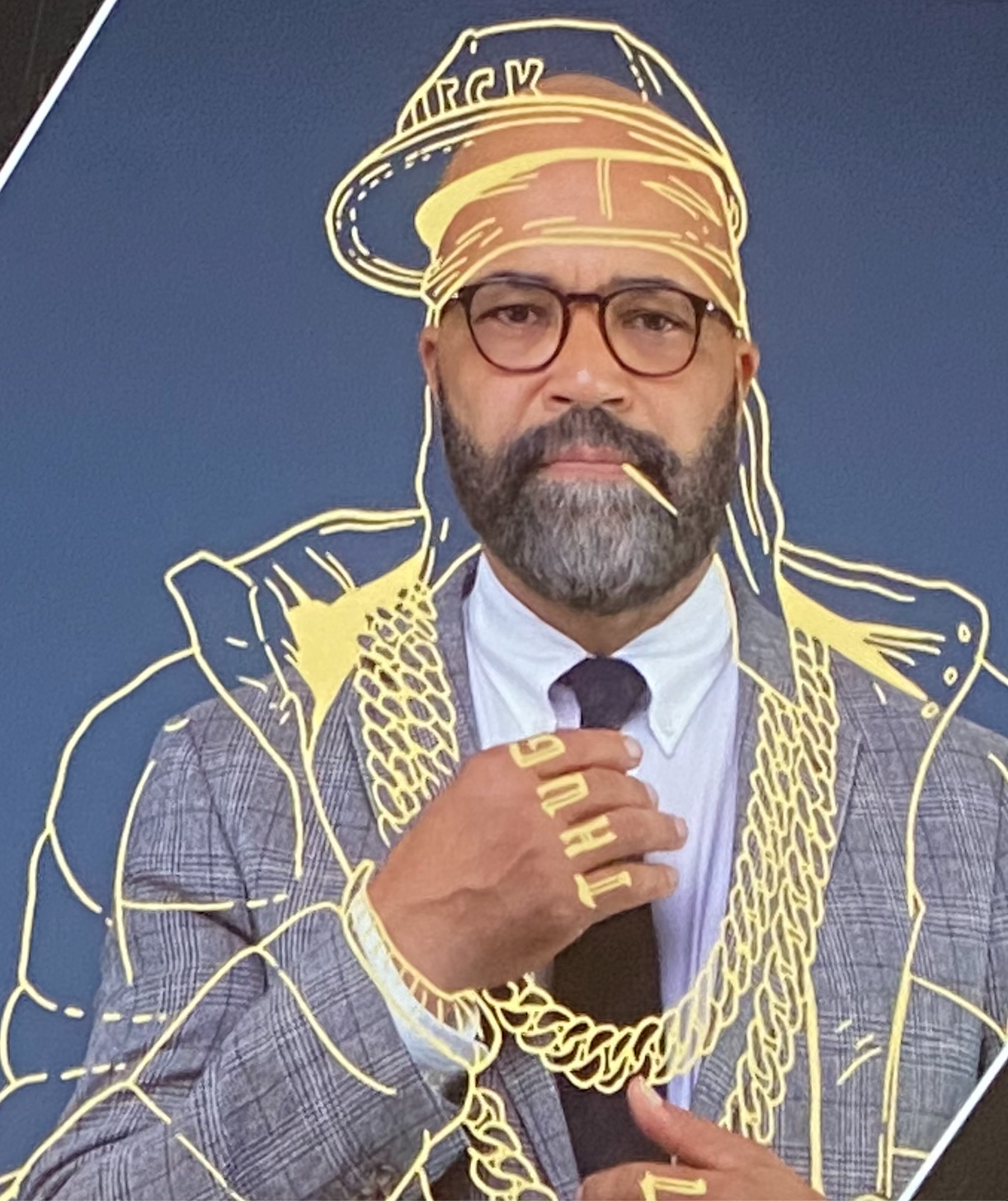
Jeffrey Wright as Thelonious “Monk” Ellison in American Fiction; Photo: M.Vizcaino
American Fiction, based on the novel “Erasure” by Percival Everett, follows Thelonius “Monk” Ellison, an English professor who revels in controversy by examining the N-word in class, challenging student beliefs, and sparring with colleagues, which seems to stem from his dissatisfaction with the lackluster success of his last few novels and the impact they’ve had on the literary world. Adding to Monk’s dismal situation is his exuberant, no-holds-bar and comical agent, Arthur, played by the enigmatic John Ortiz (Silver Linings Playbook, American Gangster), who says publishers are passing on his latest novel.
Issa Rae as Sintara Golden, Nicole Kempskie as moderator in American Fiction; Photo: DKC Public Relations.
After joining a barely-attended book conference with other writers in Boston, he seeks the hot new author in town, Sinatra Golden (Issa Rae, Barbie, Insecure), whose audience is brimming with fans. After listening to Sintara read excerpts from her book in hood-like dialogue, he’s shocked and weirdly drawn to her spell on the attentive crowd and the white moderator.
Snapped into reality by his disdain at the spectacle he just witnessed, he decides to create a Black book of his own under a pen name to dispel the truth that trauma and negative Black experiences sell. What ensues are comical exchanges between a stereotypical Black criminal son and absentee father as Monk writes their dialogue in real time with legendary actor Keith David (There’s Something About Mary, The Nice Guys) interpreting the father; that will have audiences howling with laughter, not to mention a whirlwind of attention from publishers and the public.
Tracee Ellis Ross as Lisa Ellison, Leslie Uggams as Agnes Ellison, and Sterling K. Brown as Cliff Ellison in American Fiction; Photo Courtesy of DKC Public Relations.
In the midst of Monk developing his literary farce, he’s faced with an ailing mother who may be on the brink of a mental collapse and connecting with his estranged siblings. Monk’s sister Lisa, wittily played by Tracee Ellis Ross (Black-ish, Girlfriends), who has been in charge of their mother’s care, and Cliff, played by Sterling K. Brown — while their lives unravel.
Jeffrey Wright plays Monk with the right amount of stoic anger, making him likable and memorable. His siblings, just like him, are flawed, multi-dimensional, and raw. Sterling K. Brown’s performance is brilliant as his “perfect” brother leading a double life. Then there’s Monk’s love interest, Coraline, played masterfully by Erika Alexander (Living Single, Get Out), who is a calming agent to the movie I rarely see in contemporary African-American films. Alexander’s character is refreshing, as is the film’s lively scoring throughout. The tone in American Fiction is reminiscent of Alexander Payne’s film Sideways, in which the two main characters seem devoid of redemption but are relatable to audiences in dealing with professional fulfillment and life’s ups and downs.
Erika Alexander as Coraline and Jeffrey Wright as Thelonius “Monk” Ellison in American Fiction; Photo Courtesy of DKC Public Relations.
In a recent Q&A with Colt Jefferson (Survivor’s Remorse, Black-ish) at the Urbanworld 27th Film Festival’s opening night, where the film screened, the writer-filmmaker of American Fiction admitted he had Jeffrey Wright in mind as the main character while reading the novel and writing the script. Once he had Wright attached to the project, Issa Rae committed after reading the first six pages of the script, and Sterling K. Brown knew instantly this was the next project he wanted to be a part of while on a plane.
According to Jefferson:
“I think these talented, established actors were enthusiastic about being part of this movie because these types of roles are not offered to them. These are real parts with a leading Black actor, not in service of white characters to move the plot forward.” Hollywood is doing a disservice to talented Black artists by not creating movies like this.”
Winner of the Toronto International Film Festival’s 2023 People’s Choice Awards, American Fictionis in select theaters on December 15th, and a wider release is set for December 22nd. Don’t miss this fantastic comedic adaptation of the novel “Erasure” with a cast of colorful and in-depth Black characters with rich storylines.
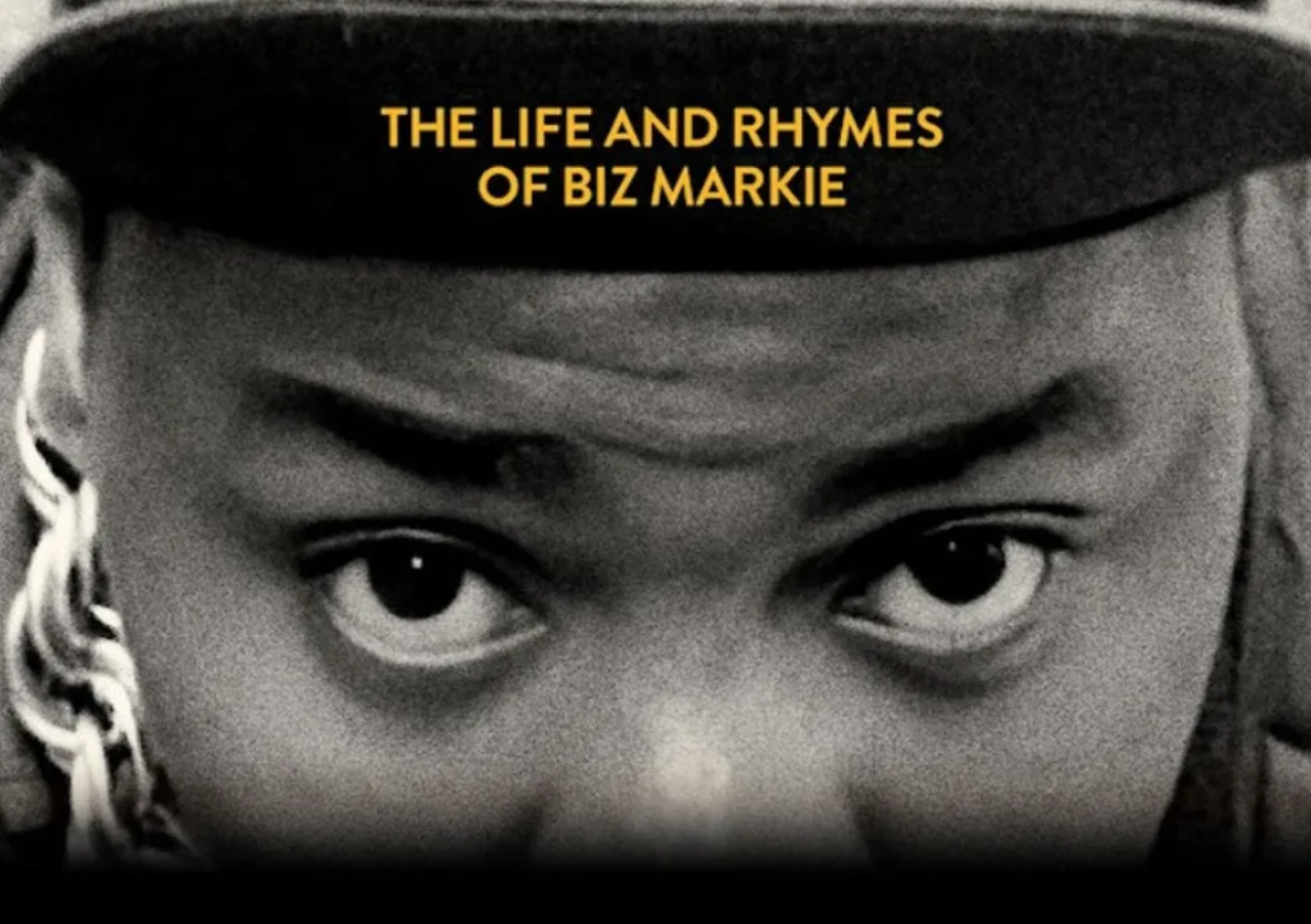
Filmmaker Sacha Jenkins chronicles The self-proclaimed “Clown Prince of Hip Hop’s” legacy through candid interviews with colorful animations, a Biz Markie puppet, and old videos of the rapper in proper form.
Image of Biz Markie; Photo: Showtime Networks.
The Humanbeat beatbox. Ascending to fame with the improvised quirky yet melodic sounds he could belt at any given moment and his universal hit, “Just A Friend,” Biz Markie was more than just his goofy exploits. And ‘All Up in the Biz’ captures the multi-faceted performer’s essence through his career’s ups and downs.
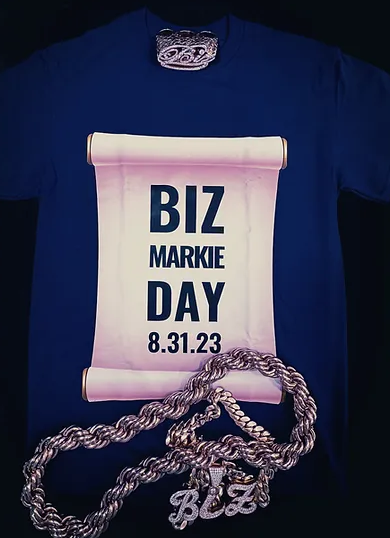
Many Hip Hop heads like myself are still celebrating Hip Hop’s indelible mark the music genre has made on pop culture and pretty much every facet of life. And while Hip Hop’s official birthday was on August 11th, with a 50th anniversary celebrated worldwide, homage and tributes are still on the horizon for the rest of the year. One recent commemoration was held on August 31st, tentatively proclaimed Biz Markie Day, by the New York Mayor’s office as they announced the proclamation at Marcus Garvey Park in Harlem.
Biz Markie Day T-Shirt; Photo: Just A Friend Foundation.
Champions and supporters of this campaign include the late rapper’s wife, Tara Hall, who leads his Just A Friend foundation, established to provide resources for foster kids as once Biz Markie was. Plus, organizers of the event ImageNation, a cultural nonprofit entertainment hub in Harlem, advocating for and helping to sponsor spectacular community cinema and music events and Up In The Biz’s distributor, Showtime.
This late summer Thursday evening leading up to the All Up In the Biz screening attracted people of all ages and races. From men in their Zulu nation get-ups and women outfitted in head-to-toe African bohemian and contemporary fashion, dancing non-stop to the nostalgic grooves of DJ Hollywood and listening intently to the rhythmic verses of the Last Poets, who celebrate 55 years together this year, it was an ode to Hip Hop nostalgia.
Following the eclectic mix of artists on stage came a projection of All Up In the Biz, directed by Sacha Jenkins (Bitchin’: The Sounds and Fury of Rick James, Word Is Bond), a Hip Hop historian, visual artist, and preservationist of the music genre.
Young Big Daddy Kane and Biz Markie; Photo: All Up in the Biz documentary.
The film begins with old footage of Biz Markie’s early life, moving from Harlem to Long Island’s Patchogue region. He found a passion for music, coming into his own as a human beatbox, rapper, and DJ. While performing, he encountered 17-year-old Big Daddy Kane and Rakim, who went to the same high school as Biz, encouraging both to raise their profile in New York City clubs by rapping. Hip Hop powerhouses Big Daddy Kane and Rakim acknowledge Biz Markie’s influence on their careers. Others like Dougie Fresh and Roxanne Shanté, a prominent Juice Crew member and Biz Markie was part of, reflect on and reminisce about the rapper’s passion for music, collectibles, and his undeniable gift for beatboxing.
But Marcel Theo Hall took the moniker Biz Markie, a name rooted in his mother calling him a busybody when he was young and neighborhood friends giving him the name Markie for short; life wasn’t always a bed of roses. The rapper was battling Type 2 diabetes for most of his life and had fallouts with a few rappers, shady business dealings with music producers, and the repercussions of unlicensed music samples. Despite it all, the beloved rapper persevered and kept reinventing himself, as the documentary illustrates. Click here to check out this in-depth portrait of Biz Markie’s contributions to Hip Hop and eventful life, now streaming on Showtime and Paramount+.















 Don't Suck My Collagen