‘Wednesday’ Season 2 Leans into the Disturbing. Dark. Stirs Up Family Drama — And Embraces its Latinness

Netflix’s newest adaptation of the Addams family is currently the number one series, bringing back kooky cast members and new oddballs you’ll love to hate.

Cast of ‘Wednesday’ Season 2; Photo courtesy of Netflix.

Goth teen with the mostest, Wednesday Addams, is back for another year at Nevermore Academy. This time, she’s wiser, more defiant, and ready to solve a new murder in the fictional town of Jericho, Vermont. She also contends with uncontrollable, disturbing visions of her roommate Enid’s death and black tears descending from her eyes. Adding to Wednesday’s distress is the loss of Goody’s book (spiritual guide from a deceased Addams relative), which Wednesday’s mother, Morticia Addams, confiscated, fearing she’d succumb to madness like her sister, Orphelia. Throw in a stalker to Wednesday’s turmoil, who seems to be three steps ahead of her at every turn.

Jenna Ortega (Beetlejuice, BeetlejuiceScream) reprises her role as Wednesday Addams, along with Luis Guzman (Dumb and DumberCarlito’s Way) as Gomez Addams, Catherine Zeta-Jones (Ocean’s 12The Mask of Zorro), as Morticia Addams, Isaac Ordoñez (A Wrinkle in Time) as Pugsley Addams and Fred Armisen (PortlandiaSNL) as Uncle Fester. What’s super exciting about this version of the beloved show created by Charles Addams in 1938 as a single-panel cartoon that appeared in The New Yorker, and later adapted to a television show in 1964.
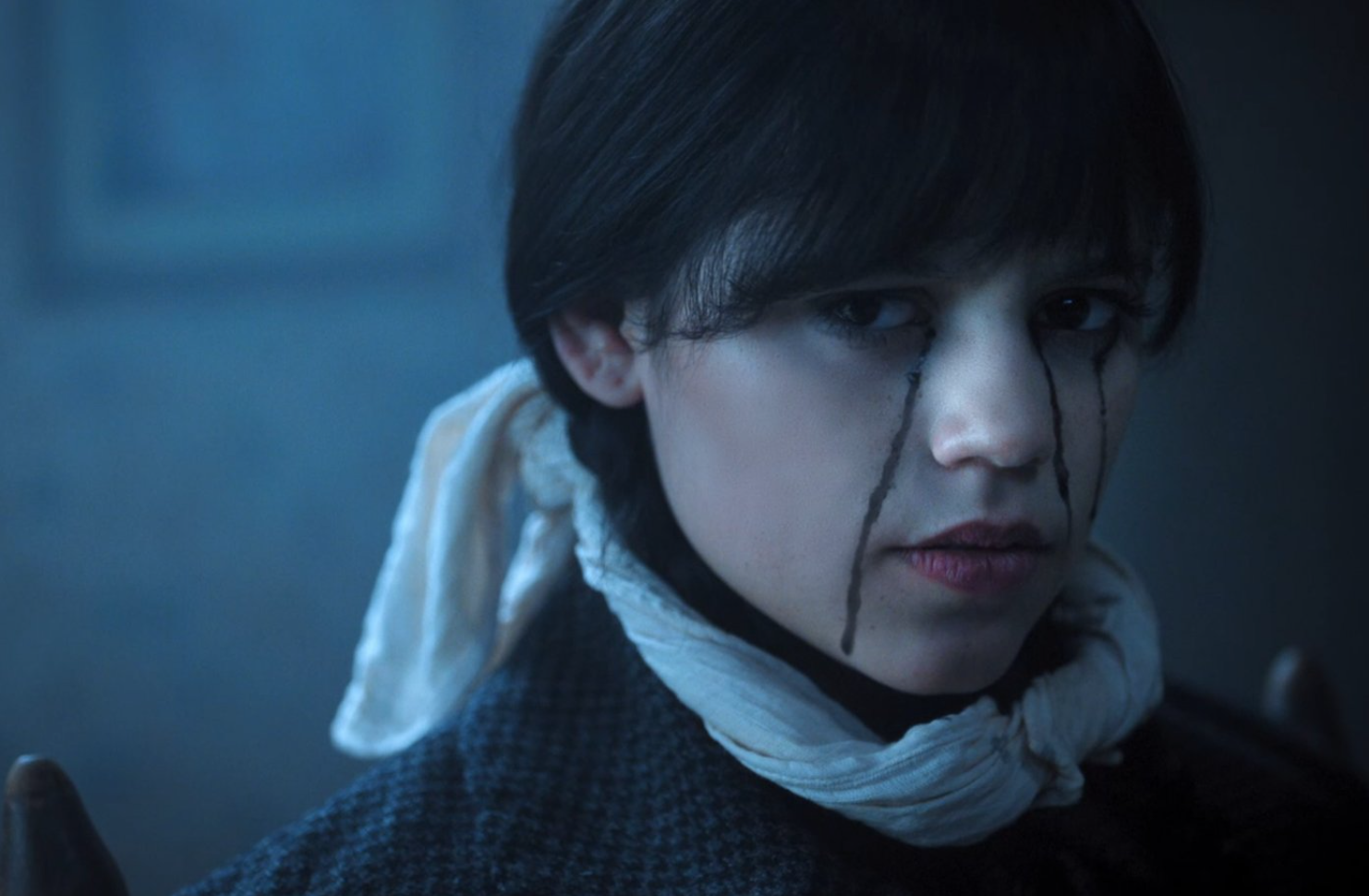
Jenna Ortega as Wednesday Addams in ‘Wednesday’ Season 2; Photo: Courtesy of Netflix.

According to showrunners and principal writers Alfred Gough and Miles Millar, they wanted to emphasize Wednesday’s Latin heritage in the series, a representation often not seen in popular series or films:

“It’s so rare to find an iconic [Latina] character of this stature. We really try to find ways to [highlight that] authentically. What would Wednesday listen to when she was growing up? What would Gomez be playing? And finding moments where we could really make it feel like a girl who’s grown up in New Jersey with a Latino parent, and how would that resonate with her as a teen? Certainly, this season we’re looking for more ways to explore that.”

Season 2 of Wednesday does just that. We see Gomez (Luis Guzman) utter sayings like “Cara Mia” (signature Gomez phrase) and listen to “Besame Mucho” (the most sung Mexican song in history) by Mexican singer Consuelo Veláquez, recorded in 1941, during a shower scene. But more than these common Spanish-language interludes, there are noticeable Spanish dialogue sprinkled throughout the series. Phrases like “mi cariño” (my sweety), “lobo” (wolf), “tormenta” (storm). It’s refreshing and essential to the family dynamic to see Spanish dialogue sprinkled throughout, solidifying Wednesday’s roots.
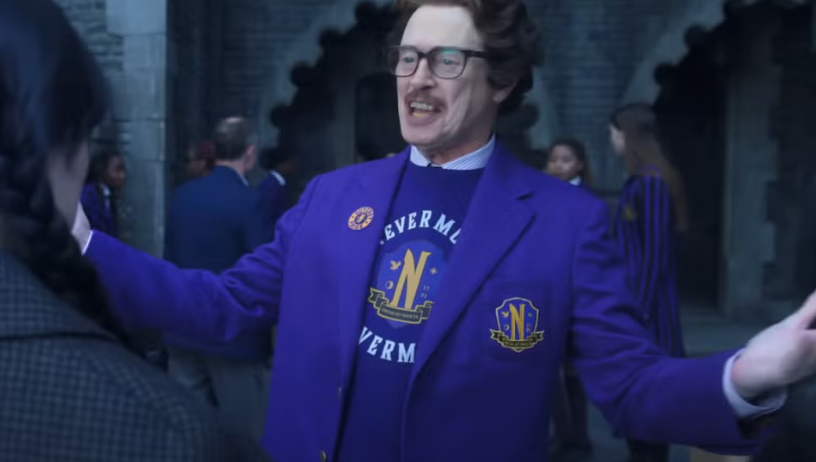
Steve Buscemi as Principal Barry Dort in ‘Wednesday’ Season 2; Photo courtesy of Netflix.

But Wednesday is more than her ancestry; the character is 3-dimensional in that she’s an admirer of literary titans like Voltaire and Sylvia Plath, often quoting them, and laser-focused on taking down the patriarchy while saving the day in a hilarious student camp scene. Wednesday admonishes fitting in, especially when Nevermore’s new enthusiastic principal Barry Dort suggests so, played to perfection by character actor Steve Bucsemi (FargoThe Sopranos). He’s eccentric, pushy, yet likable with a pyrotechnic ability. He asks Wednesday if she ever suffers from FOMO when not participating in camp activities, to which she replies, “No, I suffer from FOBI (Fear of Being Included) instead.” It’s quintessential Wednesday Addams, and Jenna Ortega nails her character to a tee. Her brother Pugsly has more screen time in season 2, joining his sister at Nevermore and developing his electrokinetic powers. He unearths a buried zombie with an insatiable appetite for brains, whom he keeps as a pet, naming him Slurp. Slurp is grotesque and can’t give up his taste for the mushy matter.

The first four episodes of Wednesday Season 2 do not disappoint. Stream it now on Netflix. Stay tuned for the next final four, dropping on September 3rd, with Lady Gaga making a guest appearance!

OPI Launches LGBTQIA+ — Inspired “Make ’Em Jelly” Nail Collection, Celebrating Pride — Raising Capital and Awareness for Suicide Prevention

Fan-favorite and top-selling global brand OPI introduces 12 hot new nail shades for summer, designed to promote empowerment and self-expression.

“Make ’Em Jelly Nail Collection at the OPI ‘Do Hue & Strike A Pose’ Event at Lips NYC. Photo: M.Vizcaino.

OPI kicked off Pride month with a dazzling Do Hue & Strike A Pose event at the legendary Lips restaurant and bar, often referred to as NYC’s mecca destination for nightly longest-running drag queen shows, which also hosts brunch, birthdays, and bachelorette parties. The venue was adorned with shimmering silver and gold disco balls, striped walls, and tables draped with bright sequins and colorful cellophane, capped off with fresh flowers mirroring OPI’s new shades, and befitting of ballroom decor; an a homage to the spirit of ballroom dancing, where dancers express their individuality and joy of self-expression. What better place to encompass the essence of Pride?!

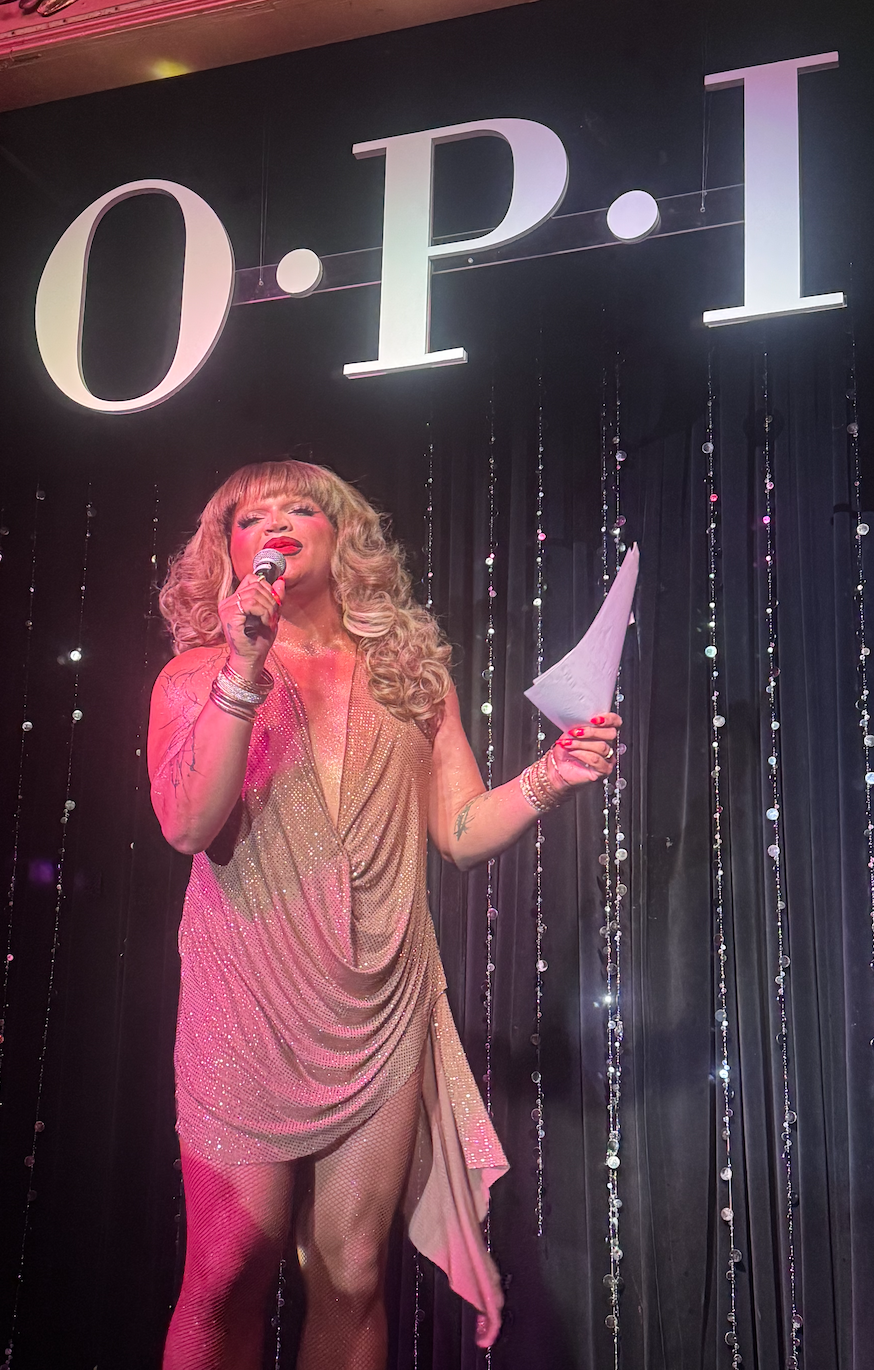
MC Kandy Muse at OPI’s ‘Do Hue Strike A Pose ‘Event at Lips NYC. Photo: M.Vizcaino

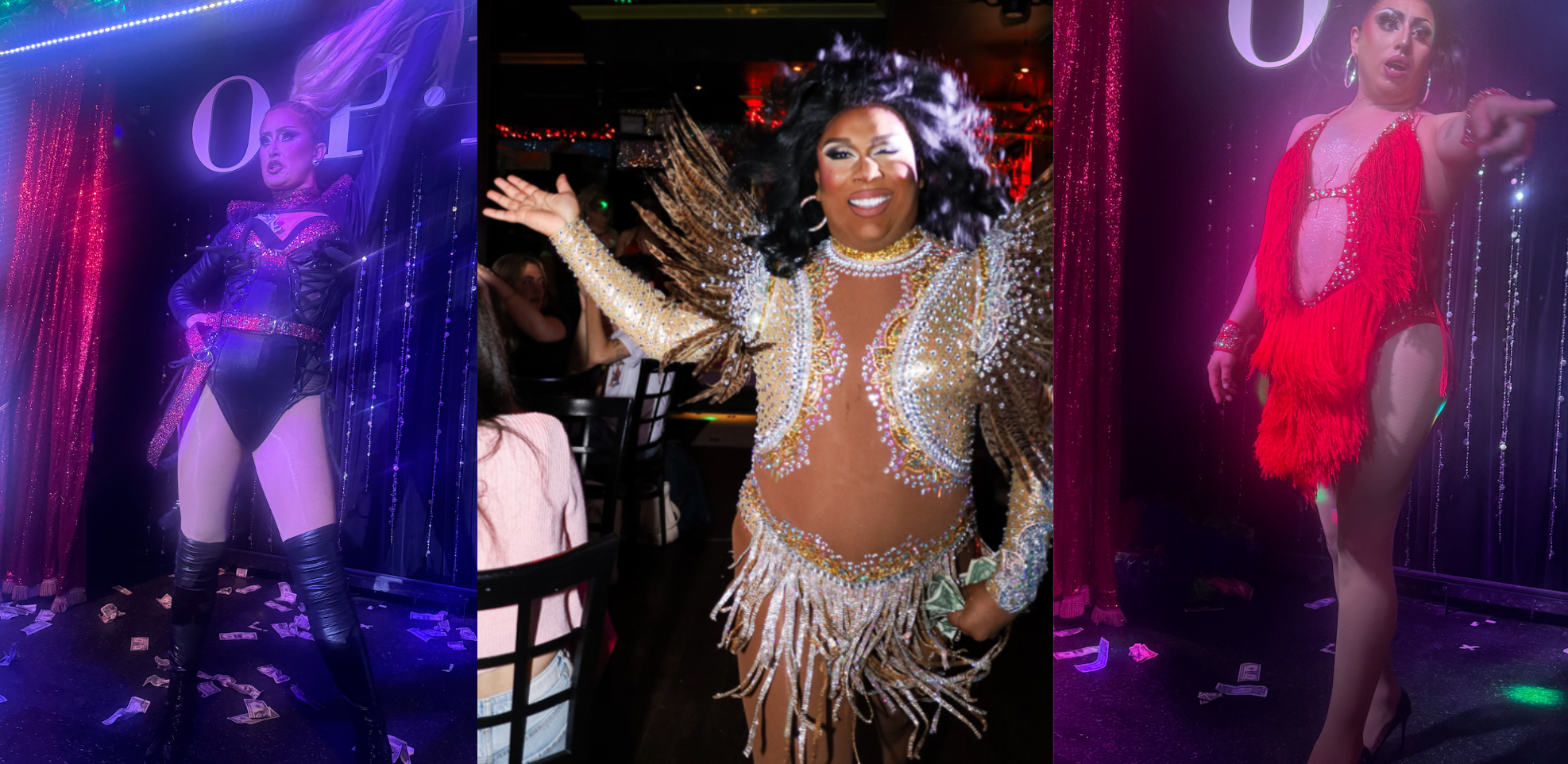
Serving as hostess with the mostess for the frenzied, fun-filled evening was Kandy Muse, drag queen extraordinaire, TV personality, and runner-up from RuPaul’s Drag Race Season 13. Kandy kept the night lively, cracking jokes and showcasing Lip’s hottest divas to get the audience amped up. Taking to the stage and whipping patrons into submission were Mistress Twiggy, Sophya Medina, and Roxie Chanel:

From L to R: Mistress Twiggy, Sophya Medina, and Roxie Chanel at OPI’s ‘Do Hue Strike A Pose’ event at Lips NYC. Photos Mistress Twiggy and Roxie Chanel, M.Vizcaino, Sophya Media by Madi Goldman.

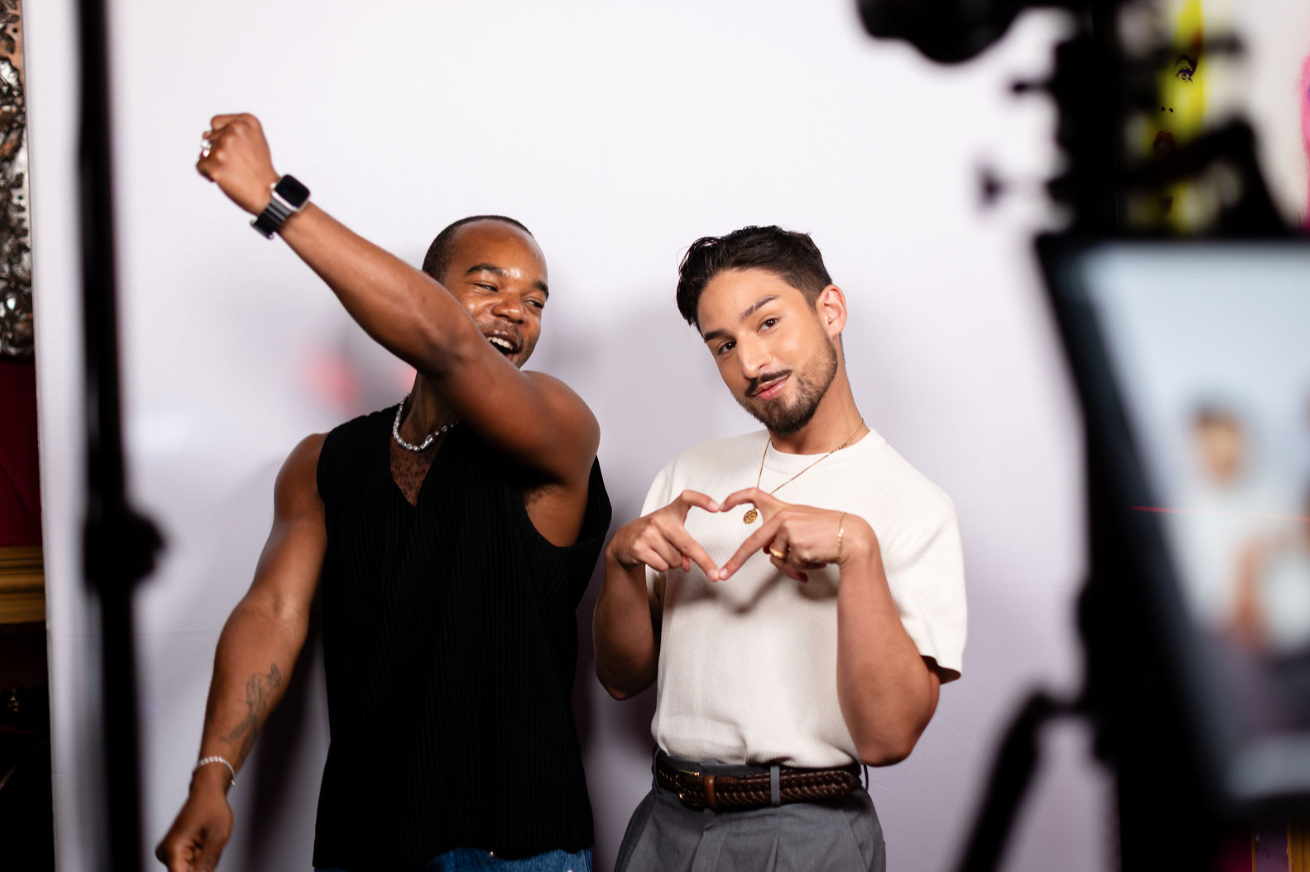
Keeping the unbridled and unadulterated energy in the room going, OPI provided photo-op activations by NYC Photo Booth (Unique Photo Booth Experiences) and set up nail stations for guests to channel their inner show diva.

Guests at OPI’s ‘Do Hue Strike A Pose’ event at Lips NYC. Photo: NYC Party Booth.

If you think OPI (Odontorium Products, Inc.), co-founded by brand ambassador and “The Queen of Nails,” Suzi Weiss-Fischmann, in the 80s, is capitalizing on the Pride marketing bandwagon, think again. The brand has collaborated with the Trevor Project for four years to address and combat suicide among LGBTQIA+ and young people, contributing $100,000 in support for the nonprofit this year. The Trevor Project connects LGBTQIA+ individuals and youth to counselors who provide support in dealing with this type of crisis. OPI hopes to expand support in the coming years.

OPI “Make ’Em Jelly” Collection. Photo: OPI.com

Check out OPI’s 12 New Make ’Em Jelly shades in Nail Lacquer and GelColor Intell-Gel™ System with inspirational names like: “Blue Them All Away,” “Vogue in Violet,” and “Drop to the Florchid” to unleash your creativity and live your life to the fullest!

**If you or anyone you know is experiencing difficulty with suicide, please get in touch at x988 or visit https://www.iasp.info/suicidalthoughts/ for help.

‘Real Women Have Curves,’ the Musical, Highlights Body Positivity, Immigration, and Female Empowerment Themes on Broadway with Punchy Songs and Witty Lyrics

Adapted from the 2002 film of the same name, written by Josefina López and George LaVoo, the new play is more resonant than ever in our current political and social climate.

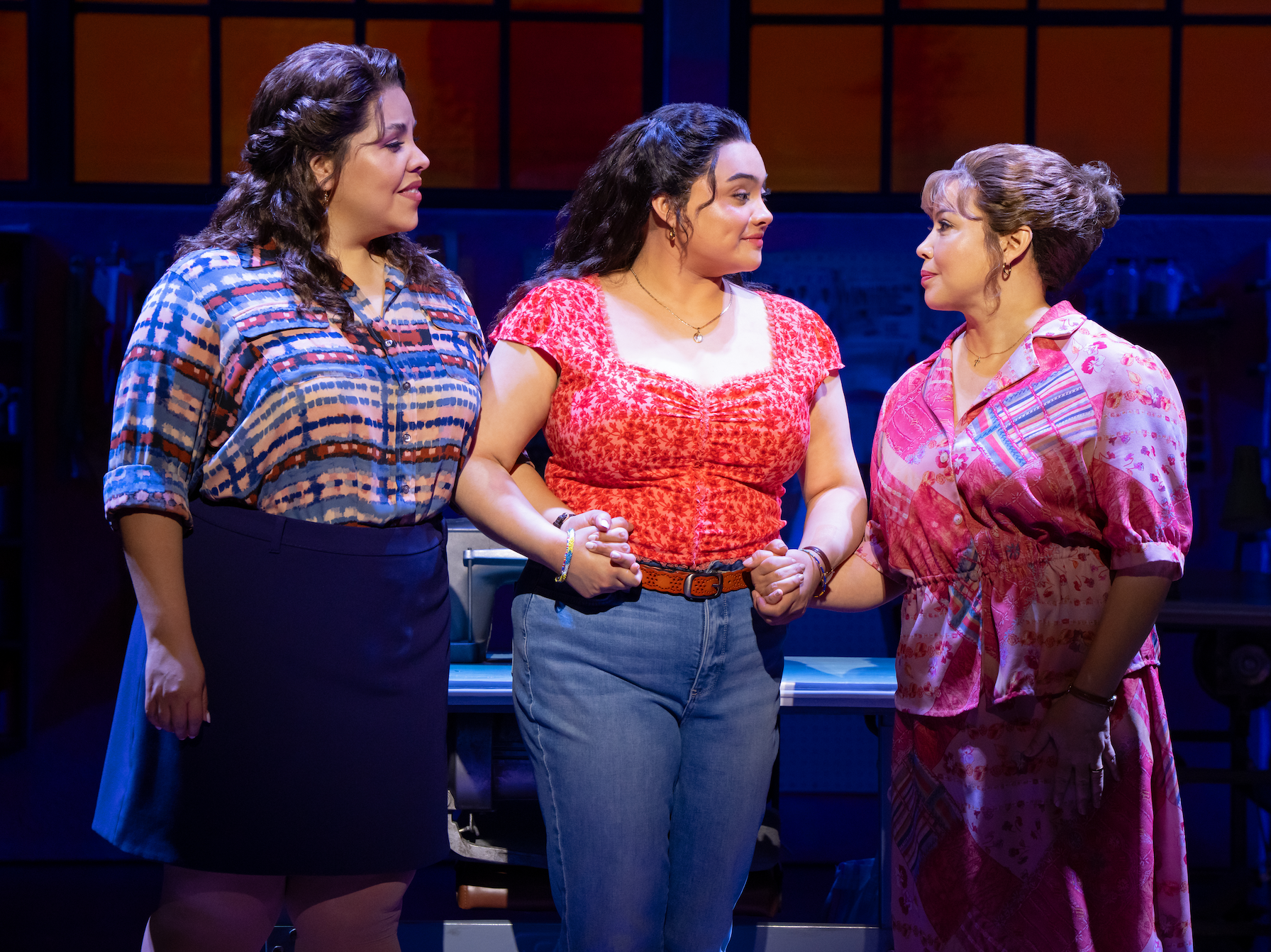
From L to R: Florencia Cuenca (Estela), Tatiana Córdoba (Ana) and Justina Machado (Carmen) in ‘Real Women Have Curves.’ Photo: Julieta Cervantes

Real Women Have Curves follows the García family, living in Boyle Heights, a predominantly Chicano/Mexicano neighborhood in East LA, set in 1987. Ana García (Tatiana Córdoba, making her Broadway debut!), the main protagonist, has been accepted to Columbia University’s journalism program. Cause for celebration, right? Not for everyone. Ana’s parents are unaware, and her sister Estela doesn’t share her enthusiasm for her Ivy League journey.

Ana is the sole U.S. citizen in her family who handles taxes and any other governmental logistics. Her older sister Estela owns a textile shop, barely making ends meet, and Ana’s mother, Carmen, wants Ana to work at the factory. Once Estela accepts an order for 200 dresses with a tight deadline and loses a worker to deportation, Ana steps in to help. She isn’t a seamstress; she has a few mishaps but gets the hang of it while her mother, Carmen, chastises her. Makes derogatory comments about her weight. Reminds her of her unrealistic ambitions, lack of sacrifice, and unwillingness to follow traditional female roles.

Even though the musical touches on universal complex topics of family obligations, guilt, and pursuing dreams, at the core is the love these women have for each other. A true sisterhood. Communicating their joy, frustration, and camaraderie through feet-stomping, electrifying songs like “Make it Work” and “Oye Muchacha,” and the poignant “If I Were a Bird,” sung by Ana and Itzel (Aline Mayagoitia, Broadway debut).

From L to R: Tatiana Córdoba as Ana and Aline Mayagoitia as Itzel in Real Women Have Curves; Photo: Julieta Cervantes.

Tatiana Córdoba is sensational as Ana García, hitting all the right notes and convincingly conveying emotions — from defiance, sadness, to jubilation. Poised for continued success on the Great White Way, the young performer graces the stage like a seasoned pro. Florencia Cuenca (Estela, also making her Broadway debut) is the first Mexican immigrant to star as a co-lead, dominating the role as the goading older sister yet empathetic best friend and champion of Ana’s dreams. Veteran stage and television actress Justina Machado (In the HeightsA Free Man of Color) joins the cast as Carmen, the overbearing mother, a multi-layered character who warrants both compassion and reproach. Machado’s acting is fantastic, making Carmen likable and relatable. Last, but not least, is the patriarch of the family, Raúl (Mauricio Mendoza, Resurrection BlvdMatlock), a calming force amid a sea of estrogen. Seasoned actor Mauricio Mendoza is up to the task, serving as the voice of reason to his family’s boisterous, resolute women with captivating charm.

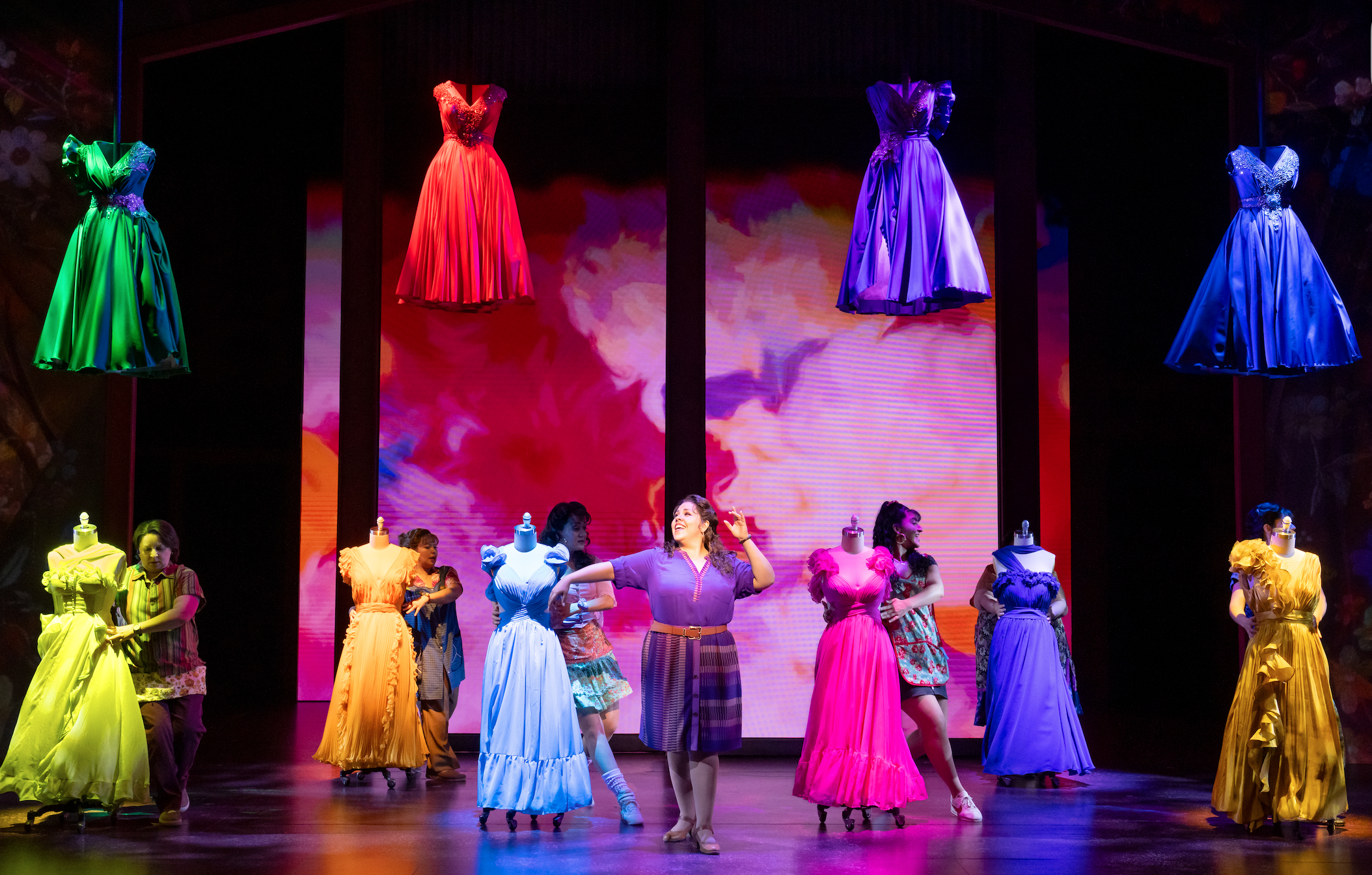
Florencia Cuenca (Estela) and ensemble in ‘Real Women Have Curves.’ Photo: Julieta Cervantes.

The set design (Arnulfo Maldonado, Buena Vista Social Club) and costumes are rich in warm, Latin American cultural hues, featuring stunning, vibrant dresses that embody the spirit of Mexican Americans.

Real Women Have Curves, the musical, directed and choreographed by Sergio Trujillo (first-ever Latino to receive the Tony for Best Choreography, Ain’t Too Proud to Beg: The Life and Times of the Temptations), written by Lisa Loomer (The Waiting Room) and Nell Benjamin (Mean Girls) and music and lyrics by Joy Huerta (Broadway debut and first Mexican-American woman to compose a musical), and Benjamin Velez (Broadway debut) is playing at the James Earl Theatre. Don’t miss this spectacular musical. Click here for tickets!

Full Creative and Production Cast

Female Entrepreneurs Aim to Revolutionize the Cannabis Industry, Debuting Brooklyn’s Newest Dispensary — Yerba Buena Striving to Educate and Empower Consumers

Former legal, finance, tech, and marketing executives congregated to educate and inspire communities to embrace cannabis products that heal their mind, body, and soul as an alternative to traditional medicine.

From L to R: Yerba Buena co-founders Jillian Dragutsky, Dio, and Doralyn Brito at the store opening March 6th; Photo: Astro Management.

Cobble Hill, Brooklyn, was buzzing with activity as Yerba Buena’s “Un Chin Más” (a little bit more) event celebrated female cannabis entrepreneurs and activists working to change the perception and relationship between cannabis and marginalized communities. The dispensary’s budtenders are equipped with the latest cannabis knowledge to help consumers (seasoned or novice) navigate their colorful cannabis-infused products, ranging from potent Flowers to sleep aids to anxiety-reducing gummies, primed for your wellness boost.

The evening’s top honorees included Leann Mata, founder of Matawana, Brooklyn’s first Black woman-owned dispensary, and author of Money & Marijuana: Growing And Infusing Your Cannabis; and Amy Chin, founder of Calm Better Days, a CBD wellness platform dedicated to helping people struggling with anxiety and postpartum depression. Chin has also co-launched a cannabis-centric marketing agency, High Exposure, with co-partners Annette Fernandez and Kassia Graham, to help businesses amplify their brand messaging and sell their products and services. Jahmila Edwards, a cannabis entrepreneur (founder of Stash Queens) and policy advocate, champions the passing of regulations to expunge cannabis-related criminal records like Clean Slate and the emergence of progressive laws in the industry.

Founder of Calm Better Days, Amy Chin, receiving her Impact Maker Award at the Yerba Buena Event; Photo Credit: Speke Media.

What is Yerba Buena?

Yerba buena, referred to by many in Spanish-speaking countries as the “good plant,” comes from the mint family and is used for medicinal purposes to treat everything from toothaches to arthritis, especially in the Dominican Republic, where the co-owners and spouses of Yerba Buena, Doralyn and Dio Brito, are from.

Doralyn, a former Brooklyn assistant district attorney and founder of De Dios Law, specializing in criminal and immigration law, has spent her career working with individuals charged with cannabis-related offenses and championing the reduction or dismissal of sentences while contemplating an avenue to promote the benefits of cannabis that consumers can enjoy legally. Her spouse, Dio, has a background in design and operations, was named one of Fast Company’s Creative People, and is attuned to New York’s changing cannabis-regulated market.

Rounding out the team of Yerba Buena’s co-founders and pushing for inclusion in the cannabis industry is Jillian Dragutsky, whose involvement with cannabis dates back to her father’s conviction and arrest when the plant was illegal and she was a teen. Undeterred and unfettered to advocate for cannabis regulation and equity once the MRTA passed in 2021, Dragutsky capitalized on the opportunity to obtain a CUARD (Conditional Adult-use Retail Dispensary) license approved by New York officials. She works closely with the NY Cannabis Retail Association (NYCRA), chairs the Law & Regulation Committee, and co-chairs the Women’s Committee.

Yerba Buena Dispensary in Cobble Hill, Brooklyn; Photo: Speke Media.

Interested in opening a dispensary in New York?

Although the NYCRA’s mission is for advocacy, equality, transparency, and essential reforms to create a healthy and thriving cannabis industry in New York, there are a lot of hurdles to opening a business. According to Jillian Dragutsky:

“Anyone looking to open a dispensary: get involved. Meet others across the ecosystem — cultivators, processors, microbusinesses, and fellow retailers. Attend industry events, have conversations, and join advocacy and industry groups. The more you connect, the more you’ll understand the landscape you’re stepping into.

*BIPOC ownership grew year-over-year, going from 15.4% to 18.7% of all cannabis owners. 50% of cannabis marketing and finance professionals are women

Upcoming Family-Friendly Cannabis Event Hosted by High Exposure Agency

Event Name: Cannabis: Art, Culture & Commerce

DateSaturday, 5/10/2025

Time: 11 AM — 5 PM

Location: Boricua College, 3755 Broadway, 10032

Cost: Free

Ages: 13+ (a parent or guardian must accompany minors under 18)

Topics: Cannabis, community, education, health, local entrepreneurs

Mathematics Reinvents The Wu-Tang Sound with the New ‘Black Samson, The Bastard Swordsman’ Album

Wu-Tang Clan members and guest artists collaborated on the record, which features fresh beats and sonically elevated rhymes reminiscent of the group’s legendary hits.

Black Samson, The Bastard Swordsman Album; Photo: DKCNews.

Young and old, hip-hop heads gathered at the IMI Studios in Manhattan recently as producer/DJ Mathematics debuted the tracks off the highly anticipated Wu-Tang Clan x Mathematics Black Samson, The Bastard Swordsman album. The intimate setting enabled attentive listeners to soak in the melodies and arrangements selected by Mathematics, who provided anecdotes, tales of his carpentry background, and inspiration for the songs.

Mathematics is more than Wu-Tang’s multi-talented go-to-producer, even before the critically acclaimed Enter the Wu-Tang (36th Chambers) dropped in 1993 and changed Hip Hop forever (recognized as one of the top five most influential Hip-Hop albums ever made!). Mathematics, aka Ronald Maurice Bean, is the group’s musical muse and graphic artist. Not only has he produced many of Wu-Tang’s greatest hits like “Protect Ya Neck,” “C.R.E.A.M,” and “Bring Da Ruckus,” but he also designed the Wu-Tang Clan logo.

‘Black Samson, The Black Swordsman’ cover art; Photo: M. Vizcaino.

Black Samson features the current Wu-Tang members: RZA, Raekwon, Method Man, GZA, Ghostface Killah, Inspectah Deck, Cappadonna, Mastah Killa, and U-God. The album also includes renowned artists Kool G Rap, Benny The Butcher, 38 Spesh, Crooked I, R.J. Payne, Willie The Kid, Nicole Bus, Kameron Corvet, and Kurupt. According to Mathematics, each added their distinct rhyme style and creativity to each track.

“The artists all kept it hard and kept it beautiful.”

And audibly, the beauty of seasoned lyricists annihilating the mike was transcendently evident. Tracks like “Cleopatra Jones,” featuring Raekwon Masta Killa, and “Warriors Two, Cooley High,” featuring Benny the Butcher and Method Man, had the guests in the studio bopping their heads, immersing themselves in the hard-hitting beats, taking them on a musical rap odyssey.

Wu-Tang Clan x Mathematics ‘Black Samson, The Black Swordsman’ Album listening session, pictured (Mathematics). Photo: @Robert.photoshoot + @jon_officials.

Experimental, soulful storytelling and, in true Wu-Tang Clan fashion, karate flick sound effects and soundbites are prevalent on the album with an edgy spin. Black SamsonThe Bastard Swordsman is the first collaboration from existing Wu-Tang members since 2015’s Once Upon a Time in Shaolin. The album drops as a limited edition on April 12th on National Record Store Day on a 2LP audiophile-grade vinyl featuring 5,000 one-of-a-kind covers. The whole LP will be available worldwide on April 25thClick here for a sneak peek!

Filmmaker RaMell Ross Unapologetically Breaks Screenwriting Rules with the Exceptional ‘Nickel Boys’ Film — Nabbing a Golden Globe Best Picture Nomination Along the Way

RaMell Ross isn’t preoccupied with filmmaking conventions — the first-time fictional feature director/documentarian, photographer, and writer says there is no wrong or right way to experience the film.

From L to R: Ethan Herisse as Elwood Curtis and Brandon Wilson as Jack Turner in ‘Nickel Boys’ Photo: Orion Pictures/Amazon/MGM Studios.

So, what’s Nickel Boys about, and why is it generating Oscar buzz already?

Adapted from Colson Whitehead’s Pulitzer-prize-winning book for fiction in 2020 with the same name, Nickel Boys begins with fractured images of Elwood Curtis’ (Ethan Herisse, When They See Us) life, a prominent theme throughout that begs the viewer to interpret the story as they’re viewing it instead of it being spoonfed. Elwood, a promising Black teen in the Jim Crow era, makes a fateful mistake on his way to a free college for gifted Black students, leading to incarceration in a brutal reformatory school known as the Nickel Academy for law-breaking boys.

At the Nickel Acadamy, he forges a friendship with a streetsmart, jaded youth named Jack Turner (Brandon Wilson, The Way Back). Steeped in the Civil Rights movement, the film juxtaposes images of Dr. Martin Luther King (one of Elwood’s heroes) and actual documents from the actual Dozier school in Tallahassee, Florida.

Over 100 boys, Black and white, died at the school, many buried in unmarked graves. It’s heartwrenching and infuriating to learn about the abuses the school engaged in. Still, Ross, with his visual storytelling tapestry, evokes empathy and hope in these characters, unlike any other film in its genre addressing trauma and injustice in Black culture.

I chatted with RaMell Ross, who directed the 2019 Oscar-nominated documentary Hale County This Morning, This Evening, right before Nicole Boy’s theatrical release to discuss the film’s exploration of visuals to aid the storytelling, the shift in narrative point-of-view and the absence of dialogue close to the end of the first act.

Filmmaker RaMell Ross: Photo: IMDB.

MV: Why did you approach the visual components vs. a dialogue-driven narrative, and what kind of response have you received from audiences?

RR: The film elicits such a subjective response — it has a plethora of images from across time and ones created on set, dealing with real events. The range of reactions has not been the same; some people have reacted to the wordlessness, while others have praised it. The film taps into people’s relationships to trauma, imagining other people’s agency, their own agency, and how they received information in the past, which is a bit of a mind bend. The default in cinema has been to show the visuals outright as far as depicting trauma. The point-of-view in this film does something that’s off-edge.

MV: Plan B approached you to write and direct this film. It’s quite a unique position, where the money backers are soliciting you instead of being the other way around. What was your take on making this film before and after reading the book?

RR: I was hesitant in general. I’m a hesitant maker. It takes a lot to make something, especially if it doesn’t originate from me or my writing process. Before reading the book, I thought, hey, it’s Plan B. They’ve done a lot of incredible work and supported artists. Then I read the book, realized its impact, thought about methods to adapt it, and started conversing with Joslyn Barnes (This Changes Everything), my co-writer and producer, who I sought. Trouble-shooting the point-of-view of the film and researching the Dozier School documents. Everything started to build itself out. In the context of the Dozier School boy’s story, this form and these ideas seem to be an unprecedented connection between form and content. That could have powerful ripples.

MV: When writing the screenplay, did you and Joslyn consult with author Colson Whitehead on the script’s development or your process for writing it?

RR: His involvement was non-existent. Colson Whitehead had no role in developing the screenplay. He, Dede Garder, and Jeremy Kleiner (Producers and co-presidents of Plan B) chose me to direct the film after seeing Hale County This Morning, This Evening. I sent him a Thank you note and was gushing about his talents. Whitehead responded with, “Go luck, man. You got it.” Which was great. In essence, giving me permission to execute my vision.

MV: In retrospect, after watching dailies and working with the team you had, is there anything you would’ve done differently conceptually when creating this film?

RR: Perhaps if the film is well received and makes AFI’s (American Film Institute) top 10 films, I would have included a clause in my contract to pay me more money, like 5 million (laughs). It’s easy to say in hindsight. I can’t imagine making this film with another DP, production, costume designer, producer, or co-writer. The film has many hands in it, and there are so many brushstrokes from creatives I trust. I think it would’ve collapsed had we approached it differently. It’s a pretty fickle relationship between elements. And this film works because of a marriage of 20 different elements.

MV: What do you think the reaction will be in Florida and other places to Nickel Boys that ignore and try to ban stories, whether in books or cinema, dealing with marginalized people and their experiences?

RR: It’s crazy to me that the book burning was part of our past, and now we’re dealing with it again. In Florida, especially where the Dozier school existed, the government acknowledged wrongdoing and awful truths but didn’t apologize. There’s this erasure of narratives taking place openly. And art, especially through Colson’s book and now the Nickel Boys adaptation, is emerging while powers that be are trying to suppress it. The hope is that people start having conversations about the past and continue to be inspired to make art that addresses these topics and gives way to new voices!

MV: Given your success as a documentarian and now feature filmmaker, what advice would you give first-time and seasoned filmmakers?

RR: Find Jesus and pray! (laughs). I respectfully say this to seasoned directors: the more specific, personal, idiosyncratic, and intimate to your own life and vision, the better the art will be. As unique as your films are, like your footprints, fingerprints, or brainwaves, that’s interesting and missing from mainstream cinema. Suppose people were making profoundly personal and deeply specific films in the commercial space. In that case, I think the world would be genuinely different because we would have access to the types of truths that are as singular as human beings and not the squished-down truths accessible and palatable for folks for the sake of watching the next show or film.

Watch Nickel Boys, an evocative and visually stimulating experimental film that lets viewers interpret the narrative through their imagination and lived experiences with a stellar cast that inhabited these characters so naturally; they were born to play these roles, especially Aunjanue Ellis-Taylor (Hattie, King Richard)—now playing in select theaters nationwide. Click here to see movie schedules and times.

‘Strange Darling,’ A Film That Will Equally Delight and Disgust You — But Not for the Reasons You May Think

Writer-director JT Mollner flips the horror script on its cinematic head with this unconventional film.

Willa Fitzgerald as the Lady in ‘Strange Darling’; Photo: Magenta Light Studios.

Strange Darling begins with a young woman or “the Lady” as she’s known in the film (Willa Fitzgerald, ReacherThe Fall of the House of Usher) sporting a bandage on her left ear running across a wooded area in a red jumpsuit, clearly distressed. It is a recognizable image, sure, seemingly fitting the horror film trope of the lone woman escaping the deranged killer. And we meet the presumed killer, “the Demon” (Kyle Gallner, SmileDinner in America), soon after chasing the young woman, a modern-looking redneck in a plaid jacket with dirty blonde-haired hair and an almost handlebar mustache carrying a shotgun ready to pounce on his victim, yelling, “Here, Kitty Kitty.”

There is no dialogue for almost 10 minutes of the film. Action sequences, yes. That lead to suspension and pure anxiety. Elements that adequately compensate for the nonverbal visuals to keep the viewer engaged.

Kyle Gallner as the Demon in ‘Strange Darling’; Photo: Magenta Light Studios.

Filmmaker JT Mollner (Outlaws and Angels) prefaces the film with a narrated backstory with accompanying words about an elusive serial killer who’s been killing people for years and how the carnage came to an end by revealing the story in the course of six chapters in the movie. Yet, Mollner starts the film with chapter three and continuously goes back and forth between chapters to give the audience more information, excruciatingly fun and unpredictably horrific. It’s a wildly effective storytelling technique reminiscent of Quentin Tarantino’s ground-breaking story-structure-disrupting film Pulp Fiction. In addition, the gore factor is relatively high in Strange Darling. Tarantino would be proud.

Strange Darling even resorts to scrolling red text on a black background, a color scheme synonymous with many a horror film, especially one of my favorites: John Carpenter’s 1978 Halloween, ominous factor, check!

But the horror tropes keep coming.

Kyle Gallner as the Demon and Willa Fitzgerald as the Lady in ‘Strange Darling’; Photo: Magenta Light Studios.

The audience thinks they know who the serial killer is, but our theory is ground to a screeching halt when several bloodbaths ensue, leaving innocent people in the murderer’s wake, which “the Demon” may or may not have committed. It’s terrifying. It’s unanticipated and gives way to nuanced and exciting storytelling audiences crave. The film’s point of view shifts between killer and victim/and/or victims, and it’s magical to watch as the series of events unravels.

I won’t share any spoilers because Strange Darling, produced by Giovanni Ribisi (Lost in Translation, Sneaky Pete) and served as cinematographeris a must-watch. It made my top five horror movies of the last decade. Yeah, it’s that good. Watch it now on Prime Video.

Other notable horror flicks with fantastic twists to add to your film repertoire:

  1. Midsommar — written and directed by Ari Aster.

2. Thanksgiving (couldn’t be more seasonal) — co-written and directed by Eli Roth.

Discovery’s “Shark Week” Came and Went, But Fear Not — NatGeo’s “SharkFest” Will Satiate Your Apex Predator Obsession

Shark aficioniados rejoice! NatGeo is stepping onto the proverbial entertainment plate with not one week but a whole month of shark programming fantastically bordering on shark overload.

John Cena with Tom “the Blowfish” Hird on Shark Week; Photo: Discovery Channel.

John Cena did a great job hosting “Shark Week 2024”. His brand of zany, comical, engaging quips was marvelous— but did he get in the water and dive with sharks? No! He drank a “chum smoothie” with a shark scientist and interviewed other shark experts, which, by the way, I was happy to see more women of color included this year. Marine ecologist Dr. Tiara Moore, aka Dr. T., host of “Sharks of the Dead Zone” and CEO of Black In Marine Science, livened things up with her funny reactions to sharks suddenly appearing around the water with the contaminants she’s been tracking in the Indian River Lagoon (Atlantic side of Florida). Moore teamed up with other scientists to figure out ways to prevent the onset of these pollutants, typically found where bull sharks drop their pups.

On another note: Here’s hoping John Cena returns to get up close and personal with the ocean’s most featured majestic creatures as actor/producer Anthony Mackie did.

The Marvel star of the upcoming Captain America: Brave New World kicked off “SharkFest” on the National Geographic network with the premiere of “Shark Beach with Anthony Mackie.”

Scientists and conservationist with Anthony Mackie in SharkFest; Photo: National Geographic.

Mackie traveled to his native Louisiana to investigate the ongoing problem between sharks and fishermen. Sharks are stealing fishermen’s catch (whole or half-eaten), a term called shark depredation, affecting fishermen’s livelihoods. Mackie, shark experts, and scientists explored Lake Pontchartrain, where he used to fish and spend time as a kid, and learned that sharks inhabit it. He also traveled to the rigs where fishermen hook multiple fish species and compete with sharks’ quick meals.

Mackie didn’t just talk the talk; he walked the walk. The action star helped scientists tag baby bull sharks, gave one shark an anal swab to learn about their diet, and overcame his fears and plunged into the ocean. The Gulf of Mexico, to be precise, with marine biologist Jasmine Graham to guide him and serve as a security blanket, the actor revealed. He spent over four hours in the water, discovering humans and sharks can coexist. In addition, Mackie helped conservationists plant grass in eroding marshlands to ward off the effects of flooding and preserve the ecosystem.

Beyond trekking the swampy wetlands with Anthony Mackie, NatGeo brought a slate of shows ranging from a newly discovered shark nursery near NYC to documented experiences of shark attacks by men, women, and children and how they survived—or not!

Female marine biology student tagging a Tiger shark in “Maui Shark Mystery.” Photo: National Geographic.

With “Maui Shark Mystery,” National Geographic introduces a skilled team of young female scientists from the University of Hawaii who navigate the coast of Maui in search of Tiger sharks to tag and learn more about their behavior and mating habits. To say these female scientists are badasses doesn’t even cut it. The strength and fearlessness they displayed on this show is unmatched.

SharkFest ends July 31st. You have a few more days! Be sure to check out this insightful, action-packed show, which features scientists and conservationists, shark attack survivors, and witnesses recounting their experiences and educating viewers on the preservation and habits of these majestic creatures. Watch SharkFest on the National Geographic Channel or stream it on Disney+.

Sequels Generally Suck — But the Fourth Installment of ‘Beverly Hills Cop: Axel F’ Debunks my Theory with an Action-packed Comedy-laced Comeback

The familiar scoring and characters will take you towards a welcomed trip down movie memory lane.

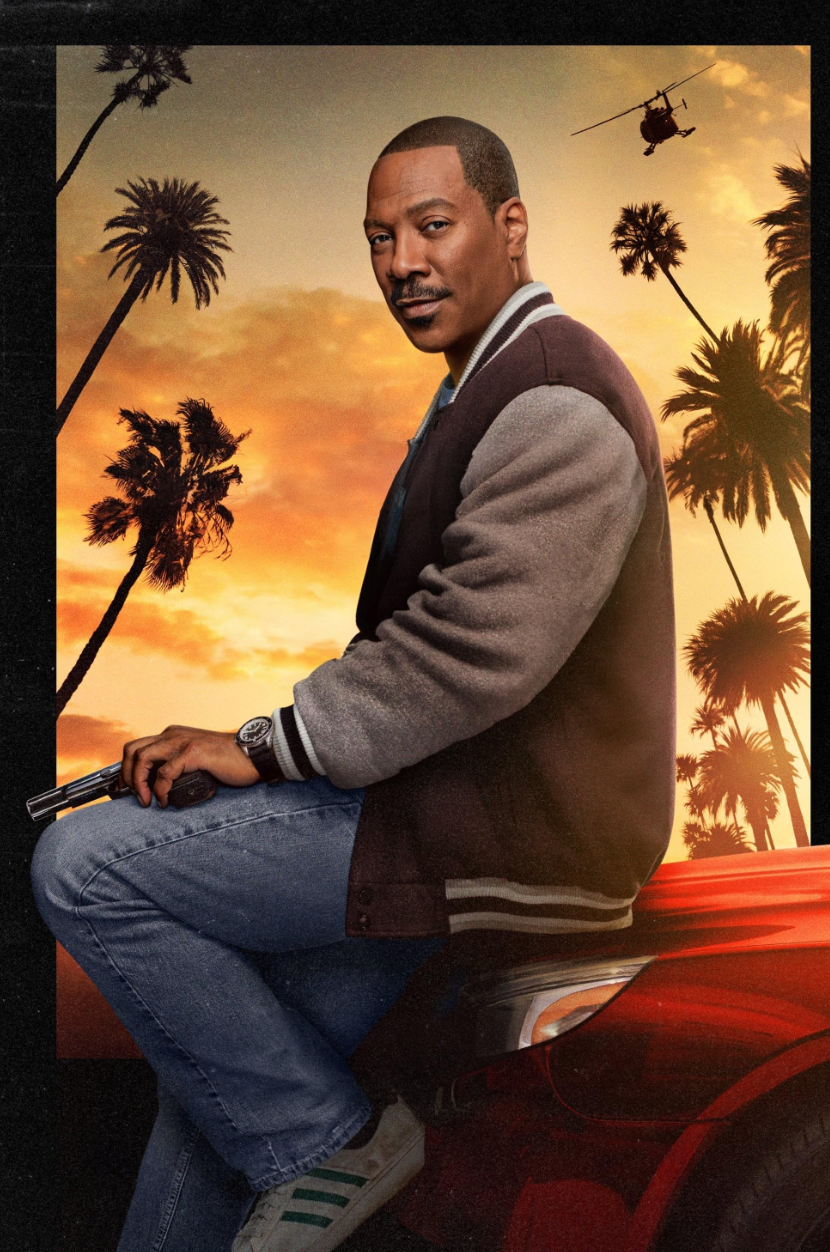
Eddie Murphy as Axel Foley in Beverly Hills Cop: Axel F; Photo: Netflix.

Eddie Murphy reprises his role as Axel Foley, the Detroit street-smart former con-turned-cop who, in the first film, went to Beverly Hills to figure out who killed his friend Mikey, ends up tracking down the killers, and befriends officers Billy Rosewood (Judge Reinhold, Fast Times at Ridgemont High, Stripes) and John Taggart (John Ashton, Gone Baby GoneMidnight Run), who initially took him into custody for trespassing the would-be killer’s businesses.

John Ashton as John Taggart, Eddie Murphy as Axel Foley, and Judge Reinhold as Billy Rosewood in Beverly Hills Cop: Axel F; Photo; Netflix.

Flash-forward to forty years later, and Axel Foley is still fighting crime and chasing criminals, especially early in the film. He suspects a robbery is about to go down at a Detroit Red Wings game he’s attending with a fellow cop. Foley’s policeman’s intuition pays off. After confronting the robbers at the stadium, a chase ensues. In true Foley fashion, he barrels down Detroit streets in a snow plow, eventually apprehending the criminals, but not without a slew of destroyed cars, traffic signs, poles, and terrified pedestrians in the midst. Foley’s now captain, formerly a detective in the original Beverly Hills Cop, is semi-furious and tired, played by funnyman Paul Reiser (Mad About YouStranger Things); he’s over Foley’s antics and is ready to retire. Axel is about to challenge his captain when he receives a call from Billy Rosewood saying his daughter is in trouble. Foley’s daughter (Taylour Paige, ZolaBoogie), Jane Saundersis a defense attorney in Beverly Hills and may be defending the “wrong” guy, according to the Beverly Hills Police Department.

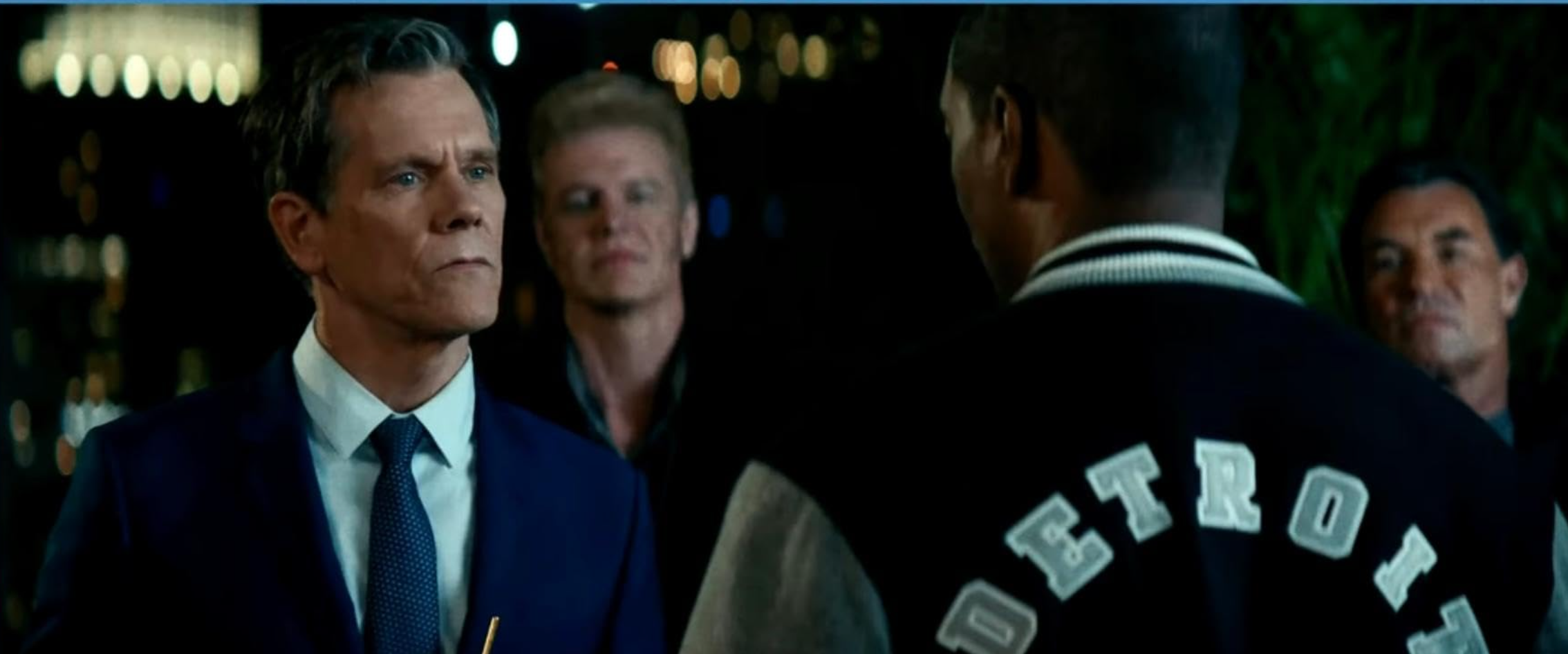
Kevin Bacon as Captain Grant in Beverly Hills Cop: Axel F; Photo: Netflix.

Axel Foley finds himself again in Beverly Hills, ready to expedite the wheels of justice, cunningly and entertainingly. Upon entering the Beverly Hills precinct, we learn Taggart is now chief, and Officer Rosewood has become a private investigator — on the heels of exposing crooked Los Angeles cops. Enter Kevin Bacon’s character, Captain Grant. Oozing enough smarm and finesse, he can make playing a crooked cop an Olympic sport. And Kevin Bacon always seems to add a layer of depth to any film he’s in. Debate me if you’d like.

Eddie Murphy as Axel Foley and Taylor Paige as Jane Saunders in Beverly Hills Cop: Axel F; Photo: Netflix.

But Foley’s return isn’t smooth sailing. His daughter wants nothing to do with him since they are estranged. Foley’s daughter, Jane, works for a prestigious firm defending criminals; this time, it seems to be a cop-killer. There’s a big conflict of interest between father and daughter.

Bronson Pinchot as Serge in Beverly Hills Cop: Axel F; Photo: Netflix.

Although Foley and his daughter are at odds, they team up with other favorite characters like Bronson Pinchot’s (Perfect Strangers, Risky Business) Serge, who’s still as funny and eccentric as ever. And newcomer to the Beverly Hills Cop franchise, Joseph Gordon-Levitt (Don JonLooper). He’s ditched his clean-shaven, boyish look for a bearded mid-thirties millennial cop with daddy issues. Then there’s Axel Foley’s theme song that will be permanently etched in your brain as it was for me since childhood when I played it on my synthesizer.

According to Eddie Murphy, his loved ones can play the infamous Harold Faltermeyer-composed theme song at his funeral to make people smile, although his loved ones know he doesn’t want a funeral.

Watch this fun, action-packed Eddie Murphy flick, which is just as enjoyable as the first film forty years later. Don’t believe me? Rotten Tomatoes audience members gave it a higher rating than the original! Stream it now on Netflix!

‘Baby Reindeer’s’ Role-reversing Twist on Stalking — is Laced with Nuanced, Semi-biographical Storytelling You Can’t Stop Viewing

The seven-part limited Netflix series stars Richard Gadd, who also wrote and co-produced the story based on his life.

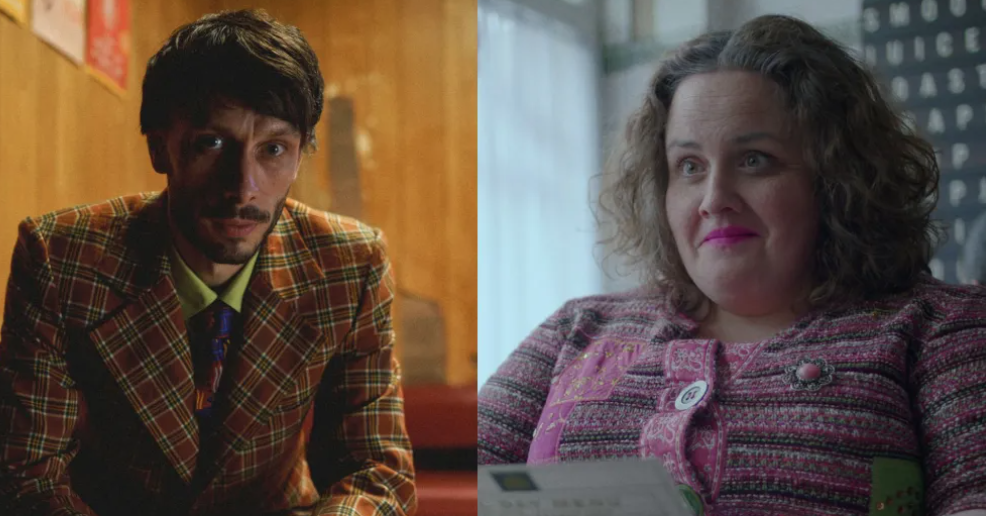
Richard Gadd as Donnie Dunn and Jessica Gunning as Martha in Baby Reindeer’; Photos courtesy of Netflix.

What started as an award-winning one-person comedy show at the Edinburgh Fringe Festival became a successful and dark Netflix miniseries. The series Baby Reindeer follows Donny Dunn, a struggling comedian in his late twenties and part-time bartender who encounters a woman in her 40s named Martha (Jessica Gunning, “White Heat,” What Remains”) when she enters the bar he works in. After Martha reveals her financial woes, Donny offers her a cup of tea free of charge. Martha takes this kind gesture to heart. She comes to the bar daily, and Donny provides free diet cokes. The relationship blossoms; they’re at ease with one another. Donny enjoys her odd, contagious laugh. She compliments his features and quick-witted quips. He soaks it in.

Martha mentions to Donny that her birthday is coming up. Unsure what to say, he suggests they meet, not for a date, as he clarifies his platonic interest in Martha, but for a fun interaction between friends. She agrees. When they get together to celebrate her birthday at a cafe, Martha starts getting triggered by Donny’s insistence that they are friends and nothing else and starts yelling. The pair leave the cafe, and Donny follows her to glimpse her real life. Donny tries to be discreet as he peeps into Martha’s living room window, only to be discovered by her when his phone rings; it’s Martha calling. Donny’s misstep sets off a chain of unfortunate events.

Martha begins to email Donny numerous times daily. She goes to his one-person show comedy acts and either heckles or cheers him on while he’s on stage. She follows him everywhere and emails him incessantly, where the harassment becomes unbearable for Donny. He goes to the police station to report Martha, and the officers don’t take him seriously.

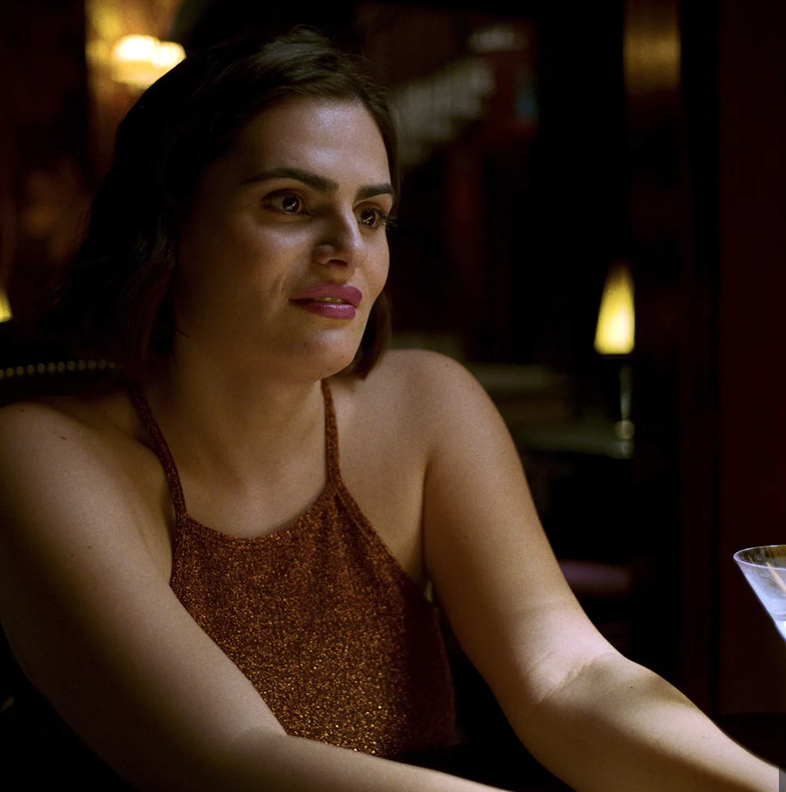
What’s deeply fascinating is how Donny and Martha feed off one another’s need for affection. He’s a comedian craving attention from the public. Although an audience of one, he subconsciously likes Martha’s adulation, although nightmarish, and comes in the form of 41,071 emails, 350 hours of voicemails, 744 tweets, 46 Facebook messages, and 106 pages of letters. Martha sent Donny an array of odd gifts, everything from sleeping pills, a wooly hat, and boxer shorts to a baby reindeer toy. The real-life Donny (Richard Gadd) endured Martha’s obsessive interactions for four and a half years. Martha’s erratic harassment spilled over to Donny’s parents, former girlfriend, and a trans woman, played wonderfully compelling by Nava Mua (Disclosure).

Nava Mau as Terri in ‘Baby Reindeer’; Photo courtesy of Netflix.

But it gets worse for Donny. During one of Martha’s aggressive encounters, she gropes Donny. Repressed memories of a former sexual abuser instantly trigger him. And Martha realizes this when she stops touching Donny and says: “Who hurt you?” The scene is profoundly revealing for both characters. It’s as if broken recognizes broken. You sympathize with Donny and Martha. Donny acknowledges Martha’s mental instability, simultaneously realizing he has unresolved trauma he must contend with.

So the real-life Donny, Richard Gadd, chose to write, act, and produce this period in his life that had been consuming him:

I couldn’t keep my life separate from what I’d been through anymore. It was becoming increasingly hard to play the frivolous funnyman when I’d been through these kinds of things,” he told The Independent“Because I don’t think I could have survived having repressed it and carried on doing these one-liners and surface-level routines. It was almost a survival choice. Because I was struggling so much.

Hard to watch at times. Intriguing. Dark, for sure. Baby Reindeer is worth binging and getting a rare perspective on male sexual assault and the trauma that ensues. Stream it now on Netflix.