Secret operative missions, stand-up comedy, and a who-dun-it; Netflix enthralls viewers with a new batch of titillating entertainment.
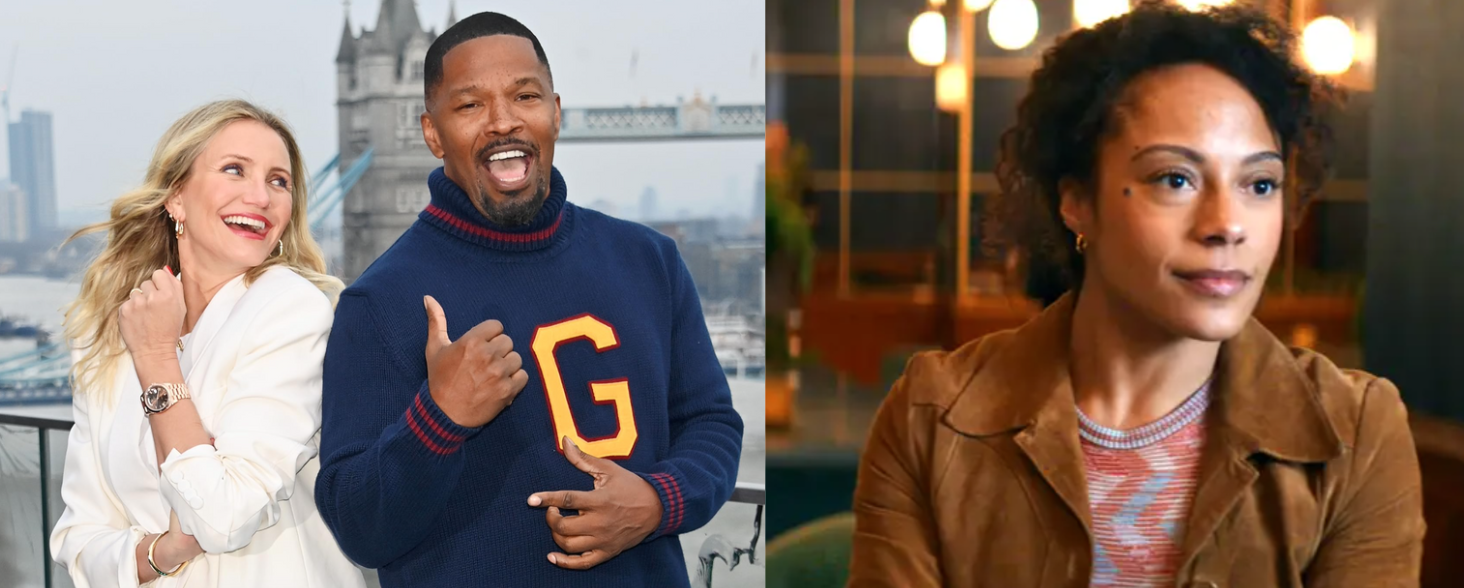
From L to R: Cameron Diaz, Jamie Foxx, and Rosalind Eleazar; Photo Credit: Netflix.
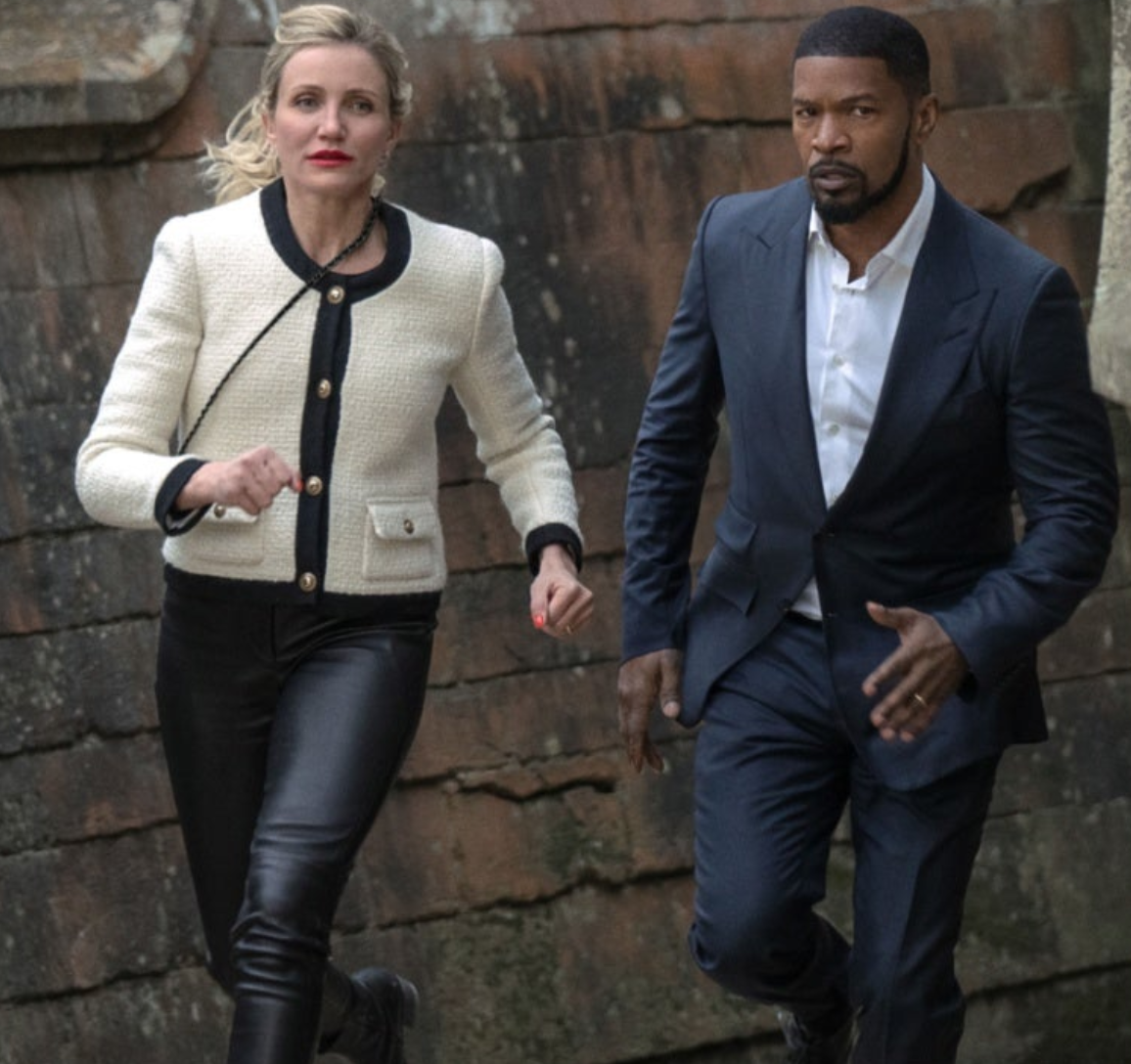
Superstars Cameron Diaz (Emily) and Jamie Foxx (Matt) make a splashy comeback with their spy thriller Back in Action. The couple plays a pair of brilliant CIA spies in a clandestine relationship. Once Diaz finds out she’s pregnant with their child, they decide to disappear, assume new identities, marry, and move to the suburbs until their cover is blown. Forced to return to the world of espionage with precocious teens in tow, they battle oligarchs and their henchmen until their family is safe. Glenn Close (Fatal Attraction, The Wife) plays Cameron Diaz’s estranged mother, whose actions allude to being a former spy, and she’s glorious as usual! An actor’s actor.
Both actors are in great shape, and we buy their roles as GenX martial experts who haven’t lost their edge. Back in Action marks Diaz and Foxx’s return to cinema. Diaz hasn’t starred in films since 2014, and in the middle of shooting the action-comedy, Foxx had a medical emergency that left him out of the spotlight for a few years. The two stars have dynamic chemistry and a natural comedic ability. Cameron Diaz’s Emily is reminiscent of Natalie Cook’s graceful fight scenes from the Charlie’s Angel franchise (2000–2003), while Foxx channels his Django character’s stealth moves.
Cameron Diaz and Jamie Foxx proved their bankable stars as Back in Action remains the top film on Netflix.
Cameron Diaz and Jamie Foxx in ‘Back in Action’; Photo Credit: Netflix.
Clearing the air and setting the record straight on his hiatus from TV and Film, Foxx stars in his poignant and hilarious comedy special What Had Happened Was. Rumors and conspiracies stating that P. Diddy drugged Foxx to him becoming a paraplegic were debunked by Foxx. The truth, as confirmed by the actor, is that he had a brain bleed, leading to a stroke that doctors had a hard time diagnosing, and his sister stepped in to advocate for further analysis. Foxx addresses the severity of his condition and epiphanies, makes jokes, and sings in this hilarious and poignant one-hour show. Foxx still got it, but more importantly, never lost it.
Lastly, Harlan Coben returns with his book adaptation series, Missing You. And use John Waite’s hit 80s song “Missing You” as the musical backdrop.
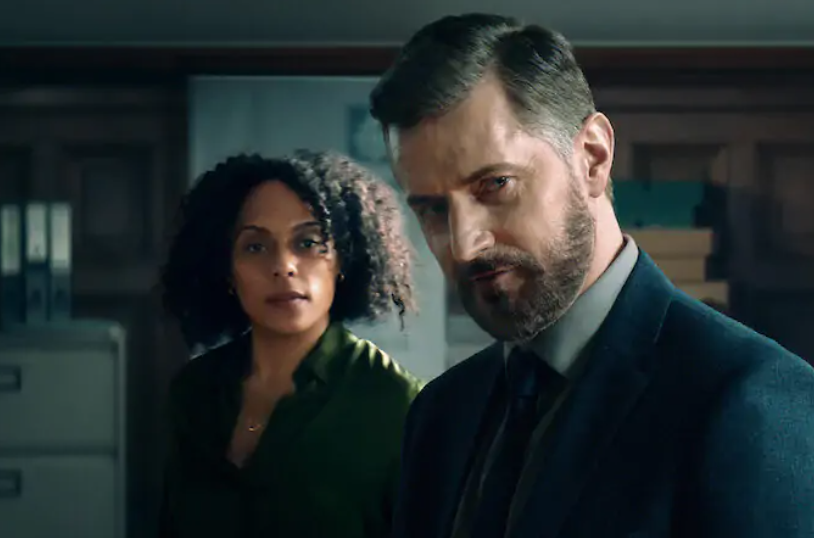
Rosalind Eleazar (Kat) and Richard Armitage (Stagger) in ‘Missing You’; Photo Credit: Netflix.
Missing You follows Kat Donovan (Rosalind Eleazar, Slow Horses, Deep Water), a detective inspector in the U.K. whose fiance broke off their engagement and went off the grid for 11 years. To make matters worse, Kat learns her father’s murderer is about to die and visits him to find out why he murdered him, a former policeman. In true Harlan Corben fashion, there are more winding twists and turns than the steepest stairwell in a centuries-old European castle in this story. And fans of the suspense-thriller author will love it! Not to mention the diverse multinational cast and Coben favorite and veteran British actor Richard Armitage (Fool Me Once, The Stranger) as Donovan’s boss, Ellis Stagger.
Fluff up your couch and prepare your favorite snacks for a superb TV viewing this weekend or next. Back in Action, directed by Seth Gordon (Horrible Bosses, Identity Thief). It’s Netflix’s highest-grossing film to date. Jamie Foxx’s honest Golden Globe-nominated special What Had HappenedWas, detailing his recovery, is ripe with impersonations, storytelling, and singing extravaganza. If you’re looking for more than a contained show or film, check out the 5-episode limited suspenseful series Missing You.
RaMell Ross isn’t preoccupied with filmmaking conventions — the first-time fictional feature director/documentarian, photographer, and writer says there is no wrong or right way to experience the film.
From L to R: Ethan Herisse as Elwood Curtis and Brandon Wilson as Jack Turner in ‘Nickel Boys’ Photo: Orion Pictures/Amazon/MGM Studios.
So, what’s Nickel Boys about, and why is it generating Oscar buzz already?
Adapted from Colson Whitehead’s Pulitzer-prize-winning book for fiction in 2020 with the same name, Nickel Boys begins with fractured images of Elwood Curtis’ (Ethan Herisse, When They See Us) life, a prominent theme throughout that begs the viewer to interpret the story as they’re viewing it instead of it being spoonfed. Elwood, a promising Black teen in the Jim Crow era, makes a fateful mistake on his way to a free college for gifted Black students, leading to incarceration in a brutal reformatory school known as the Nickel Academy for law-breaking boys.
At the Nickel Acadamy, he forges a friendship with a streetsmart, jaded youth named Jack Turner (Brandon Wilson, The Way Back). Steeped in the Civil Rights movement, the film juxtaposes images of Dr. Martin Luther King (one of Elwood’s heroes) and actual documents from the actual Dozier school in Tallahassee, Florida.
Over 100 boys, Black and white, died at the school, many buried in unmarked graves. It’s heartwrenching and infuriating to learn about the abuses the school engaged in. Still, Ross, with his visual storytelling tapestry, evokes empathy and hope in these characters, unlike any other film in its genre addressing trauma and injustice in Black culture.
I chatted with RaMell Ross, who directed the 2019 Oscar-nominated documentary Hale County This Morning, This Evening, right before Nicole Boy’s theatrical release to discuss the film’s exploration of visuals to aid the storytelling, the shift in narrative point-of-view and the absence of dialogue close to the end of the first act.
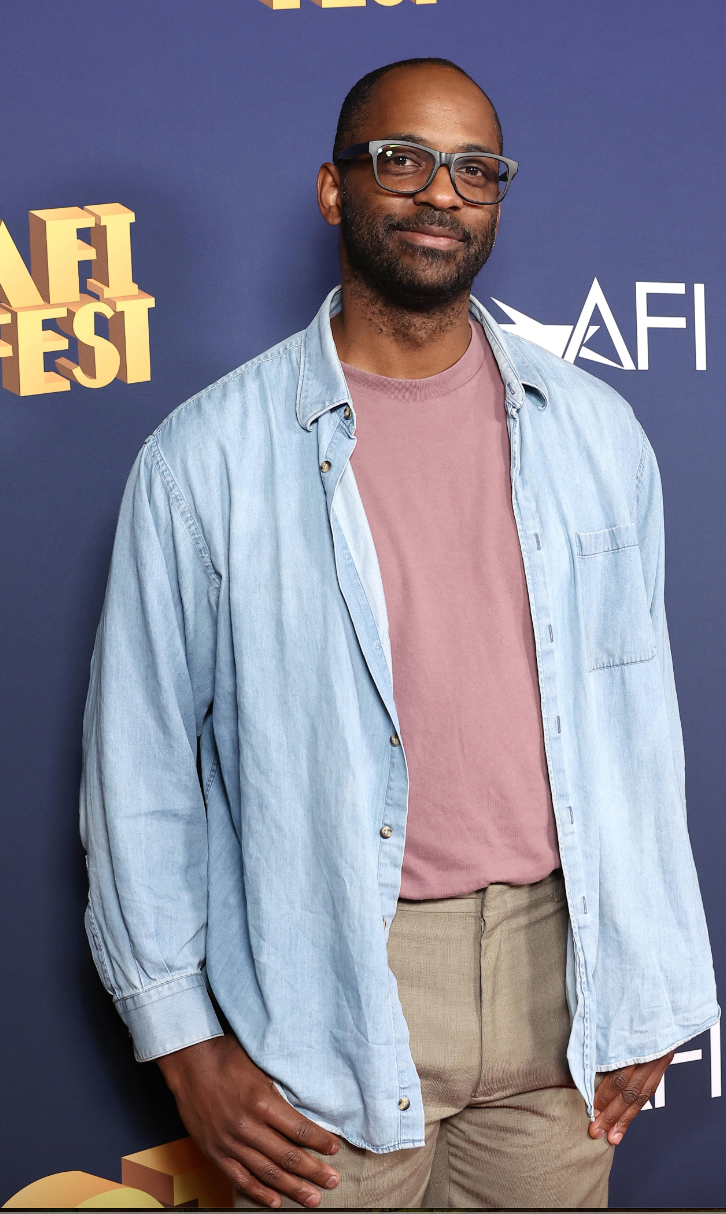
Filmmaker RaMell Ross: Photo: IMDB.
MV: Why did you approach the visual components vs. a dialogue-driven narrative, and what kind of response have you received from audiences?
RR: The film elicits such a subjective response — it has a plethora of images from across time and ones created on set, dealing with real events. The range of reactions has not been the same; some people have reacted to the wordlessness, while others have praised it. The film taps into people’s relationships to trauma, imagining other people’s agency, their own agency, and how they received information in the past, which is a bit of a mind bend. The default in cinema has been to show the visuals outright as far as depicting trauma. The point-of-view in this film does something that’s off-edge.
MV: Plan B approached you to write and direct this film. It’s quite a unique position, where the money backers are soliciting you instead of being the other way around. What was your take on making this film before and after reading the book?
RR: I was hesitant in general. I’m a hesitant maker. It takes a lot to make something, especially if it doesn’t originate from me or my writing process. Before reading the book, I thought, hey, it’s Plan B. They’ve done a lot of incredible work and supported artists. Then I read the book, realized its impact, thought about methods to adapt it, and started conversing with Joslyn Barnes (This Changes Everything), my co-writer and producer, who I sought. Trouble-shooting the point-of-view of the film and researching the Dozier School documents. Everything started to build itself out. In the context of the Dozier School boy’s story, this form and these ideas seem to be an unprecedented connection between form and content. That could have powerful ripples.
MV: When writing the screenplay, did you and Joslyn consult with author Colson Whitehead on the script’s development or your process for writing it?
RR: His involvement was non-existent. Colson Whitehead had no role in developing the screenplay. He, Dede Garder, and Jeremy Kleiner (Producers and co-presidents of Plan B) chose me to direct the film after seeing Hale County This Morning, This Evening. I sent him a Thank you note and was gushing about his talents. Whitehead responded with, “Go luck, man. You got it.” Which was great. In essence, giving me permission to execute my vision.
MV: In retrospect, after watching dailies and working with the team you had, is there anything you would’ve done differently conceptually when creating this film?
RR: Perhaps if the film is well received and makes AFI’s (American Film Institute) top 10 films, I would have included a clause in my contract to pay me more money, like 5 million (laughs). It’s easy to say in hindsight. I can’t imagine making this film with another DP, production, costume designer, producer, or co-writer. The film has many hands in it, and there are so many brushstrokes from creatives I trust. I think it would’ve collapsed had we approached it differently. It’s a pretty fickle relationship between elements. And this film works because of a marriage of 20 different elements.
MV: What do you think the reaction will be in Florida and other places to Nickel Boys that ignore and try to ban stories, whether in books or cinema, dealing with marginalized people and their experiences?
RR: It’s crazy to me that the book burning was part of our past, and now we’re dealing with it again. In Florida, especially where the Dozier school existed, the government acknowledged wrongdoing and awful truths but didn’t apologize. There’s this erasure of narratives taking place openly. And art, especially through Colson’s book and now the Nickel Boys adaptation, is emerging while powers that be are trying to suppress it. The hope is that people start having conversations about the past and continue to be inspired to make art that addresses these topics and gives way to new voices!
MV: Given your success as a documentarian and now feature filmmaker, what advice would you give first-time and seasoned filmmakers?
RR: Find Jesus and pray! (laughs). I respectfully say this to seasoned directors: the more specific, personal, idiosyncratic, and intimate to your own life and vision, the better the art will be. As unique as your films are, like your footprints, fingerprints, or brainwaves, that’s interesting and missing from mainstream cinema. Suppose people were making profoundly personal and deeply specific films in the commercial space. In that case, I think the world would be genuinely different because we would have access to the types of truths that are as singular as human beings and not the squished-down truths accessible and palatable for folks for the sake of watching the next show or film.
Watch Nickel Boys, an evocative and visually stimulating experimental film that lets viewers interpret the narrative through their imagination and lived experiences with a stellar cast that inhabited these characters so naturally; they were born to play these roles, especially Aunjanue Ellis-Taylor (Hattie, King Richard)—now playing in select theaters nationwide. Click here to see movie schedules and times.
Writer-director JT Mollner flips the horror script on its cinematic head with this unconventional film.
Willa Fitzgerald as the Lady in ‘Strange Darling’; Photo: Magenta Light Studios.
Strange Darling begins with a young woman or “the Lady” as she’s known in the film (Willa Fitzgerald, Reacher, The Fall of the House of Usher) sporting a bandage on her left ear running across a wooded area in a red jumpsuit, clearly distressed. It is a recognizable image, sure, seemingly fitting the horror film trope of the lone woman escaping the deranged killer. And we meet the presumed killer, “the Demon” (Kyle Gallner, Smile, Dinner in America), soon after chasing the young woman, a modern-looking redneck in a plaid jacket with dirty blonde-haired hair and an almost handlebar mustache carrying a shotgun ready to pounce on his victim, yelling, “Here, Kitty Kitty.”
There is no dialogue for almost 10 minutes of the film. Action sequences, yes. That lead to suspension and pure anxiety. Elements that adequately compensate for the nonverbal visuals to keep the viewer engaged.
Kyle Gallner as the Demon in ‘Strange Darling’; Photo: Magenta Light Studios.
Filmmaker JT Mollner (Outlaws and Angels) prefaces the film with a narrated backstory with accompanying words about an elusive serial killer who’s been killing people for years and how the carnage came to an end by revealing the story in the course of six chapters in the movie. Yet, Mollner starts the film with chapter three and continuously goes back and forth between chapters to give the audience more information, excruciatingly fun and unpredictably horrific. It’s a wildly effective storytelling technique reminiscent of Quentin Tarantino’s ground-breaking story-structure-disrupting film Pulp Fiction. In addition, the gore factor is relatively high in Strange Darling. Tarantino would be proud.
Strange Darling even resorts to scrolling red text on a black background, a color scheme synonymous with many a horror film, especially one of my favorites: John Carpenter’s 1978 Halloween, ominous factor, check!
But the horror tropes keep coming.
Kyle Gallner as the Demon and Willa Fitzgerald as the Lady in ‘Strange Darling’; Photo: Magenta Light Studios.
The audience thinks they know who the serial killer is, but our theory is ground to a screeching halt when several bloodbaths ensue, leaving innocent people in the murderer’s wake, which “the Demon” may or may not have committed. It’s terrifying. It’s unanticipated and gives way to nuanced and exciting storytelling audiences crave. The film’s point of view shifts between killer and victim/and/or victims, and it’s magical to watch as the series of events unravels.
I won’t share any spoilers because Strange Darling, produced by Giovanni Ribisi (Lost in Translation, Sneaky Pete) and served as cinematographer, is a must-watch. It made my top five horror movies of the last decade. Yeah, it’s that good. Watch it now on Prime Video.
Other notable horror flicks with fantastic twists to add to your film repertoire:
The Kristen Bell Adam Brody vehicle will restore viewers’ proclivity for T.V. romance.
Kristen Bell and Adam Broday in ‘No One Wants This.’ Photo: Netflix.
I can’t remember the last time I rooted for an on-screen couple’s relationship journey the way I have been for Joanne and Noah in Netflix’s No One Wants This. Is it because I watched the series post-election and needed an entertaining distraction from the bleak, catastrophic plunge our country has taken? Or is it because of the welcomed offbeat storytelling, likable characters, and funny, sharp dialogue? I will confess: it’s all of the reasons I mentioned earlier.
The premise and meet-cute:
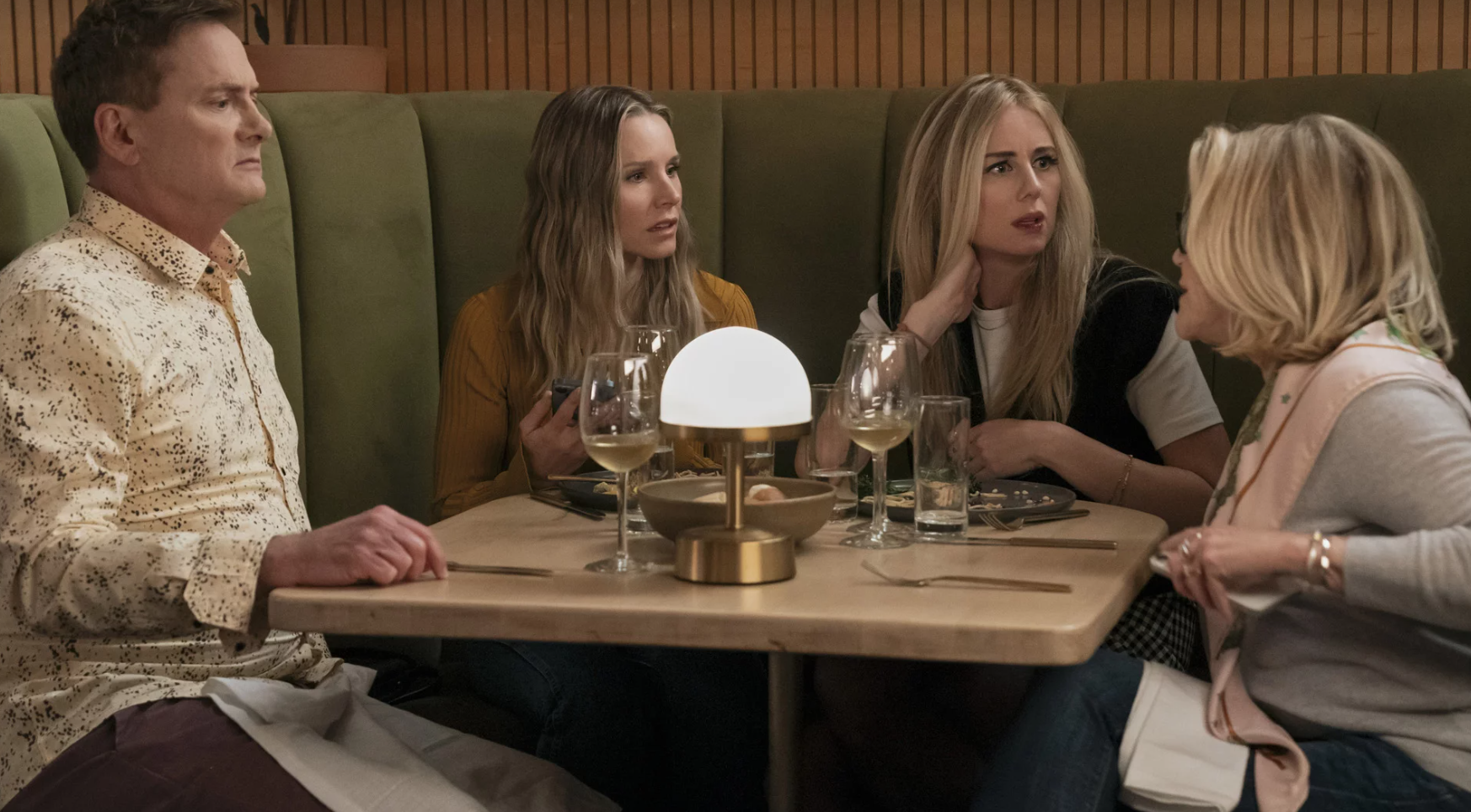
Joanne (Kristen Bell, Queenpins, Frozen), a thriving sex podcaster and jaded relationship cynic, attends her publicist’s party after another failed date, waltzing in with an over-the-top mink coat and care-free attitude that catches the attention of everyone, especially the rumored rabbi that’s in attendance, Noah (Adam Brody, American Fiction, “The O.C.”). Noah and Joanne engage in casual, witty conversation. Although Joanne isn’t aware he’s the actual rabbi who’s recently broken up with his girlfriend, there’s an instant attraction.
From L to R: Joanne’s dad, Henry (Michael Hitchcock), Kristen Bell (Joanne), Joanne’s sister, Morgan(Justine Lupe), and Joanne’s mom, Lynne (Stephanie Faracy). Photo: Netflix.
Joanne and Noah, from opposite worlds, hit it off. Of course, they do. It’s a rom-com universe. But their worlds are so strikingly different and comical. Joanne’s sister, Morgan ( Justine Lupe, “Succession,” “Mr. Mercedes”), is abrasive, divorced, and deceptively vulnerable, which you gravitate towards later in the series, and her co-podcasting host. Their parents are separated because their father came out as gay and is openly dating men, yet their mother remains in love with him.
On the other hand, Noah’s family comes from a traditional Jewish family. His parents have been married for over 40 years. His brother has a Jewish wife whose best friend is Noah’s ex and may be plotting to get them back together. Although Noah enjoys his chosen profession as a rabbi and the Jewish faith, something is lacking, and Joanne seems to be filling the void.
Kristen Bell and Adam Brody in ‘No One Wants This.’ Photo: Netflix.
Joanne is conflicted. She’s overwhelmed by Noah’s gentlemanly traits, honesty, and sense of humor. Qualities she’s unaccustomed to in her last failed relationships. Joanne and Noah acknowledge their differences and try to make it work despite their families’ opposition to their union. You have the quirky siblings, admonishing them to be realistic about their unconventional attraction. Noah’s mother calls Joanne a Shiska, a Yiddish term for a gentile woman of non-Jewish faith who may purposely be trying to lead Noah down the wrong path—everyone’s sewing seeds of doubt.
Despite the unlikelihood that Joanne and Noah will remain together, viewers are in for a great romantic ride with this engaging and dynamic story — and not to mention the crisp dialogue. Bell’s and Brody’s sensational chemistry, natural comedic flair, plus fast-paced storytelling will keep you glued to the T.V. with limited breaks (even bathroom ones!). Watch this refreshing 10-episode (less than 30 minutes each) series on Netflix now!
Hispanic Heritage Month has ended, but the legacy left behind by one of its prominent allies, who advocated for social justice, women’s rights, and Mexican creative culture, lives on with the prolific artist’s artwork.
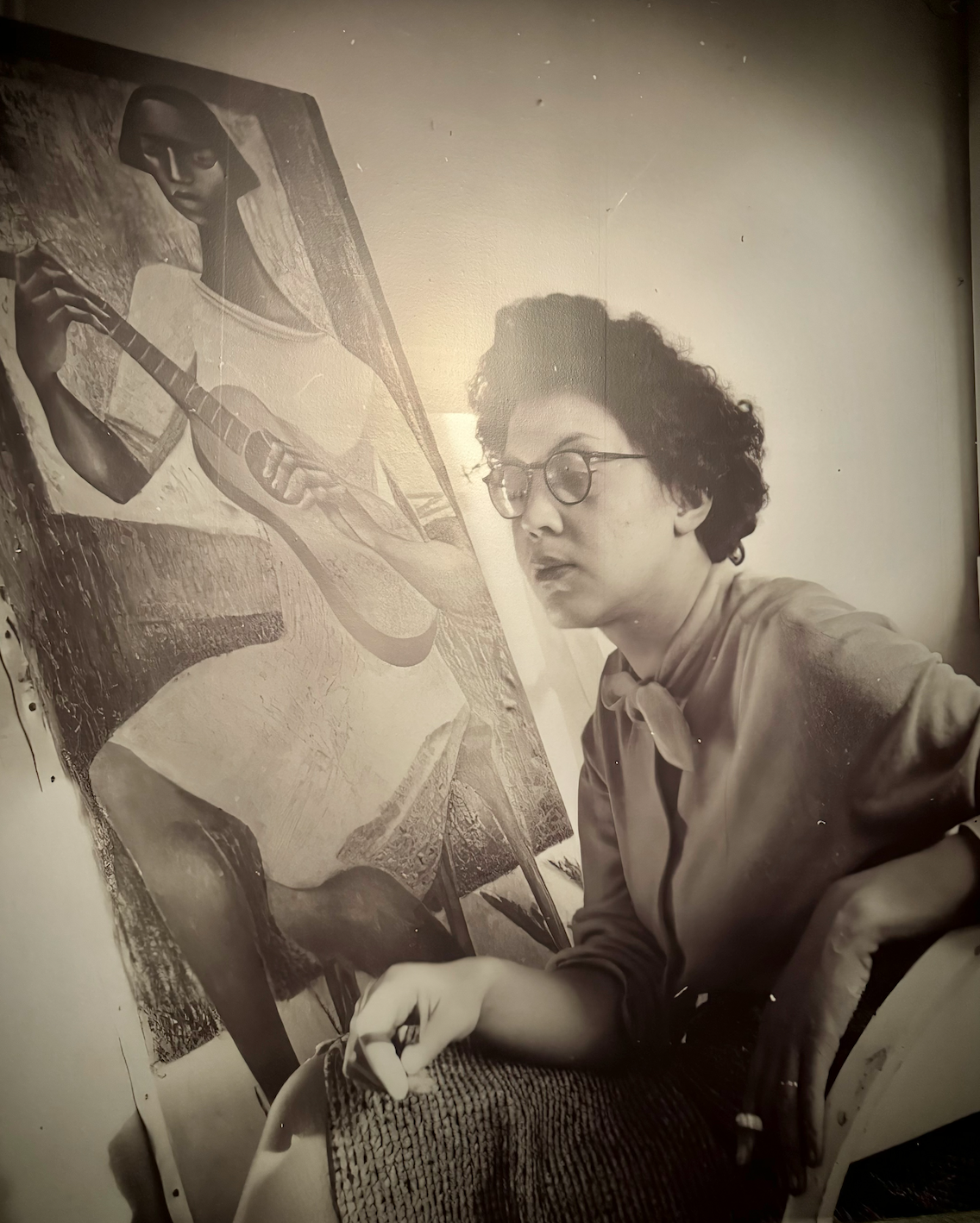
Artist Elizabeth Catlett in Mexico; Photo: From ‘Elizabeth Catlett: A Black Revolutionary Artist and All That It Implies’; Photo courtesy of Brooklyn Museum.
Elizabeth Catlett, born in Washington D.C. in 1915, was a naturally gifted artist and fearless activist. In her teens, she carved an elephant out of a bar of soap and kept developing her craft. She began protesting lynchings in front of the U.S. Supreme Court with a noose around her neck, symbolizing the violent demise Black citizens were experiencing. She was arrested but later released, becoming a beacon of hope and change for people of color. Catlett became the first student to earn a Master of Fine Arts in the U.S. from the University of Iowa in 1940 and completed her undergrad at Howard University, quite a feat for a Black woman in the Jim Crow era, rife with segregation, oppression, and unspeakable cruelty toward Black Americans.
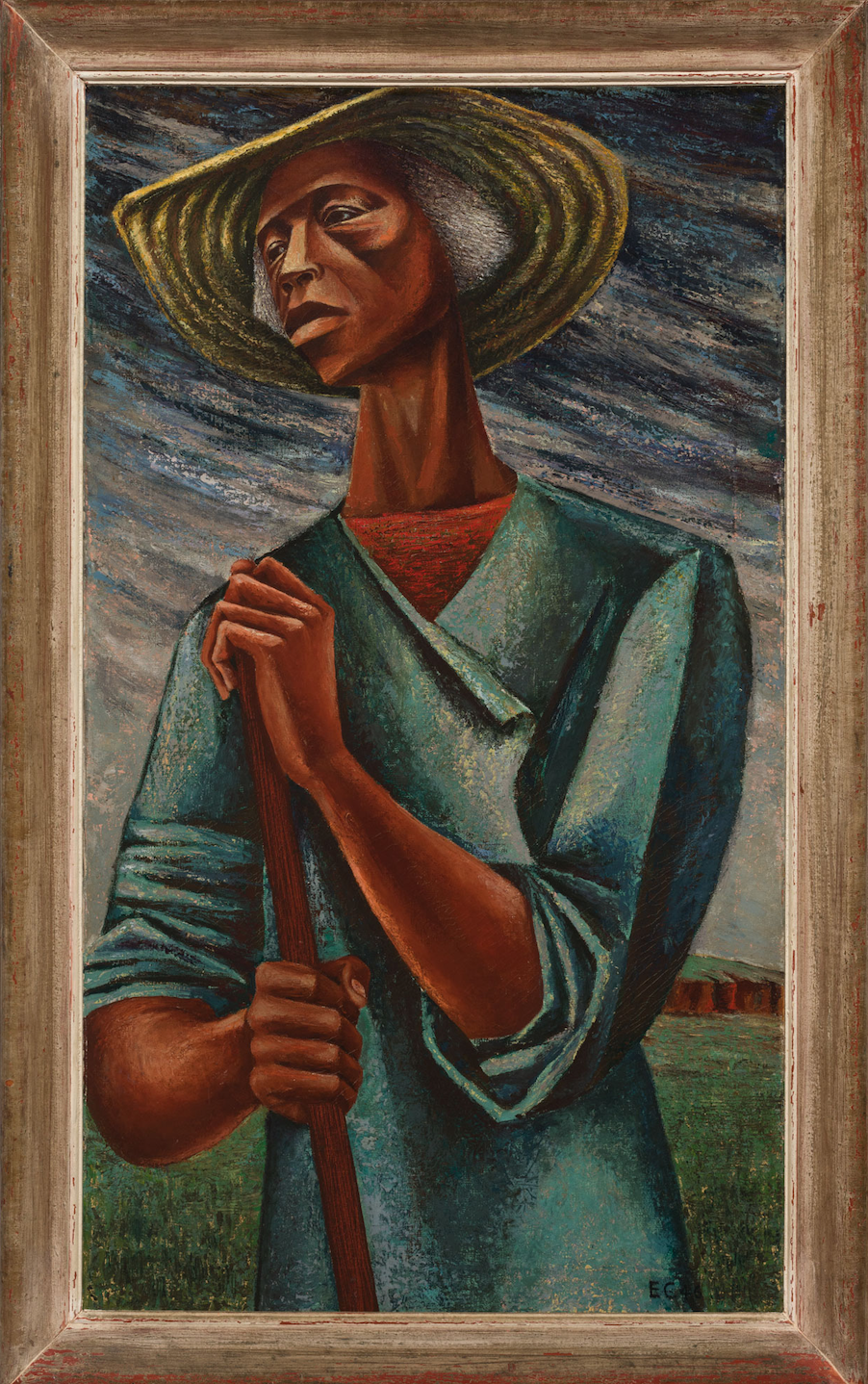
Catlett’s art reflected the turbulence of that era, developing her sculpting and clay modeling techniques during the Black Chicago and Harlem Renaissance. One of her most iconic works: “The Negro Woman,” later renamed “Black Woman,” depicts beautiful solemn Black women at work (as nannies, servants, and field workers) through extraordinarily composed lithographs, paintings, and sculptures. When you look at these pieces, you can’t help but feel the ancestral pain of Black women who endured the limitations of their time yet possessed an unrelenting reserve of optimism.
Serving on the Arts Committee of the National Negro Congress (NNC), an organization committed to advocating for Black liberation and prompting Catlett to publish political cartoons and subsequently finding her social advocacy stride collaborating with Taller de Gráfica Popular in Mexico (TGP), an artist printmaking collective dedicated to social causes in the form of prints. Mexico is where Catlett would refine her “Black Woman” series, study terra-cotta sculpture under acclaimed artist Francisco Zúñiga, and call the country home for the next six decades after marrying her creative partner and renowned Mexican artist Francisco “Pancho” Mora, a celebrated printmaking and graphic creator who shuttled back and forth with Catlett to showcase their work in distinguished galleries around the U.S.
But, it wasn’t all accolades and fanfare for the artist couple.
As Catlett became more involved with the TGP’s mission, she gained notoriety back home. Spearheading and contributing to a series titled: “Against Discrimination in the U.S.,” showcasing African American heroes like Harriet Tubman and Ida B. Wells put a target on her back. Shortly after, incessant CIA and FBI monitoring of Catlett during the Cold War fear-mongering McCarthy era led to the artist’s citizenship being rescinded. And it wouldn’t be reinstated until 2002. Nonetheless, the courageous Elizabeth Catlett fought for workers’ rights, especially working-class Mexican women, advocating for railroad workers, teachers, and doctors to strike and support the country’s anticolonial movements of the 70s.
Installation View of ‘Elizabeth Catlett: A Black Revolutionary Artist and All That It Implies’ Exhibit. Photo: Paula Abreu Pita/Brooklyn Museum.
Elizabeth Catlett is a monumental figure in Black and Mexican artistic culture. She’s lived through historic upheavals and milestones, all documented in this breathtaking exhibition. Visit the Brooklyn Museum for tickets to view Elizabeth Catlett: A Black Revolutionary Artist and All That It Implies exhibit (including over 200+ pieces), running through January 2025!
But Emmy honors for Latinas didn’t stop with the Puerto Rican actress. Selena Gomez and showrunner Issa López also broke entertainment barriers.
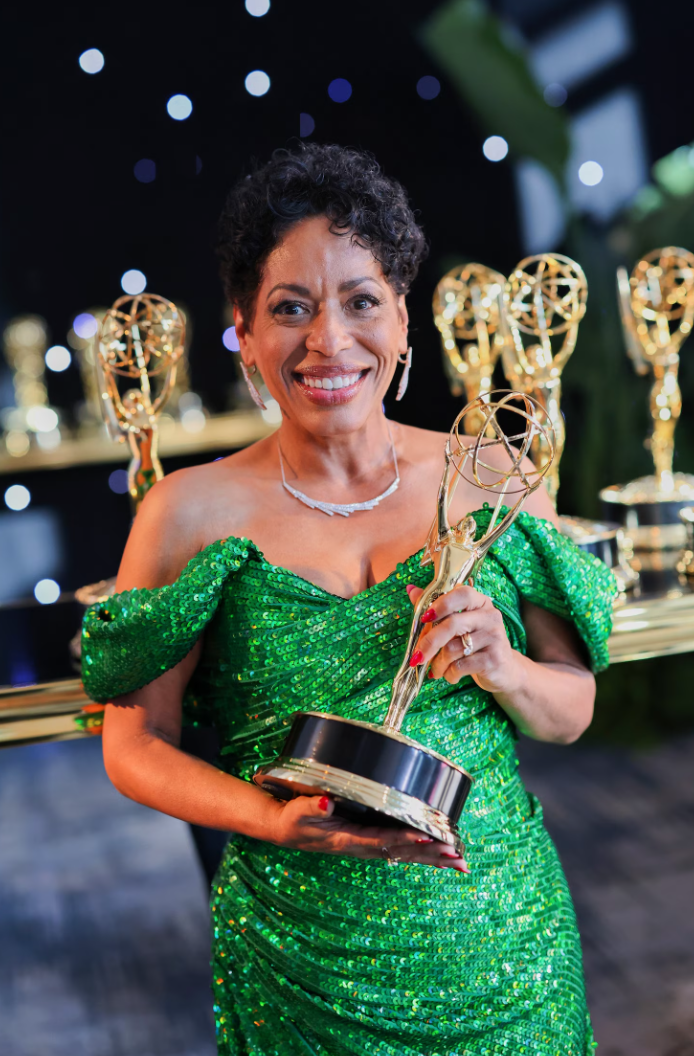
Liza Colón-Zayas with her Emmy for Best Supporting Actress for “The Bear.” Photo: courtesy of 76th Annual Emmys.
One of the night’s biggest surprises at the Emmys this year came when actress Liza Colón-Zayas secured the win for Best Supporting Actress in a Comedy Series for “The Bear.” Colón-Zayas plays the outspoken and talented sous chef, Tina Marrero, who relishes standing up for herself and the rest of the kitchen staff in the hit series “The Bear,” now in its 3rd season. If you’re unfamiliar with “The Bear,” it’s about a professionally-trained chef, Carmy (Jeremy Allen White, winning Best Actor in a Comedy Series this year), who comes back to revitalize his family’s restaurant after his brother passed away. Conflict arises when Carmy brings in new staff and attempts to work with the existing staff, often resulting in explosive situations that both invigorate and debilitate Carmy’s mental state.
Liza Colón-Zayas’ character (Tina) often bumps heads with Carmy. But she does so endearingly and authentically, and that’s why she was victorious against her equally talented nominees as she gushed about on the Emmy stage, who share the category: the incomparable Meryl Streep (“Only Murders in the Building”), Carole Burnett (“Palm Royale,”), Janelle James and Sheryl Lee Ralph (“Abbott Elementary”), and Hannah Einbinder (“Hacks”).
Liza Colón-Zayas in her one-woman show ‘Sistah Supreme.’ Photo courtesy of Playbill.
Emmy-winning Colón-Zayas began her entertainment career by writing, starring, and producing her one-woman off-Broadway show Sistah Supreme in 2000. She segued to television and had supporting roles in shows like “In Treatment” and Law & Order: SVU,” Her portrayal of Tina Marrero is Liza Colon-Zaya’s first Emmy Award nomination and win. With her humbled appreciation for the Emmy acknowledgment and tears of joy, she ended her speech with these parting words:
“To all the Latinas looking at me, keep believing and vote. Vote for your rights!”
Her sound advice couldn’t be more timely as far-Right extremists are looking to roll back reproductive freedoms, institute archaic education policies, and dismantle union worker protections.
*Did you know today is National Voter Registration Day? You can check if you’re registered to vote here.
Sidenote:
Other Latinas who made their mark at the 76th Annual Emmy Awards are Selena Gomez and showrunner Issa López. Gomez is the most Emmy-nominated Latina to date with a third production nomination for the mystery-comedy series “Only Murders in the Building,” receiving her first lead comedy actress nomination this year, becoming only the fourth Latina in history nominated in this category. Moving to the executive producer category, showrunner Issa López garnered three Emmy nominations for directing, writing, and producing the HBO/Max anthology series “True Detective: Night Country.”
While this year’s Emmys included more diversity (the number of people of color nominated increased to 30 of the 96 acting nominees), here’s hoping recognition of creative diversity in all Hollywood award shows will accelerate in coming years.
Inspired by actual events, Daniels’s new Black drama rattles viewers with the enigmatic veteran actress’s portrayal of Alberta.
Glenn Close as Alberta in ‘The Deliverance’; Photo courtesy of Netflix.
Alberta (Glenn Close, Fatal Attraction, The Wife) is the domineering white mother to her mixed-race daughter, Ebony Jackson (Andra Day, The United Statesvs. Billie Holiday, Marshall). A single mother of three, she moves her kids to a new home in Indiana, where the residence seems occupied by demonic forces. She resigns herself to finding an unorthodox solution to the problem, often through horror genre-infused tropes that are entertaining (kids speaking in satanic voices and levitating) but also through spiritual guidance that seems to temper the demons.
What’s so bad about the house?
Andra Day as Ebony Jackson and Anthony B. Jenkins in ‘The Deliverance.’; Photo courtesy of Netflix.
Ebony starts noticing strange behavior in her children: trance-like states, communicating with people who aren’t there, and unexplained bruises on their bodies. To make matters worse, Ebony is struggling financially, trying to stay sober, and battling with her mother, Alberta, who doesn’t hold back when Ebony messes up. Not to mention, Child Services is keeping a close eye on Ebony because of her past child endangerment issues. Constantly reminded by the agency’s rep, Cynthia Henry (played by Oscar-winning actress Mo’Nique, (Precious, and The Parkers), that she must put them first and be a responsible parent, Ebony feels trapped.
But back to Glen Close.
I watched the film without IMDB-ing or Googling the cast. At first glance, I didn’t recognize the actress playing Alberta (Close) until I started focusing on her voice and mannerisms. It’s Glenn Close like I’ve never seen or heard before. Ghetto-fabulous sassy. Critical. Bat-wielding protector. And owning the mean-spirited attributes sometimes single mothers possess when faced with poverty and lack of support. Resentment. Despair. And addiction passed down to their children. In this instance, it’s Alberta and Ebony’s dynamic. Generational trauma plays out on-screen between them, and viewers will cringe at the numerous mother-daughter showdowns. One explicit scene of their relationship, which has social media in an uproar, has Alberta (resurfacing as a Nosferatu-like creature) saying: “I can smell your nappy p*%@y.” Yeah, it’s an intense line. Granted. However, according to Daniels:
Andra Day as Ebony Jackson and Glenn Close as Alberta in ‘The Deliverance.’; Photo courtesy of Netflix.
“I had to do it. Every Black person knows an Alberta. She’s part of the fabric of our community, but we’ve never seen her on screen before,” Lee told CNN.
One of those never-before-seen moments viewers can anticipate is watching Alberta (mid-to-late 70s) flirt with a much younger (Omar Epps, Love & Basketball, Higher Learning) while receiving chemotherapy. Dressed in a revealing blouse, wearing lots of makeup, and confidently flirty for days, Glenn Close perfected the role to a tee. Cheers to that! We need more sexagenarians and septuagenarians strutting their stuff on screen playing sirens, not seniors ready for the afterlife. It makes for exciting cinema. Stream The Deliverance, based on Latoya Ammons’s experience with the haunting of her house in 2011, on Netflix!
A hot new play has hit The Great White Way. It features a stellar two-person cast, sharp dialogue, and a captivating theme.
Peter Friedman as Lloyd and Sydney Lemmon as Jane in ‘JOB’; Photo: Emilio Madrid/DKC/O&M.
‘JOB’ begins with a seemingly unhinged 20-something woman pulling a gun on a man in his sixties in his psychiatry office. He has nothing to defend himself with; his phone is in another room, and he uses his decades-long psychiatric training to learn more about the young woman and, most importantly — convince her not to pull the trigger.
If only the psychologist could cry for help or get the attention of someone from the outside to get him away from this disturbed woman.
Not so fast. We learn about the patient, who commands enough charisma and engagement to create her one-woman show, played by Sydney Lemmon(The Parisian Woman, Tár ), and is none other than the granddaughter of legendary actor Jack Lemmon. Acting genes run in the Lemmon family. We discover Jane has to attend mandated therapy sessions imposed by her tech employer, User Care, because of a meltdown she suffered at work, where she climbed atop a desk and started screaming uncontrollably. Coworkers filmed it, and the video went viral.
Sydney Lemmon as Jane in ‘JOB’; Photo: Emilio Madrid/DKC/O&M.
Shouldering her unsolicited internet fame and the stressors of her tech job, Jane keeps probing the psychologist to see if he’ll greenlight her return to work. A job that involves content moderating the worst images and videos imaginable — from child abuse to murder, rape, or torture, Jane is the gatekeeper preventing this content from reaching the public. It’s inevitable. This line of work has affected Jane’s psyche.
The doctor (Lloyd), played magnificently empathetic and uncondescendingly in his line of questioning of Jane, is veteran Tony-nominated Broadway star Peter Friedman (Ragtime, The Marvelous Mrs. Maisel). He provides a comforting space for Jane to share her experiences and family life while divulging personal details about him. The dialogue is fast-paced, witty, and timely. The banter between two generations discussing the effects of the internet and its roles in their lives is plausible until a dark secret emerges. It won’t spoil it for you, but it’s scandalously surreal.
Peter Friedman as Lloyd in ‘JOB’; Photo: Emilio Madrid/DKC/O&M.
Friedman and Lemmon’s chemistry is dynamic. They don’t miss a beat, as evidenced by the deafening silence in the theater during this 80-minute run with no intermission. Both actors starred in the hit TV show Succession. Although they’ve never filmed show scenes together, they continue to discuss and explore how the internet shapes and evolves the human experience and whether it’s to the benefit or detriment of people.
See the previously off-Broadway hit turned Broadway production of JOB, written by Max Wolf Friedlich and directed by Michael Herwitz. It is now playing at the Hayes Theater in NYC through September 29th!Click here to get tickets!
Shark aficioniados rejoice! NatGeo is stepping onto the proverbial entertainment plate with not one week but a whole month of shark programming fantastically bordering on shark overload.
John Cena with Tom “the Blowfish” Hird on Shark Week; Photo: Discovery Channel.
John Cena did a great job hosting “Shark Week 2024”. His brand of zany, comical, engaging quips was marvelous— but did he get in the water and dive with sharks? No! He drank a “chum smoothie” with a shark scientist and interviewed other shark experts, which, by the way, I was happy to see more women of color included this year. Marine ecologist Dr. Tiara Moore, aka Dr. T., host of “Sharks of the Dead Zone” and CEO of Black In Marine Science, livened things up with her funny reactions to sharks suddenly appearing around the water with the contaminants she’s been tracking in the Indian River Lagoon (Atlantic side of Florida). Moore teamed up with other scientists to figure out ways to prevent the onset of these pollutants, typically found where bull sharks drop their pups.
On another note: Here’s hoping John Cena returns to get up close and personal with the ocean’s most featured majestic creatures as actor/producer Anthony Mackie did.
The Marvel star of the upcoming Captain America: Brave New World kicked off “SharkFest” on the National Geographic network with the premiere of “Shark Beach with Anthony Mackie.”
Scientists and conservationist with Anthony Mackie in SharkFest; Photo: National Geographic.
Mackie traveled to his native Louisiana to investigate the ongoing problem between sharks and fishermen. Sharks are stealing fishermen’s catch (whole or half-eaten), a term called shark depredation, affecting fishermen’s livelihoods. Mackie, shark experts, and scientists explored Lake Pontchartrain, where he used to fish and spend time as a kid, and learned that sharks inhabit it. He also traveled to the rigs where fishermen hook multiple fish species and compete with sharks’ quick meals.
Mackie didn’t just talk the talk; he walked the walk. The action star helped scientists tag baby bull sharks, gave one shark an anal swab to learn about their diet, and overcame his fears and plunged into the ocean. The Gulf of Mexico, to be precise, with marine biologist Jasmine Graham to guide him and serve as a security blanket, the actor revealed. He spent over four hours in the water, discovering humans and sharks can coexist. In addition, Mackie helped conservationists plant grass in eroding marshlands to ward off the effects of flooding and preserve the ecosystem.
Beyond trekking the swampy wetlands with Anthony Mackie, NatGeo brought a slate of shows ranging from a newly discovered shark nursery near NYC to documented experiences of shark attacks by men, women, and children and how they survived—or not!
Female marine biology student tagging a Tiger shark in “Maui Shark Mystery.” Photo: National Geographic.
With “Maui Shark Mystery,” National Geographic introduces a skilled team of young female scientists from the University of Hawaii who navigate the coast of Maui in search of Tiger sharks to tag and learn more about their behavior and mating habits. To say these female scientists are badasses doesn’t even cut it. The strength and fearlessness they displayed on this show is unmatched.
SharkFest ends July 31st. You have a few more days! Be sure to check out this insightful, action-packed show, which features scientists and conservationists, shark attack survivors, and witnesses recounting their experiences and educating viewers on the preservation and habits of these majestic creatures. Watch SharkFest on the National Geographic Channel or stream it on Disney+.
The familiar scoring and characters will take you towards a welcomed trip down movie memory lane.
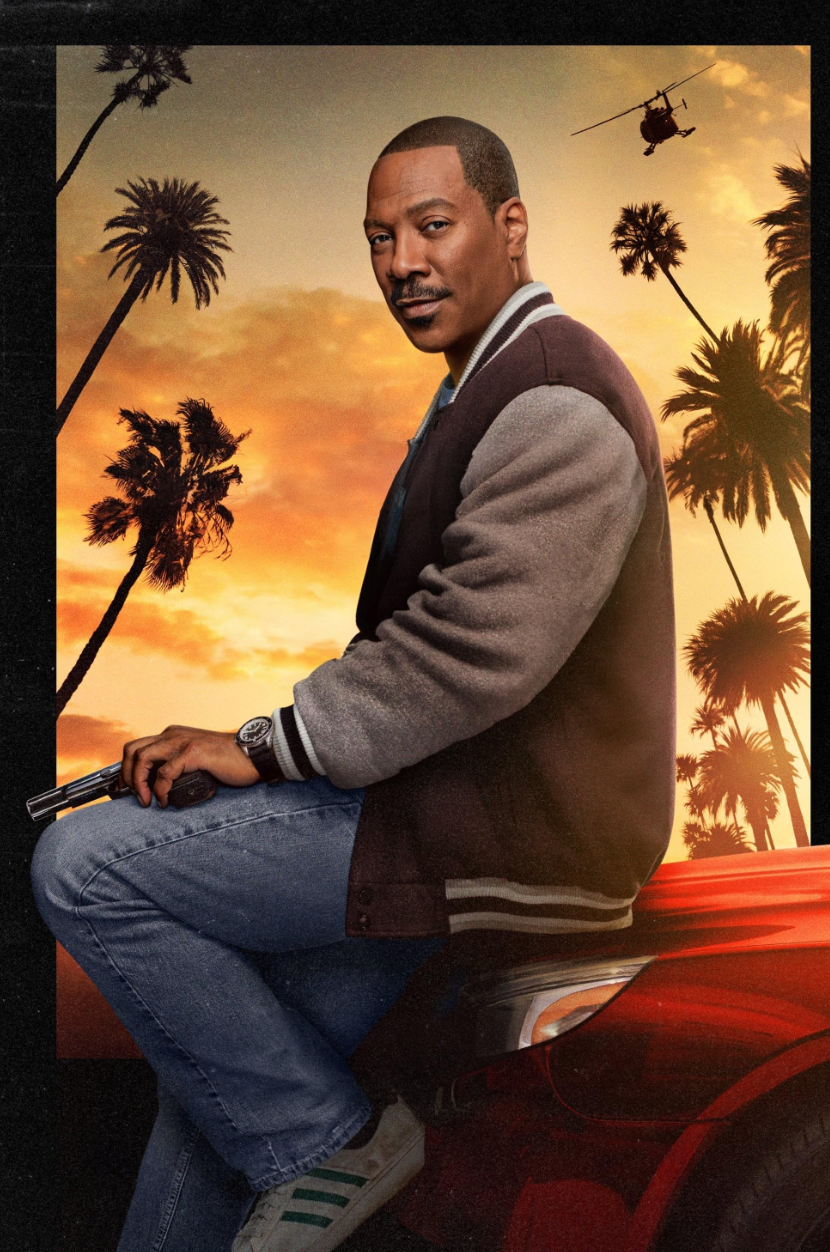
Eddie Murphy as Axel Foley in Beverly Hills Cop: Axel F; Photo: Netflix.
Eddie Murphy reprises his role as Axel Foley, the Detroit street-smart former con-turned-cop who, in the first film, went to Beverly Hills to figure out who killed his friend Mikey, ends up tracking down the killers, and befriends officers Billy Rosewood (Judge Reinhold, Fast Times at Ridgemont High, Stripes) and John Taggart (John Ashton, Gone Baby Gone, Midnight Run), who initially took him into custody for trespassing the would-be killer’s businesses.
John Ashton as John Taggart, Eddie Murphy as Axel Foley, and Judge Reinhold as Billy Rosewood in Beverly Hills Cop: Axel F; Photo; Netflix.
Flash-forward to forty years later, and Axel Foley is still fighting crime and chasing criminals, especially early in the film. He suspects a robbery is about to go down at a Detroit Red Wings game he’s attending with a fellow cop. Foley’s policeman’s intuition pays off. After confronting the robbers at the stadium, a chase ensues. In true Foley fashion, he barrels down Detroit streets in a snow plow, eventually apprehending the criminals, but not without a slew of destroyed cars, traffic signs, poles, and terrified pedestrians in the midst. Foley’s now captain, formerly a detective in the original Beverly Hills Cop, is semi-furious and tired, played by funnyman Paul Reiser (Mad About You, Stranger Things); he’s over Foley’s antics and is ready to retire. Axel is about to challenge his captain when he receives a call from Billy Rosewood saying his daughter is in trouble. Foley’s daughter (Taylour Paige, Zola, Boogie), Jane Saunders, is a defense attorney in Beverly Hills and may be defending the “wrong” guy, according to the Beverly Hills Police Department.
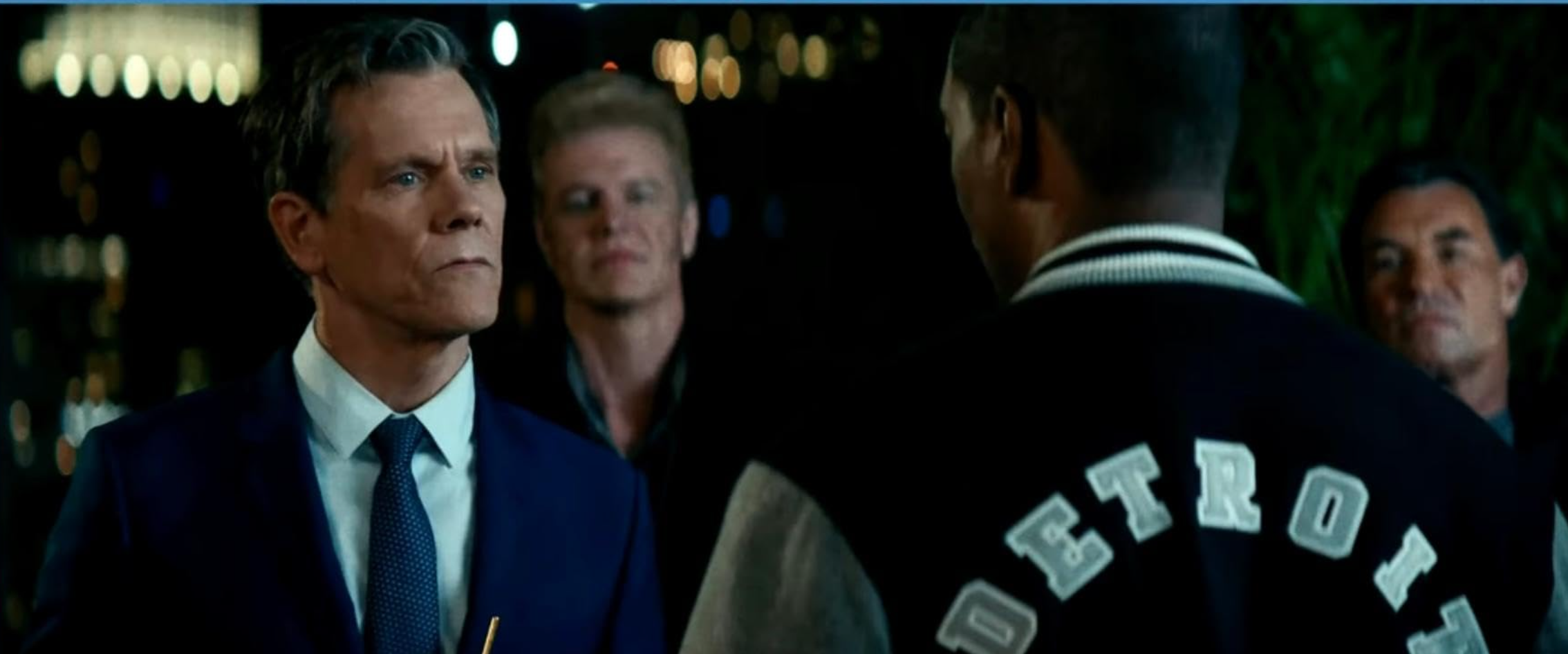
Kevin Bacon as Captain Grant in Beverly Hills Cop: Axel F; Photo: Netflix.
Axel Foley finds himself again in Beverly Hills, ready to expedite the wheels of justice, cunningly and entertainingly. Upon entering the Beverly Hills precinct, we learn Taggart is now chief, and Officer Rosewood has become a private investigator — on the heels of exposing crooked Los Angeles cops. Enter Kevin Bacon’s character, Captain Grant. Oozing enough smarm and finesse, he can make playing a crooked cop an Olympic sport. And Kevin Bacon always seems to add a layer of depth to any film he’s in. Debate me if you’d like.
Eddie Murphy as Axel Foley and Taylor Paige as Jane Saunders in Beverly Hills Cop: Axel F; Photo: Netflix.
But Foley’s return isn’t smooth sailing. His daughter wants nothing to do with him since they are estranged. Foley’s daughter, Jane, works for a prestigious firm defending criminals; this time, it seems to be a cop-killer. There’s a big conflict of interest between father and daughter.
Bronson Pinchot as Serge in Beverly Hills Cop: Axel F; Photo: Netflix.
Although Foley and his daughter are at odds, they team up with other favorite characters like Bronson Pinchot’s (Perfect Strangers, Risky Business) Serge, who’s still as funny and eccentric as ever. And newcomer to the Beverly Hills Cop franchise, Joseph Gordon-Levitt (Don Jon, Looper). He’s ditched his clean-shaven, boyish look for a bearded mid-thirties millennial cop with daddy issues. Then there’s Axel Foley’s theme song that will be permanently etched in your brain as it was for me since childhood when I played it on my synthesizer.
Watch this fun, action-packed Eddie Murphy flick, which is just as enjoyable as the first film forty years later. Don’t believe me? Rotten Tomatoes audience members gave it a higher rating than the original! Stream it now on Netflix!












 Don't Suck My Collagen