Richly described, flawed characters who, despite their imperfections, come together to serve a bigger purpose than themselves.
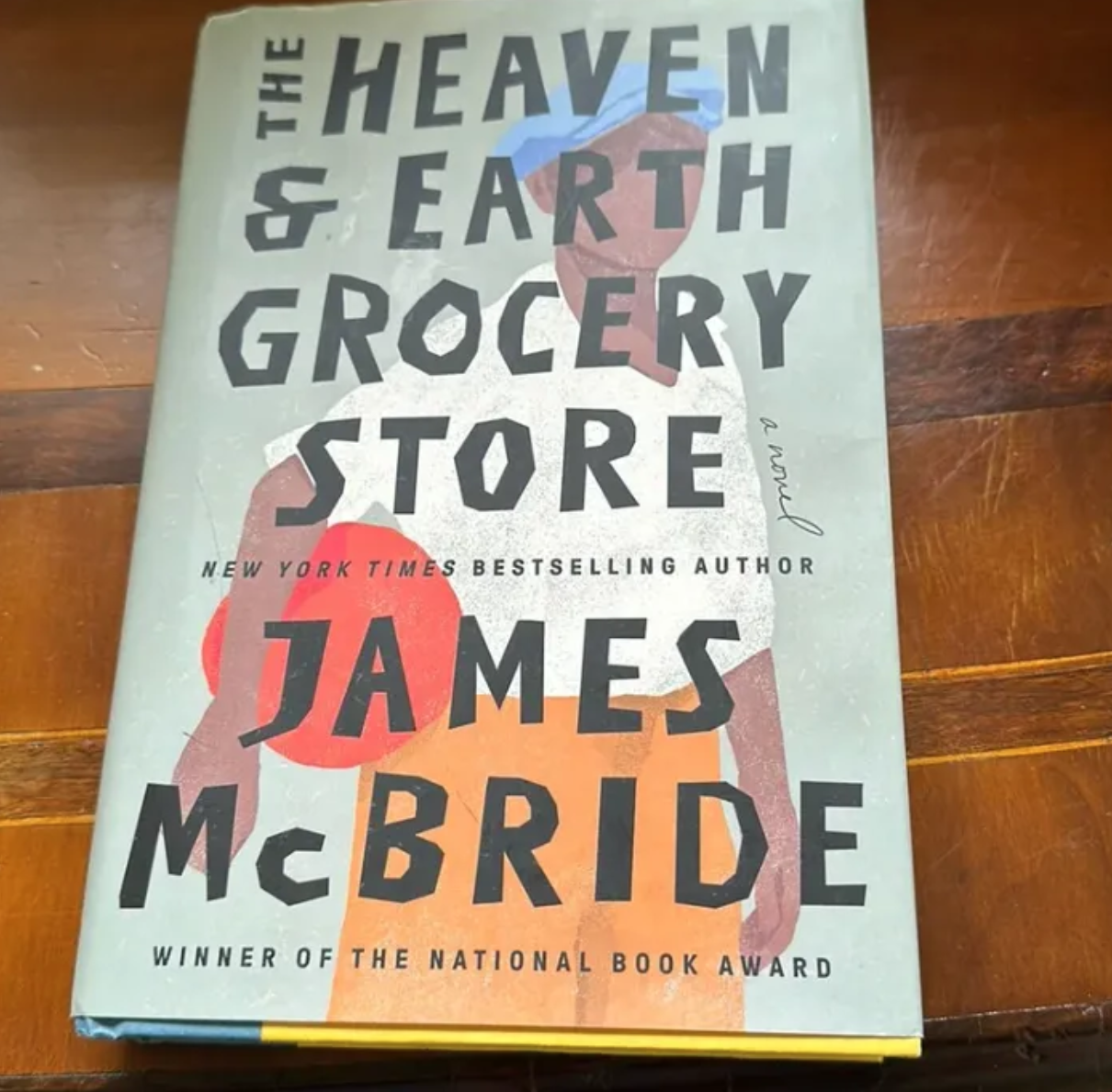
The Heaven & Earth Grocery Store Hardcover book by James McBride; photo: Mercedes Vizcaino
James McBride’s The Heaven & Earth Grocery Store is my first book review on Medium. I felt compelled to write about it because I was still thinking about the novel weeks later, even though I’d started another book. We know books are highly subjective because they tend to follow genres that readers gravitate toward or not. This particular novel weaves multiple genres, and the storytelling is so masterful you barely notice if it’s fiction, horror, or memoir — or all three! I bought the book earlier this year because I was intrigued by it. At the end of last year, I saw two editors on TV from two platforms (Amazon Editors and Barnes & Noble) gush about the story, the writing, and how the characters made them feel afterward, declaring it the best book of 2023.
They were right.
Anyone who asks who I’m currently reading or not, I recommend The Heaven & Earth Grocery Store novel.
So what’s the story about?
The book begins with the discovery of a skeleton with a Jewish mezuzah (a symbol that connects, protects, and unites Jews) in a well excavated by construction workers in Pottstown, PA, in the 1970s and flashbacks to 1936. The author tells the story of the residents of Chicken Hill, made up of African-Americans, Jews, and Christians, who are at odds with each other but find a way to coexist.
The owner of The Heaven & Earth Grocery store is Chona, a Jewish woman married to Moshe, a Jewish-Romanian theater owner who brought artists of all different creeds and religions to his performing arts space. Moshe and Chona Ludlow, although very religious, are accepting of the African-Americans in Chicken Hill, whereas other whites are not. Chona, a disabled woman with striking features and a heart to match, provides unlimited credit to the Black residents of Chicken Hill, often overlooking collecting the debt. She doesn’t subscribe to tenets of Christian nationalism, which many of the other white residents of Chicken Hill are susceptible to. As the white people in Chicken Hill prosper, including their Jewish friends, they move out to more affluent areas, leaving Moshe and Chona as the Jewish outliers who aren’t interested in wealth mobility or status.
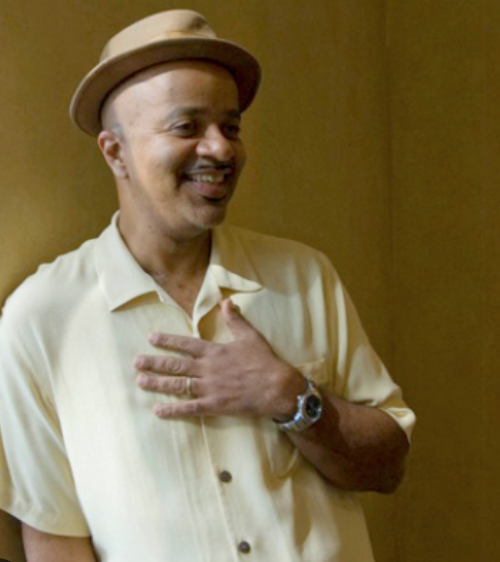
Author and musician James McBride; photo courtesy of Riverhead Books. When Moshe’s Black theater worker and best friend, Nate Timblin’s 10-year-old deaf nephew, Dodo, becomes the target of state investigation to send him to a state hospital for people with disabilities and mental illness (which the child does not have), Chona intervenes. She does everything within her power to keep the child safe, to her detriment. I won’t go on so as not to reveal too much so you can bask in McBride’s captivating storytelling. Not since Joan Didion’s The Year of Magical Thinking (dealing with the subject of grief) has a book left such a lasting impression on me. The themes of community and helping each other out no matter what background, religion, or walk of life people come from are prevalent and speak to a world we can aspire to live in one day.
Read this book, STAT! Digitally, audibly, or buy the hardcover.
The seven-part limited Netflix series stars Richard Gadd, who also wrote and co-produced the story based on his life.
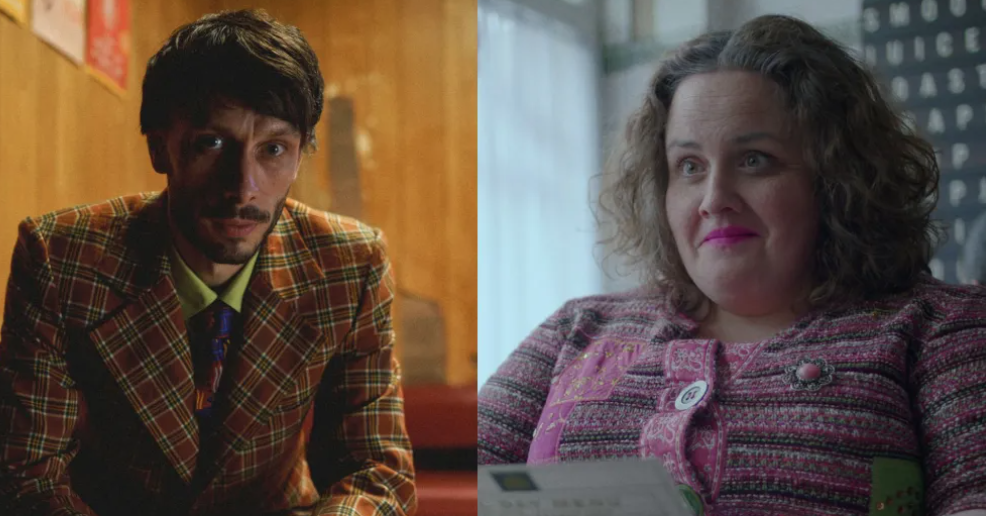
Richard Gadd as Donnie Dunn and Jessica Gunning as Martha in Baby Reindeer’; Photos courtesy of Netflix.
What started as an award-winning one-person comedy show at the Edinburgh Fringe Festival became a successful and dark Netflix miniseries. The series Baby Reindeer follows Donny Dunn, a struggling comedian in his late twenties and part-time bartender who encounters a woman in her 40s named Martha (Jessica Gunning, “White Heat,” What Remains”) when she enters the bar he works in. After Martha reveals her financial woes, Donny offers her a cup of tea free of charge. Martha takes this kind gesture to heart. She comes to the bar daily, and Donny provides free diet cokes. The relationship blossoms; they’re at ease with one another. Donny enjoys her odd, contagious laugh. She compliments his features and quick-witted quips. He soaks it in.
Martha mentions to Donny that her birthday is coming up. Unsure what to say, he suggests they meet, not for a date, as he clarifies his platonic interest in Martha, but for a fun interaction between friends. She agrees. When they get together to celebrate her birthday at a cafe, Martha starts getting triggered by Donny’s insistence that they are friends and nothing else and starts yelling. The pair leave the cafe, and Donny follows her to glimpse her real life. Donny tries to be discreet as he peeps into Martha’s living room window, only to be discovered by her when his phone rings; it’s Martha calling. Donny’s misstep sets off a chain of unfortunate events.
Martha begins to email Donny numerous times daily. She goes to his one-person show comedy acts and either heckles or cheers him on while he’s on stage. She follows him everywhere and emails him incessantly, where the harassment becomes unbearable for Donny. He goes to the police station to report Martha, and the officers don’t take him seriously.
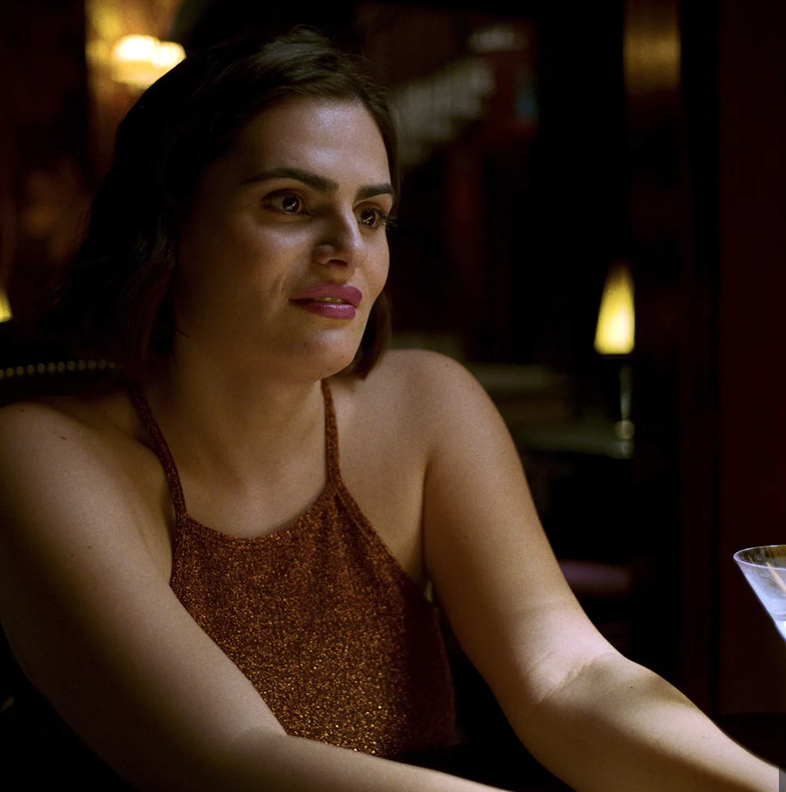
What’s deeply fascinating is how Donny and Martha feed off one another’s need for affection. He’s a comedian craving attention from the public. Although an audience of one, he subconsciously likes Martha’s adulation, although nightmarish, and comes in the form of 41,071 emails, 350 hours of voicemails, 744 tweets, 46 Facebook messages, and 106 pages of letters. Martha sent Donny an array of odd gifts, everything from sleeping pills, a wooly hat, and boxer shorts to a baby reindeer toy. The real-life Donny (Richard Gadd) endured Martha’s obsessive interactions for four and a half years. Martha’s erratic harassment spilled over to Donny’s parents, former girlfriend, and a trans woman, played wonderfully compelling by Nava Mua (Disclosure).
Nava Mau as Terri in ‘Baby Reindeer’; Photo courtesy of Netflix.
But it gets worse for Donny. During one of Martha’s aggressive encounters, she gropes Donny. Repressed memories of a former sexual abuser instantly trigger him. And Martha realizes this when she stops touching Donny and says: “Who hurt you?” The scene is profoundly revealing for both characters. It’s as if broken recognizes broken. You sympathize with Donny and Martha. Donny acknowledges Martha’s mental instability, simultaneously realizing he has unresolved trauma he must contend with.
So the real-life Donny, Richard Gadd, chose to write, act, and produce this period in his life that had been consuming him:
Hard to watch at times. Intriguing. Dark, for sure. Baby Reindeer is worth binging and getting a rare perspective on male sexual assault and the trauma that ensues. Stream it now on Netflix.
By intertwining technology, sustainable fabrics, and customizable silhouettes, Lauer has given the one-piece garment a much-needed makeover that rivals contemporary luxe brands.
Fashion designer Andrea Lauer at her Risen Division shop in Red Hook, Brooklyn; photo; Risen Division website.
The award-winning artist, scenic, and costume designer is no stranger to creating statement fashion pieces. Andrea Lauer has outfitted musicians and Broadway, TV, and film stars for years, taking their wardrobes to new heights. From Billy Joe Armstrong to Melissa Etheridge, now she’s more than ready to adorn the rest of us with her stylish jumpsuits.
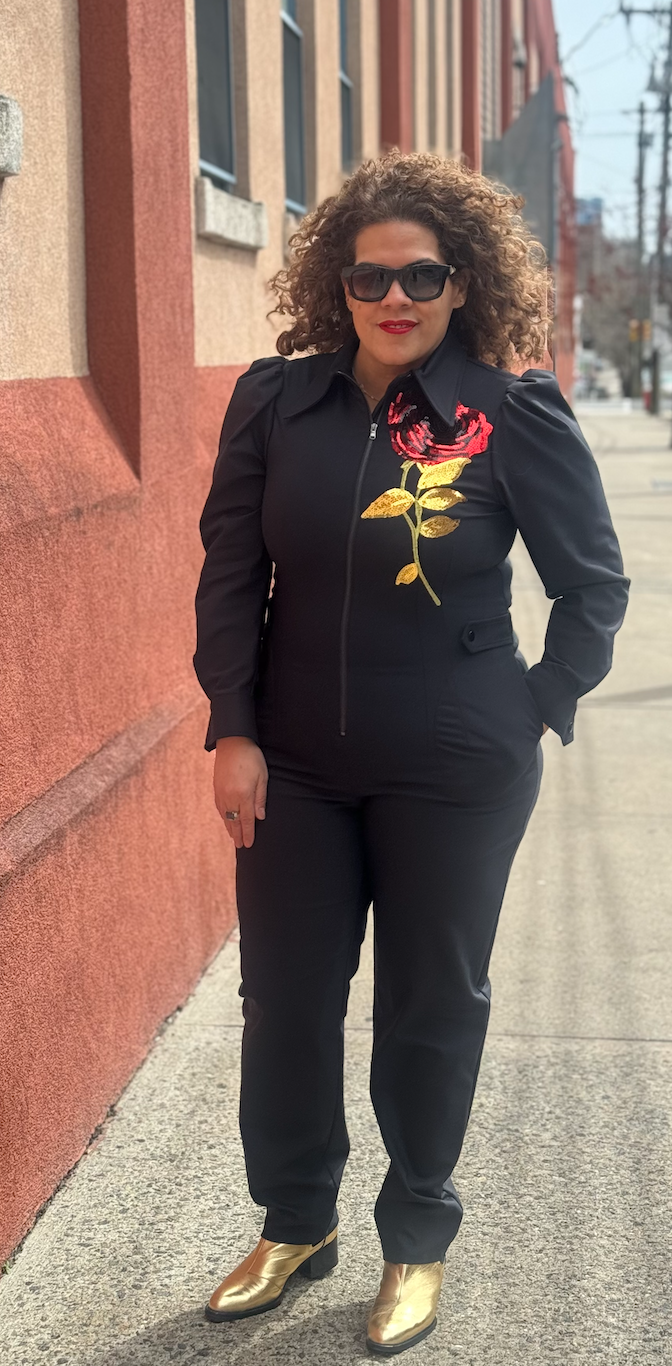
I love fashion. Always have. As a kid, my older cousins would parade their fabulous eighties shimmery threads at family functions. They had the build for all types of clothing. I didn’t. I was short and plump and wore what was flattering and unexciting. One recurring fashion memory in my childlike mind involved an iridescent gold lamé jumpsuit with accentuating attributes my cousin once wore. She resembled a golden goddess ready to climb into her Formula One racing car with the same hue as her outfit. At a book signing in NYC’s Gotham restaurant, I came across someone wearing a jumpsuit reminiscent of this sparkly one-piece designed by Andrea Lauer.
Lauer had models of varying body types and ages wearing her whimsical fitted jumpsuits. What struck me the most was that each piece looked completely different on each model, as if the garment was an extension of their personalities. There was a sea of jumpsuits in black seersucker, navy with white pinstripes, metallic, a rich, satiny blue that reminded me of a beach in Cote d’Azure worn by a sixty-something model that slayed the look. Think Debbie Harry meets the lead singer of The Runaways, Cherie Currie. I was mesmerized.
I chatted with Andrea Lauer, Founder and Creative Director of Risen Divison, a fashion brand specializing in the cult and art of the jumpsuit. She shared her insights into sparking a renaissance of the one-piece garment.
M. Vizcaino: What was the impetus to create a fashion line centered solely on one garment?
A. Lauer: My background is in clothing and costume design, working in theatre and film, television, and music. A few years ago, I decided to launch Risen Division and open a store that doubles as my atelier and studio for all my other projects. I’ve always been curious about the history of the jumpsuit, not just in fashion but also in its connotations in our culture. Studying costume history, I discovered the inventor of the one-piece garment was Ernesto Michachelles, an Italian futurist who went by the pseudonym of Thayaht. He wanted to make a utilitarian garment available to the public and printed the design in the newspaper for anyone to make. After learning this, it sparked an interest in the garment, as an artist looking at what clothing can tell you about a moment in time. From there, I started looking at space and space travel. In space, you need to wear a one-piece garment. In other cultural carriers of this idea of uniform in our society, predominantly used for incarceration, mechanics, and workers in varying industries — historically, the jumpsuit is representative of the uniform of the masses. I wanted to take this concept of the uniform and the masses, flip it on its head, create a garment that was an elevation of the individual, and adjust the perception of the jumpsuit — how to step into it. And that’s when Risen Division was born.
Fashion designer Andrea Lauer making adjustments to her Risen Division jumpsuit; photo Craig La Court.
M. Vizcaino: What’s the meaning behind the brand name?
AL: Garments used for the division of labor. That’s where the division comes from. But then I considered taking it to a higher power if you raise something to the square power in mathematics, like R-squared. The idea of dividing labor, bringing it to the masses with a different version of workwear encompassing couture, in how it’s made, and raising the individual aesthetic through the garment. The concept for the brand also materialized from people in history. I love literature and am inspired by people who have had an unusual path, broken barriers, and impacted culture.
MV: Which figure in history did you choose for your first design?
AL: My muse for my first jumpsuit is Virginia Woolf. I named it the Woolf piece. Although she disliked fashion, she moved through life by her own rules, not letting societal conventions dictate her existence. Another inspiration for one of my signature jumpsuits is the Quimby, an homage to Harriet Quimby. She was the first female aviator (not Amelia Earhart) to acquire a pilot’s license and travel across the Atlantic on a plane in a violet flight suit — and the original Quimby is a plum metallic jumpsuit. My pieces reflect the contributions these fascinating outliers made to society. It’s important for me to imbue their stories through design and capture the details.
MV: You mention sourcing sustainable materials to make your garments on your site. Can you walk me through the process of creating your jumpsuits?
There are two ways I think about jumpsuits: style and material. I’ve created seven different styles. Each of the styles is based on a person from history. I created a specific collection based on a movement, not a person, called the Bauhaus Collection. I wanted this collection to be accessible to every human, not just one person; it’s unisex and for every gender. What does the material tell us, the fabric and the weave? It has to tell a story. I’m inspired by seersucker, the traditional fabric for the gentleman’s suit of the South. I found a Japanese company, a mill, that makes sustainably produced seersucker using low water consumption and organic cotton with high twists, a strong material with high longevity. That means that it can withstand washes and is stain-repellant, an elegant and functional material. I interchange materials based on seasons and what’s available. I was thinking about scarcity wisely. Just because we have small amounts of something doesn’t mean we can’t use it. Scarcity challenges my design sensibility and forces me to think outside the box of mass production and design something special. I’m sustainable by nature, and it echoes in everything I do. People can come to the shop in Brooklyn and try on ten different jumpsuits with one-of-a-kind embroidery, sequins, or vegan leather (materials that can’t be reproduced) and leave with an incredible piece. Customizable jumpsuits that aren’t available on the website.
M. Vizcaino: What are your plans for Risen Division? How do you see the brand evolving?
A. Lauer: Risen Division focuses on enhancing the jumpsuit’s beauty in its one-and-done practicality. You can style it up or down by adding something and transforming it from day to night. I’m a fan of all jumpsuits. I even had a jumpsuit party, encouraging guests to wear their favorite designs. I’d love to collaborate with other brands. My dream is to reimagine the flight attendant’s uniform and create a jumpsuit that embodies the service they provide, transcending their individuality.
Andrea Lauer’s creative work in scenic and fashion design and her innate understanding of materials share a common theme of design and body composition. Her curiosity about the human form has led her to create designs with AI and solve design challenges, pushing the boundaries of the one-piece garment while maintaining a sustainable business model.
According to Lauer, “Technology can aid human design but not replace it.”
Andrea Lauer is a maker at heart. She believes the Risen Division is a meditation on the body, with the one-piece garment as the vessel. This reflects the brand’s mantra: “In jumpsuits, we trust.”
Click here to shop Risen Division’s spectacular, versatile, sustainably made jumpsuits. You can also visit her Brooklyn storefront for a custom-made piece.
Giamatti, the two-time Oscar nominee, conjures up all the feels from audiences in the film. Disdain. Sympathy. Anger. Revulsion. Laughter.
Paul Giamatti as Paul Hunham in ‘The Holdovers’; photo courtesy of Focus Features.
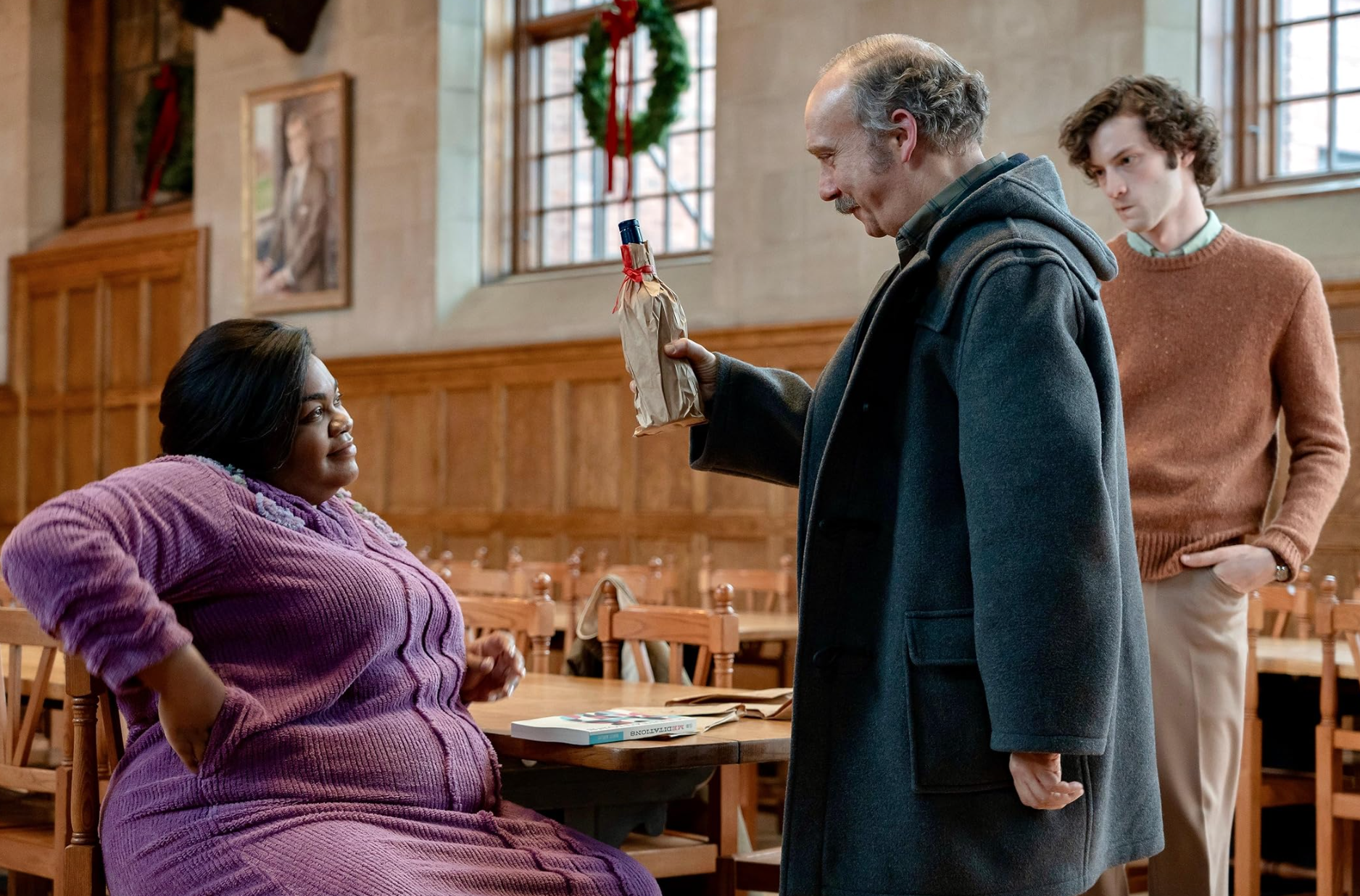
There hasn’t been one Paul Giamatti film that has left me disappointed. And the latest Alexander Payne-directed film is no exception. It’s Paul Giamatti at his best. His brand of know-it-all, feigning righteousness, flawed, non-handsome yet alluring, often funny characters that make terrible decisions but somehow come out on top is on full display. In The Holdovers, it comes in the form of Paul Hunham, a New England classics prep school teacher who’s a misanthrope tasked with babysitting a group of students with no place to go during Christmas break in 1970. Punishment or payback from the school headmaster for Mr. Hunham not passing a legacy student from an influential and powerful family.
Da’Vine Joy Randolph as Mary Lamb, Paul Giamatti as Paul Hunham, and Dominic Sessa as Angus Tully in ‘The Holdovers’; photo courtesy of Focus Features.
When most of the group is rescued by a fellow student’s well-to-do parent, whisking them off to a family winter escapade via helicopter on school grounds, all but one student is left behind. Angus Tully, a smart and troubled 17-year-old, played by Dominic Sessa (debut role), can’t bear his fate and makes the situation unbearable for Mr. Hunham. Rounding out the crew of stragglers at the prep school is Mary Lamb, the head cook who serves as a buffer between teacher and student, played subdued and empathetically by Da’Vine Joy Randolph (Ghost on Broadway, Dolemite), who also received an Oscar nom for Best Supporting Actress in the film.
The Giamatti Effect
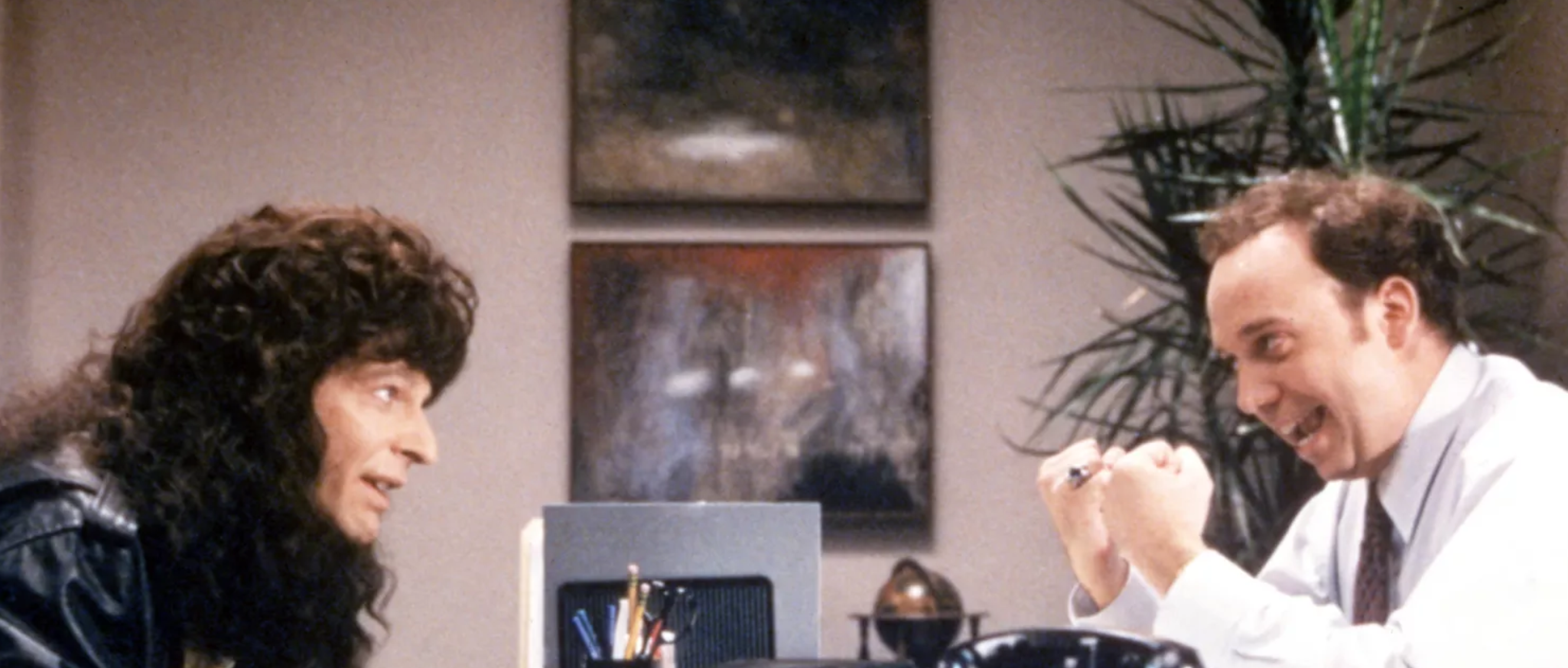
I first saw Paul Giamatti as Kenny “Pig Vomit” Rushton on the screen. A nickname unaffectionally bestowed by Howard Stern in his autobiographical 1997 film Private Parts. In the film, Giamatti’s character is the shock jock’s boss at WNBC radio station. He is as annoying as he is entertainingly comical, constantly harassing Stern to watch his language on air and to identify the station’s call letters with more pizzaz. Pig Vomit epitomizes nightmarish, quirky, micromanaging bosses, and Giamatti plays him to insolent perfection. A role believed by critics to upstage Howard Stern’s character in the film, with which I wholeheartedly agree. Giamatti’s “W-NNN-B-C” is one of the most memorable lines from the movie that catapulted his acting career.
Howard Stern as himself and Paul Giamatti as Kenny “Pig Vomit” Rushton in ‘Private Parts’; photo courtesy of Paramount Pictures.
Other Giamatti Gems
Alexander Payne and Paul Giamatti first collaborated on the critically acclaimed Sideways, where Giamatti plays a divorced middle-aged English professor (even though he was 36 at the time) and aspiring writer who takes a road trip through California’s wine country with his actor-best friend (Thomas Haden Church, Wings, Twisted Metal) right before his wedding. Both characters are loathsome as they are loveable and engage in absurd, funny situations. It’s the perfect pair of f@*k-ups you can’t get enough of.
Next up: The Illusionist, where Giamatti plays Inspector Uhl, a curiously skeptical officer and music lover during turn-of-the-century Vienna, who is on the heels of arresting Eisenhem (Edward Norton, Fight Club, American History X), a master magician with abilities to bring back people from the dead and hypnotize audiences while pining for his childhood love, Duchess Sophie (Jessica Biel, Candy, The Sinner), who is out of his economic class. Giamatti brings so much depth to the role and is delightfully enigmatic as the inspector. You can’t imagine any other actor in the role.
3 Fun Facts About Paul Giamatti:
Giamatti wore a prosthetic eye to emphasize The Holdovers’ Paul Hunham character’s lazy eye defect.
Giamatti went to Yale for theatre, and his father, Dr. Bart Giamatti, was president at the Ivy League college before becoming the 7th baseball commissioner for MLB.
Paul Giamatti, Edward Norton, and Ron Livingston went to Yale, studied theater together, and remained good friends.
In theatres, you can watch Paul Giamatti’s latest heartfelt dramedy, The Holdovers, written by David Hemingson (Whiskey Cavalier, Kitchen Confidential), or stream it on Amazon Prime.
Sure. Vergara may not resemble the real-life Griselda, but she embodies her fiery criminal spirit in the new Netflix 6-part series.
From L to R: Griselda Blanco and Sofía Vergara as Griselda in the series; photo: courtesy of Netflix.
From the word go, at the beginning of episode one in Griselda, viewers see Griselda Blanco (Sofía Vergara, Modern Family, Hot Pursuit) quickly approaching her home, concealing blood oozing from her hip and ushering her sons to pack up their stuff and get into a taxi for the airport Miami-bound, leaving behind the drug-fueled Medellín Cartel in Colombia.
Miami became Griselda Blancos’s drug-distributing oyster from 1979 to 1981 and was infamously known as the “Godmother” of cocaine.
Upon arriving in Miami, Blanco meets up with an old friend, Carmen (Vanessa Ferlito, 24,Graceland), who runs a travel agency, vows never to return to the drug game, and implores Griselda to do the same. Blanco has other plans. She smuggled enough pure-grade cocaine for others to take notice, sell to, and make a decent life for herself and her family. But she’s a female in a violent male-dominated drug business. After one of the drug distributors’ lackeys assaults Blanco for making him look foolish in front of his boss, Blanco retaliates by following him, ambushing him, and beating his legs with a bat. It’s Sofía Vergara like you’ve never seen. Savage and ruthless.
Sofía Vergara as Griselda; photo: courtesy of Netflix.
Vergara owns Griselda’s violence and conveys it well.
She has to capture Griselda’s essence, after all. Undermined and undervalued, Blanco enlists an army of Cuban dissidents fresh off the Mariel boatlift in 1979. It’s not a good look for Cubans, I know (I’m Cuban). Needless to say, this troupe of terrorizing refugees is at Griselda’s beck-and-call, targeting the Ochoas (one of Colombia’s prominent cartels), other drug distributors, and any other man, woman, and child that has the misfortune of crossing her path. The first to discover Griselda’s crimes is June Hawkins (Julian Aidén Martinez, The Black List, Prodigal Son), a Latina cop who also had to contend with sexism of her own in the Miami Police Department. Not believed by her colleagues in law enforcement, Hawkins persevered with the theory that the drug lord behind the murders in that era was a woman.
Julian Aidén Martinez as police officer June Hawkins in ‘Griselda’; photo: courtesy of Netflix.
The filmmakers and executive producers (Eric Newman and Sofía Vergara) wanted to tell Griselda Blanco’s perspective. Still, the last three episodes seem to gloss over the extent of the damage and riches she assumed. It’s not that we need more mounds of cocaine, dead bodies, lavish mansions, and gold toilets. I would’ve liked to have seen more expository details explaining her ascension to the top before eventually being gun-downed in Colombia in 2012 and serving 15 years in federal prison. Nonetheless, Griselda (directed by Andrés Baiz, Narcos franchise) is a captivating glimpse into the only female drug lord we’ve barely seen on-screen, unlike her drug kingpin counterparts, like Pedro Escobar. You can stream Griselda on Netflix.
The Peter Farrelly (There’s Something About Mary, Me, Myself, and Irene) and Bobby Mort led (Comedy Jam, Dead Man Walking) comedy-drama has been around since 2017. Still, the themes of addiction, redemption, and finding purpose are more relevant than ever and brimming with countless funny jokes.
Clockwise: Will Sasso as Ben, Ron Livingston as Loudermilk, and Anja Savcic as Claire; Photo: Courtesy of Amazon Prime.
The series follows Sam Loudermilk (Ron Livingston, Office Space, Sex and the City), a former music critic for Rolling Stone and recovering alcoholic who counsels a support group in a church called Immaculate Heart in Seattle, managed by a no-nonsense, truth-telling priest ready to call out Loudermilk’s potty-mouthed approach to keeping members sober and motivated. When the priest gives Loudermilk an ultimatum: help a drunk, meth-addicted 19-year-old whose mother is a vital donor or lose the location for the support group, he’s at a standstill. With an arduous task ahead, Loudermilk brings the teen to live with him and Ben (Will Sasso, Mad TV, Young Sheldon), his best friend and sponsor. The troubled teen, Claire (Anja Savcic, Big Sky, Nancy Drew), is a mess.
Yes, placing a teen in the care of two recovering male addicts may seem strange, but in this series, it isn’t. The common bond of addiction and the road to recovery is what makes their living situation work. Not to mention, Ben, who looks like a big teddy bear (and sometimes acts like one), provides a pleasant mix of snark and clever retorts to the environment. Loudermilk is just as snarky and clever, only he never laughs. He’s had it with people’s behavior. If Larry David is known as the “social assassin” on Curb Your Enthusiasm, Loudermilk tops him as the social terrorist. He’s called an asshole by most people he encounters and knows he’s one. Providing his unsolicited thoughts on people’s actions and mocking their idiocy and, at times, their bad grammar is Loudermilk’s trademark.
L to R: Jackie Flynn (There’s Something About Mary) and Tyler Layton-Olson (The Man in the High Castle) in Loudermilk; Photo: Courtesy of Amazon Prime.
Throughout Season One, we meet an oddball mix of young, middle-aged, and old regulars that attend the support group — from the 19-year-old Derek Jeter lookalike who’s trying to figure out his ancestry to the older man who shacks up with a blow-up doll to a bookie by trade, who’s given up one addiction for another — you’ll recognize from other Farrelly films. Their narratives are anything but dull. Then Loudermilk Senior makes an appearance, a womanizing, irresponsible 70+ man, living the life of a twenty-something who pays for his careless, irresponsible antics in a later season.
The rotten apple doesn’t fall far from the rotten tree. We can see similar traits of the older Loudermilk in the younger. But that doesn’t make him unlikeable. Loudermilk commits to becoming a better person and writer, leaving his dead-end job cleaning floors in a bank and resuscitating his once-thriving writing career. He’s crude — an acquired taste, but if you dig deep, he’s good-hearted and loves first-class music and literature. Amazon Prime hasn’t greenlit a fourth season of Loudermilk, but you can now catch the first three sensational seasons on Prime Video and Netflix.
The star-studded cast breathes new life into the much-needed comedy genre.
From L to R: Sandra Oh and Awkwafina in ‘Quiz Lady’; Photo: Courtesy of 20th Century Studios.
Quiz Lady follows Anne Yum (Awkwafina, Crazy Rich Asians, Ocean’s 8), an introverted, game-show-loving woman whose penchant for the show Can’t Stop the Quiz, hosted by whimsical and quirky Terry McTeer (Will Ferrell, Barbie, Elf), begins at a young age while her mother gambles and her dad drinks, and her actress-wannabe older sister chases fame. It’s the latch-key kid syndrome all over again — this time for the millennial generation. Anne continues to preoccupy her time with the show and grows to be an unassuming accountant her coworkers barely pay any mind to.
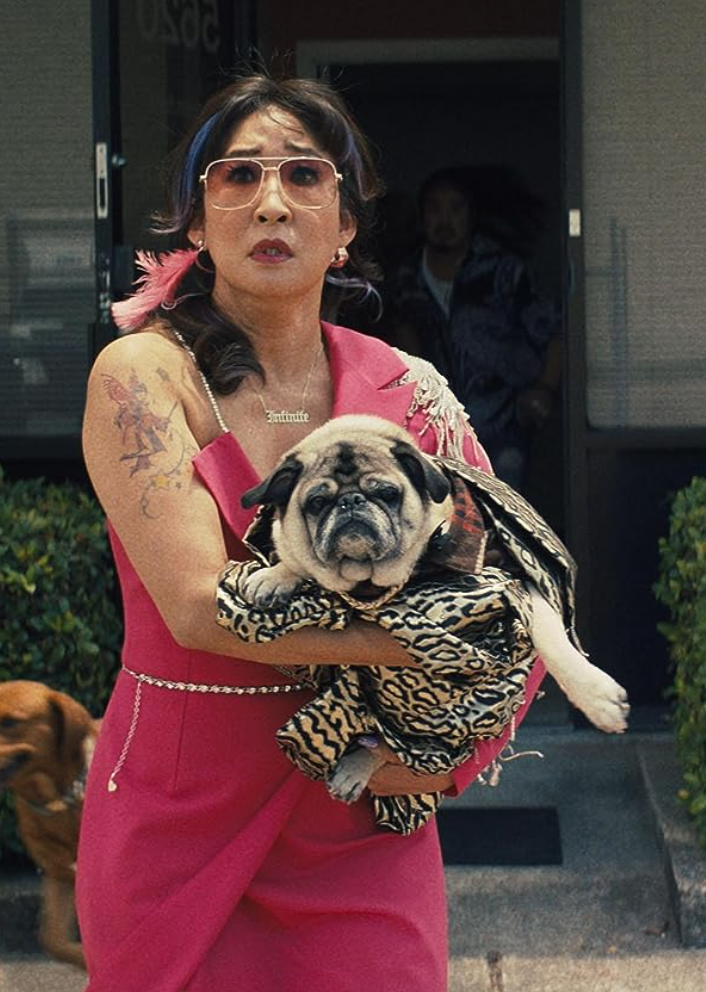
One day, Anne’s mother’s assisted living residence calls to let her know her mother has fled the facility and they don’t really want her back if and when she’s found. To make matters worse, Anne’s mother’s gambling vice hasn’t subsided with age, and she owes 80 grand to a gangster named Ken, who’s kidnapped Anne’s beloved dog, Mr. Linguini until Anne can settle the debt. The pug is living the life. Anne fears he may not want to return to her after experiencing a lavish lifestyle, and she panics. Jenny, Anne’s sister (Sandra Oh, Grey’s Anatomy, Killing Eve), visits indefinitely, as she’s financially unstable and unrelentingly impulsive and has a strained relationship with her younger sister. Anne isn’t happy.
Sandra Oh as Jenny Yum, holding Mr. Linguini in ‘Quiz Lady’; Photo: courtesy of 20th Century Studios.
Jenny secretly films Anne’s rapid-fire succession of correct answers to the questions on Can’t Stop the Quiz and posts the video on the Internet, which goes viral. Suddenly thrust into the spotlight, Anne must contend with becoming a contestant and beating the reigning champion, Ron Heacock, played smarmily with just the right amount of dislike-ability as only Jason Schwartzman (Rushmore, Asteroid City) can pull off. Can’t Stop the Quiz’s Will Ferrell mirrors his SNL days as Alex Trebek and other game show hosts he’s masterfully assumed on SNL with deadpan panache.
Will Ferrell as Terry McTeer on ‘Quiz Lady’: Photo: courtesy of 20th Century Studios.
Both Awkwafina and Sandra Oh give standout performances. But it’s Oh’s departure from serious, complex, and sarcastic characters that make her quirky and funny portrayal of Jenny shine — a testament to Oh’s acting range. Directed by Jessica Yu, written by Jen D’Angelo, and produced by Will Ferrell, Quiz Lady is a funny, heartfelt, relatable sister relationship movie you don’t want to miss. Watch it on Hulu now!
The expansive exhibit on director Spike Lee’s career and inspiration to create ground-breaking films on African-American culture is a multi-media tapestry of the artist’s creative journey, spanning almost 40 years.
Spike Lee: Creative Resources Exhibit; Photo: Paula Abreu Pita/Brooklyn Museum.
As soon as you enter the Spike Lee Creative Resources exhibit, Denzel Washington’s Malcolm X character’s infamous fiery 1964 speech from the film permeates the room. The scene, audio, costumes, and other colorful props from the movie, released in 1992, engulf your senses and prime you for what’s next.
A nostalgic visual stimulation that gives you front-row access to Lee’s early life.
Clockwise: Spike, Joie, David, Cinqué, and Christopher Lee at 186 Warren Street, Cobble Hill, circa 1967–1970; Photo: Unknown Artist.
In this room, there’s a collection of paintings in color and black and white of Spike Lee’s family — from his siblings as kids on the stoop of his beloved Brooklyn neighborhoods (an abstract character present in Lee’s films) to portraits of his dad, Bill, a renowned jazz bassist and composer, heavily influencing the filmmaker’s taste in music and scoring many of his films, like the critically-acclaimed Inside Man, where you can hear the theme song, play intermittently throughout the exhibit to photos with Lee and his children. Family played a pivotal role in shaping Lee’s love for the arts and the narratives of the projects he’s brought — and continues to bring — to life.
Next up: Do the Right Thing’s Immersive Experience
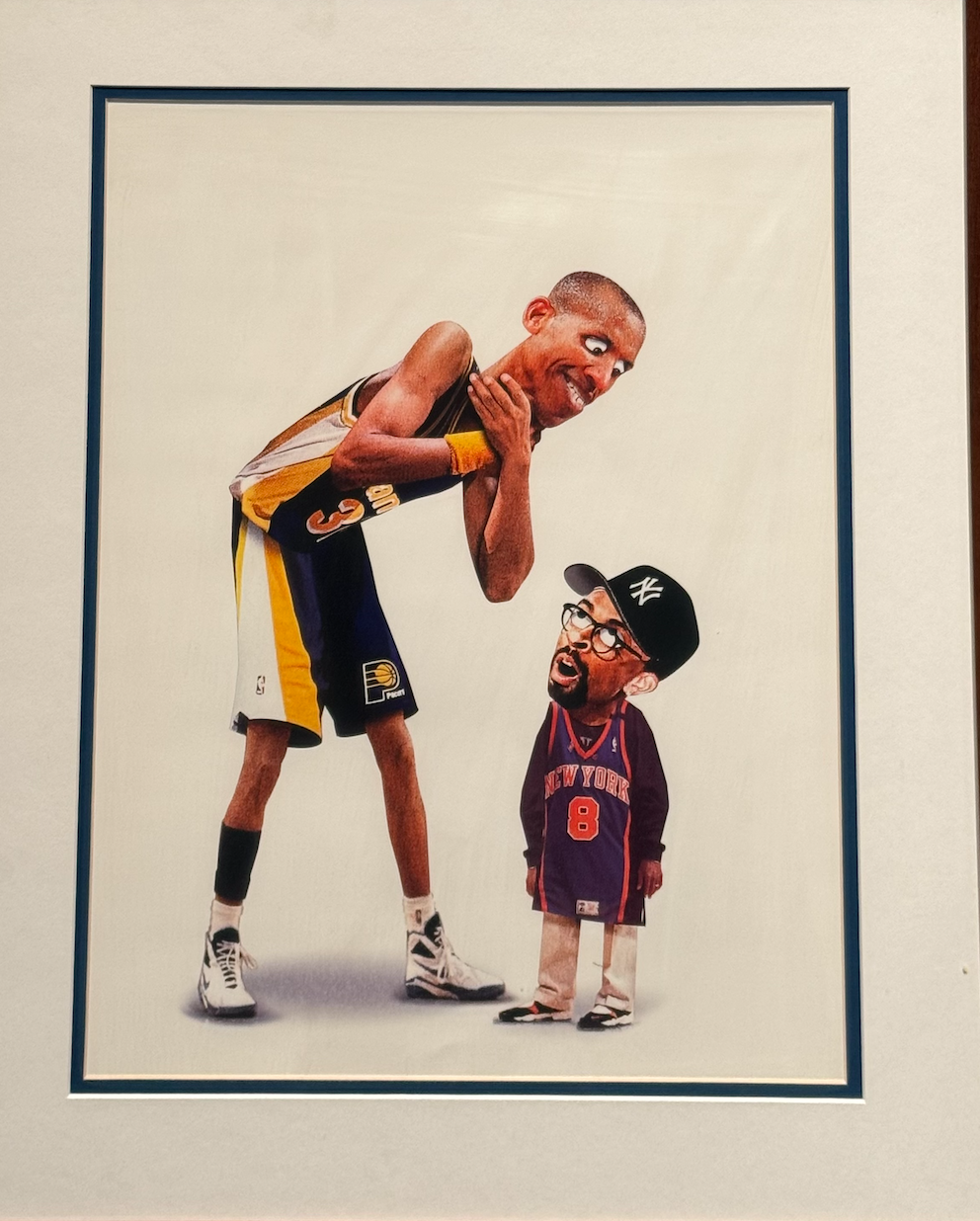
L to R: Illustration of Reggie Miller’s Infamous choking gesture, taunting Spike Lee; Image: Spike Lee’s archives/Brooklyn Museum.
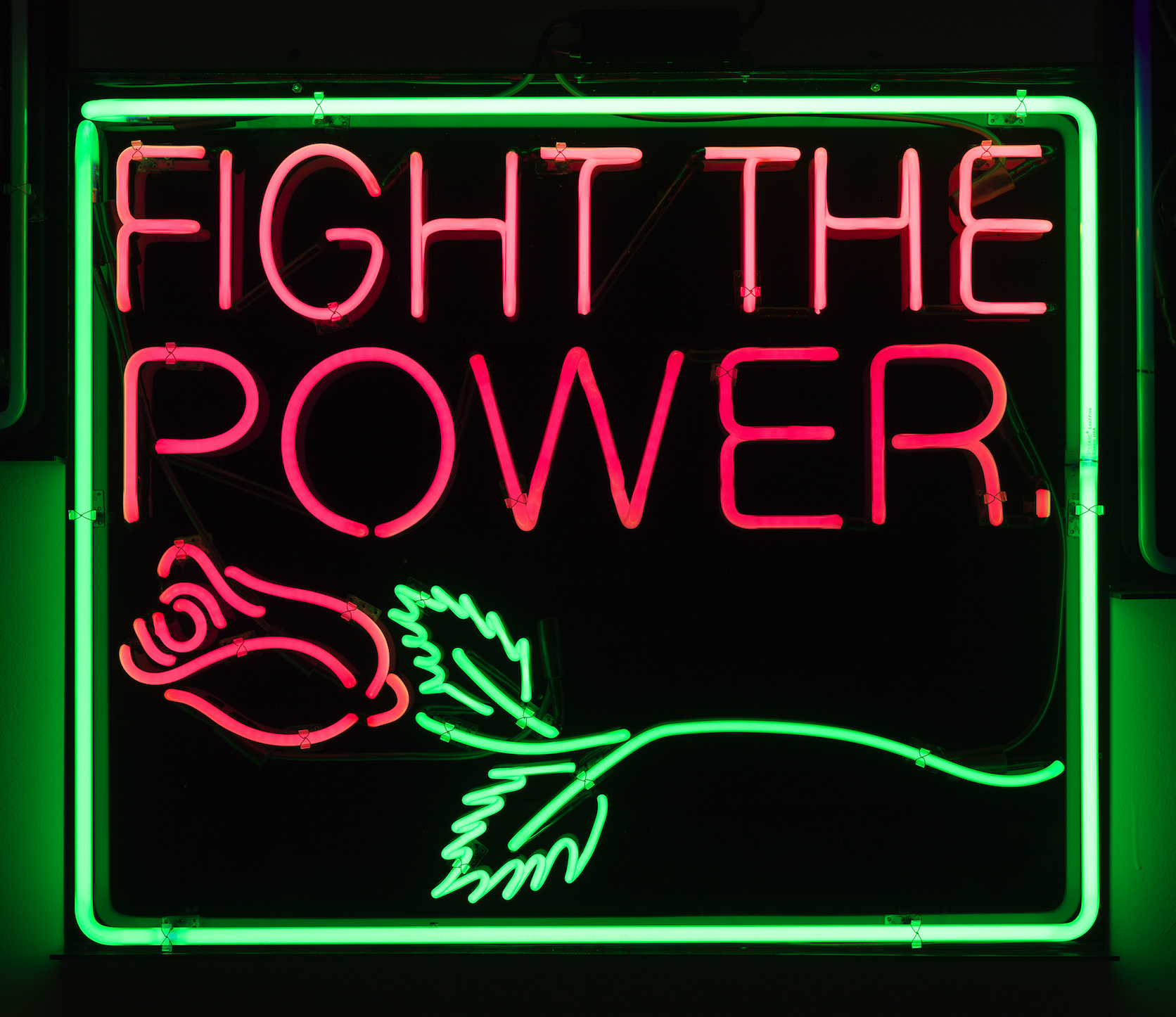
From the neon “Fight the Power” sign to an encased Sal’s pizza box prop hanging on the wall and a movie clip of Rosie Perez’s opening scene of Do the Right Thing, where she’s grooving and shaking to Public Enemy’s “Fight the Power”— a song that changed rap music forever with its powerful lyrics and inconvenient social truths that drew legions of fans, including myself, to love the music genre, and cemented the film’s influence not only in Hollywood but in American culture.
The Sports Wing — There’s a Lot!
You’ll see scores of photographs and athlete jerseys from one of Lee’s favorite teams, The New York Knicks, where Spike Lee has been a fan since practically the womb. And as an avid sports memorabilia collector and once aspiring baseball player, there’s an array of news clippings of images showcasing his controversial court-side antics, signed autographs from the likes of Michael Jordan, young and old, to illustrations of Knick nemesis Reggie Miller (Indiana Pacers) infamous choking gesture, a nod to the Knicks/Pacers rivalry. Lee’s fusion of sports narratives into his films while celebrating the Black sports figures breaking records and acquiring the highest accolades in their respective fields is a testament to Lee’s unwavering commitment to amplifying excellence in Black culture.
L to R: Illustration of Reggie Miller’s Infamous choking gesture, taunting Spike Lee; Image: Spike Lee’s archives/Brooklyn Museum.
The Music and Film Poster Rooms
Lee’s mom, Jacquelyn Shelton Lee, introduced him to movies and musicals when he was young, fomenting his interest in entertainment. Visitors can soak in the filmmaker’s extensive musical instrument collection, including Prince’s guitars, one-of-a-kind record players, and the movie posters he’s amassed. Posters reflecting all movie genres, from Jaws and TheDeer Hunter to Raging Bull and North by Northwest, and photographs of Spike Lee with cinema greats, actors Robert Deniro and Joe Pesci, and filmmaker Martin Scorsese, fill the hall.
Spike Lee’s collection of Prince’s guitars.
There are seven sections to the Spike Lee: Creative Sources exhibit to blow you away. I won’t share any more details because you should run, not walk, to this comprehensive, educational, and awe-inspiring collection of 350 pieces, organized by Kimberli Gant, Curator, Modern and Contemporary Art, with Indira A. Abiskaroon, Curatorial Assistant, Modern and Contemporary Art. The exhibit displays many facets of Lee: his advocacy for justice and homage to the African American titans who came before and after him, who have challenged the status quo and have made a mark in every aspect of American life, and last but not least, his playful side.
Spike Lee: Creative Sources will be running through February 4th. Click here to get your get tickets to see this extraordinary exhibit!
Italian thoracic surgeon Paolo Macchiarini, who rose to prominence after developing an organ transplant with no evidence of successful clinical trials, is at the center of the Netflix three-episode drama.
Dr. Paolo Macchiarini is holding his transplant device; Photo: Courtesy of Netflix.
Many doctors often exhibit the “God Complex,” a term bestowed on physicians, exuding confidence and commanding superiority. They are perceived to be saviors by patients and the institutions that celebrate their pioneering contributions and enable their hubris. One man who fully embodies this larger-than-life persona is Paola Macchiarini, a surgeon who developed a plastic transplant device shrouded in the patient’s stem cells to replace their damaged or non-functioning trachea — a life-saving procedure if it actually worked.
In the first episode, we meet Benita Alexander-Noel, a long-time NBC producer and eventual fiancee of Paolo Macchiarini, assigned to tell the surgeon’s story after getting extensive press from mainstream media and international news organizations for his innovative invention.
Benita Alexander-Noel and Dr. Paola Macchiarini; Photo: Courtesy of Netflix.
The twist.
Paolo is not the revolutionary scientific surgeon he makes himself out to be.
This stranger-than-fiction true-crime tale will draw you in because it’s unfathomable that so many people, including an investigative journalist, were duped by this individual.
For over ten years, a narcissist fraud operated on eight patients in whom he implanted a plastic device and suffered severe complications, of which seven died. What’s most gripping about the docuseries is seeing footage of these people beforehand, living their lives, full of hope, and Dr. Paolo Macchiarrini assuring them that they will be fine after the procedure.
Dr. Paolo Macchiarini; Photo: Courtesy of Netflix.
Macchiarrini’s deception doesn’t end with his medical profession. He’s also a raging philanderer and pathological liar in his personal life. Carrying five cell phones at a time, taking mysterious trips to Russia Barcelona, and touting to be a celebrity doctor to the pope, the Clintons, and Barack Obama, the extent of his rich, colorful lies have no bounds. Swedish investigative journalists present video of the surgeon committing crimes, and hard evidence documentation from former colleagues surfaces, yet there is barely any retribution for Macchiarinni.
This 3-part series is a roller-coaster ride of intrigue and deception that will keep you glued to your screen. And rethink how much trust you place in healthcare providers. To watch Bad Surgeon: Love Under the Knife, click here.
Award-winning veteran actor Jeffrey Wright (Westworld, The Batman) is at the helm of the multi-layered cast. He concocts a social, literary experiment that pits him against Black stereotypes and his scholarly ethics.
Jeffrey Wright as Thelonious “Monk” Ellison in American Fiction; Photo: M.Vizcaino
American Fiction, based on the novel “Erasure” by Percival Everett, follows Thelonius “Monk” Ellison, an English professor who revels in controversy by examining the N-word in class, challenging student beliefs, and sparring with colleagues, which seems to stem from his dissatisfaction with the lackluster success of his last few novels and the impact they’ve had on the literary world. Adding to Monk’s dismal situation is his exuberant, no-holds-bar and comical agent, Arthur, played by the enigmatic John Ortiz (Silver Linings Playbook, American Gangster), who says publishers are passing on his latest novel.
Issa Rae as Sintara Golden, Nicole Kempskie as moderator in American Fiction; Photo: DKC Public Relations.
After joining a barely-attended book conference with other writers in Boston, he seeks the hot new author in town, Sinatra Golden (Issa Rae, Barbie, Insecure), whose audience is brimming with fans. After listening to Sintara read excerpts from her book in hood-like dialogue, he’s shocked and weirdly drawn to her spell on the attentive crowd and the white moderator.
Snapped into reality by his disdain at the spectacle he just witnessed, he decides to create a Black book of his own under a pen name to dispel the truth that trauma and negative Black experiences sell. What ensues are comical exchanges between a stereotypical Black criminal son and absentee father as Monk writes their dialogue in real time with legendary actor Keith David (There’s Something About Mary, The Nice Guys) interpreting the father; that will have audiences howling with laughter, not to mention a whirlwind of attention from publishers and the public.
Tracee Ellis Ross as Lisa Ellison, Leslie Uggams as Agnes Ellison, and Sterling K. Brown as Cliff Ellison in American Fiction; Photo Courtesy of DKC Public Relations.
In the midst of Monk developing his literary farce, he’s faced with an ailing mother who may be on the brink of a mental collapse and connecting with his estranged siblings. Monk’s sister Lisa, wittily played by Tracee Ellis Ross (Black-ish, Girlfriends), who has been in charge of their mother’s care, and Cliff, played by Sterling K. Brown — while their lives unravel.
Jeffrey Wright plays Monk with the right amount of stoic anger, making him likable and memorable. His siblings, just like him, are flawed, multi-dimensional, and raw. Sterling K. Brown’s performance is brilliant as his “perfect” brother leading a double life. Then there’s Monk’s love interest, Coraline, played masterfully by Erika Alexander (Living Single, Get Out), who is a calming agent to the movie I rarely see in contemporary African-American films. Alexander’s character is refreshing, as is the film’s lively scoring throughout. The tone in American Fiction is reminiscent of Alexander Payne’s film Sideways, in which the two main characters seem devoid of redemption but are relatable to audiences in dealing with professional fulfillment and life’s ups and downs.
Erika Alexander as Coraline and Jeffrey Wright as Thelonius “Monk” Ellison in American Fiction; Photo Courtesy of DKC Public Relations.
In a recent Q&A with Colt Jefferson (Survivor’s Remorse, Black-ish) at the Urbanworld 27th Film Festival’s opening night, where the film screened, the writer-filmmaker of American Fiction admitted he had Jeffrey Wright in mind as the main character while reading the novel and writing the script. Once he had Wright attached to the project, Issa Rae committed after reading the first six pages of the script, and Sterling K. Brown knew instantly this was the next project he wanted to be a part of while on a plane.
According to Jefferson:
“I think these talented, established actors were enthusiastic about being part of this movie because these types of roles are not offered to them. These are real parts with a leading Black actor, not in service of white characters to move the plot forward.” Hollywood is doing a disservice to talented Black artists by not creating movies like this.”
Winner of the Toronto International Film Festival’s 2023 People’s Choice Awards, American Fictionis in select theaters on December 15th, and a wider release is set for December 22nd. Don’t miss this fantastic comedic adaptation of the novel “Erasure” with a cast of colorful and in-depth Black characters with rich storylines.













 Don't Suck My Collagen