Wu-Tang Clan members and guest artists collaborated on the record, which features fresh beats and sonically elevated rhymes reminiscent of the group’s legendary hits.
Black Samson, The Bastard Swordsman Album; Photo: DKCNews.
Young and old, hip-hop heads gathered at the IMI Studios in Manhattan recently as producer/DJ Mathematics debuted the tracks off the highly anticipated Wu-Tang Clan x Mathematics Black Samson, The Bastard Swordsman album. The intimate setting enabled attentive listeners to soak in the melodies and arrangements selected by Mathematics, who provided anecdotes, tales of his carpentry background, and inspiration for the songs.
Mathematics is more than Wu-Tang’s multi-talented go-to-producer, even before the critically acclaimed Enter the Wu-Tang (36th Chambers) dropped in 1993 and changed Hip Hop forever (recognized as one of the top five most influential Hip-Hop albums ever made!). Mathematics, aka Ronald Maurice Bean, is the group’s musical muse and graphic artist. Not only has he produced many of Wu-Tang’s greatest hits like “Protect Ya Neck,” “C.R.E.A.M,” and “Bring Da Ruckus,” but he also designed the Wu-Tang Clan logo.
‘Black Samson, The Black Swordsman’ cover art; Photo: M. Vizcaino.
Black Samson features the current Wu-Tang members: RZA, Raekwon, Method Man, GZA, Ghostface Killah, Inspectah Deck, Cappadonna, Mastah Killa, and U-God. The album also includes renowned artists Kool G Rap, Benny The Butcher, 38 Spesh, Crooked I, R.J. Payne, Willie The Kid, Nicole Bus, Kameron Corvet, and Kurupt. According to Mathematics, each added their distinct rhyme style and creativity to each track.
“The artists all kept it hard and kept it beautiful.”
And audibly, the beauty of seasoned lyricists annihilating the mike was transcendently evident. Tracks like “Cleopatra Jones,” featuring Raekwon Masta Killa, and “Warriors Two, Cooley High,” featuring Benny the Butcher and Method Man, had the guests in the studio bopping their heads, immersing themselves in the hard-hitting beats, taking them on a musical rap odyssey.
Wu-Tang Clan x Mathematics ‘Black Samson, The Black Swordsman’ Album listening session, pictured (Mathematics). Photo: @Robert.photoshoot + @jon_officials.
Experimental, soulful storytelling and, in true Wu-Tang Clan fashion, karate flick sound effects and soundbites are prevalent on the album with an edgy spin. Black Samson, The Bastard Swordsman is the first collaboration from existing Wu-Tang members since 2015’s Once Upon a Time in Shaolin. The album drops as a limited edition on April 12th on National Record Store Day on a 2LP audiophile-grade vinyl featuring 5,000 one-of-a-kind covers. The whole LP will be available worldwide on April 25th. Click here for a sneak peek!
The new Broadway musical strikes a universal chord of excitement, joy, and love-loss among theater patrons.
Ensemble and band from the Buena Vista Social Club musical; Photo: Matthew Murphy/Polk&Co.
Move over MSG and Radio City Music Hall; this new Broadway musical recently brought the house down to a packed 1,080-seat smaller venue. The clapping, head-bopping, and toe-tapping continued throughout the performance from theatergoers, young and old. It was an electrifying musical shock to the senses, reverberating well after the curtain call and the lights went dark.
The story, inspired by true events, follows producer Juan de Marcos González (Justin Cunningham, King Lear, Succession) attempting to reunite acclaimed Cuban performers from a pre-revolution era of the Buena Vista Social Club from Marianoa, Cuba, where infectious live music filled the hearts and tickled the feet of Black Cubans banned from playing in white clubs on the island for one last record. An album compilation that would win a Latin Grammy and see worldwide success much later. De Marcos is determined to collaborate with Omara Portuondo (Natalie Venetia Belcon, Matilda, Avenue Q), one of the most talented vocalists since the 50s. Omara reproaches De Marcos’ offer. She’s standoffish. Distant. And unwilling to disclose her reluctance to the reunion.
Renesito Avich as Eliades and Natalie Venetia Belcon as Omara in the Buena Vista Social Club musical; Photo: Matthew Murphy/Polk&Co.
Until…
We flashback to her younger self at age 19, when she was part of a singing group with her older sister, Haydee. The duo performs regularly in Cuba’s infamous Tropicana Club and has an opportunity to sign with Capital Records in America. However, young Omara (Isa Antonetti) is conflicted about moving to America, and her desire for singing soars after an encounter with a young Afro-Cuban musician, Ibrahim Ferrer (Wesley Wray), who doubles as a busboy at The Buena Vista Social Club. It’s at this club that Omara awakens the capacity of her vocal instrument and sings from her heart with Ibrahim and other talented musicians like Compay Segundo, played wonderfully by Julio Monge (On Your Feet, Wet Brain), and Eliades (Renesito Avich, Cuban Grammy-nominated singer-songwriter), that breaks out into a jaw-dropping guitar solo that will blow your mind.
It’s a musical tale rife with upended familial bonds and new friendships formed and disintegrated with music at the center. As young Omara, Isa Antonetti makes her Broadway debut with a multi-ranged voice primed for the stage. Belcon, as the older Omara, steps the solemn singer’s role with ease and conviction. Wesley Wray also makes his Broadway debut as young Ibrahim Ferrer, a charmer who masterfully sings through his character’s turmoil. The set and costume design transports viewers into a pre-revolution Cuba with beautiful orange/red sunsets, shimmering outfits, and intoxicating Cuban music that can’t be quelled and activates every cell in your body.
Isa Antonetti as Young Omara in the Buena Vista Social Club musical; Photo: Matthew Murphy/Polk&Co.
The Buena Vista Social Club musical, written by Marco Ramirez (Orange is the New Black, Daredevil), developed and directed by Saheem Ali (Goddess, Fat Ham), choreographed by Patricia Delgado and Justin Peck, and music by Buena Vista Social Club™, is running at the Gerald Schoenfeld Theatre. To learn more about this phenomenal musical and get tickets, click here.
The heritage brand, launched in 1974, catapulted Diane von Furstenberg’s signature wrap dress into a mainstay in women’s wardrobes more than fifty years ago. It continues to evolve with daring designs!
From Left to Right: Photograph of Diane von Furstenberg from the 1970s and Collage of DVF’s First Wrap Dress; Photo: M. Vizcaino/DVF Flagship NYC Store.
This year, the renowned designer drew inspiration from previous collections and created versatile pieces in knit, silk, and cotton blends with stunning blue/green, pink and purple, and black hues ready to transform your closet dramatically.
Step into the Wild
Choose between tiger, cheetah, or zebra prints in luxury, lightweight fabrics that perfectly meet the moment at any time of day or night. Whether in a business meeting, brunch setting, or evening excursion, these designs have you covered in effortless style, from a show-stopping print trench that can double as a dress to light up the room or sidewalk to a playfully plunging neckline tiger-print wrap or a fabulously form-fitting dress for the trendsetting woman.
From left to right: The Amara Wrap Dress Retails for $498, the Jasper Trench Coat for $698, and the Florence Short Sleeve Dress for $458. Photo: DVF.com.
Classic Prints Are The Rage, Too!
Diane von Furstenberg channels designs from past collections to create silk cotton and viscose ensembles for a new generation of fashion-forward and fearless females, embracing femininity and empowerment in their everyday lives with bold, vibrant pieces.
*Standout piece: A dazzling black and white, bohemian chic 70s-style jumpsuit that exudes confidence in any room.
The Delia Jumpsuit Retails for $498; Photo DVF.com.
Bonus accessory: A flag scarf ( in various colors retails for $258) can instantly transform your outfit from 100 to 1000!
Black Hues Are Back Better Than Ever
You can never go wrong with black if you’re looking for a solid, contemporary hue. It’s sleek, elegant, and transitional. And this season, the fashion legend created pieces to mix and match with staples in your fashion arsenal or wear as a sensational stand-alone.
DVF Ballerina Dress retails for $588; Photo: DVF.com
Meet the Ballerina dress, made with a smooth matte jersey for traversing the city and dancing the night away—in deliciously unrestricted construction! Click here to shop Diane Von Furstenberg’s Odyssey Collection!
Hispanic Heritage Month has ended, but the legacy left behind by one of its prominent allies, who advocated for social justice, women’s rights, and Mexican creative culture, lives on with the prolific artist’s artwork.
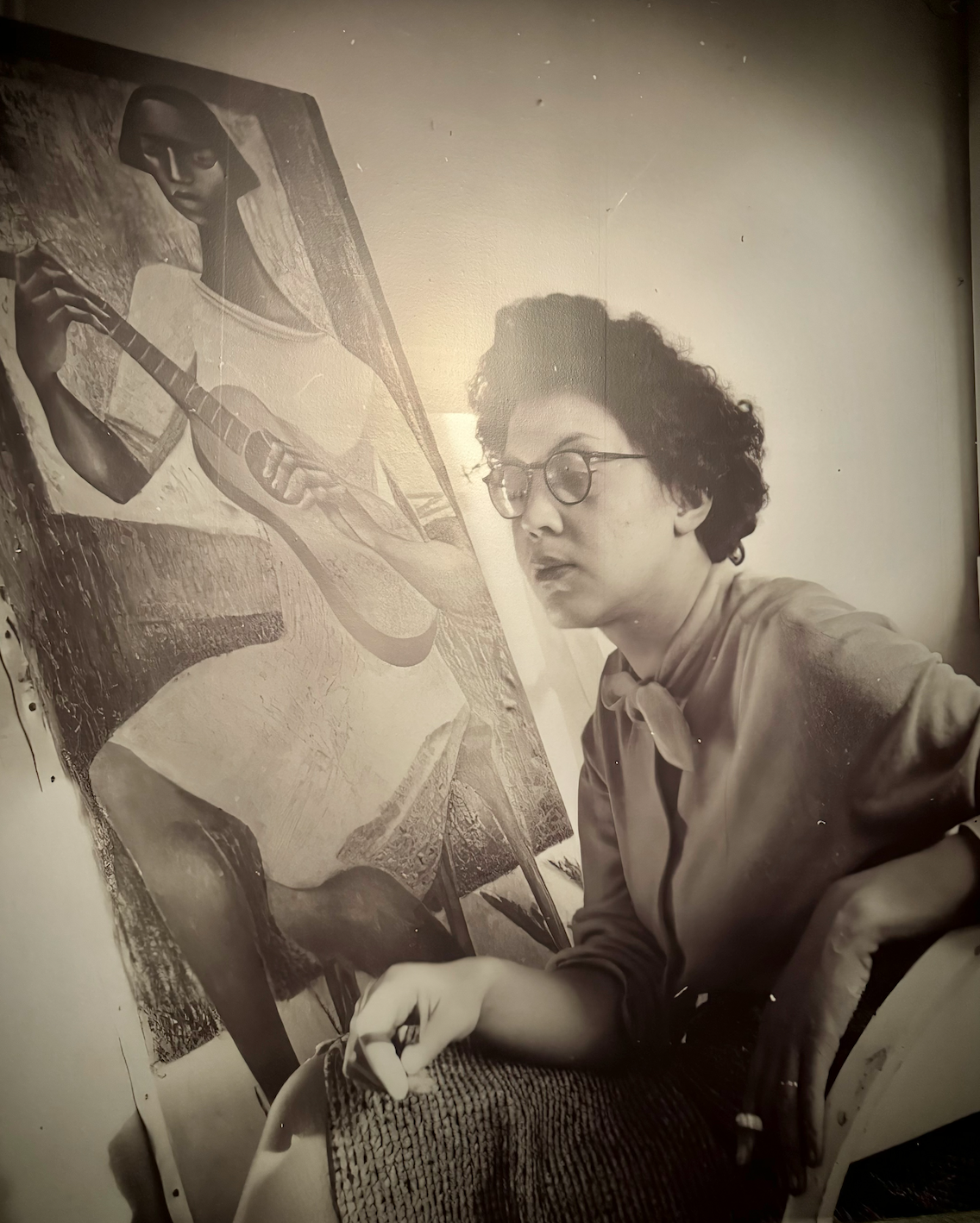
Artist Elizabeth Catlett in Mexico; Photo: From ‘Elizabeth Catlett: A Black Revolutionary Artist and All That It Implies’; Photo courtesy of Brooklyn Museum.
Elizabeth Catlett, born in Washington D.C. in 1915, was a naturally gifted artist and fearless activist. In her teens, she carved an elephant out of a bar of soap and kept developing her craft. She began protesting lynchings in front of the U.S. Supreme Court with a noose around her neck, symbolizing the violent demise Black citizens were experiencing. She was arrested but later released, becoming a beacon of hope and change for people of color. Catlett became the first student to earn a Master of Fine Arts in the U.S. from the University of Iowa in 1940 and completed her undergrad at Howard University, quite a feat for a Black woman in the Jim Crow era, rife with segregation, oppression, and unspeakable cruelty toward Black Americans.
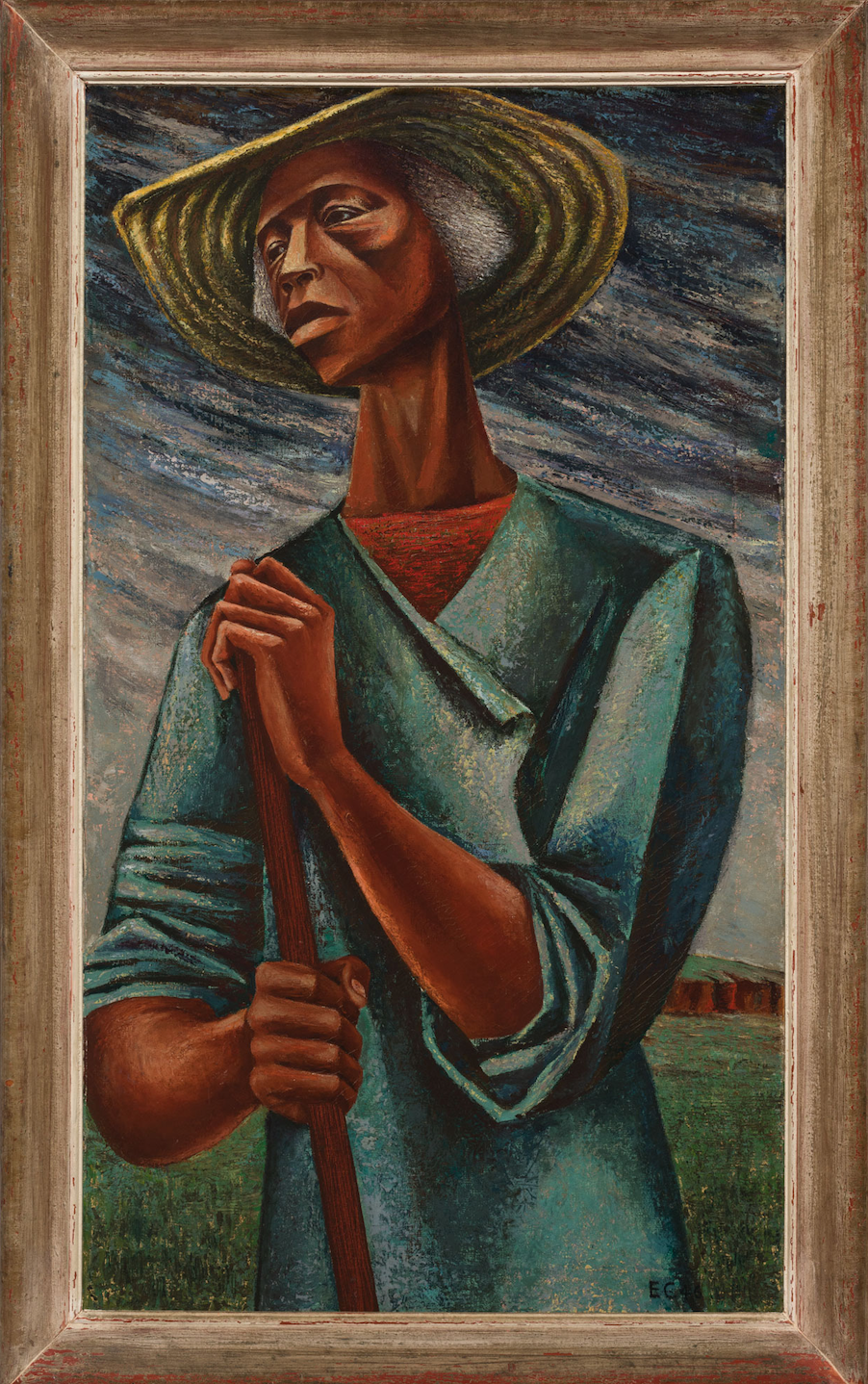
Catlett’s art reflected the turbulence of that era, developing her sculpting and clay modeling techniques during the Black Chicago and Harlem Renaissance. One of her most iconic works: “The Negro Woman,” later renamed “Black Woman,” depicts beautiful solemn Black women at work (as nannies, servants, and field workers) through extraordinarily composed lithographs, paintings, and sculptures. When you look at these pieces, you can’t help but feel the ancestral pain of Black women who endured the limitations of their time yet possessed an unrelenting reserve of optimism.
Serving on the Arts Committee of the National Negro Congress (NNC), an organization committed to advocating for Black liberation and prompting Catlett to publish political cartoons and subsequently finding her social advocacy stride collaborating with Taller de Gráfica Popular in Mexico (TGP), an artist printmaking collective dedicated to social causes in the form of prints. Mexico is where Catlett would refine her “Black Woman” series, study terra-cotta sculpture under acclaimed artist Francisco Zúñiga, and call the country home for the next six decades after marrying her creative partner and renowned Mexican artist Francisco “Pancho” Mora, a celebrated printmaking and graphic creator who shuttled back and forth with Catlett to showcase their work in distinguished galleries around the U.S.
But, it wasn’t all accolades and fanfare for the artist couple.
As Catlett became more involved with the TGP’s mission, she gained notoriety back home. Spearheading and contributing to a series titled: “Against Discrimination in the U.S.,” showcasing African American heroes like Harriet Tubman and Ida B. Wells put a target on her back. Shortly after, incessant CIA and FBI monitoring of Catlett during the Cold War fear-mongering McCarthy era led to the artist’s citizenship being rescinded. And it wouldn’t be reinstated until 2002. Nonetheless, the courageous Elizabeth Catlett fought for workers’ rights, especially working-class Mexican women, advocating for railroad workers, teachers, and doctors to strike and support the country’s anticolonial movements of the 70s.
Installation View of ‘Elizabeth Catlett: A Black Revolutionary Artist and All That It Implies’ Exhibit. Photo: Paula Abreu Pita/Brooklyn Museum.
Elizabeth Catlett is a monumental figure in Black and Mexican artistic culture. She’s lived through historic upheavals and milestones, all documented in this breathtaking exhibition. Visit the Brooklyn Museum for tickets to view Elizabeth Catlett: A Black Revolutionary Artist and All That It Implies exhibit (including over 200+ pieces), running through January 2025!
A hot new play has hit The Great White Way. It features a stellar two-person cast, sharp dialogue, and a captivating theme.
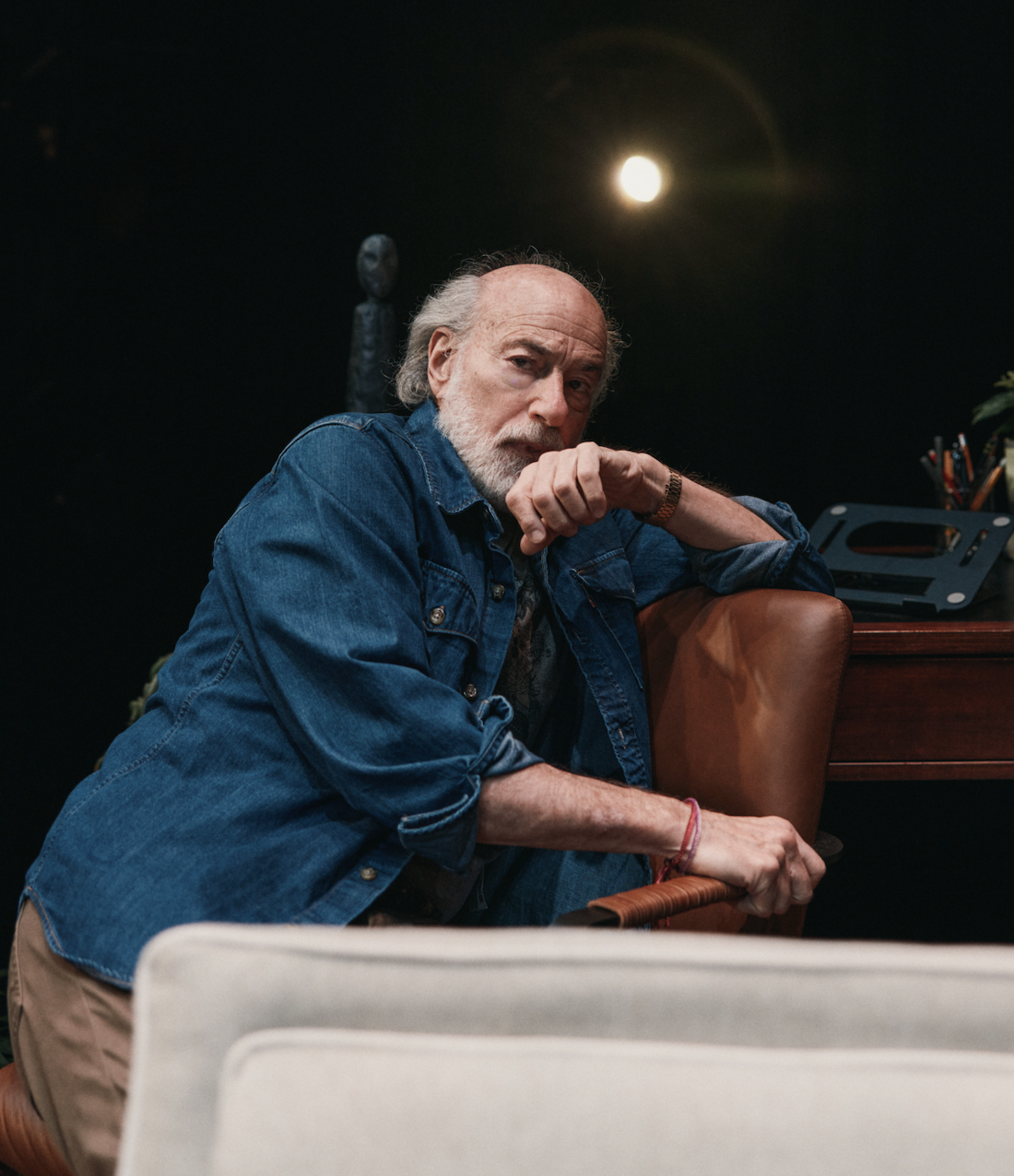
Peter Friedman as Lloyd and Sydney Lemmon as Jane in ‘JOB’; Photo: Emilio Madrid/DKC/O&M.
‘JOB’ begins with a seemingly unhinged 20-something woman pulling a gun on a man in his sixties in his psychiatry office. He has nothing to defend himself with; his phone is in another room, and he uses his decades-long psychiatric training to learn more about the young woman and, most importantly — convince her not to pull the trigger.
If only the psychologist could cry for help or get the attention of someone from the outside to get him away from this disturbed woman.
Not so fast. We learn about the patient, who commands enough charisma and engagement to create her one-woman show, played by Sydney Lemmon(The Parisian Woman, Tár ), and is none other than the granddaughter of legendary actor Jack Lemmon. Acting genes run in the Lemmon family. We discover Jane has to attend mandated therapy sessions imposed by her tech employer, User Care, because of a meltdown she suffered at work, where she climbed atop a desk and started screaming uncontrollably. Coworkers filmed it, and the video went viral.
Sydney Lemmon as Jane in ‘JOB’; Photo: Emilio Madrid/DKC/O&M.
Shouldering her unsolicited internet fame and the stressors of her tech job, Jane keeps probing the psychologist to see if he’ll greenlight her return to work. A job that involves content moderating the worst images and videos imaginable — from child abuse to murder, rape, or torture, Jane is the gatekeeper preventing this content from reaching the public. It’s inevitable. This line of work has affected Jane’s psyche.
The doctor (Lloyd), played magnificently empathetic and uncondescendingly in his line of questioning of Jane, is veteran Tony-nominated Broadway star Peter Friedman (Ragtime, The Marvelous Mrs. Maisel). He provides a comforting space for Jane to share her experiences and family life while divulging personal details about him. The dialogue is fast-paced, witty, and timely. The banter between two generations discussing the effects of the internet and its roles in their lives is plausible until a dark secret emerges. It won’t spoil it for you, but it’s scandalously surreal.
Peter Friedman as Lloyd in ‘JOB’; Photo: Emilio Madrid/DKC/O&M.
Friedman and Lemmon’s chemistry is dynamic. They don’t miss a beat, as evidenced by the deafening silence in the theater during this 80-minute run with no intermission. Both actors starred in the hit TV show Succession. Although they’ve never filmed show scenes together, they continue to discuss and explore how the internet shapes and evolves the human experience and whether it’s to the benefit or detriment of people.
See the previously off-Broadway hit turned Broadway production of JOB, written by Max Wolf Friedlich and directed by Michael Herwitz. It is now playing at the Hayes Theater in NYC through September 29th!Click here to get tickets!
The seven-part limited Netflix series stars Richard Gadd, who also wrote and co-produced the story based on his life.
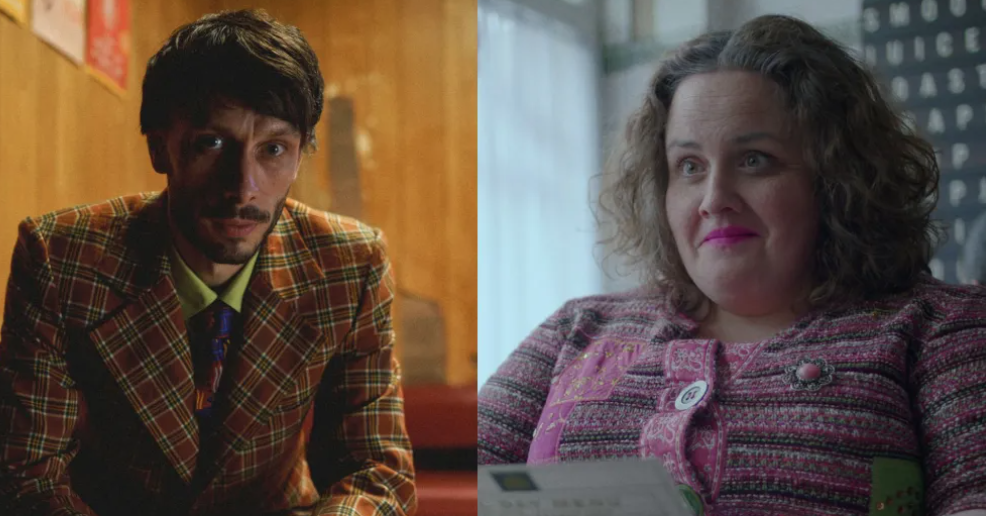
Richard Gadd as Donnie Dunn and Jessica Gunning as Martha in Baby Reindeer’; Photos courtesy of Netflix.
What started as an award-winning one-person comedy show at the Edinburgh Fringe Festival became a successful and dark Netflix miniseries. The series Baby Reindeer follows Donny Dunn, a struggling comedian in his late twenties and part-time bartender who encounters a woman in her 40s named Martha (Jessica Gunning, “White Heat,” What Remains”) when she enters the bar he works in. After Martha reveals her financial woes, Donny offers her a cup of tea free of charge. Martha takes this kind gesture to heart. She comes to the bar daily, and Donny provides free diet cokes. The relationship blossoms; they’re at ease with one another. Donny enjoys her odd, contagious laugh. She compliments his features and quick-witted quips. He soaks it in.
Martha mentions to Donny that her birthday is coming up. Unsure what to say, he suggests they meet, not for a date, as he clarifies his platonic interest in Martha, but for a fun interaction between friends. She agrees. When they get together to celebrate her birthday at a cafe, Martha starts getting triggered by Donny’s insistence that they are friends and nothing else and starts yelling. The pair leave the cafe, and Donny follows her to glimpse her real life. Donny tries to be discreet as he peeps into Martha’s living room window, only to be discovered by her when his phone rings; it’s Martha calling. Donny’s misstep sets off a chain of unfortunate events.
Martha begins to email Donny numerous times daily. She goes to his one-person show comedy acts and either heckles or cheers him on while he’s on stage. She follows him everywhere and emails him incessantly, where the harassment becomes unbearable for Donny. He goes to the police station to report Martha, and the officers don’t take him seriously.
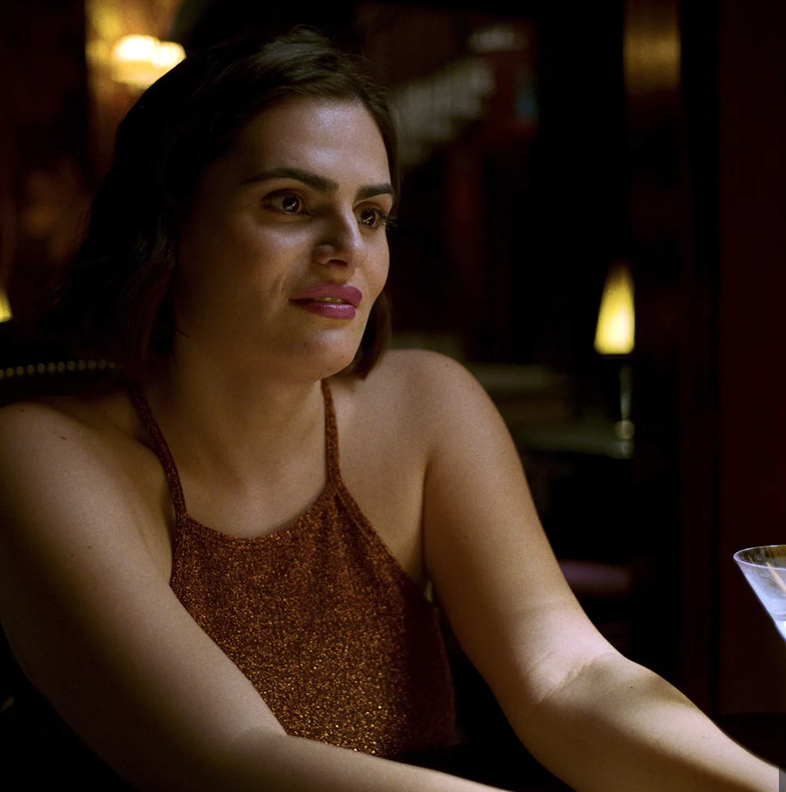
What’s deeply fascinating is how Donny and Martha feed off one another’s need for affection. He’s a comedian craving attention from the public. Although an audience of one, he subconsciously likes Martha’s adulation, although nightmarish, and comes in the form of 41,071 emails, 350 hours of voicemails, 744 tweets, 46 Facebook messages, and 106 pages of letters. Martha sent Donny an array of odd gifts, everything from sleeping pills, a wooly hat, and boxer shorts to a baby reindeer toy. The real-life Donny (Richard Gadd) endured Martha’s obsessive interactions for four and a half years. Martha’s erratic harassment spilled over to Donny’s parents, former girlfriend, and a trans woman, played wonderfully compelling by Nava Mua (Disclosure).
Nava Mau as Terri in ‘Baby Reindeer’; Photo courtesy of Netflix.
But it gets worse for Donny. During one of Martha’s aggressive encounters, she gropes Donny. Repressed memories of a former sexual abuser instantly trigger him. And Martha realizes this when she stops touching Donny and says: “Who hurt you?” The scene is profoundly revealing for both characters. It’s as if broken recognizes broken. You sympathize with Donny and Martha. Donny acknowledges Martha’s mental instability, simultaneously realizing he has unresolved trauma he must contend with.
So the real-life Donny, Richard Gadd, chose to write, act, and produce this period in his life that had been consuming him:
Hard to watch at times. Intriguing. Dark, for sure. Baby Reindeer is worth binging and getting a rare perspective on male sexual assault and the trauma that ensues. Stream it now on Netflix.
The expansive exhibit on director Spike Lee’s career and inspiration to create ground-breaking films on African-American culture is a multi-media tapestry of the artist’s creative journey, spanning almost 40 years.
Spike Lee: Creative Resources Exhibit; Photo: Paula Abreu Pita/Brooklyn Museum.
As soon as you enter the Spike Lee Creative Resources exhibit, Denzel Washington’s Malcolm X character’s infamous fiery 1964 speech from the film permeates the room. The scene, audio, costumes, and other colorful props from the movie, released in 1992, engulf your senses and prime you for what’s next.
A nostalgic visual stimulation that gives you front-row access to Lee’s early life.
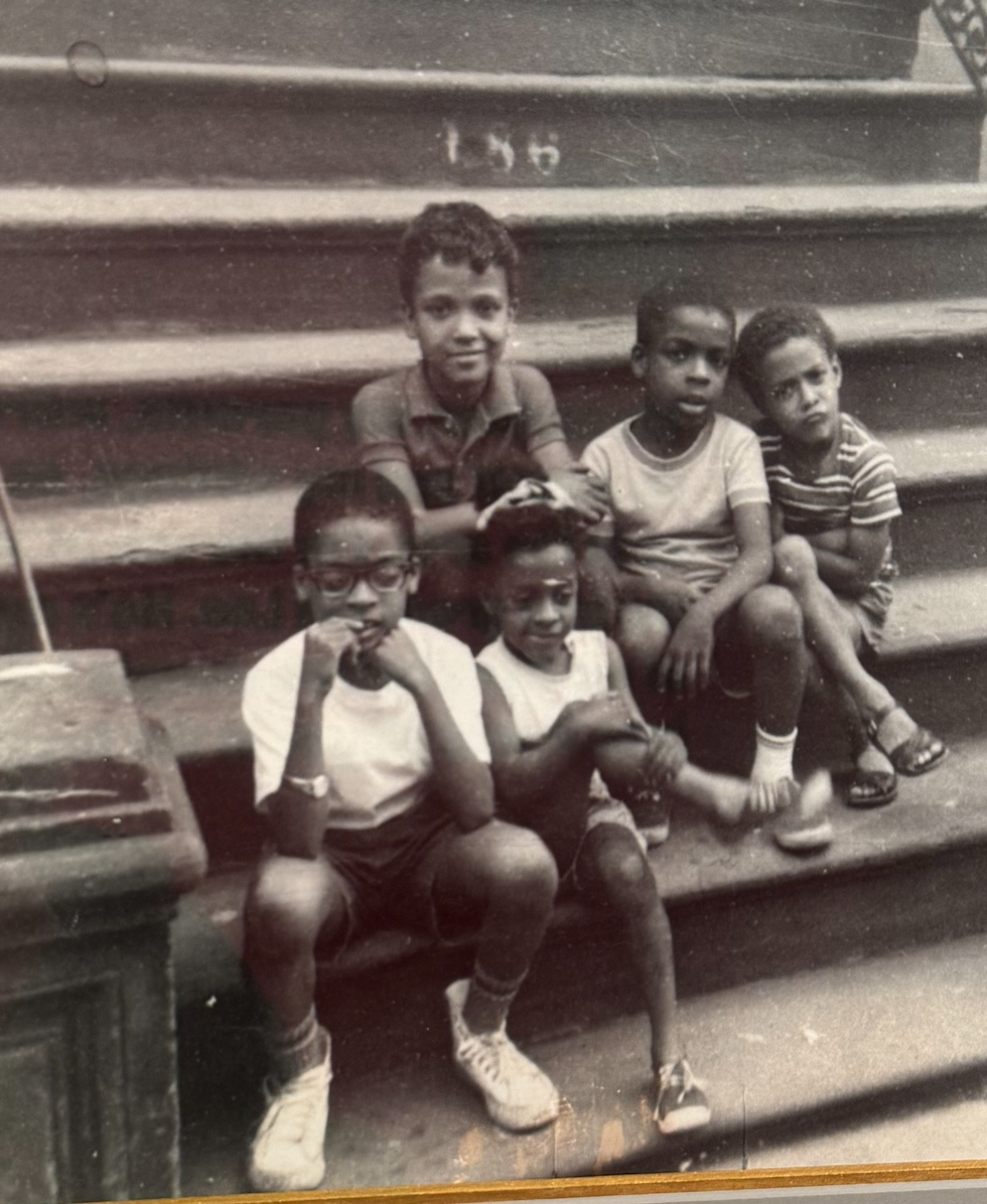
Clockwise: Spike, Joie, David, Cinqué, and Christopher Lee at 186 Warren Street, Cobble Hill, circa 1967–1970; Photo: Unknown Artist.
In this room, there’s a collection of paintings in color and black and white of Spike Lee’s family — from his siblings as kids on the stoop of his beloved Brooklyn neighborhoods (an abstract character present in Lee’s films) to portraits of his dad, Bill, a renowned jazz bassist and composer, heavily influencing the filmmaker’s taste in music and scoring many of his films, like the critically-acclaimed Inside Man, where you can hear the theme song, play intermittently throughout the exhibit to photos with Lee and his children. Family played a pivotal role in shaping Lee’s love for the arts and the narratives of the projects he’s brought — and continues to bring — to life.
Next up: Do the Right Thing’s Immersive Experience
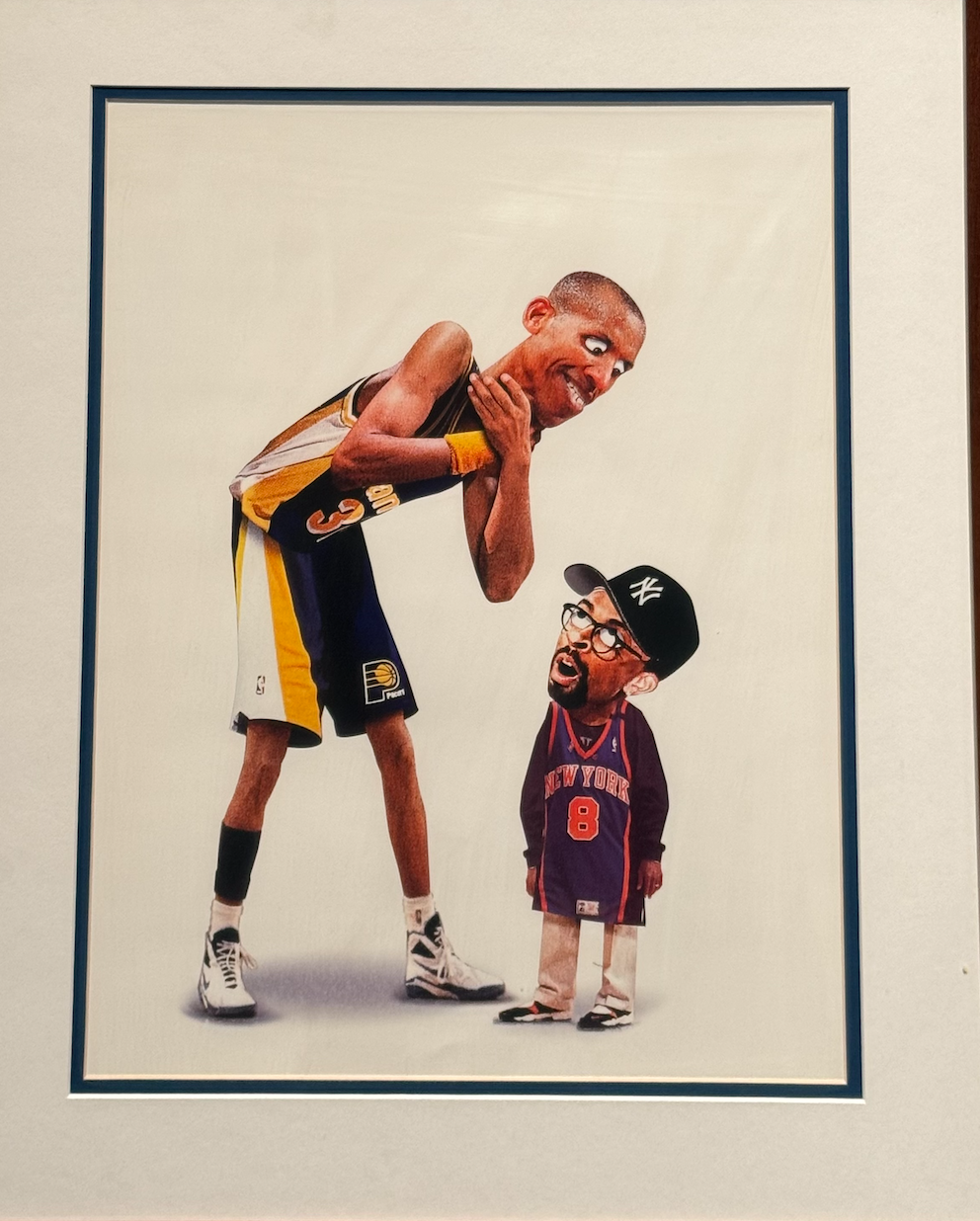
L to R: Illustration of Reggie Miller’s Infamous choking gesture, taunting Spike Lee; Image: Spike Lee’s archives/Brooklyn Museum.
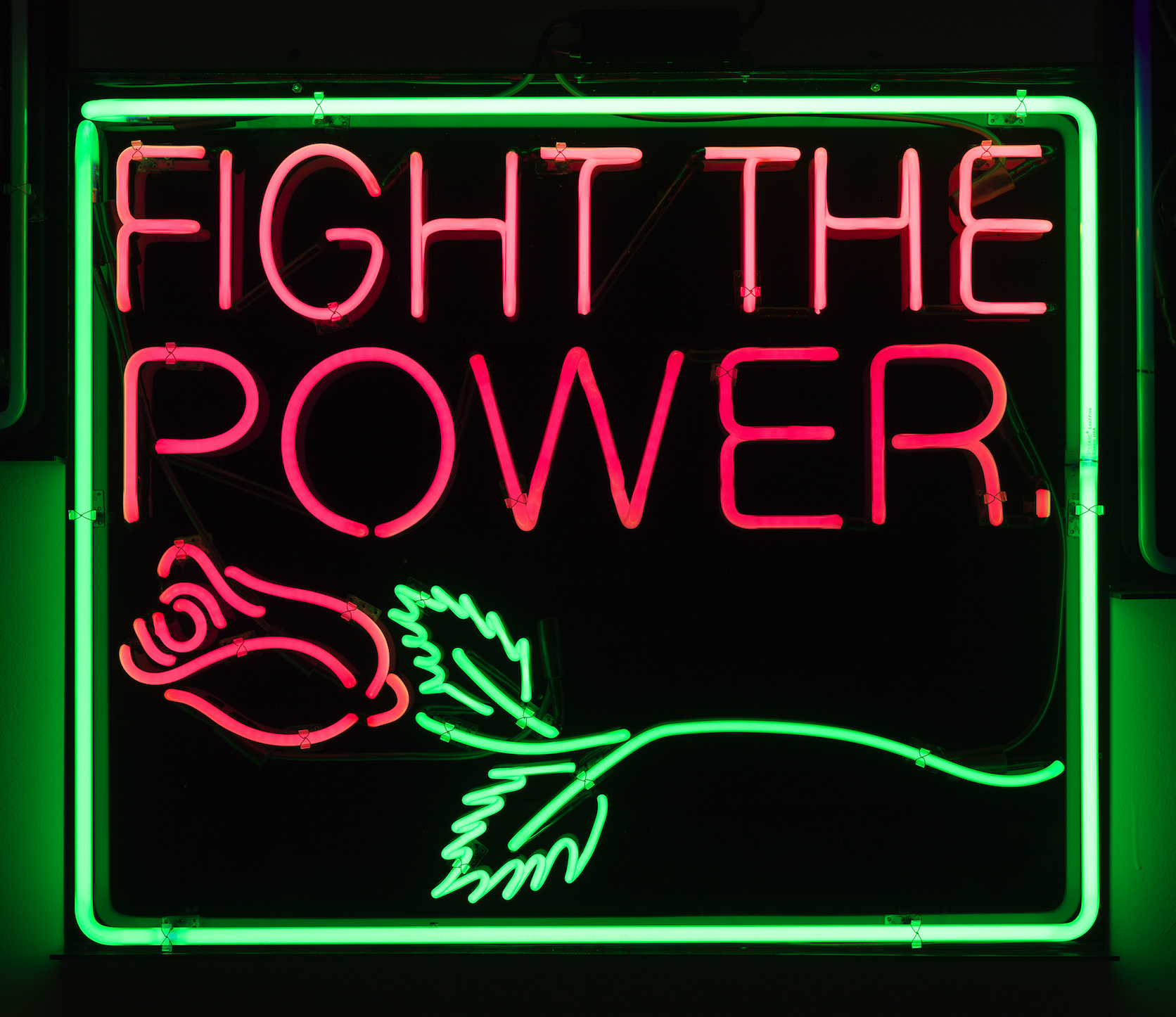
From the neon “Fight the Power” sign to an encased Sal’s pizza box prop hanging on the wall and a movie clip of Rosie Perez’s opening scene of Do the Right Thing, where she’s grooving and shaking to Public Enemy’s “Fight the Power”— a song that changed rap music forever with its powerful lyrics and inconvenient social truths that drew legions of fans, including myself, to love the music genre, and cemented the film’s influence not only in Hollywood but in American culture.
The Sports Wing — There’s a Lot!
You’ll see scores of photographs and athlete jerseys from one of Lee’s favorite teams, The New York Knicks, where Spike Lee has been a fan since practically the womb. And as an avid sports memorabilia collector and once aspiring baseball player, there’s an array of news clippings of images showcasing his controversial court-side antics, signed autographs from the likes of Michael Jordan, young and old, to illustrations of Knick nemesis Reggie Miller (Indiana Pacers) infamous choking gesture, a nod to the Knicks/Pacers rivalry. Lee’s fusion of sports narratives into his films while celebrating the Black sports figures breaking records and acquiring the highest accolades in their respective fields is a testament to Lee’s unwavering commitment to amplifying excellence in Black culture.
L to R: Illustration of Reggie Miller’s Infamous choking gesture, taunting Spike Lee; Image: Spike Lee’s archives/Brooklyn Museum.
The Music and Film Poster Rooms
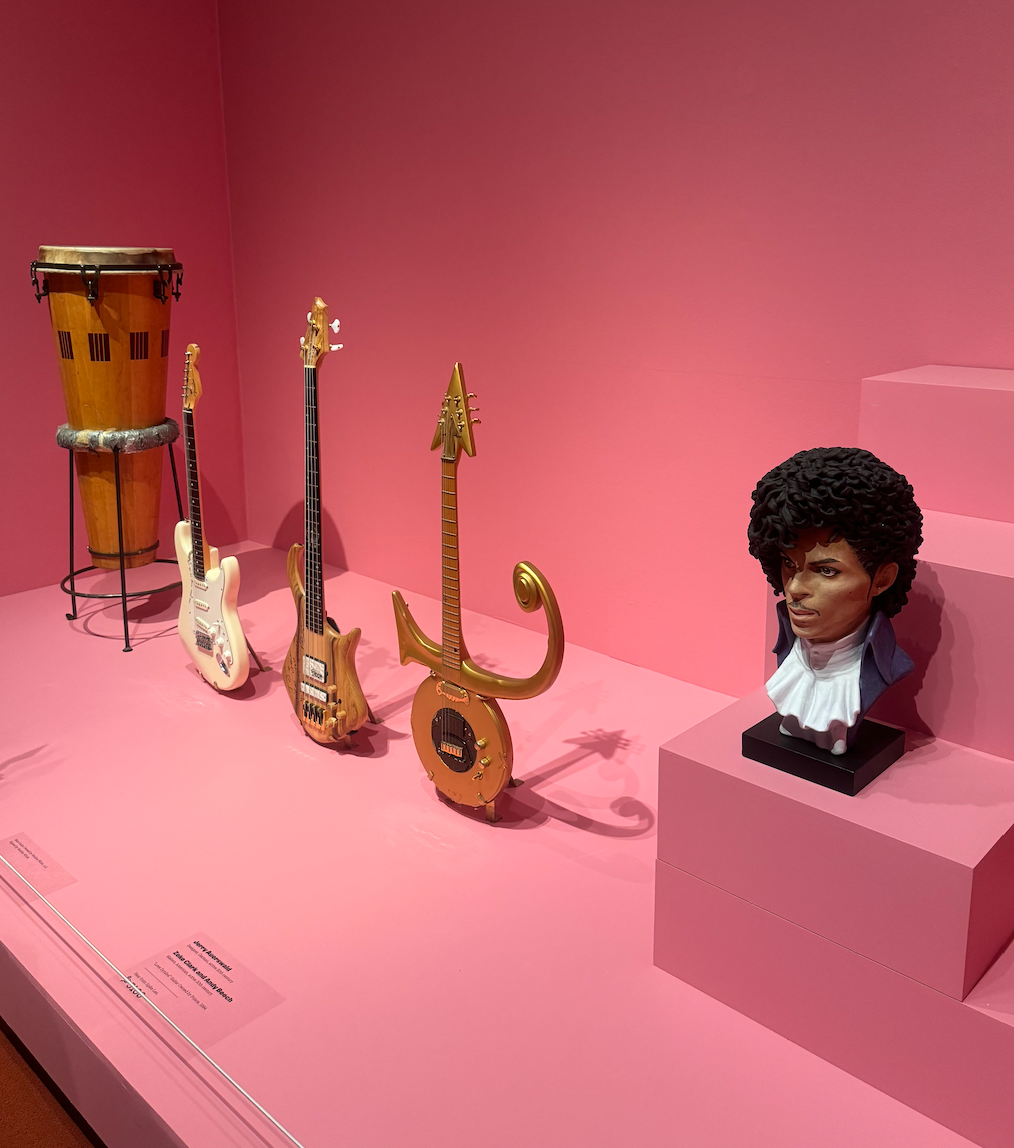
Lee’s mom, Jacquelyn Shelton Lee, introduced him to movies and musicals when he was young, fomenting his interest in entertainment. Visitors can soak in the filmmaker’s extensive musical instrument collection, including Prince’s guitars, one-of-a-kind record players, and the movie posters he’s amassed. Posters reflecting all movie genres, from Jaws and TheDeer Hunter to Raging Bull and North by Northwest, and photographs of Spike Lee with cinema greats, actors Robert Deniro and Joe Pesci, and filmmaker Martin Scorsese, fill the hall.
Spike Lee’s collection of Prince’s guitars.
There are seven sections to the Spike Lee: Creative Sources exhibit to blow you away. I won’t share any more details because you should run, not walk, to this comprehensive, educational, and awe-inspiring collection of 350 pieces, organized by Kimberli Gant, Curator, Modern and Contemporary Art, with Indira A. Abiskaroon, Curatorial Assistant, Modern and Contemporary Art. The exhibit displays many facets of Lee: his advocacy for justice and homage to the African American titans who came before and after him, who have challenged the status quo and have made a mark in every aspect of American life, and last but not least, his playful side.
Spike Lee: Creative Sources will be running through February 4th. Click here to get your get tickets to see this extraordinary exhibit!
Prepare to lose yourself to the magically colorful world of famed Dutch painter, Vincent van Gogh with the debut of the Immersive Van Gogh Exhibit in New York City, featuring 40 of the acclaimed artist’s masterpieces shown via 74 state-of-the-art projectors. Located at Pier 36 in lower Manhattan, the 70,000+ square foot venue is conducive to large crowds and adheres to COVID health protocols. Art enthusiasts apprehensive about re-joining society in this post-pandemic world can let their guard down in this spectacular space!
The exhibit is comprised of 3 concepts: art exhibition, filmmaking through animation, and experiential – where the public walks through the space and art happens within 360 degrees around them and projected on every surface in the building. Set designer, David Korins (Hamilton, Dear Evan Hansen) was tasked with creating interactive New York-centric installations, unlike no other. According to Korins, “This exhibit will take you deep within a personal and profound journey, look at Van Gogh’s work through Massimiliano Siccardi’s (creative director, film producer) interpretation and leave you with a deeper understanding of the man and his brand”
Photo: Nina Westervelt
What to look out for?
The Ceiling, inspired by one of Van Gogh’s most revered work: The Starry Night, was created using 7,800 individually hung paintbrushes dipped in multiple colors – breathtakingly serene and enchanting. Next: an oversized reproduction self-portrait of Van Gogh, allowing viewers to peek into the artist’s eyes and facial expression – to appreciate the intricacies of his dynamic brushstrokes. A must see: The Synesthesia Experience, which invites audiences to walk through 10 booths, engulfed by light and sound, based on documented research watching people with chromesthesia react to certain colors. Vincent van Gogh had a special form of synesthesia called chromesthesia that enabled him to hear color and see sound. The most interactive yet: Letters from Vincent is an activation based on an artificial intelligence program developed from 1,000 digital scans Van Gogh sent his brother, Theo. Inside the booth, visitors can ask Vincent a question and a response with customized letter addressed to the individual materializes. My favorite exhibit of all, The Sunflower Wall, not just because this mesmerizing painting has been etched in my subconscious since my visit to the Van Gogh Museum in Amsterdam, a while back, but simply because of the emotions it evokes. The images of the sunflowers wash over you gradually and the light and music instill a warming effect you must experience in person; it’s as if you are one with the painting. Composer, Luca Longobardi’s mix of electronica and ethereal piano sounds aids with this transformative state of mind.
Photo: Nina Westervelt
Don’t miss this imaginative and surreal exhibition dedicated to one of the most renowned post-impressionist artists in history. In his short 37 years of life, had he not succumbed to the pitfalls of mental illness, and had the adequate resources to seek help, it makes you wonder how far his creative reach would’ve been. Tickets for The Immersive Van Gogh Exhibit New York are on sale now at vangoghnyc.com and by phone at 844-307-4644. Tickets range in price from $29.99 for kids to $99.99 for VIP Flex tickets. Oh, and there’s also a fun over-priced gift shop (but, really what tourist attraction isn’t?) and a cute café with Van Gogh self-portrait cookies and refreshing sorbets to beat the New York summer heat.
CREDITS:
DAVID KORINS, Creative Director New York David Korins is the award-winning Creative Director, Designer and Founder of his eponymous New York City based creative studio. In his two decades of creating omnidirectional experiences, he has, along with his expert team, reached hundreds of millions of people all over the world while helping the most influential brands, companies and individuals bring their stories to life. From stage to screen, museums to hospitality, experiential design to singular live events, Korins has traversed the landscape of world building and storytelling through almost every medium available. Korins created the worlds for the Tony Award-winning musicals Hamilton, Dear Evan Hansen and Beetlejuice: The Musical.
MASSIMILIANO SICCARDI, Creator Massimiliano Siccardi studied at the London School of Contemporary Dance of London. But in 1990, he left the world of dance to begin a new journey in the world of video art. Siccardi quickly became the artistic force behind several visual mise-en-scène for choreographers around the world. He also created video scenographies for numerous prestigious festivals and galas around the world. He also re-constructed the video mapping of the Basilica di Giotto for the Teatro Petruzzelli of Bari, where one of his permanent installation’s virtually reconstructs the frescoes of the Cupola. Siccardi is also a celebrated photographer and has had photo exhibitions in Spoleto and Rome, to name a few.
LUCA LONGOBARDI, Composer Italian composer and pianist Luca Longobardi is a classically trained musician who incorporates the contemporary electronic music into his pieces. Born in 1976, Longobardi studied classical music in Italy and New York and went on to earn his doctorate in digital audio restoration in Rome in 2011. His works reveal a strong interaction between classical and contemporary music. The experience he has gained as a theatre musician has increased his interest in the relationship between sounds and spectacle; he has composed music for ballets and films and accompanied installations and experimental art productions (Atelier de Lumières – Paris, Carrière does Lumières – Baux-de-Provence, Kunstkraftwerk – Leipzig).
About the Producing Team The producers of Immersive Van Gogh New York are Corey Ross and Svetlana Dvoretsky, working with Co-Producers Maria Shclover and Irina Shabshis. The presenting organization of Immersive Van Gogh is Lighthouse Immersive. Corey Ross is the founder of Starvox Entertainment which has ranked in Profit Magazine’s Fastest growing Canadian companies for 5 years in a row. The company produces and manages cross-over performing arts shows and exhibition including the Art of Banksy in London, Canada, the USA, Taiwan, and Japan. He is also a co-founder at Lighthouse Immersive – a company producing the Immersive Van Gogh in 19 North American cities and Illusionarium in Toronto.
Svetlana Dvoretsky is the founder of Toronto’s Show One Productions and a proud recipient of the Order of York by the Government of Canada for her “significant role in arts and culture.” Show One Productions is leading presenter of high-profile international artists in classical music, theater and dance. She is a co-founder of Lighthouse Immersive and co-producer of Immersive Van Gogh.
Maria Shclover and Irina Shabshis are the co-founders of Maestro Immersive Art. Shclover founded Maestro Artist Management in 2004, Shabshis in 2005 and together they have presented more than 1,000 theatrical and classical music performances across the United States, including projects with Michel Legrand, Mikhail Baryshnikov, John Malkovich and more. In 2012, Shclover and Shabshis formed a non-profit organization, Cherry Orchard Festival Foundation, presenting an annual international theatrical festival to audiences in New York City and beyond.
By definition, documentaries are meant to educate, shed light, and “document reality” to inspire and move audiences on any given subject they may know nothing about. American Street Kid, by writer/director Michael Leoni, met these criteria – and then some. He pushed the genre further by injecting himself into the story; weary at first, I thought his inclusion would taint the outcome of the film – turns out I was wrong. Leoni begins the film by asking random people – young and old – their perception of homeless youth. Typical responses: lazy, unmotivated, and labeled as undesirable. Disheartening to hear as the absence of empathy reflects society’s lack of interest and understanding of how these youths become entrenched in these unfortunate circumstances.
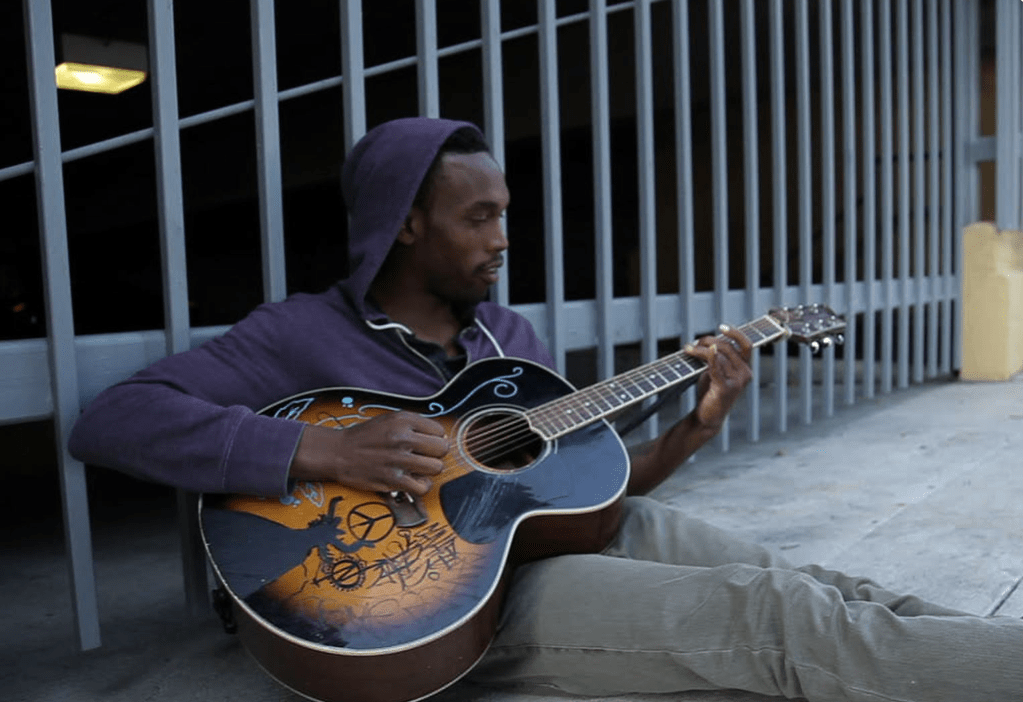
Ish playing guitar, Photo: Jeff Farkash
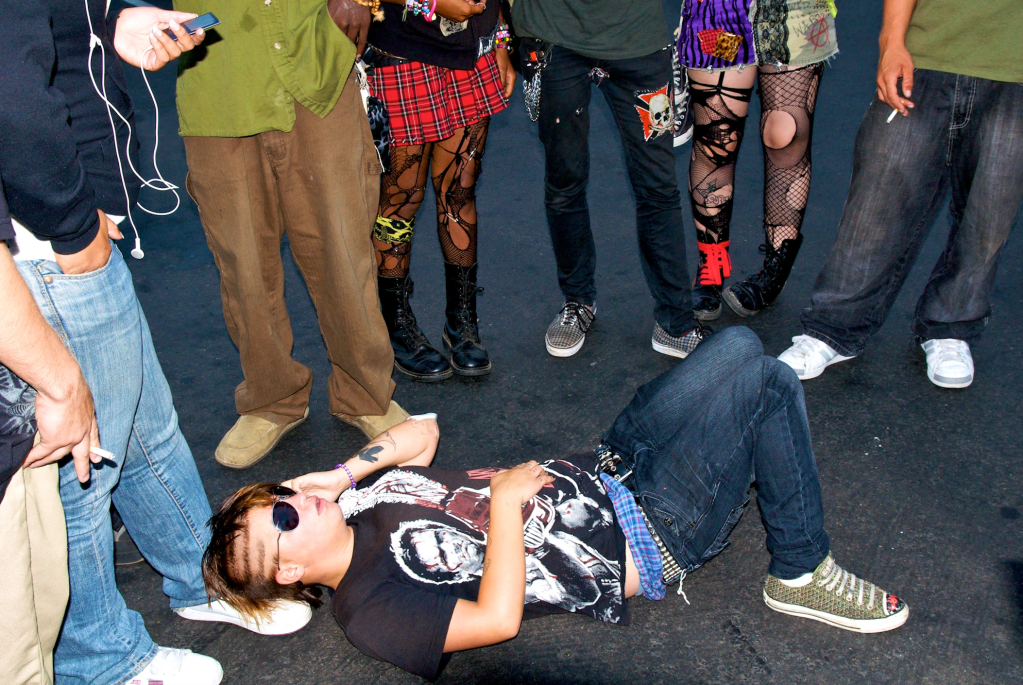
Director Michael Leoni gives us a glimpse into the lives of these troubled young people by hanging out in the Los Angeles neighborhoods they frequent. Unsettled by and distrusting of Leoni, it took time for the filmmaker to gain the kids’ trust. Once he did, the audience meets incredibly charismatic and endearing characters like Ish, a talented African-American musician who struggles with childhood abandonment and abuse by a pimp father and prostitute mother, Greenz and Nick, likeable guy-next door types with winning personalities, yet drugged-addicted with abusive parents that led them to run away and seek a better life in the streets of Los Angeles. Bublez and Kiki, two of the younger kids, the filmmaker encounters, with so much promise, likely destined for tragedy. Although post-film release, Marquesha “Kiki” Babers has launched a successful career as a poet, touring nationwide and speaking about her experiences in conferences.
Bublez on the streets of Los Angeles, Photo: Jeff Farkash
For many of these kids, their fates are sealed in death or imprisonment. It’s inevitable. Failed bureaucratic agencies doing the minimum to assist these kids and overworked staff unable to meet the influx of homeless teens in overcrowded facilities, as Leoni experiences when reaching out to them. But, the filmmaker doesn’t solely rely on the mishaps and the negative circumstances these young people endure to tell the story, he incorporates narrative elements to build storylines with these real-life characters – to not just keep you engaged and sympathize with their abysmal situations, but root for them as you’d be inclined for protagonists in any narrative drama or comedy. It’s a refreshing spin. And it works.
Homeless kids on the streets of Los Angeles, Photo: Jeff Farkash
What started as an assignment to produce a 2-minute PSA on America’s homeless youth turned into an 8-year journey for director, Michael Leoni. Compelled to document the struggles and hardship of America’s 1.8 million forgotten homeless youth, after struggling with financial hardship in New York City at the age of 19, became more than a passion project for him. Leoni launched the Spare Some Change nonprofit to engage and empower homeless youth to change their lives and create a stable future. The film earned the Social Impact Award at the Hollywood Film Festival and Excellence Award at the Impact Doc Awards! The film has a run time of 104 minutes. American Street Kid begins streaming worldwide today on Apple, Amazon Prime, Spectrum, and another popular services. To learn more about more the American Street Kid documentary, click here.
20 years in the making and the film adaption of Motherless Brooklyn is finally here. Triple threat Ed Norton serves as writer, director, and star of this highly stylized film noir rendition of Jonathan Lethem’s 1999 novel of the same name. Unlike its printed predecessor, Norton’s film takes place in the 1950s, whereas Lethem’s crime novel describes a 1990s Big Apple. Some resistance from the author could have been expected, but according to Lethem, when Norton asked for his input, he said: “Just run with it.”
And Edward Norton did just that. For two decades the artist researched the New York City of the 1950s and its place in history with politics, race, community displacement and power struggles interwoven – the major components that make up this crime drama. Edward Norton plays Lionel Esrogg, a junior detective with Tourette’s syndrome that is determined to find the truth about his mentor’s (played by Bruce Willis) murder, all while uncovering unsavory truths about New York City’s powerful and disenfranchised. Joining Norton in this dramatic ensemble are acclaimed actors: Alec Baldwin, as the powerful, money-hungry and bigoted developer, Moses Randolph intent on bamboozling anyone and any institutions that get in his way of seeing his projects through (loosely based on actual New York developer, Robert Moses). Baldwin’s casting and interpretation of Randolph is quite apropos and authentic as his portrayal of Trump has been well received by the public and condemned by the president; and well, extremely timely.
Photo: Courtesy of Warner Bros. L to R, Alec Baldwin and Edward Norton
Gugu Mbatha-Raw as Laura Rose, a mixed-race lawyer and activist intertwined in this crime story is fantastic. Mbatha-Raw and Norton have great chemistry on-screen and there’s a beautiful connection their characters convey with an unspoken recognition of the struggle each has endured within a less-than accepting society. Rounding out the cast with electrifying performances are Willem Dafoe as Paul, Moses Randolph’s more humane, and less corrupt brother and Michael K. Williams (The Wire, Boardwalk Empire) as the trumpet man with keen situational awareness.
Photo: Courtesy of Warner Bros. L to R, Gugu Mbatha-Raw and Edward Norton
Edward Norton has a gift for portraying dimensional characters. He can go from 0 – 100 instantaneously, from self-deprecating to exuding complete confidence without hesitation; his Academy Award nominations for Primal Fear and American History X speaks to this. It’s a given. The audience will root for underdog, Lionel Essrog, to defeat the villains in Motherless Brooklyn but what is most compelling about Norton’s brilliant portrayal of Lionel’s disability is the way he outsmarts those who believe he’s no match for them with grace, humility and humor. And as the audience, we buy it.
The cinematography (Dick Pope) and set design (Kara Zeigon) conjures ups a romanticized nostalgia moviegoers crave. Manhattan and Brooklyn streets littered with 1950s Cadillacs and Chevys in an array of models and colors is a sight to behold. At first glance, you might think you’re in a tourist attraction in present day Cuba, but no, it’s the extraordinary production team that made this era come life with beautiful visuals. The film is lengthy but worth sitting through and witnessing wonderful storytelling. Motherless Brooklyn comes out tomorrow, November 1st. Click here for showtimes.










 Don't Suck My Collagen