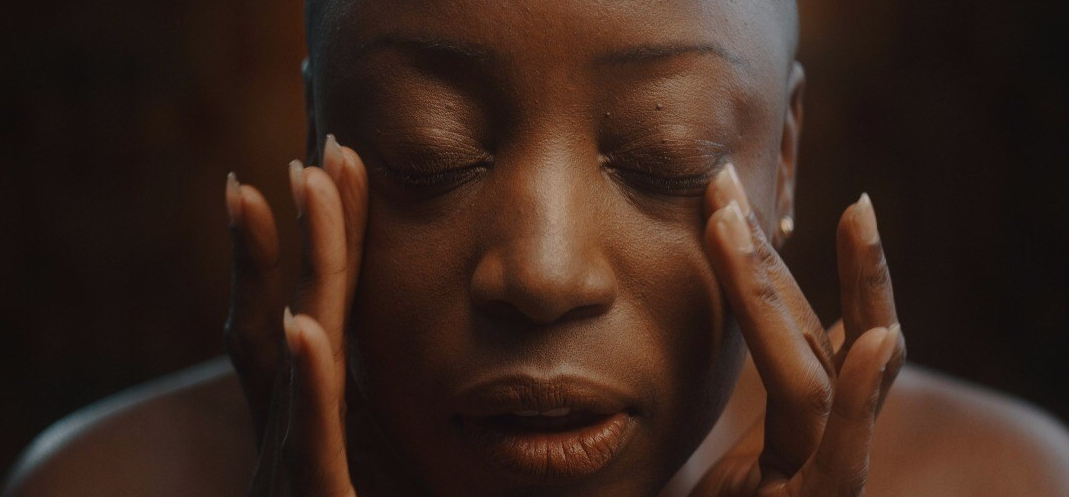
Filmmaker RaMell Ross Unapologetically Breaks Screenwriting Rules with the Exceptional ‘Nickel Boys’ Film — Nabbing a Golden Globe Best Picture Nomination Along the Way

RaMell Ross isn’t preoccupied with filmmaking conventions — the first-time fictional feature director/documentarian, photographer, and writer says there is no wrong or right way to experience the film.

From L to R: Ethan Herisse as Elwood Curtis and Brandon Wilson as Jack Turner in ‘Nickel Boys’ Photo: Orion Pictures/Amazon/MGM Studios.

So, what’s Nickel Boys about, and why is it generating Oscar buzz already?

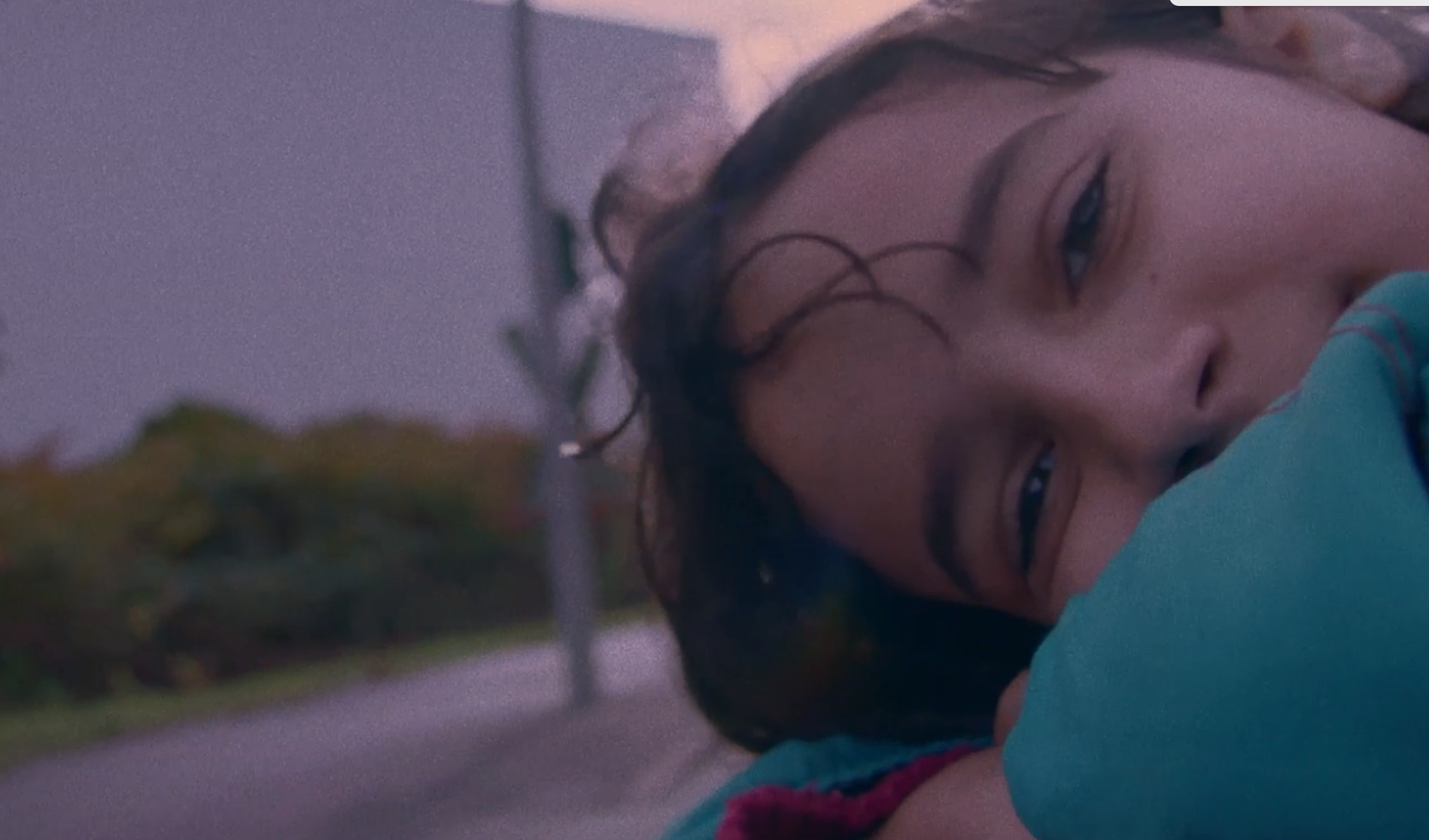
Adapted from Colson Whitehead’s Pulitzer-prize-winning book for fiction in 2020 with the same name, Nickel Boys begins with fractured images of Elwood Curtis’ (Ethan Herisse, When They See Us) life, a prominent theme throughout that begs the viewer to interpret the story as they’re viewing it instead of it being spoonfed. Elwood, a promising Black teen in the Jim Crow era, makes a fateful mistake on his way to a free college for gifted Black students, leading to incarceration in a brutal reformatory school known as the Nickel Academy for law-breaking boys.

At the Nickel Acadamy, he forges a friendship with a streetsmart, jaded youth named Jack Turner (Brandon Wilson, The Way Back). Steeped in the Civil Rights movement, the film juxtaposes images of Dr. Martin Luther King (one of Elwood’s heroes) and actual documents from the actual Dozier school in Tallahassee, Florida.

Over 100 boys, Black and white, died at the school, many buried in unmarked graves. It’s heartwrenching and infuriating to learn about the abuses the school engaged in. Still, Ross, with his visual storytelling tapestry, evokes empathy and hope in these characters, unlike any other film in its genre addressing trauma and injustice in Black culture.

I chatted with RaMell Ross, who directed the 2019 Oscar-nominated documentary Hale County This Morning, This Evening, right before Nicole Boy’s theatrical release to discuss the film’s exploration of visuals to aid the storytelling, the shift in narrative point-of-view and the absence of dialogue close to the end of the first act.
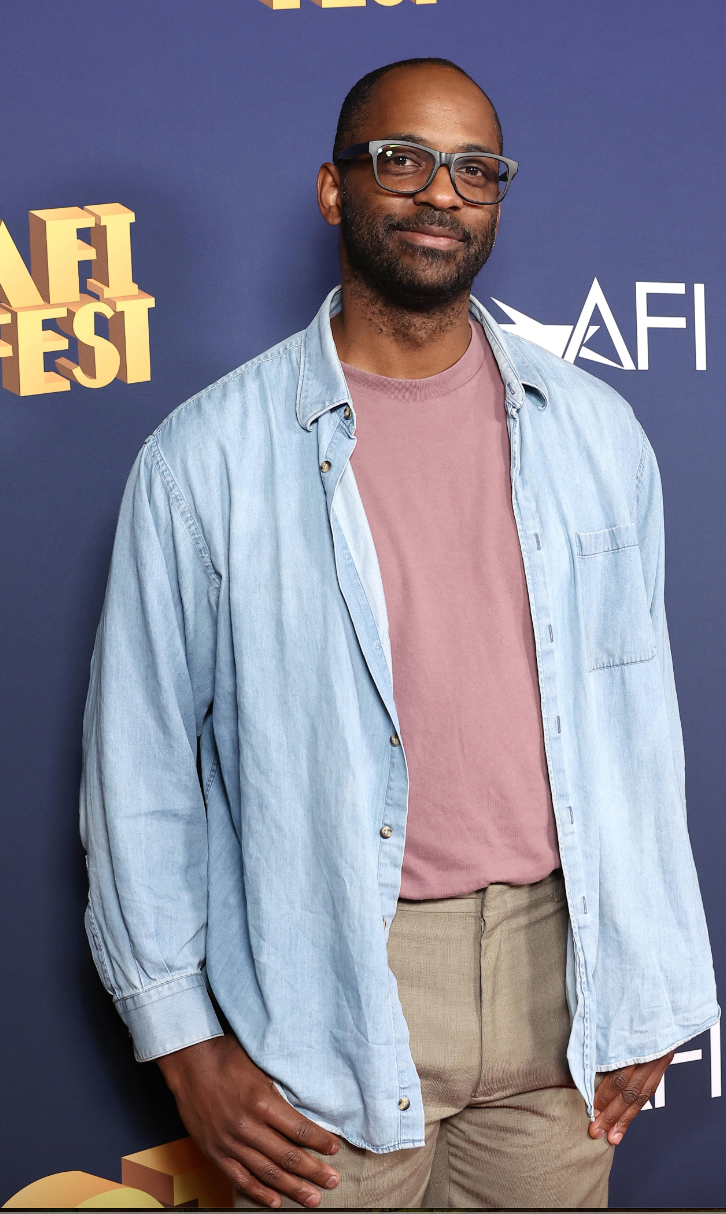
Filmmaker RaMell Ross: Photo: IMDB.

MV: Why did you approach the visual components vs. a dialogue-driven narrative, and what kind of response have you received from audiences?

RR: The film elicits such a subjective response — it has a plethora of images from across time and ones created on set, dealing with real events. The range of reactions has not been the same; some people have reacted to the wordlessness, while others have praised it. The film taps into people’s relationships to trauma, imagining other people’s agency, their own agency, and how they received information in the past, which is a bit of a mind bend. The default in cinema has been to show the visuals outright as far as depicting trauma. The point-of-view in this film does something that’s off-edge.

MV: Plan B approached you to write and direct this film. It’s quite a unique position, where the money backers are soliciting you instead of being the other way around. What was your take on making this film before and after reading the book?

RR: I was hesitant in general. I’m a hesitant maker. It takes a lot to make something, especially if it doesn’t originate from me or my writing process. Before reading the book, I thought, hey, it’s Plan B. They’ve done a lot of incredible work and supported artists. Then I read the book, realized its impact, thought about methods to adapt it, and started conversing with Joslyn Barnes (This Changes Everything), my co-writer and producer, who I sought. Trouble-shooting the point-of-view of the film and researching the Dozier School documents. Everything started to build itself out. In the context of the Dozier School boy’s story, this form and these ideas seem to be an unprecedented connection between form and content. That could have powerful ripples.

MV: When writing the screenplay, did you and Joslyn consult with author Colson Whitehead on the script’s development or your process for writing it?

RR: His involvement was non-existent. Colson Whitehead had no role in developing the screenplay. He, Dede Garder, and Jeremy Kleiner (Producers and co-presidents of Plan B) chose me to direct the film after seeing Hale County This Morning, This Evening. I sent him a Thank you note and was gushing about his talents. Whitehead responded with, “Go luck, man. You got it.” Which was great. In essence, giving me permission to execute my vision.

MV: In retrospect, after watching dailies and working with the team you had, is there anything you would’ve done differently conceptually when creating this film?

RR: Perhaps if the film is well received and makes AFI’s (American Film Institute) top 10 films, I would have included a clause in my contract to pay me more money, like 5 million (laughs). It’s easy to say in hindsight. I can’t imagine making this film with another DP, production, costume designer, producer, or co-writer. The film has many hands in it, and there are so many brushstrokes from creatives I trust. I think it would’ve collapsed had we approached it differently. It’s a pretty fickle relationship between elements. And this film works because of a marriage of 20 different elements.

MV: What do you think the reaction will be in Florida and other places to Nickel Boys that ignore and try to ban stories, whether in books or cinema, dealing with marginalized people and their experiences?

RR: It’s crazy to me that the book burning was part of our past, and now we’re dealing with it again. In Florida, especially where the Dozier school existed, the government acknowledged wrongdoing and awful truths but didn’t apologize. There’s this erasure of narratives taking place openly. And art, especially through Colson’s book and now the Nickel Boys adaptation, is emerging while powers that be are trying to suppress it. The hope is that people start having conversations about the past and continue to be inspired to make art that addresses these topics and gives way to new voices!

MV: Given your success as a documentarian and now feature filmmaker, what advice would you give first-time and seasoned filmmakers?

RR: Find Jesus and pray! (laughs). I respectfully say this to seasoned directors: the more specific, personal, idiosyncratic, and intimate to your own life and vision, the better the art will be. As unique as your films are, like your footprints, fingerprints, or brainwaves, that’s interesting and missing from mainstream cinema. Suppose people were making profoundly personal and deeply specific films in the commercial space. In that case, I think the world would be genuinely different because we would have access to the types of truths that are as singular as human beings and not the squished-down truths accessible and palatable for folks for the sake of watching the next show or film.

Watch Nickel Boys, an evocative and visually stimulating experimental film that lets viewers interpret the narrative through their imagination and lived experiences with a stellar cast that inhabited these characters so naturally; they were born to play these roles, especially Aunjanue Ellis-Taylor (Hattie, King Richard)—now playing in select theaters nationwide. Click here to see movie schedules and times.

Love Him, Misunderstand Him, or Intrigued by Him: Spike Lee’s Creative Resources Exhibit at the Brooklyn Museum Invites You to Explore the Acclaimed Filmmaker’s Monumental Body of Work in Film — and the People, Places, and Concepts That Served as Catalysts for his Cinematic Art

The expansive exhibit on director Spike Lee’s career and inspiration to create ground-breaking films on African-American culture is a multi-media tapestry of the artist’s creative journey, spanning almost 40 years.

Spike Lee: Creative Resources Exhibit; Photo: Paula Abreu Pita/Brooklyn Museum.

As soon as you enter the Spike Lee Creative Resources exhibit, Denzel Washington’s Malcolm X character’s infamous fiery 1964 speech from the film permeates the room. The scene, audio, costumes, and other colorful props from the movie, released in 1992, engulf your senses and prime you for what’s next.

A nostalgic visual stimulation that gives you front-row access to Lee’s early life.

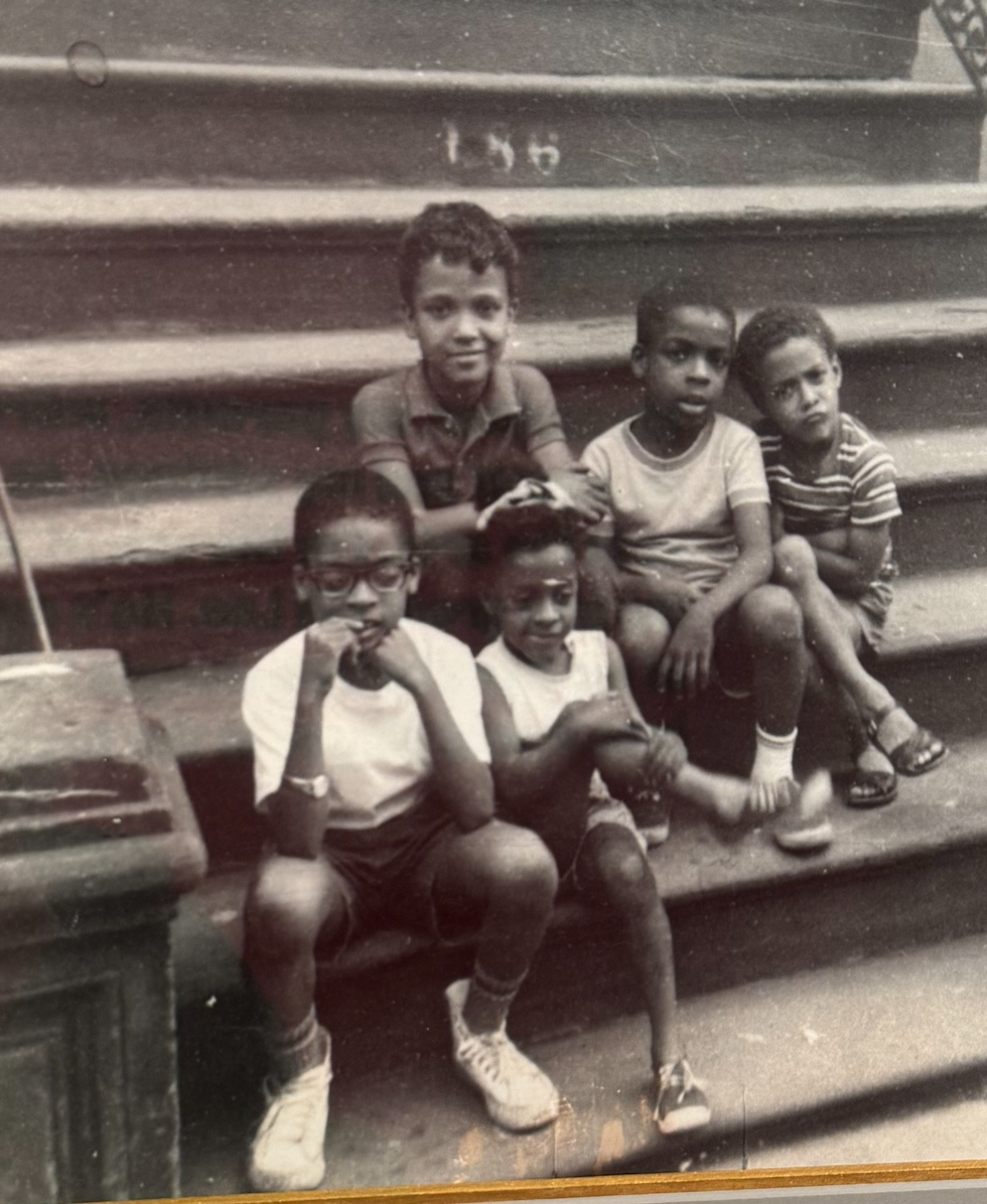
Clockwise: Spike, Joie, David, Cinqué, and Christopher Lee at 186 Warren Street, Cobble Hill, circa 1967–1970; Photo: Unknown Artist.

In this room, there’s a collection of paintings in color and black and white of Spike Lee’s family — from his siblings as kids on the stoop of his beloved Brooklyn neighborhoods (an abstract character present in Lee’s films) to portraits of his dad, Bill, a renowned jazz bassist and composer, heavily influencing the filmmaker’s taste in music and scoring many of his films, like the critically-acclaimed Inside Man, where you can hear the theme song, play intermittently throughout the exhibit to photos with Lee and his children. Family played a pivotal role in shaping Lee’s love for the arts and the narratives of the projects he’s brought — and continues to bring — to life.

Next up: Do the Right Thing’s Immersive Experience

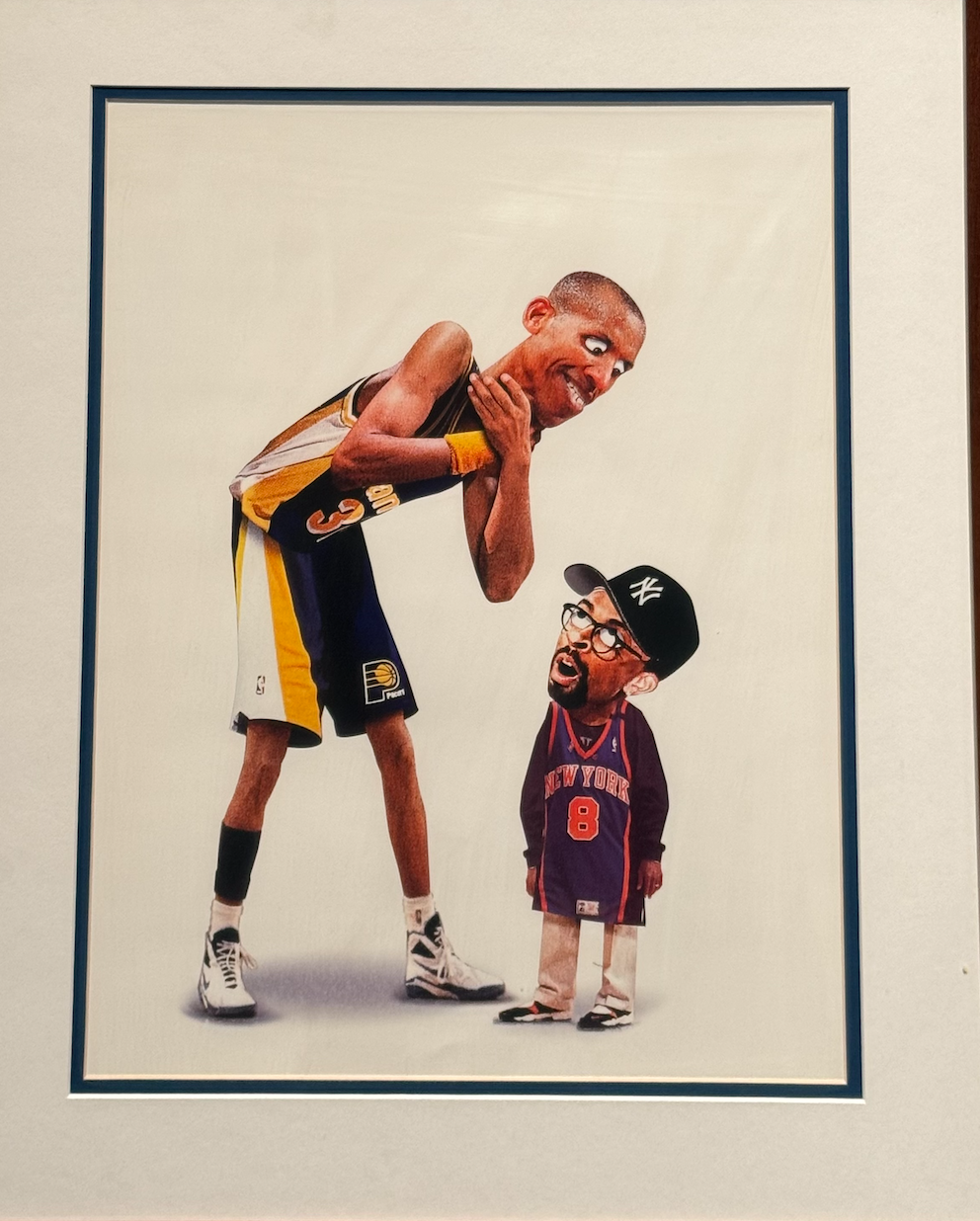
L to R: Illustration of Reggie Miller’s Infamous choking gesture, taunting Spike Lee; Image: Spike Lee’s archives/Brooklyn Museum.

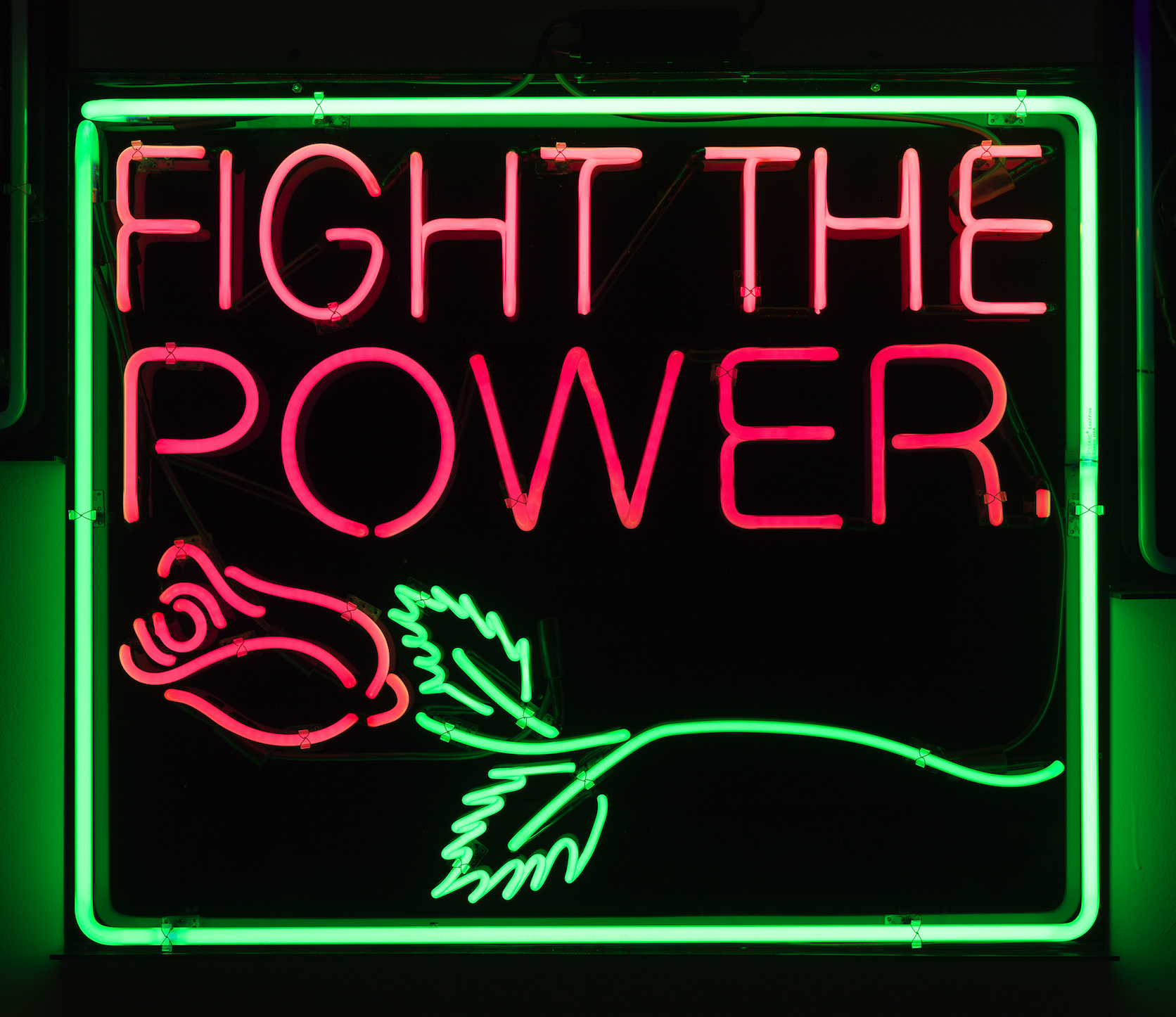
From the neon “Fight the Power” sign to an encased Sal’s pizza box prop hanging on the wall and a movie clip of Rosie Perez’s opening scene of Do the Right Thing, where she’s grooving and shaking to Public Enemy’s “Fight the Power”— a song that changed rap music forever with its powerful lyrics and inconvenient social truths that drew legions of fans, including myself, to love the music genre, and cemented the film’s influence not only in Hollywood but in American culture.

The Sports Wing — There’s a Lot!

You’ll see scores of photographs and athlete jerseys from one of Lee’s favorite teams, The New York Knicks, where Spike Lee has been a fan since practically the womb. And as an avid sports memorabilia collector and once aspiring baseball player, there’s an array of news clippings of images showcasing his controversial court-side antics, signed autographs from the likes of Michael Jordan, young and old, to illustrations of Knick nemesis Reggie Miller (Indiana Pacers) infamous choking gesture, a nod to the Knicks/Pacers rivalry. Lee’s fusion of sports narratives into his films while celebrating the Black sports figures breaking records and acquiring the highest accolades in their respective fields is a testament to Lee’s unwavering commitment to amplifying excellence in Black culture.

L to R: Illustration of Reggie Miller’s Infamous choking gesture, taunting Spike Lee; Image: Spike Lee’s archives/Brooklyn Museum.

The Music and Film Poster Rooms

Lee’s mom, Jacquelyn Shelton Lee, introduced him to movies and musicals when he was young, fomenting his interest in entertainment. Visitors can soak in the filmmaker’s extensive musical instrument collection, including Prince’s guitars, one-of-a-kind record players, and the movie posters he’s amassed. Posters reflecting all movie genres, from Jaws and The Deer Hunter to Raging Bull and North by Northwest, and photographs of Spike Lee with cinema greats, actors Robert Deniro and Joe Pesci, and filmmaker Martin Scorsese, fill the hall.

Spike Lee’s collection of Prince’s guitars.

There are seven sections to the Spike Lee: Creative Sources exhibit to blow you away. I won’t share any more details because you should run, not walk, to this comprehensive, educational, and awe-inspiring collection of 350 pieces, organized by Kimberli Gant, Curator, Modern and Contemporary Art, with Indira A. Abiskaroon, Curatorial Assistant, Modern and Contemporary Art. The exhibit displays many facets of Lee: his advocacy for justice and homage to the African American titans who came before and after him, who have challenged the status quo and have made a mark in every aspect of American life, and last but not least, his playful side.

Spike Lee: Creative Sources will be running through February 4thClick here to get your get tickets to see this extraordinary exhibit!

Review: ‘American Street Kid’ – Narrative Meets Documentary Style Portrayal of America’s Homeless Youth – Bitingly Gritty and Honest

Homeless kids in Los Angeles, Photo: Jeff Farkash

By definition, documentaries are meant to educate, shed light, and “document reality” to inspire and move audiences on any given subject they may know nothing about. American Street Kid, by writer/director Michael Leoni, met these criteria – and then some. He pushed the genre further by injecting himself into the story; weary at first, I thought his inclusion would taint the outcome of the film – turns out I was wrong. Leoni begins the film by asking random people – young and old – their perception of homeless youth. Typical responses: lazy, unmotivated, and labeled as undesirable.  Disheartening to hear as the absence of empathy reflects society’s lack of interest and understanding of how these youths become entrenched in these unfortunate circumstances.

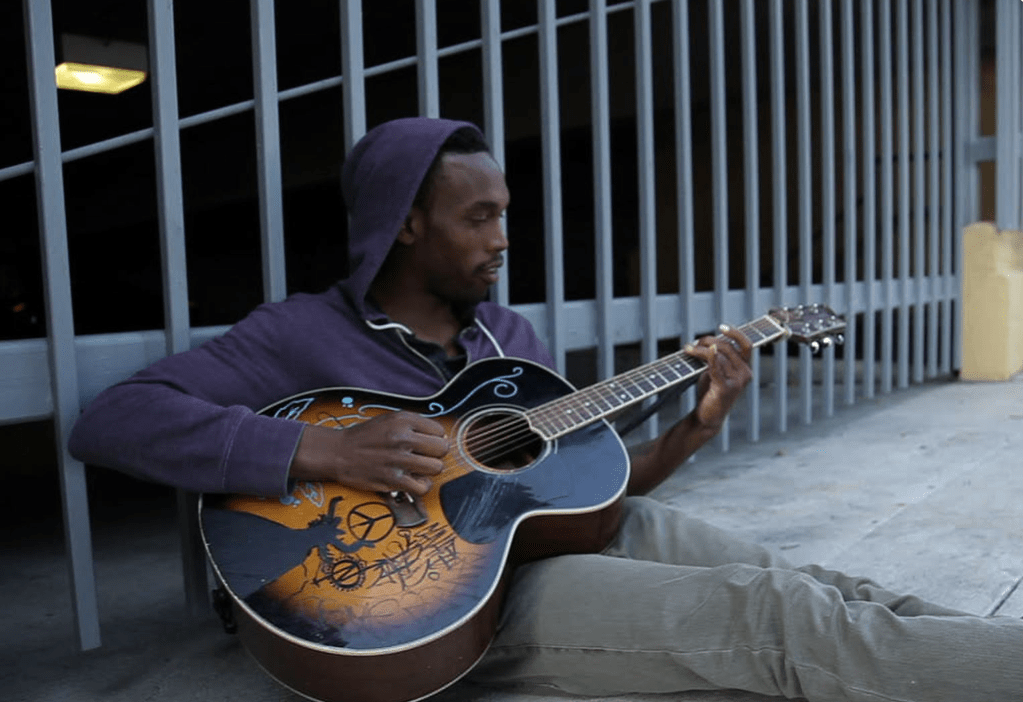
Ish playing guitar, Photo: Jeff Farkash

Director Michael Leoni gives us a glimpse into the lives of these troubled young people by hanging out in the Los Angeles neighborhoods they frequent. Unsettled by and distrusting of Leoni, it took time for the filmmaker to gain the kids’ trust. Once he did, the audience meets incredibly charismatic and endearing characters like Ish, a talented African-American musician who struggles with childhood abandonment and abuse by a pimp father and prostitute mother, Greenz and Nick, likeable guy-next door types with winning personalities, yet drugged-addicted with abusive parents that led them to run away and seek a better life in the streets of Los Angeles. Bublez and Kiki, two of the younger kids, the filmmaker encounters, with so much promise, likely destined for tragedy. Although post-film release, Marquesha “Kiki” Babers has launched a successful career as a poet, touring nationwide and speaking about her experiences in conferences.

Bublez on the streets of Los Angeles, Photo: Jeff Farkash

For many of these kids, their fates are sealed in death or imprisonment. It’s inevitable. Failed bureaucratic agencies doing the minimum to assist these kids and overworked staff unable to meet the influx of homeless teens in overcrowded facilities, as Leoni experiences when reaching out to them. But, the filmmaker doesn’t solely rely on the mishaps and the negative circumstances these young people endure to tell the story, he incorporates narrative elements to build storylines with these real-life characters – to not just keep you engaged and sympathize with their abysmal situations, but root for them as you’d be inclined for protagonists in any narrative drama or comedy. It’s a refreshing spin. And it works.

Homeless kids on the streets of Los Angeles, Photo: Jeff Farkash

What started as an assignment to produce a 2-minute PSA on America’s homeless youth turned into an 8-year journey for director, Michael Leoni. Compelled to document the struggles and hardship of America’s 1.8 million forgotten homeless youth, after struggling with financial hardship in New York City at the age of 19, became more than a passion project for him. Leoni launched the Spare Some Change nonprofit to engage and empower homeless youth to change their lives and create a stable future. The film earned the Social Impact Award at the Hollywood Film Festival and Excellence Award at the Impact Doc Awards!  The film has a run time of 104 minutes. American Street Kid begins streaming worldwide today on Apple, Amazon Prime, Spectrum, and another popular services. To learn more about more the American Street Kid documentary, click here.

Film Independent’s Project Involve 2020 Showcase Raises The Creativity Bar With Thought-Provoking Films

Screen Shot 2020-06-12 at 3.11.47 PM

Jonah Beres as Sam in Balloon, Photo: Courtesy of Film Independent

We are living in unprecedented times. That’s a given. A global pandemic claiming more than 2 million lives and counting, a monumental Black Lives Matter Movement calling for the dismantlement of systemic racism rooted in American foundations. Yet, in the midst of all this chaos (ultimately for the greater good) there is beauty waiting to be discovered through the magical storytelling lens of filmmakers. Stories about communities underrepresented on the screen that need to be seen. This year, Film Independent unveiled 6 short films from their 27th Project Involve program poised to make a lasting impression on audiences. 4 of these films are laced with bittersweet, funny, and controversial themes expressing emotions validating our universal experiences we share as humans.

Balloon, directed by Jeremy Merrifield, and edited by Bowei Yue, follows 14 year-old Sam (Jonah Beres) in the middle of an active-shooter drill, led by the talented Paul Scheer (Officer Hart). Sam, a quiet teen, is the target of harassment after a video of him crying goes viral after being punched by school bully, Jason (Carson Severson). Jason is dead set on seizing any opportunity to get a rise out of Sam and his other victims. Sam’s friend, Adam (Jaylin Ogle), tries to console Sam and urges him to fight back, while not wanting to be labeled as weak by the other boys. When Sam discovers he has super powers to defend himself from his aggressors, he’s at a crossroads: fight back or continue enduring the brutal torments. The film reveals an all too familiar toxic masculinity in American culture and what’s at stake for children and young adults to survive in school. It’s relevant and timely and worth watching.

Screen Shot 2020-06-12 at 3.12.05 PM

Lara Cengiz as Kati in Bambirak, Photo Courtesy of Film Independent

The film Bambirak by director Zamarin Wahdat, about an 8 year-old Afghan girl (Kati) and her single father (Faruk), adapting to a new country they’ve sought asylum in is poignant and speaks to the collective solid bond fathers and daughters have. The story begins with Kati (Lara Cengiz) hiding in her dad’s delivery truck. Once he discovers her while making deliveries, Faruck (Kailas Mahadevan) becomes desperate to drop Kati at the grandmother’s home, although she’s nowhere to be found. Faruk enlists Kati to be his assistant. Everything seems to go smoothly until a racist turn-of-events challenge the father-daughter duo. Tensions flare, accusations are made, and with minimal dialogue, the father-daughter team accept the trade-off of being in a new country. Wonderfully acted and scripted, Bambirak is a gem of a short film.

Screen Shot 2020-06-12 at 3.12.34 PM

Buck, the narrative short by director Elegance Bratton and co-director Jovan James follows Lynn (Malik Shakur), a young gay black man dealing with his depression in a self-destructive manner that has the potential to lead to tragedy. The film starts off with Lynn’s mother pressing him about his meds. Determined to seek happiness with a visit to his white male lover, Richard (Gabe Peyton), the encounter proves to be disappointing. Lynn realizes there is another gay couple waiting for him to partake in a sexual party. Reluctant and declining to participate, Lynn decides to leave even though he’s taken a hit of Meth, is barely conscious, and is rescued by fellow black gay man whose life is on borrowed time. With the 25 million Americans suffering from depression to date, we don’t see nearly enough films examining and exploring individual experiences with this disease and Buck does a great job of portraying someone who battles mental illness, with empathy, not pity.


Screen Shot 2019-10-08 at 2.30.10 PM

Saint from La Gloria film, Photo: Courtesy of Film Independent

La Gloria a film by Mary Evangelista explores the aftermath of an attempted suicide by a young gay Latina (Gloria). And she how copes with lovesickness and sorrow with the help of her grandmother’s optimism and dream-channeling to achieve hope and peace. While the rest of her family glosses over her suicide attempt and go about their everyday lives. Gloria (Chris Gris) and her grandmother’s bond is authentic and compelling. It offers a sweet glimpse into relationships between younger and older generations. And we are here for it!

Film Independent’s 2020 Project Involve Showcase, a carefully curated program of short films spotlighting some of the program’s most exciting new filmmakers. Project Involve (PI for short) fosters the careers of talented filmmakers from communities traditionally underrepresented in the industry, and is celebrating 27 years of working toward a more inclusive entertainment landscape. The program serves as a valuable incubator for diverse talent and has cultivated the careers of more than 820 filmmakers. Notable alumni include Linda Yvette Chavez & Marvin Lemus (Gentefied); Jon M. Chu (Crazy Rich Asians); Jomo Fray (Selah and the Spades); LaToya Morgan (Into the Badlands); Justin Simien (Dear White People); Lulu Wang (The Farewell), Kim Yutani (Director of Programming, Sundance) and many more. To learn more about Film Independent and Project Involve, click here.

Review: ‘Ovid and the Art of Love’ – Resoundingly Mirrors Modern Times

Screen Shot 2020-05-08 at 4.23.31 PM

Corbin Bleu as Ovid, Photo: Brian Geldin PR

Esmé von Hoffman’s latest film to hit the streaming platforms, Ovid and the Art of Love, couldn’t have come at a better time amidst a global pandemic and the ensuing chaos the current administration is wittingly encouraging in our nation. Its social and political commentary will resonate with audiences. As millions of Americans affected with the repercussions of the novel coronavirus (over 76K+ deaths domestically, an unemployment surge of 14.7%, a statistic unseen since the Great Depression) continues to wreak havoc in our daily lives.

Screen Shot 2020-05-08 at 4.28.14 PM

John Savage as Augustus, Kimberly Cruchon Brooks as Livia, Photo: Brian Geldin PR

Parallels of our stark reality compounded by the film’s theme are spot on. Writer/Director Esmé von Hoffman’s version of the old tale of beloved poet, Ovid, otherwise known as Publius Ovidius Naso, who was exiled by Roman emperor, Augustus in 8 AD, “allegedly” because of his exotic and provocative books of poetry. Corbin Bleu (“High School Musical,” “Dancing with the Stars”) is charming as he breathes life into modern-day Ovid, and finds his purpose in the urban streets of Detroit. He’s summoned by Augustus, the inept and hypocritical emperor, played by the talented John Savage, (“Deer Hunter”) to pursue a career in law but his interests lie elsewhere: poetry. Determined to follow his passion, Ovid attempts to read his poems at open mic clubs, failing at first and ridiculed by patrons, later finds his rhythm in verse and love as he follows a woman he thought would fulfill his life. As Ovid’s poetry career and romantic conquests flourish, the citizens of Rome, A.K.A. Detroit, are in an upheaval; jobs are lacking, health insurance is scarce, and people are protesting inadequate leadership. Ring a bell? It’s 2020 on screen, minus the fancy togas, and elegant headpieces.


Screen Shot 2020-05-08 at 4.37.48 PM

Director Esmé von Hoffman, Photo: Brian Geldin PR

Ovid and The Art Love is a tale as old as humanity – depicting average citizens standing up to power with truths and freedom of expression to affect change and the dire consequences that result, in this case, Ovid, regarded as the canonical poet of Latin literature, is exiled and sent to Romania, but his beautiful poetry and popularity lives on. In 2017, Ovid’s birthplace of Sulmona formerly Sulmo in Italy, acquitted the poet of any wrongdoing, Florence followed suit.

Check out this wonderful adaptation of Ovid and the Art of Love by director, Esmé von Hoffman, when it’s released on May 19th by Level 33 Entertainment via major streaming and VOD platforms including Amazon, iTunes, Comcast, XFinity, Dish, Sling, Microsoft, Google Play, YouTube and many more.


Film Review: ‘The State of Texas Vs. Melissa’ – A Gripping Doc on the Judicial System’s Exploitation of the Marginalized in America

Screen Shot 2020-04-30 at 5.27.44 PM

Melissa Lucio, Photo: Courtesy of The 2050 Group

As the first Hispanic woman facing death row in the state of Texas, Melissa Lucio’s milestone or accomplishment isn’t worthy of recognition, especially for Latinos, yet her story and impending fate is compelling and requires attention. The State of Texas vs. Melissa, a documentary by French-American director, Sabrina Van Tassel (The Silenced Wall) asserts how the laws of injustice favor poor, uneducated people of color. And how their cases are inevitably swept into the vortex of anonymity. Sabrina Van Tassel first encountered Melissa as she was researching for her documentary about women in jail. Van Tassel, an investigative journalist and filmmaker for over 15 years, was reluctant to meet Lucio as her case centered on the homicide of her 2-year-old daughter, Mariah. An abhorrent charge, undoubtedly. What drew Van Tassel to Melissa’s case was the inmate’s demeanor, the facts of the case, and belief that she’s innocent.

Screen Shot 2020-04-30 at 5.27.58 PM

Director, Sabrina Van Tassel, Photo: Courtesy of The 2050 Group

The director does a fantastic job of letting the images and cast of characters guide the narrative- everyone from Melissa’s family members to defense attorneys and forensic scientists play significant roles in how the documentary unfolds. From the beginning, as Melissa is interrogated for over 7 hours by unrelenting police in Southern Texas, the audience can surmise she was coerced into confessing to the murder. The filmmaker paints a vivid picture of Melissa’s life. We see she comes from a broken home, suffered physical abuse at the hands of relatives and her mother’s ex-boyfriends. The indifference Melissa’s mother shows towards her daughter’s sexual abuse and current situation is quite telling of the lack of parental and emotional support Melissa received. The drug abuse, abject poverty and guardianship of 14 children overwhelmed Lucio. It’s obvious her unresolved trauma led to her downward spiral, but this impossible situation does not make a murderer. Or does it? With no history of violence, as confirmed by family members and psychologists, there wasn’t sufficient evidence she was prone to commit this heinous crime. Melissa Lucio was a negligent mother and child services eventually removed her children from her care, the director glosses over these facts. The audience could have benefitted from learning more about Melissa’s state of mind during the actual death of Mariah.

Screen Shot 2020-04-30 at 5.30.55 PM

Although some details were omitted, the documentary chronicles the turn of events that make Melissa’s story so fascinating. A corrupt DA looking to seek re-election in Texas’  Cameron county; a defense attorney with career aspirations that trumped his client’s best interest and goal of being freed; Melissa’s other daughter, who may have been responsible for her sister’s death. Van Tassel sets the stage for a documentary-style whodunit. And in doing so, we see how easily Lucio was railroaded in a failed judicial system. Sitting on death row for over 13 years, Melissa Lucio is on her last appeal, which if overturned, may go to the Supreme Court.

Making its Tribeca 2020 Film Festival world premiere, The State of Texas vs. Melissa has received well-deserved media attention from virtual festival filmgoers and panelists. Written and Directed by Sabrina Van Tassel, produced by Vito Films in co-production with Tahli Films and Andaman Films has a running time of 97 minutes. To learn more about The State of Texas vs. Melissa, click here.


Review: ‘The Woman Who Loves Giraffes’ – Moving, Inspirational, and Triumphantly Valiant

Screen Shot 2020-01-13 at 5.53.19 PM

Anne Innis Dagg, Photo Courtesy of Zeitgeist Films

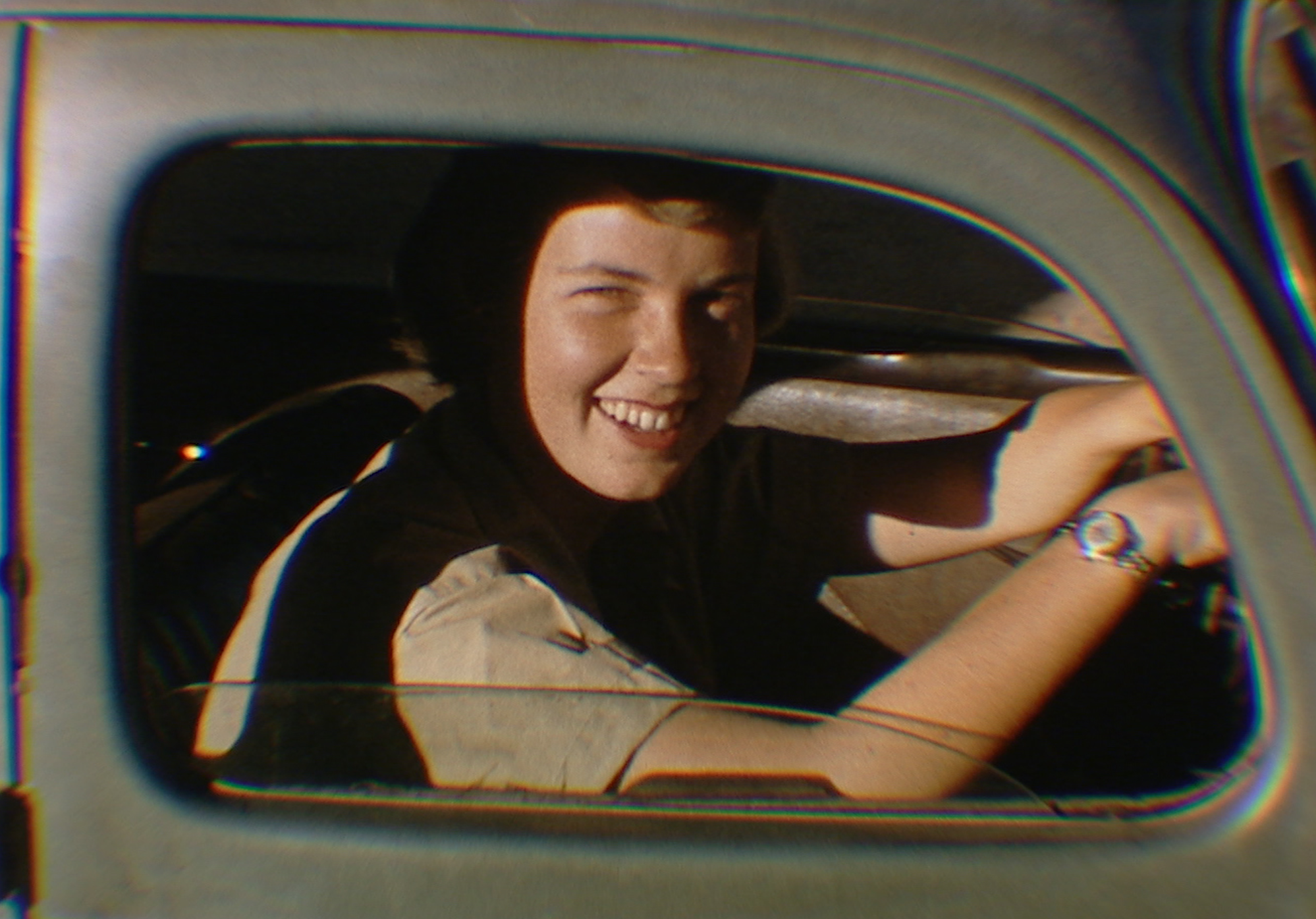
To say Anne Innis Dagg was a trailblazer is an understatement. Making her mark before Jane Goodall studied chimpanzees and Dian Fossey gorillas in mountains, Dagg ventured on a solo trip to Africa and became the first female scientist/researcher to study giraffes in 1956. Giraffes have intrigued Dagg, a scientist/feminist/animal conservationist, since the age of three when her mother took her to a zoo. Twenty-years later, this life-altering, fateful encounter at the zoo; set in motion Anne’s quest to study giraffes in their natural habitat. Encouraged by her mother and then-boyfriend Ian Dagg, Anne began her research in the middle of the African bush when such endeavors by women were unheard of, yet Anne Innis Dagg pioneered the study of giraffes and discovered behavior never before documented. And, director Alison Reid, fascinated by Dagg’s life, embarked on bringing Anne Innis Dagg’s story to the screen after Listening to a CBC radio documentary, ‘Wild Journey’ on Dagg’s experiences.

Screen Shot 2020-01-13 at 5.53.40 PM

Director, Alison Reid, Photo Courtesy of Zeitgeist Films

Award-winning director Alison Reid (The Baby Formula) wrote, developed, and shot the documentary, The Woman Who Loves Giraffes. Audiences will be thrilled she did. Besides bringing phenomenal historical context to the film, Reid does a beautiful job of capturing Dagg’s spirit and passion for giraffes. Reid chronicles Anne Innis Dagg’s life with rare footage from Dagg’s time in Africa by herself, the recreation of letters read between Anne, her mother, and boyfriend Ian Dagg. Anne’s unbelievable journey as a scientist, researcher, and feminist crusader fighting for her career against the patriarchy and male-dominated Canadian university staff. Her determination is admirable as she’s led the charge in challenging existing beliefs on female scholars.

Through Alison Reid’s lens and Anne Innis Dagg’s intact footage from over 60 years ago, we experience the highlights and low points of Anne Innis Dagg’s life. And complementing the film are the voices of Tatiana Maslany (Orphan Black), Victor Garber (Argo, Alias) David Chinchilla (The Expanse) and Lindsay Leese (Bomb Girls). We witness a seamless real-life story unfold of an extraordinary woman following her passion with grace and perseverance. Dagg’s multiple books on giraffes laid the foundation for future wildlife conservationists to study Anne’s findings and pursue careers in the field. Her contributions to the study of giraffes led to a resurgence in her career, and at almost 87 years-old, Anne Innis Dagg, currently known as a “giraffologist”, is still advocating for her beloved animals.

Screen Shot 2020-01-13 at 5.56.10 PM

Anne Innis Dagg at age 23, Photo Courtesy of Zeitgeist Films

First airing in Canada, Zeitgeist Films and Kino Lorber Inc. acquired the U.S. rights for The Woman Who Loves Giraffes. Opening this past week in New York and slated to open February 21st in Los Angeles, with subsequent engagements nationwide, The Woman Who Loves Giraffes is a must see! Whether you love animals, science or fighting for women’s rights, this film is for you. To learn more, click here.

‘Hurdle’ Review: Palestinian Youth Combat Political Strife With Inspiring Creative Outlets

Screen Shot 2019-11-15 at 4.41.31 PM

Photo: Courtesy of Hurdle Film

The world is in political turmoil domestically and internationally as evidenced by the ongoing deadly protests in Hong Kong, Venezuela, Chile and Bolivia. Reaching its 50th year of Israeli military occupation, Palestinians have mastered the virtue of resiliency in fighting for their rights to exist and living with the oppression that brings social injustice; they’ve taken to the streets for half a century, and attempting to reclaim their land is nothing new. But what has emerged, and shed light on this age-old Middle Eastern conflict, is a fresh perspective by documentary filmmaker, editor, cinematographer, producer: Michael Rowley. In his film Hurdle, audiences can judge for themselves what Palestinians are fighting for.

Screen Shot 2019-11-15 at 4.43.06 PM

Photo: Courtesy of Hurdle Film, Mohammed by Wall In Occupied Palestine

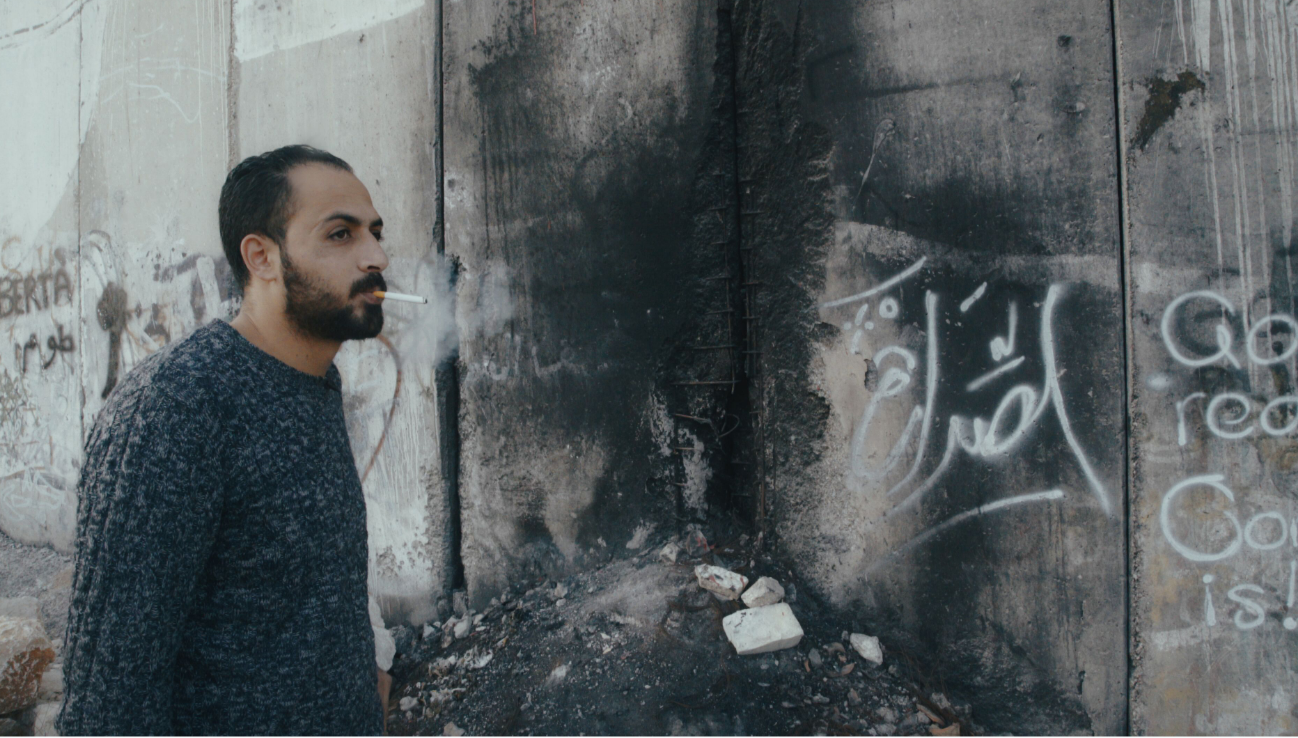
Hurdle begins with Mohammed, a Palestinian photographer examining a wall built to confine Palestinians to their “territory” by the Israeli military. Mohammed is clearly anxious and frustrated by his and his family’s current situation, but uses his photography business to enlist the youth in his community to find what’s beautiful and intriguing in the midst of all the violent attacks on their people. It’s gut-wrenching yet hopeful to see this community persevere and strive for a better life and brighter future.

Screen Shot 2019-11-15 at 4.42.11 PM

Photo: Courtesy of Hurdle Film, Parkour Team Member Jumping

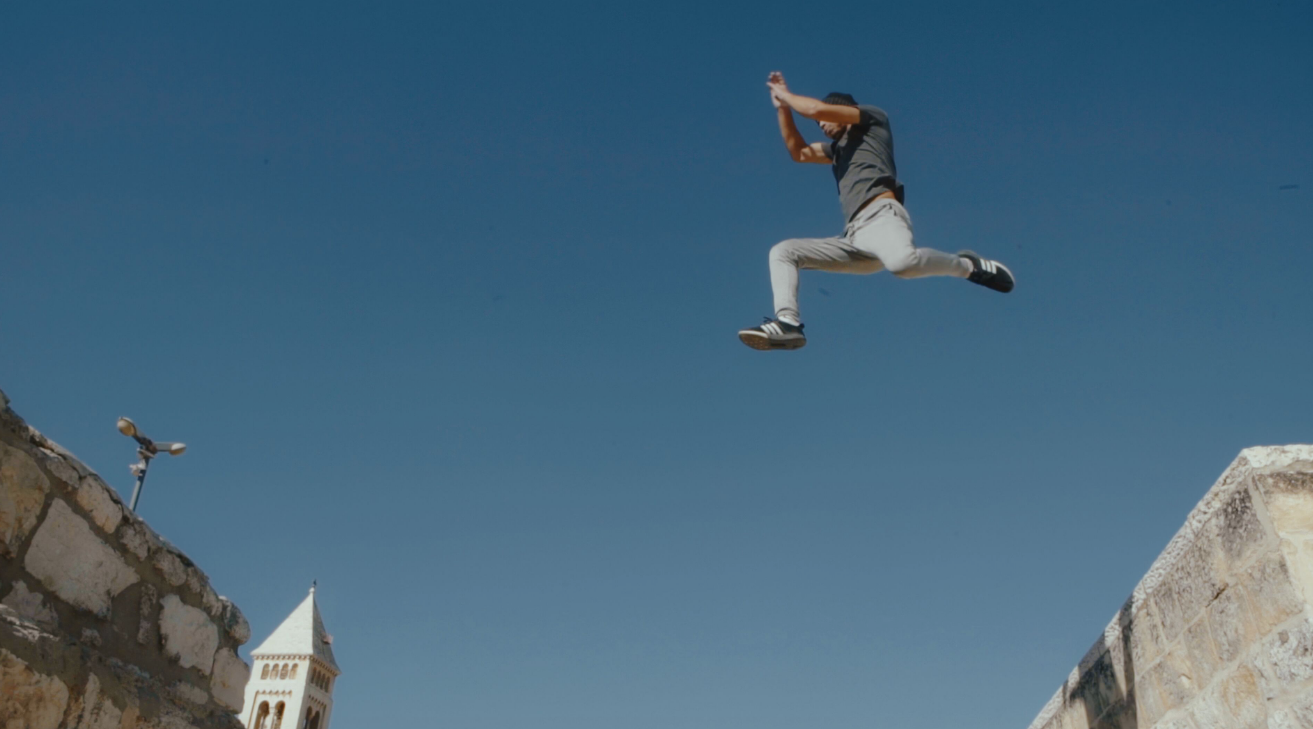
The film then follows Sami, a parkour instructor who teaches young men to jump and flip over rooftops and structures with measured form. Apart from the mental and physical demands the sport requires – it invokes the spirit of these young men to persevere, to attain the unattainable and overcome obstacles in currently occupied Palestine, even with all the violence and bloodshed simultaneously consuming their daily lives.

Rowley’s Hurdle film is candid. It shows daily Palestinian life: the celebrations, familial moments, triumphs and tribulations that connect us on human level. There are devastating violent attacks that can strike at a moment’s notice. On one side, we see people (Palestinians) fighting for their very existence, and on the other, Jews waving their flags rejoicing as they claim victory over their enemies. It’s an eye-opening experience to see basic freedoms we are all entitled to, squashed, but in succession, witness a movement of self-preservation and determination. Rowley documents the breathtaking landscapes and energy of Jerusalem with captivating cinematography and music. Winner of the Best Documentary Feature Film from the 2019 Tulsa American Film Festival, Hurdle is destined for more accolades and world-wide recognition. To learn more and check out future screenings of the Hurdle documentary, click here.

Review: ‘Motherless Brooklyn’ Edward Norton Resurges Dynamic Film Noir Storytelling

IMG_6770

20 years in the making and the film adaption of Motherless Brooklyn is finally here. Triple threat Ed Norton serves as writer, director, and star of this highly stylized film noir rendition of Jonathan Lethem’s 1999 novel of the same name. Unlike its printed predecessor, Norton’s film takes place in the 1950s, whereas Lethem’s crime novel describes a 1990s Big Apple. Some resistance from the author could have been expected, but according to Lethem, when Norton asked for his input, he said: “Just run with it.

And Edward Norton did just that. For two decades the artist researched the New York City of the 1950s and its place in history with politics, race, community displacement and power struggles interwoven – the major components that make up this crime drama. Edward Norton plays Lionel Esrogg, a junior detective with Tourette’s syndrome that is determined to find the truth about his mentor’s (played by Bruce Willis) murder, all while uncovering unsavory truths about New York City’s powerful and disenfranchised. Joining Norton in this dramatic ensemble are acclaimed actors: Alec Baldwin, as the powerful, money-hungry and bigoted developer, Moses Randolph intent on bamboozling anyone and any institutions that get in his way of seeing his projects through (loosely based on actual New York developer, Robert Moses). Baldwin’s casting and interpretation of Randolph is quite apropos and authentic as his portrayal of Trump has been well received by the public and condemned by the president; and well, extremely timely.

Screen Shot 2019-10-30 at 10.12.53 PM

Photo: Courtesy of Warner Bros. L to R, Alec Baldwin and Edward Norton

Gugu Mbatha-Raw as Laura Rose, a mixed-race lawyer and activist intertwined in this crime story is fantastic. Mbatha-Raw and Norton have great chemistry on-screen and there’s a beautiful connection their characters convey with an unspoken recognition of the struggle each has endured within a less-than accepting society. Rounding out the cast with electrifying performances are Willem Dafoe as Paul, Moses Randolph’s more humane, and less corrupt brother and Michael K. Williams (The Wire, Boardwalk Empire) as the trumpet man with keen situational awareness.

Screen Shot 2019-10-30 at 10.13.29 PM

Photo: Courtesy of Warner Bros. L to R, Gugu Mbatha-Raw and Edward Norton

Edward Norton has a gift for portraying dimensional characters. He can go from 0 – 100 instantaneously, from self-deprecating to exuding complete confidence without hesitation; his Academy Award nominations for Primal Fear and American History X speaks to this. It’s a given. The audience will root for underdog, Lionel Essrog, to defeat the villains in Motherless Brooklyn but what is most compelling about Norton’s brilliant portrayal of Lionel’s disability is the way he outsmarts those who believe he’s no match for them with grace, humility and humor. And as the audience, we buy it.

The cinematography (Dick Pope) and set design (Kara Zeigon) conjures ups a romanticized nostalgia moviegoers crave. Manhattan and Brooklyn streets littered with 1950s Cadillacs and Chevys in an array of models and colors is a sight to behold. At first glance, you might think you’re in a tourist attraction in present day Cuba, but no, it’s the extraordinary production team that made this era come life with beautiful visuals. The film is lengthy but worth sitting through and witnessing wonderful storytelling. Motherless Brooklyn comes out tomorrow, November 1st. Click here for showtimes.

Urbanworld Film Festival 2019 Review: More Than A Platform for Filmmakers – A Community of Content Powerhouses and Artists Breaking Barriers

Screen Shot 2019-09-26 at 3.55.00 PM

Photo: Courtesy of Urbanworld Film Festival

Urbanworld’s 23rd Film Festival has come to an end but the lasting impression their 78 official film selections made still lives on. Opening this year’s festival was Harriet, directed by Kasi Lemmons (Eve’s Bayou, The Caveman’s Valentine). Harriet tells the story of Araminta Ross, born into slavery in Dorchester, Maryland as 1 out of 11 siblings in her family. She became famous for freeing over 300 slaves in the south as a conductor in the Underground Railroad and integral leader of the Civil War. Lemmons does a fantastic job of portraying Tubman, played by Tony Award-winning actress Cynthia Erivo (Color Purple on Broadway, Widows), as a crusader. This isn’t just another film about slavery depicting atrocities and pulling at your heartstrings. It’s the impossible tale of a true female warrior with incredible perseverance. When we first meet Araminta, she seems scared; she’s illiterate and a bit crass, having suffered a childhood assault, and possessing divine vision and clarity, she executes numerous and courageous efforts to lead her family and others to freedom. This is the 19th century Oscar-worthy biopic we’ve been all been waiting for – the heroine of our dreams makes her way to the big screen. Harriet comes out November 1st. Click here to learn more.

Other narrative features worth spotlighting are DC Noir, and the female-led cast, If Not Now, When?

Screen Shot 2019-09-27 at 12.17.07 AM

Photo: Urbanworld Film Festival, Actor, Gbenga Akinnagbe in DC Noir

DC Noir is an anthology of 4 films based on writer/producer/director George Pelecanos’ (The Wire, Treme, The Deuce) critically acclaimed short stories. Each story is based in Washington D.C. and follows working class characters that in some way or other want to escape their circumstances, yet find themselves riddled with obstacles and propensity for crime. Pelecanos does a remarkable job of capturing the essence and culture of the urban communities he writes about and DC Noir is no exception. Long-time collaborating actor-turned-director, Gbenga Akinnage (The Wire, The Deuce, To Kill A Mocking Bird – currently on Broadway) directs and stars in one of the shorts. Pelecanos hires many of the same actors in his television series and now film series, to portray his three-demensional characters. During the panel discussion after the screening, I saw many familiar faces supporting Pelecanos and the cast and audience members emphasized his stellar efforts to characterize people from the places he writes about with authenticity. To learn more about DC Noir, click here.

Screen Shot 2019-09-27 at 12.20.34 AM

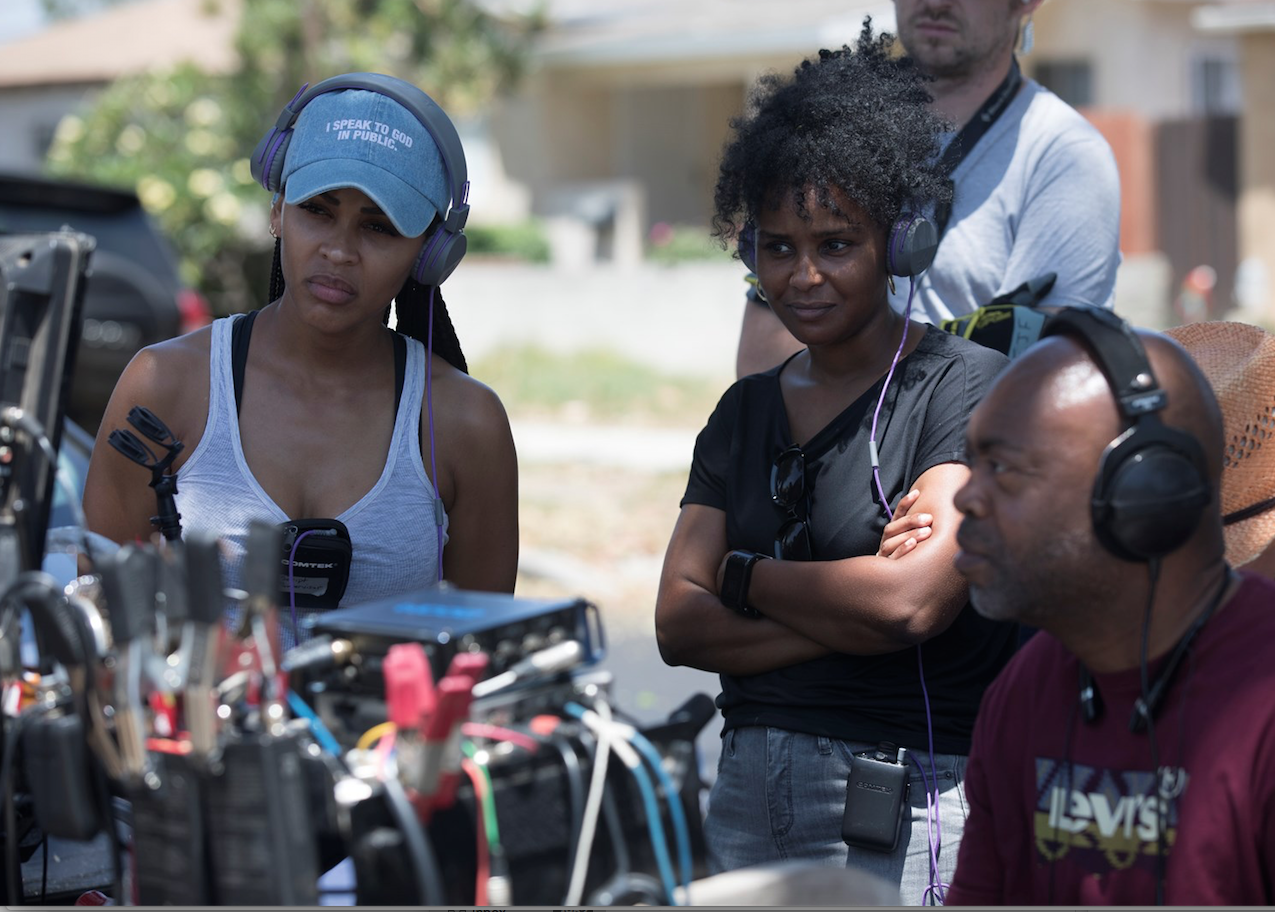
Photo: Courtesy of Urbanworld Film Festival, L to R, Meagan Good and Tamara Bass on set of If Not Now, When?

Next up: If Not Now, When? The predominantly black cast led by stars-turned directors, Meagan Good (Think Like A Man, Minority Report) and Tamara Bass (Krazy Actress Productions) bring a poignant film about high school friends and the ups-and-downs they’ve encountered 15 years later. The film is reminiscent of 90s film, Waiting to Exhale with Whitney Houston and Angela Basset, as it explores the complexities of female friendships and love interests. If Not Now, When? tackles addiction, love-loss, infidelity with grit and honesty. The characters aren’t always likeable and that’s okay, you still root for them. Good and Bass directed the movie by chance, after their original director dropped out. According to Good, “I feel like I’m cheating on acting by saying this, but I definitely love directing as much as acting, maybe a little bit more sometimes.” Good and Bass have been friends for over 21 years and took turns behind the camera. To learn more about, If Not Now, When? click here.

Screen Shot 2019-09-27 at 12.18.27 AM

Photo: Courtesy of Urbanworld Film Festival, Bakosó: Afrobeats of Cuba Film Still

I’m always in search of documentaries that strike a nerve in me – good or bad- and leave me thinking about the subject matter for a while. This year’s Urbanworld Film Festival presented: Bakosó: Afrobeats of Cuba and Skin – two films that have taken up residency in my mind.

I’ve been to 7 of Cuba’s provinces. I was born there and left for the United States at the age of 4. It took my 28 years to finally return to my motherland. And I’ve always wanted to go to Oriente where my mom was from and where the movie Bakosó is based, but I’ve never quite made it there on my 4 trips to Cuba. Habaneros, or those from Havana have always thought people from Santiago were guarijos (hicks from the countryside) and spoke a weird dialect the rest of Cuba couldn’t understand. Wow, are these Habaneros wrong! After watching Bakosó: Afrobeats of Cuba, directed by Eli Jacobs-Fantauzzi, and seeing the energy and vibrancy Santiagueros have, I completely understood what the people from the region of my native Cuba had to say and I want to visit Santiago more than ever. The film starts off with Isnay DJ Jigüe Rodriguez’s grandmother smoking a cigar and moving to African chants. African rhythms are a central theme in this documentary. DJ Jigüe takes us through the various parts of Santiago and introduces us to artists making due with homemade speakers and equipment. It’s Cuba after all – electronics and anything for that matter, are in short supply. He also shows us neighborhoods bursting with new dances and young people celebrating their local Bakosó superstars like: Ozkaro Delga2, Maykel El Padrino and El Inka making their music and receiving recognition for their upbeat and innovative contribution to Hip Hop. To learn more about Bakosó: Afrobeats of Cuba, click here.

Screen Shot 2019-09-27 at 12.15.34 AM

Photo: Courtesy of Urbanworld Film Festival, Skin Film Still

The second documentary that made an impact on me was Skin, directed by Daniel Etim Effiong, starring and produced by Beverly Naya. Naya poses the question: Why do women and men bleach their skins and succumb to “supposed beauty standards” they feel they need to conform to? Naya is on a quest and travels to different regions in Africa and interviews public figures, cosmeticians, actresses, beauty entrepreneurs, local women and school children who feel compelled to feed into the beauty myth – that lighter is beautiful. Naya addresses her own insecurities growing up with her skin color and learning to accept her beauty and confidence as a grown up. Naya does a wonderful job of exploring this sensitive topic that is universal and warrants discussion amongst people of color within their communities. Skin color does not merit the worth of a person and Beverly Naya is an excellent advocate for championing this message. Please go see this movie and embrace how God made you – beautiful to the last cell of your body! To learn more about Skin, click here.

Launched in 1997 by founder Stacy Spikes, co-founder of MoviePass and former executive of October Films, for over two decades Urbanworld Film Festival is the premiere platform for emerging filmmakers and musical talent to showcase their work and partner with distributors such as HBO, BET and Warner Media for global exposure. Spikes believed people of color were underrepresented in film and there was a void to fill, and embarked on establishing, what is now known as the: Urbanworld Foundation Inc. Under the umbrella of the foundation is also Urbanworld Digital, which includes esteemed panelists in television and film holding invaluable conversations on how to get great content out there and what the process entails. Gabrielle Glore serves as Festival Director &Head of Programming. To learn more about the Urbanworld Film Festival, click here.