Mathematics Reinvents The Wu-Tang Sound with the New ‘Black Samson, The Bastard Swordsman’ Album

Wu-Tang Clan members and guest artists collaborated on the record, which features fresh beats and sonically elevated rhymes reminiscent of the group’s legendary hits.

Black Samson, The Bastard Swordsman Album; Photo: DKCNews.

Young and old, hip-hop heads gathered at the IMI Studios in Manhattan recently as producer/DJ Mathematics debuted the tracks off the highly anticipated Wu-Tang Clan x Mathematics Black Samson, The Bastard Swordsman album. The intimate setting enabled attentive listeners to soak in the melodies and arrangements selected by Mathematics, who provided anecdotes, tales of his carpentry background, and inspiration for the songs.

Mathematics is more than Wu-Tang’s multi-talented go-to-producer, even before the critically acclaimed Enter the Wu-Tang (36th Chambers) dropped in 1993 and changed Hip Hop forever (recognized as one of the top five most influential Hip-Hop albums ever made!). Mathematics, aka Ronald Maurice Bean, is the group’s musical muse and graphic artist. Not only has he produced many of Wu-Tang’s greatest hits like “Protect Ya Neck,” “C.R.E.A.M,” and “Bring Da Ruckus,” but he also designed the Wu-Tang Clan logo.

‘Black Samson, The Black Swordsman’ cover art; Photo: M. Vizcaino.

Black Samson features the current Wu-Tang members: RZA, Raekwon, Method Man, GZA, Ghostface Killah, Inspectah Deck, Cappadonna, Mastah Killa, and U-God. The album also includes renowned artists Kool G Rap, Benny The Butcher, 38 Spesh, Crooked I, R.J. Payne, Willie The Kid, Nicole Bus, Kameron Corvet, and Kurupt. According to Mathematics, each added their distinct rhyme style and creativity to each track.

“The artists all kept it hard and kept it beautiful.”

And audibly, the beauty of seasoned lyricists annihilating the mike was transcendently evident. Tracks like “Cleopatra Jones,” featuring Raekwon Masta Killa, and “Warriors Two, Cooley High,” featuring Benny the Butcher and Method Man, had the guests in the studio bopping their heads, immersing themselves in the hard-hitting beats, taking them on a musical rap odyssey.

Wu-Tang Clan x Mathematics ‘Black Samson, The Black Swordsman’ Album listening session, pictured (Mathematics). Photo: @Robert.photoshoot + @jon_officials.

Experimental, soulful storytelling and, in true Wu-Tang Clan fashion, karate flick sound effects and soundbites are prevalent on the album with an edgy spin. Black SamsonThe Bastard Swordsman is the first collaboration from existing Wu-Tang members since 2015’s Once Upon a Time in Shaolin. The album drops as a limited edition on April 12th on National Record Store Day on a 2LP audiophile-grade vinyl featuring 5,000 one-of-a-kind covers. The whole LP will be available worldwide on April 25thClick here for a sneak peek!

Love Him, Misunderstand Him, or Intrigued by Him: Spike Lee’s Creative Resources Exhibit at the Brooklyn Museum Invites You to Explore the Acclaimed Filmmaker’s Monumental Body of Work in Film — and the People, Places, and Concepts That Served as Catalysts for his Cinematic Art

The expansive exhibit on director Spike Lee’s career and inspiration to create ground-breaking films on African-American culture is a multi-media tapestry of the artist’s creative journey, spanning almost 40 years.

Spike Lee: Creative Resources Exhibit; Photo: Paula Abreu Pita/Brooklyn Museum.

As soon as you enter the Spike Lee Creative Resources exhibit, Denzel Washington’s Malcolm X character’s infamous fiery 1964 speech from the film permeates the room. The scene, audio, costumes, and other colorful props from the movie, released in 1992, engulf your senses and prime you for what’s next.

A nostalgic visual stimulation that gives you front-row access to Lee’s early life.

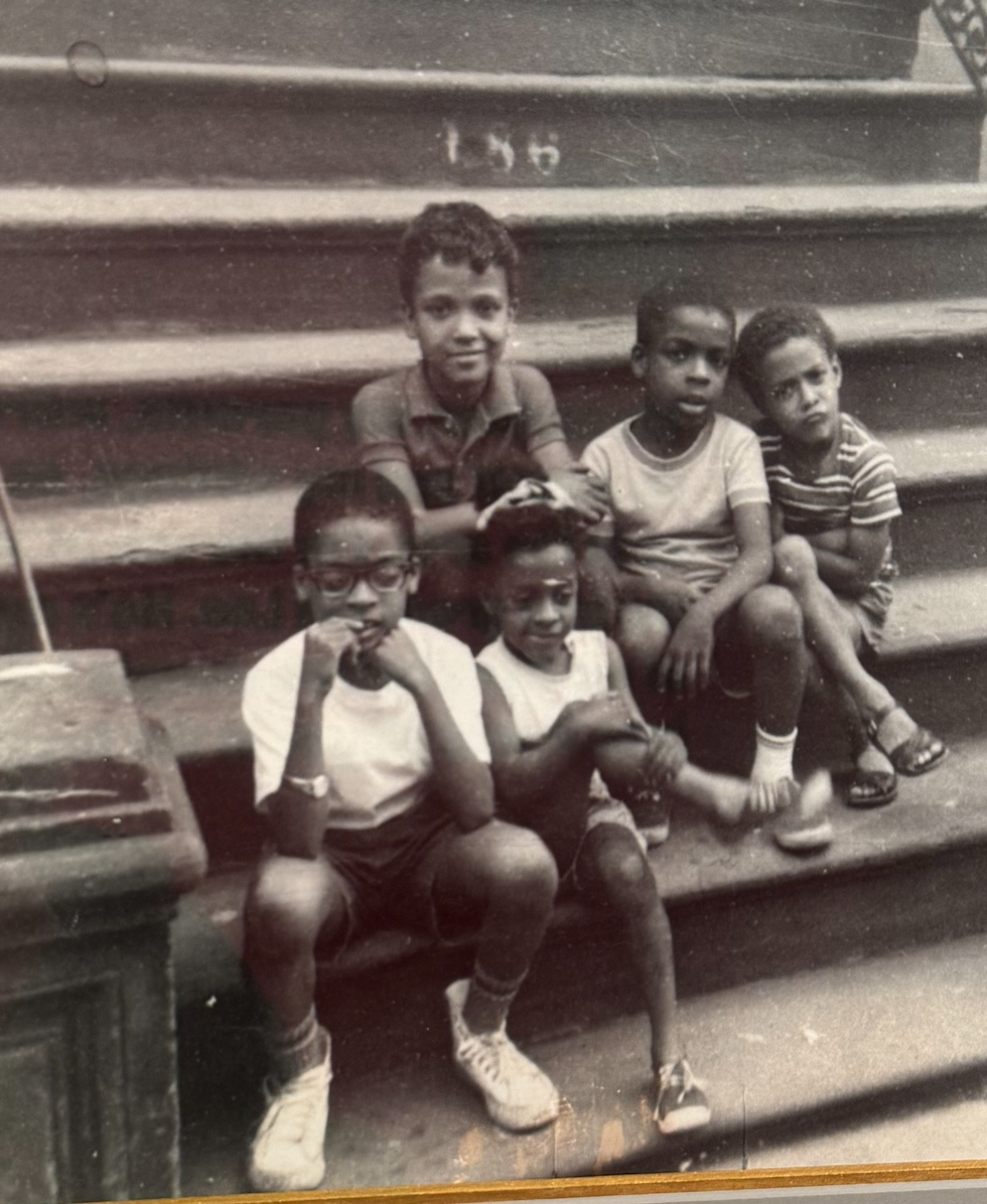
Clockwise: Spike, Joie, David, Cinqué, and Christopher Lee at 186 Warren Street, Cobble Hill, circa 1967–1970; Photo: Unknown Artist.

In this room, there’s a collection of paintings in color and black and white of Spike Lee’s family — from his siblings as kids on the stoop of his beloved Brooklyn neighborhoods (an abstract character present in Lee’s films) to portraits of his dad, Bill, a renowned jazz bassist and composer, heavily influencing the filmmaker’s taste in music and scoring many of his films, like the critically-acclaimed Inside Man, where you can hear the theme song, play intermittently throughout the exhibit to photos with Lee and his children. Family played a pivotal role in shaping Lee’s love for the arts and the narratives of the projects he’s brought — and continues to bring — to life.

Next up: Do the Right Thing’s Immersive Experience

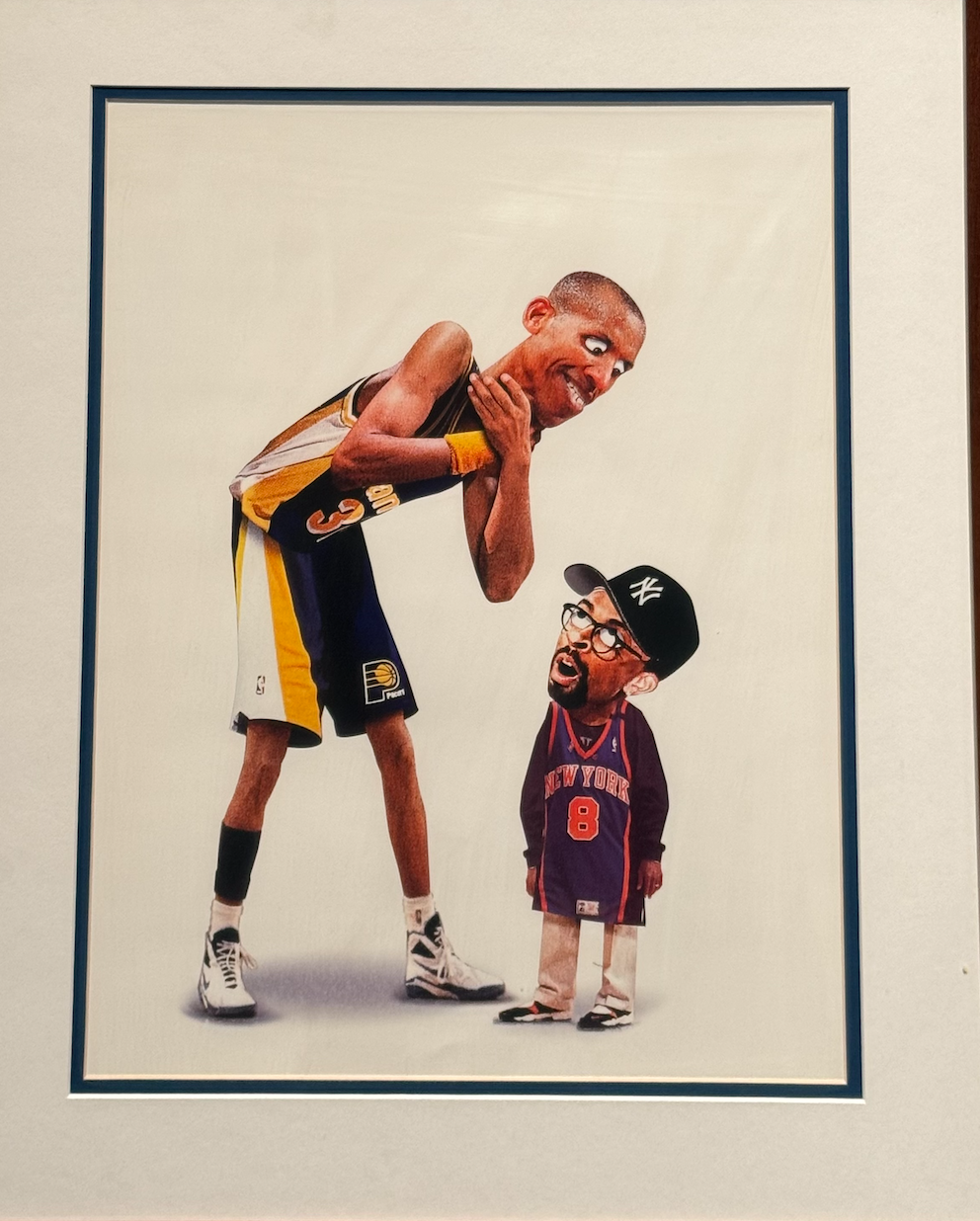
L to R: Illustration of Reggie Miller’s Infamous choking gesture, taunting Spike Lee; Image: Spike Lee’s archives/Brooklyn Museum.

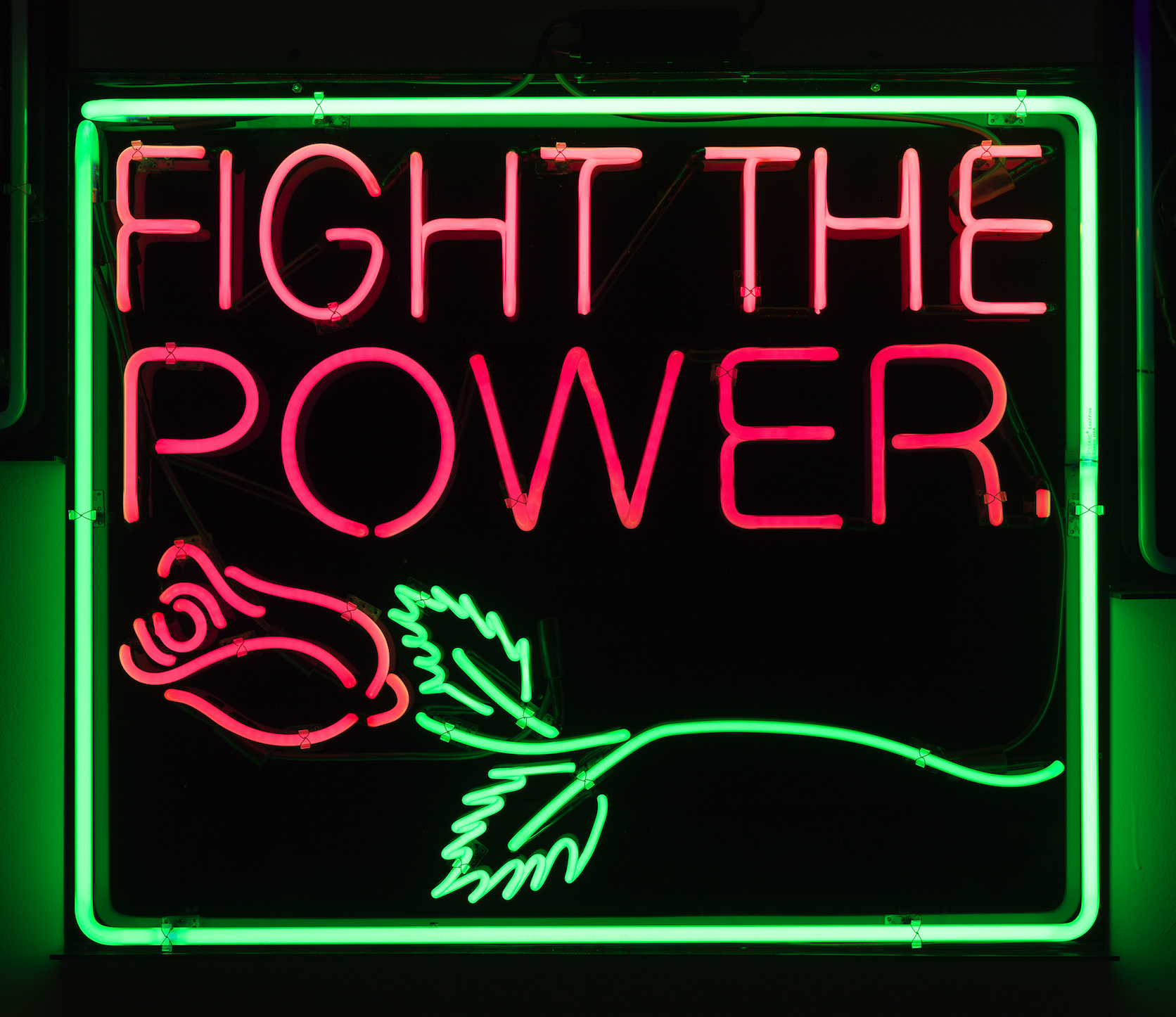
From the neon “Fight the Power” sign to an encased Sal’s pizza box prop hanging on the wall and a movie clip of Rosie Perez’s opening scene of Do the Right Thing, where she’s grooving and shaking to Public Enemy’s “Fight the Power”— a song that changed rap music forever with its powerful lyrics and inconvenient social truths that drew legions of fans, including myself, to love the music genre, and cemented the film’s influence not only in Hollywood but in American culture.

The Sports Wing — There’s a Lot!

You’ll see scores of photographs and athlete jerseys from one of Lee’s favorite teams, The New York Knicks, where Spike Lee has been a fan since practically the womb. And as an avid sports memorabilia collector and once aspiring baseball player, there’s an array of news clippings of images showcasing his controversial court-side antics, signed autographs from the likes of Michael Jordan, young and old, to illustrations of Knick nemesis Reggie Miller (Indiana Pacers) infamous choking gesture, a nod to the Knicks/Pacers rivalry. Lee’s fusion of sports narratives into his films while celebrating the Black sports figures breaking records and acquiring the highest accolades in their respective fields is a testament to Lee’s unwavering commitment to amplifying excellence in Black culture.

L to R: Illustration of Reggie Miller’s Infamous choking gesture, taunting Spike Lee; Image: Spike Lee’s archives/Brooklyn Museum.

The Music and Film Poster Rooms

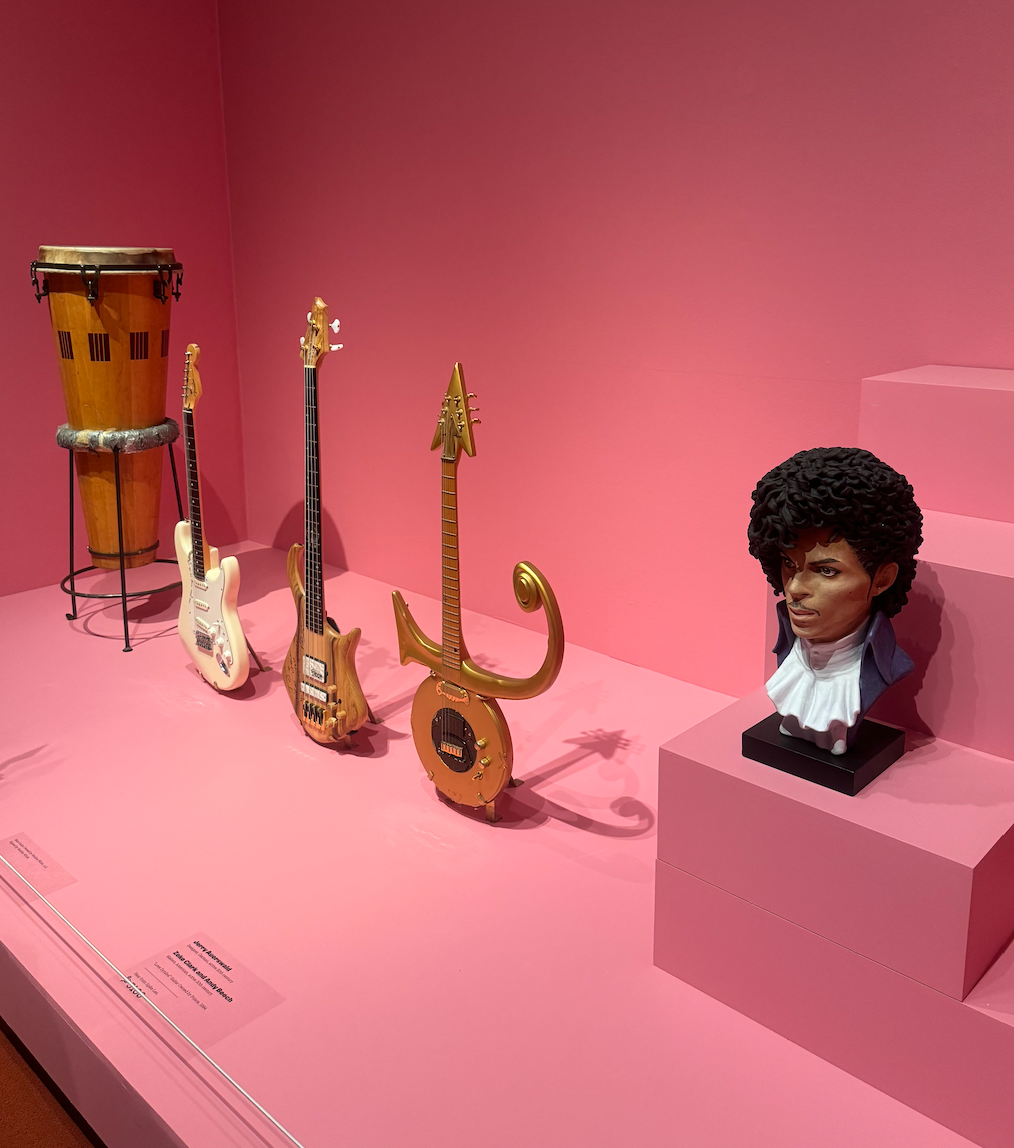
Lee’s mom, Jacquelyn Shelton Lee, introduced him to movies and musicals when he was young, fomenting his interest in entertainment. Visitors can soak in the filmmaker’s extensive musical instrument collection, including Prince’s guitars, one-of-a-kind record players, and the movie posters he’s amassed. Posters reflecting all movie genres, from Jaws and The Deer Hunter to Raging Bull and North by Northwest, and photographs of Spike Lee with cinema greats, actors Robert Deniro and Joe Pesci, and filmmaker Martin Scorsese, fill the hall.

Spike Lee’s collection of Prince’s guitars.

There are seven sections to the Spike Lee: Creative Sources exhibit to blow you away. I won’t share any more details because you should run, not walk, to this comprehensive, educational, and awe-inspiring collection of 350 pieces, organized by Kimberli Gant, Curator, Modern and Contemporary Art, with Indira A. Abiskaroon, Curatorial Assistant, Modern and Contemporary Art. The exhibit displays many facets of Lee: his advocacy for justice and homage to the African American titans who came before and after him, who have challenged the status quo and have made a mark in every aspect of American life, and last but not least, his playful side.

Spike Lee: Creative Sources will be running through February 4thClick here to get your get tickets to see this extraordinary exhibit!

‘All Up in the Biz’ — Tells the Tale of Talent, Influence, Adversity, and Controversy Before Hip Hop Pioneer Biz Markie’s Untimely Death

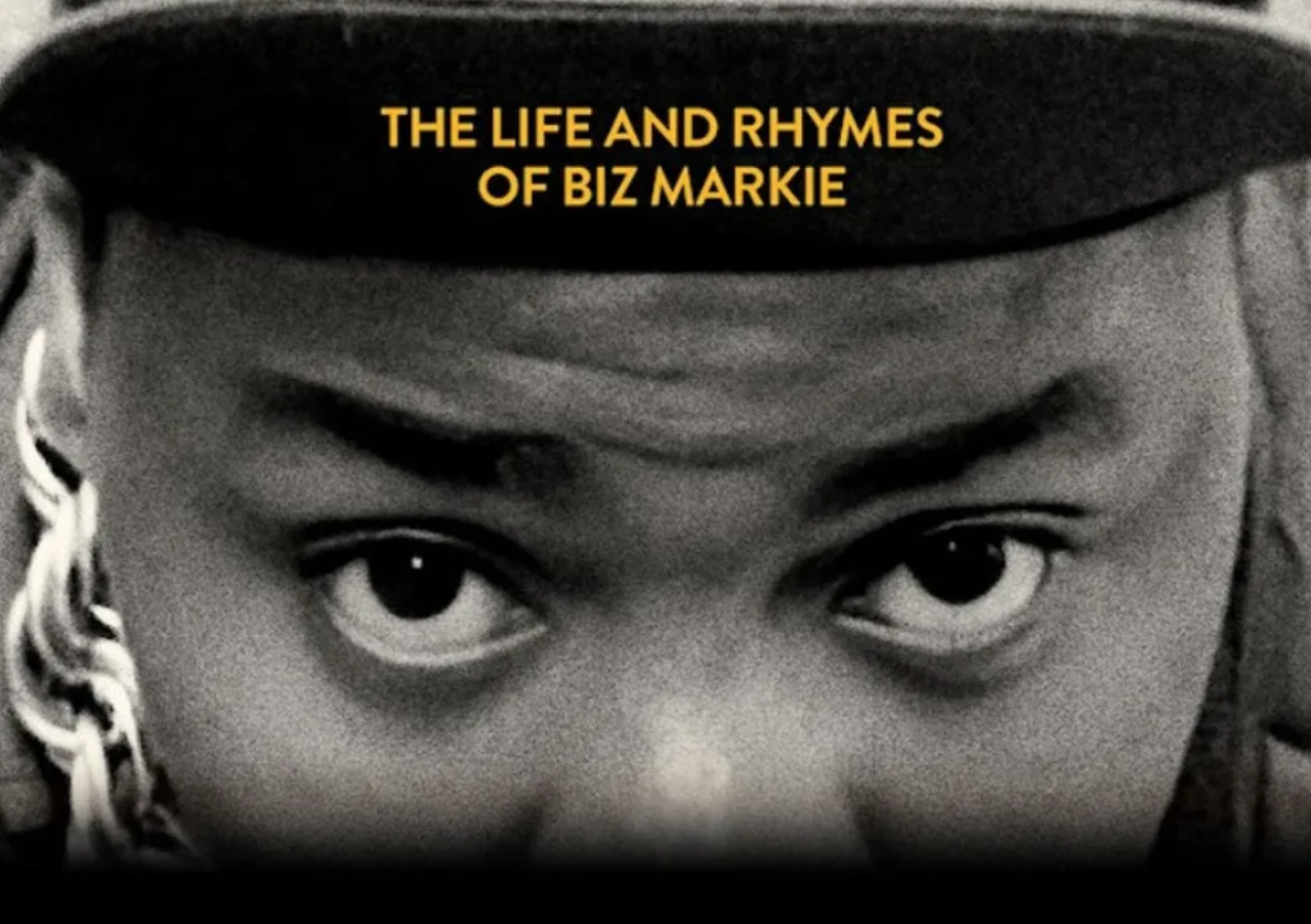
Filmmaker Sacha Jenkins chronicles The self-proclaimed “Clown Prince of Hip Hop’s” legacy through candid interviews with colorful animations, a Biz Markie puppet, and old videos of the rapper in proper form.

Image of Biz Markie; Photo: Showtime Networks.

The Humanbeat beatbox. Ascending to fame with the improvised quirky yet melodic sounds he could belt at any given moment and his universal hit, “Just A Friend,” Biz Markie was more than just his goofy exploits. And ‘All Up in the Biz’ captures the multi-faceted performer’s essence through his career’s ups and downs.

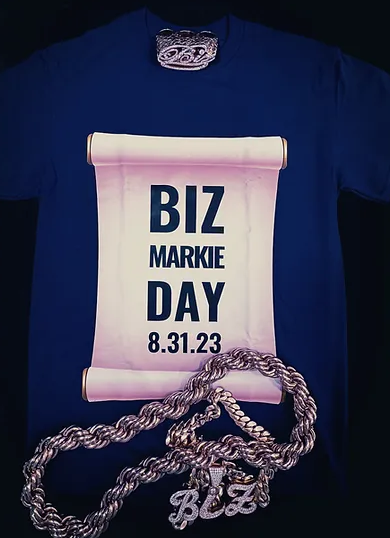
Many Hip Hop heads like myself are still celebrating Hip Hop’s indelible mark the music genre has made on pop culture and pretty much every facet of life. And while Hip Hop’s official birthday was on August 11th, with a 50th anniversary celebrated worldwide, homage and tributes are still on the horizon for the rest of the year. One recent commemoration was held on August 31st, tentatively proclaimed Biz Markie Day, by the New York Mayor’s office as they announced the proclamation at Marcus Garvey Park in Harlem.

Biz Markie Day T-Shirt; Photo: Just A Friend Foundation.

Champions and supporters of this campaign include the late rapper’s wife, Tara Hall, who leads his Just A Friend foundation, established to provide resources for foster kids as once Biz Markie was. Plus, organizers of the event ImageNation, a cultural nonprofit entertainment hub in Harlem, advocating for and helping to sponsor spectacular community cinema and music events and Up In The Biz’s distributor, Showtime.

This late summer Thursday evening leading up to the All Up In the Biz screening attracted people of all ages and races. From men in their Zulu nation get-ups and women outfitted in head-to-toe African bohemian and contemporary fashion, dancing non-stop to the nostalgic grooves of DJ Hollywood and listening intently to the rhythmic verses of the Last Poets, who celebrate 55 years together this year, it was an ode to Hip Hop nostalgia.

Following the eclectic mix of artists on stage came a projection of All Up In the Biz, directed by Sacha Jenkins (Bitchin’: The Sounds and Fury of Rick JamesWord Is Bond), a Hip Hop historian, visual artist, and preservationist of the music genre.

Young Big Daddy Kane and Biz Markie; Photo: All Up in the Biz documentary.

The film begins with old footage of Biz Markie’s early life, moving from Harlem to Long Island’s Patchogue region. He found a passion for music, coming into his own as a human beatbox, rapper, and DJ. While performing, he encountered 17-year-old Big Daddy Kane and Rakim, who went to the same high school as Biz, encouraging both to raise their profile in New York City clubs by rapping. Hip Hop powerhouses Big Daddy Kane and Rakim acknowledge Biz Markie’s influence on their careers. Others like Dougie Fresh and Roxanne Shanté, a prominent Juice Crew member and Biz Markie was part of, reflect on and reminisce about the rapper’s passion for music, collectibles, and his undeniable gift for beatboxing.

But Marcel Theo Hall took the moniker Biz Markie, a name rooted in his mother calling him a busybody when he was young and neighborhood friends giving him the name Markie for short; life wasn’t always a bed of roses. The rapper was battling Type 2 diabetes for most of his life and had fallouts with a few rappers, shady business dealings with music producers, and the repercussions of unlicensed music samples. Despite it all, the beloved rapper persevered and kept reinventing himself, as the documentary illustrates. Click here to check out this in-depth portrait of Biz Markie’s contributions to Hip Hop and eventful life, now streaming on Showtime and Paramount+.

Review: ‘Motherless Brooklyn’ Edward Norton Resurges Dynamic Film Noir Storytelling

IMG_6770

20 years in the making and the film adaption of Motherless Brooklyn is finally here. Triple threat Ed Norton serves as writer, director, and star of this highly stylized film noir rendition of Jonathan Lethem’s 1999 novel of the same name. Unlike its printed predecessor, Norton’s film takes place in the 1950s, whereas Lethem’s crime novel describes a 1990s Big Apple. Some resistance from the author could have been expected, but according to Lethem, when Norton asked for his input, he said: “Just run with it.

And Edward Norton did just that. For two decades the artist researched the New York City of the 1950s and its place in history with politics, race, community displacement and power struggles interwoven – the major components that make up this crime drama. Edward Norton plays Lionel Esrogg, a junior detective with Tourette’s syndrome that is determined to find the truth about his mentor’s (played by Bruce Willis) murder, all while uncovering unsavory truths about New York City’s powerful and disenfranchised. Joining Norton in this dramatic ensemble are acclaimed actors: Alec Baldwin, as the powerful, money-hungry and bigoted developer, Moses Randolph intent on bamboozling anyone and any institutions that get in his way of seeing his projects through (loosely based on actual New York developer, Robert Moses). Baldwin’s casting and interpretation of Randolph is quite apropos and authentic as his portrayal of Trump has been well received by the public and condemned by the president; and well, extremely timely.

Screen Shot 2019-10-30 at 10.12.53 PM

Photo: Courtesy of Warner Bros. L to R, Alec Baldwin and Edward Norton

Gugu Mbatha-Raw as Laura Rose, a mixed-race lawyer and activist intertwined in this crime story is fantastic. Mbatha-Raw and Norton have great chemistry on-screen and there’s a beautiful connection their characters convey with an unspoken recognition of the struggle each has endured within a less-than accepting society. Rounding out the cast with electrifying performances are Willem Dafoe as Paul, Moses Randolph’s more humane, and less corrupt brother and Michael K. Williams (The Wire, Boardwalk Empire) as the trumpet man with keen situational awareness.

Screen Shot 2019-10-30 at 10.13.29 PM

Photo: Courtesy of Warner Bros. L to R, Gugu Mbatha-Raw and Edward Norton

Edward Norton has a gift for portraying dimensional characters. He can go from 0 – 100 instantaneously, from self-deprecating to exuding complete confidence without hesitation; his Academy Award nominations for Primal Fear and American History X speaks to this. It’s a given. The audience will root for underdog, Lionel Essrog, to defeat the villains in Motherless Brooklyn but what is most compelling about Norton’s brilliant portrayal of Lionel’s disability is the way he outsmarts those who believe he’s no match for them with grace, humility and humor. And as the audience, we buy it.

The cinematography (Dick Pope) and set design (Kara Zeigon) conjures ups a romanticized nostalgia moviegoers crave. Manhattan and Brooklyn streets littered with 1950s Cadillacs and Chevys in an array of models and colors is a sight to behold. At first glance, you might think you’re in a tourist attraction in present day Cuba, but no, it’s the extraordinary production team that made this era come life with beautiful visuals. The film is lengthy but worth sitting through and witnessing wonderful storytelling. Motherless Brooklyn comes out tomorrow, November 1st. Click here for showtimes.

Review: ‘What Is Democracy?’-Thought-Provoking And Essential

jpeg image

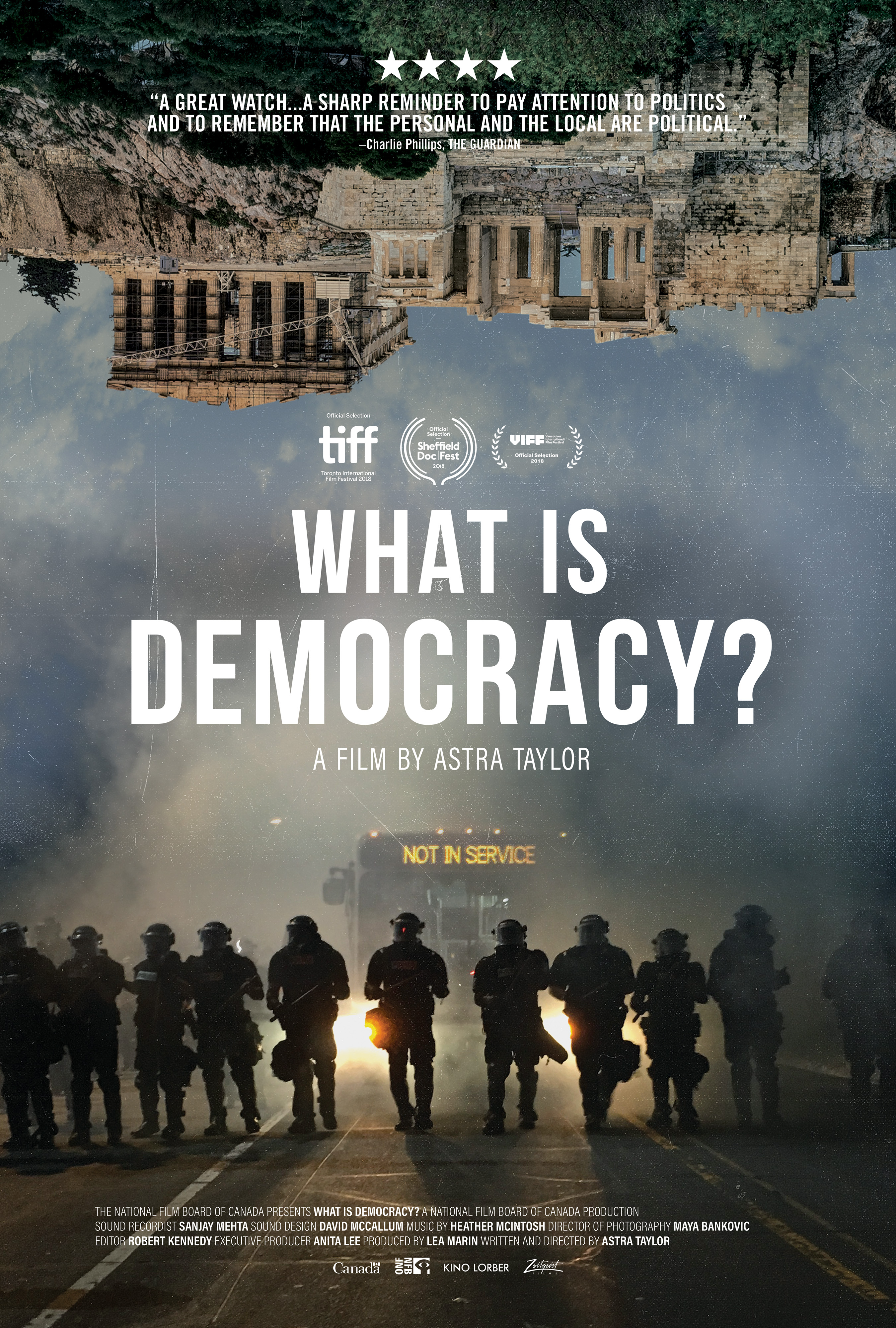
What Is Democracy? Film Poster, Photo: Courtesy Of Zeitgeist Films

While half of the population is debating whether to see Netflix’s BirdBox, here’s an option you won’t regret: What Is Democracy? by filmmaker Astra Taylor. Not only will it get you thinking, as most documentaries set out to do, but long after it’s over the ideas will linger in your brain for the better good. The film forces the viewer to examine what this concept of democracy means to them personally, which makes the film that much more compelling and timely in our current chaotic political state. Taylor begins the film with a roundtable discussion in Greece with political theorists and activists discussing the origins of the democracy: the rule by the people. The term is derived from the Greek word dēmokratiā; the combined words dēmos (“people”) and kratos (“rule”) in the middle of the 5th century, notably Athens

wia5

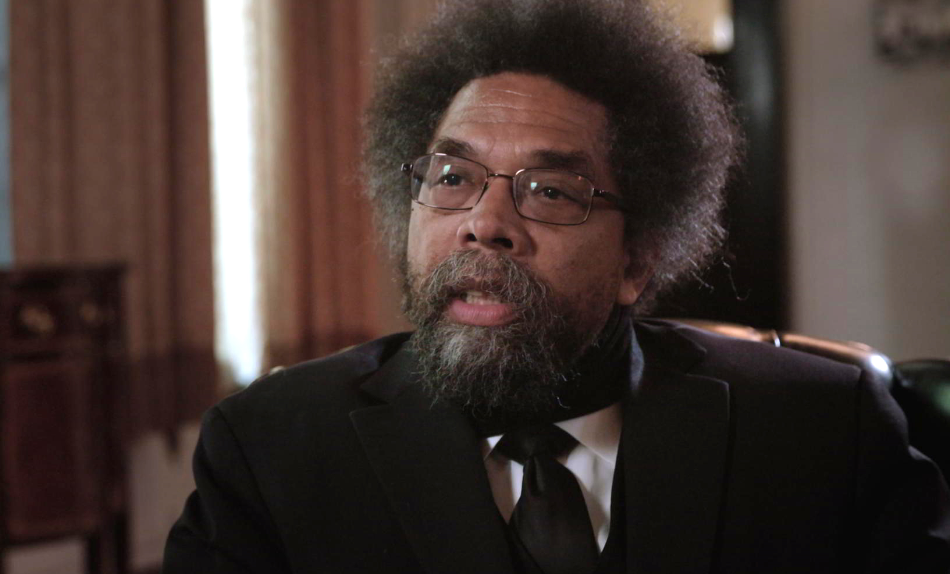
Cornel West, Photo: Courtesy of Zeitgeist Films

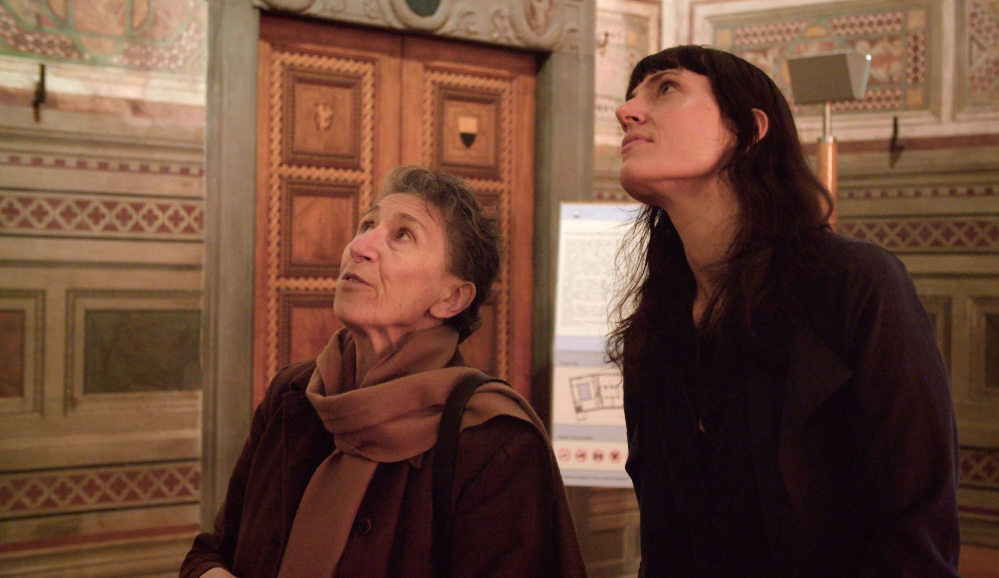
One of the most refreshing elements about What Is Democracy; is the diverse opinions Astra Taylor interjects throughout the film. We hear from Cornel West – a prominent and provocative democratic intellectual and Professor of the Practice of Public Philosophy at Harvard University describing and citing historical moments with democracy and the African-American experience to first-hand accounts of factory workers forming a collective to work for themselves to a student activist coming face-to-face with gun violence during a peaceful protest to spending time with Silvia Federici, a researcher, activist, and educator and Emerita Professor at Hofstra University in Siena, Italy as she dissects the rise of capitalism, financial institutions and the inequality that emerged – illustrated by a medieval painting: The Allegory of Good and Bad Government; Siena is considered to be one of the first centers where banking originated.

wisimage

L to R, Silvia Federici and Astra Taylor in Siena, Italy, Photo: Courtesy of Zeitgeist Films

The film weaves each subject’s viewpoint without the expectation to take a side; it presents ideas for analysis that beget a slew of questions for a democracy to be successful. Taylor is careful to let each subject tell their story organically and allows the audience to form their own opinions on the continued existence or demise of a democracy. Taylor is no stranger to filmmaking – her filmography includes Examined Life (Toronto International Film Festival Premiere, 2008) and Zizek! (Toronto International Film Festival Premiere, 2005). Her political and activism engagement is still prevalent. Her new book by Metropolitan Books: Democracy May Not Exist, but We’ll Miss It When It’s Gone, will be released in early 2019. What Is Democracy?: A Zeitgeist Films Release in association with Kino Lorber theatrical release begins January 16, 2019 at IFC Center in New York followed by theatrical engagements nationwide. To learn more about What Is Democracy?, click here.

New York City Center Celebrates Its 75th Anniversary With Alvin Ailey American Dance Theater – Captivating And Nostalgic!

Screen Shot 2018-12-18 at 12.45.52 AM

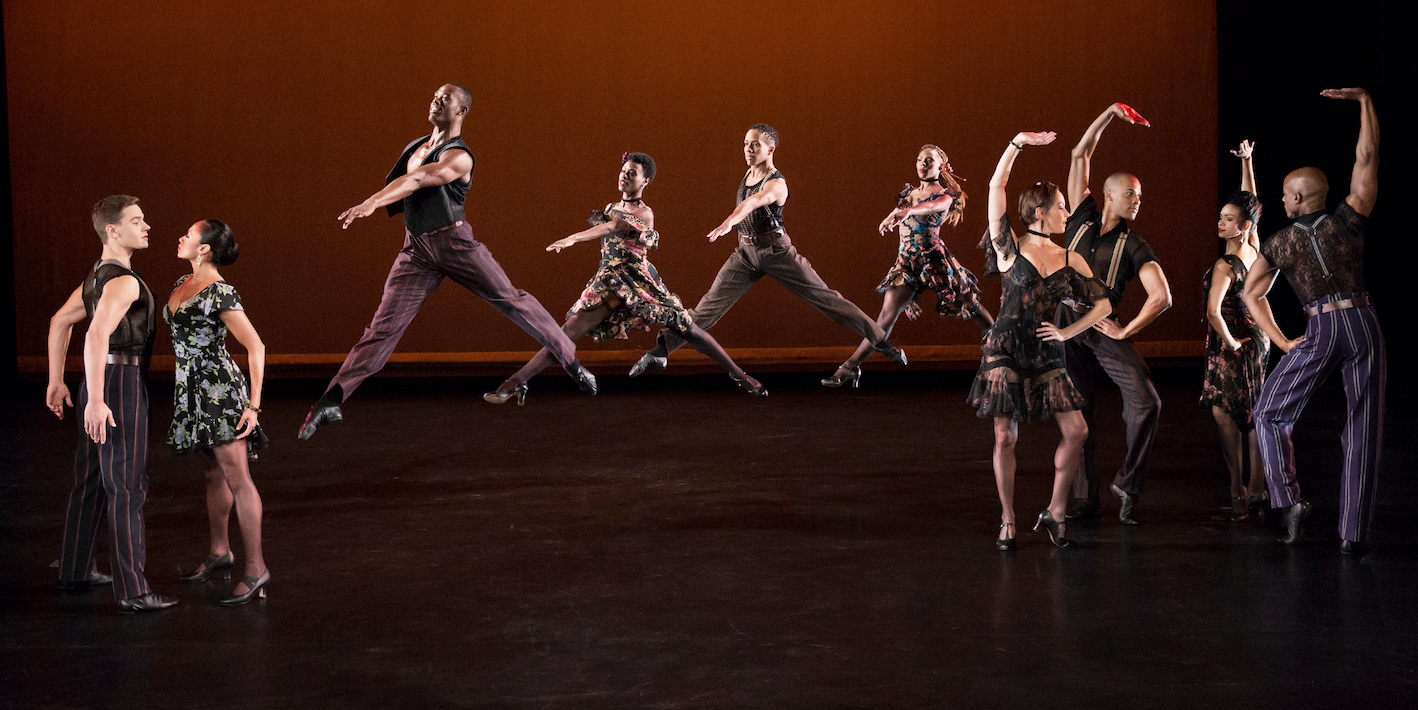
Photo: Alvin Ailey American Dance Theater in Paul Taylor’s Piazzolla Caldera. Photo by Paul Kolnik

The holiday season is upon us and if you’re in search of cultural entertainment that will revitalize you – mentally and spiritually – Alvin Ailey American Dance Theater’s 60th Anniversary performances is just what you need. I recently attended the New York City Center’s 75th birthday celebration program featuring Alvin Ailey’s presentation of Piazzolla Caldera, The Golden Section, and Revelations. What a night of magical and transcendent dancing from the company’s members, and tribute to the choreographers that made these acts possible throughout the years at the revered New York City Center. The evening began with an homage to the New York City Center’s historic residency (Alvin Ailey American Dance Theater is their principal dance company) in New York’s cultural scene. Stage and film stars reminisced about the significance of this cultural landmark followed by an introduction from Alvin Ailey’s Artistic Director, Robert Battle.

The first act, Piazzolla Caldera, by critically acclaimed choreographer, Paul Taylor, fuses sensuality and the beautiful rhythms of traditional tango with four distinct dance numbers. The dancers role-play fiery confrontations between working class men and women, moving gracefully in a dimly lit club background to set the mood. Duets and trios of dancers interpreting lost loves and predatory conquests round out this act. The melodies emanating from the conventional accordion synonymous with Argentinean tango have never been sultrier.

Screen Shot 2018-12-18 at 12.45.15 AM

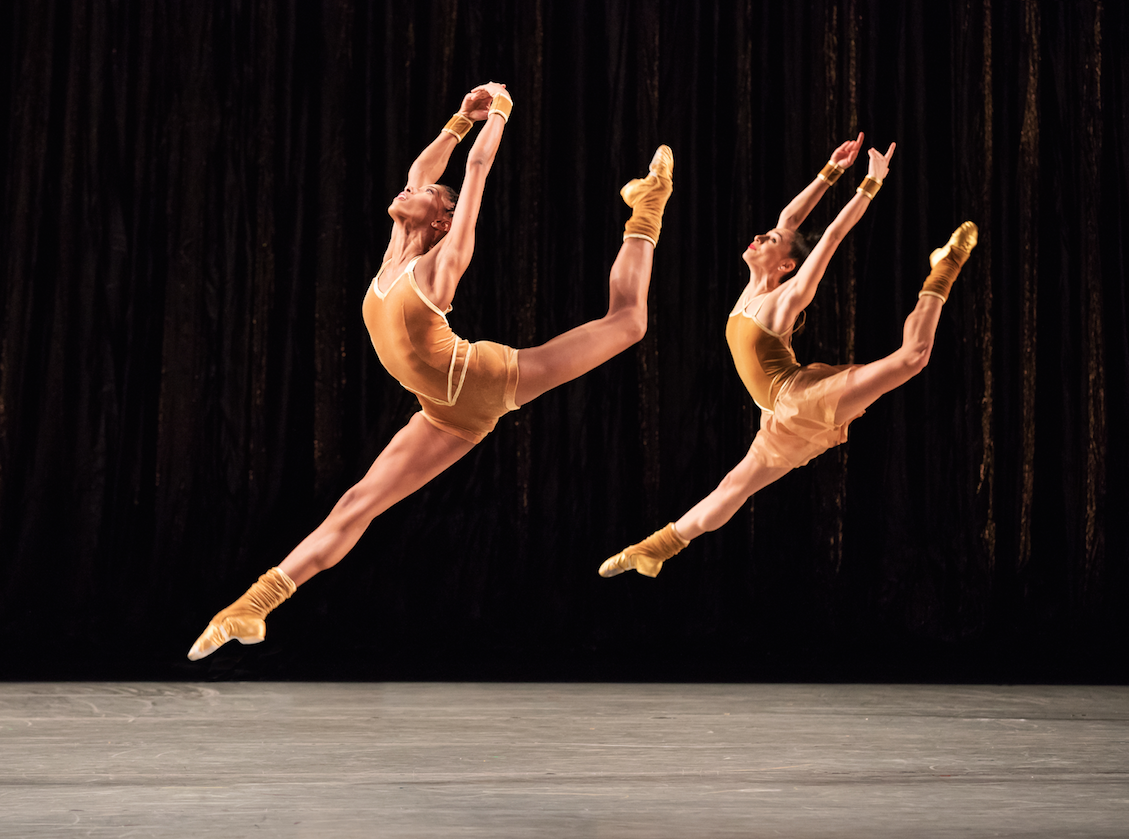
Photo: Alvin Ailey American Dance Theater’s Jacqueline Green and Danica Paulos in Twyla Tharp’s The Golden Section. Photo by Paul Kolnik

Remembering one of my favorite revolutionary and experimental new wave bands from the 80s, The Talking Heads, I would have never imagined their songs interpreted to modern dance ballet. Yet, it happened. Listening to David Byrne’s voice electric voice wafting through the theater and witnessing the dancers move to his words was exhilarating. Premiering in the Broadway production of The Catherine Wheel in 1981 by Tony Award winning choreographer, Twyla Tharp, The Golden Section pushes the physicality of dancers with aero-dynamic like movements and superhuman leaps. Truly breathtaking to see. Although over 37 years-old, the production withstands the test of time and has an enchanting futuristic appeal.

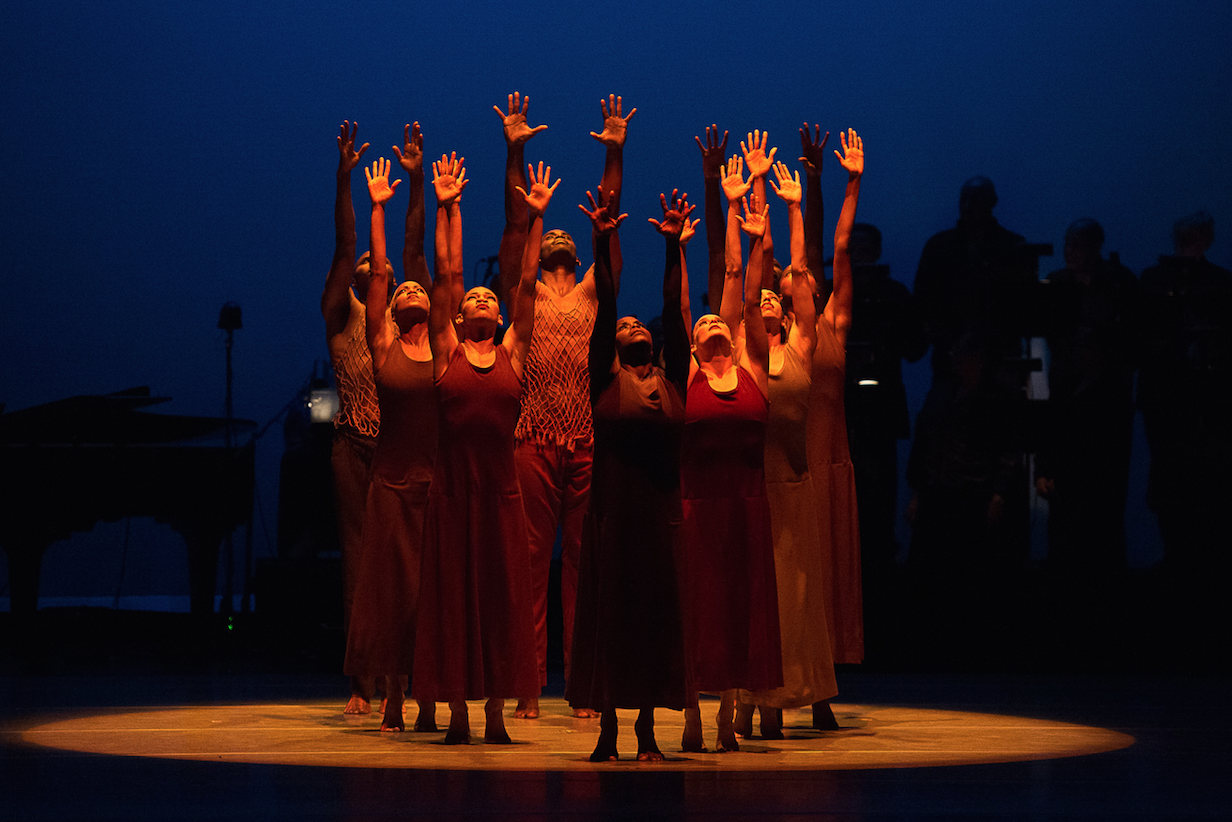
The final act of the night was Revelations, created and choreographed by Alvin Ailey at the age of 29 in 1960. Inspired by Alvin Ailey’s childhood memories of church service in his hometown of Texas and the works of James Baldwin and Langston Hughes, laid the foundation for Ailey’s signature work of art. I’ve been fortunate to see Revelations more than once and as you listen to the songs you’re powerless to the grasp of the emotional ride you embark upon with feelings of sorrow, grief, lament, joy, hope and triumph; a tribute to the African-American cultural experience, its message is universal and speaks to the resiliency of the human spirit.

Screen Shot 2018-12-18 at 12.13.49 AM

Photo: Alvin Ailey American Dance Theater in Alvin Ailey’s Revelations. Photo by Christopher Duggan

Alvin Ailey American Dance Theater’s repertoire of performances never disappoints and pushes the boundaries of creative expression every season. Whether it’s modern dance or traditional ballet, there is something for everyone this holiday season. Don’t miss out on these upcoming spectacular performances now running through December 30th. Click here, for Alvin Ailey’s American Dance Theater schedule.

Piazzolla Caldera: Choreography by Paul Taylor; Restaged by Richard Chen See; Music by: Astor Piazzolla, Jerzy Peterburshsky; Set, Décor, and Costumes by: Santo Loquasto; Lighting by: Jennifer Tipton; Song: “El sol sueño” Performed by: The Company,  Song: “Concierto para quintet” by: Jacqueline Green, Belen Pereyra, Yannick Lebrun; Song: “Celos” Performed by: Daniel Harder, Michael Francis, McBride, Ghrai DeVore, Jamar Roberts; Song: “Escualo” Performed by: The Company
The Golden Section: Choreography by Twyla Tharp; Restaged by Shelley Washington; Music: David Byrne; Set, Décor, and Costumes by Santo Loquasto; Lighting by Jennifer Tipton; Performed by: Samantha Figgins, Jacqueline Harris, Jacqueline Green, Danica Paulos, Sarah Daley-Perdomo, Constance Stamatiou, Solomon Dumas, Clifton Brown, Chalvar Monteiro, Venard J. Gilmore, Michael Jackson Jr., Michael Francis McBride, Jeroboam Bozeman
REVELATIONS: Choreography by Alvin Ailey; Music: Traditional; Décor and Costumes by Ves Harper; Costumes for “Rocka My Soul” redesigned by Barbara Forbes; Lighting Design by Nicola Cernovitch; Song: “Buked” Performed by: Hope Boykin, Megan Jakel, Jessica Pinkett, Yazzmeen Laidler, Courtney Celeste Spears, Khalia Campbell, Solomon Dumas, Jamar Roberts, Riccardo Battaglia Song: “Daniel” Performed by:  Daniel Harder, Hope Boykin, Fana Tesfagiorgis, Song: “Fix Me” Performed by: Sarah Daley-Perdomo, Jamar Roberts, Song: “Processional” Performed by: Kanji Segawa, Megan Jakel, Solomon Dumas, Riccardo Battaglia, Song: “Water” Performed by: Jacqueline Green, Vernard J. Gilmore, Khalia Campbell, Song: “Ready” Performed by: Clifton Brown, Song: “Sinner Man” Performed by: Michael Jackson, Jr., Yannick Lebrun, Solomon Dumas, Songs:  “The Day is Past and Gone,” “You May Run On” and “Rocka My Soul,” Performed by The Company.

Review: ‘Long Time Coming: A 1955 Baseball Story’ – Captivating and Heartfelt

Screen Shot 2018-10-25 at 10.54.50 PM

Photo Credit: Courtesy of Common Pictures, Film Poster of Long Time Coming: A 1955 Baseball Story

Documentaries, if the subject matter is compelling enough, are meant to educate, stir up emotions, challenge perceptions, and shed light on topics otherwise nonexistent in mainstream films. Long Time Coming: A 1955 Baseball Story exemplifies all these attributes. Whether you’re a baseball fanatic or not, this documentary is a must-see to learn about the sport’s historical and cultural significance – not just within a sports context, but as it relates to the progression of race relations in America. The film, about the first racially integrated Little League Baseball game played in the South in Orando between the Orlando Kiwanis and the Pensacola Jaycees, by first-time feature documentary filmmaker, Jon Strong, interviews the players from both teams, 60 years after playing in this monumentally historic game, and documenting their unexpected reunion.

Screen Shot 2018-10-25 at 10.55.53 PM

Photo: Courtesy of Common Pictures, Film Still (L to R) of Stewart Hall of the Orlando Kiwanis revisits Florida’s 1955 Little League Tournament with Will Preyer of the Pensacola Jaycees

We first meet, Will Preyer, once team captain of the all-black Pensacola Jaycees, as he describes playing baseball in the South in the mid 1950s during segregation and his experiences as a 12-year-old black youth. Will proceeds to meet up with Stewart Hall, the team captain of the rival team: the all-white Orlando Kiwanis, whom Preyer hadn’t seen since that fateful day in August 1955 as the two teams, one black, one white competed against each other, breaking color barriers and cultural stigmas. Director, Jon Strong, does a fantastic job of juxtaposing these men’s stories with their love of baseball and perspectives on race with candor. The limitations placed on one group based on their skin color versus the other. It’s poignant, revealing of peoples’ past and present prejudices, which the director was unapologetic about depicting. According to Strong, “I wanted to dig into the uncomfortable, real stories that many find difficult to share.” And that he did. He shares sports milestones and also features interviews from prominent figures in Major League Baseball such as Hank Aaron, Cal Ripken Jr. and Davey Johnson and Civil Rights Leader, Andrew Young to give contextual background into pivotal movements in sports and cultural history that changed society – for the better.

Screen Shot 2018-10-25 at 11.11.42 PM

Photo: Courtesy of Common Pictures, The 1955 Pensacola Jaycees All-Stars and the Orlando Kiwanis All-Stars reunite in 2016 during the filming of Long Time Coming

Long Time Coming: A 1955 Baseball Story doesn’t portray victims or villains with heroes and protagonists and subscribe to a tidy, happy resolution. Instead it tells a story of a vehicle, in this case: baseball, as a unifier of people with a shared love for a sport that transcends race and economic status. It presents opposing views and aims to continue the conversation of race relations in present day America. Released nationwide, Long Time Coming: A 1955 Baseball Story can be seen just in time for the World Series. The Hank Aaron Chasing The Dream Foundation, Derek Jeter’s Turn 1 Foundation, and the Global Peace Film Festival have screened the documentary and acknowledge the power of its historical significance to affect change. To learn more about Long Time Coming: A 1955 Baseball Story, click here. 

Review: ‘Antigone in Ferguson’ Greek Mythology, Modern Times, and Social Justice Parallels

Screen Shot 2018-09-18 at 9.09.38 PM

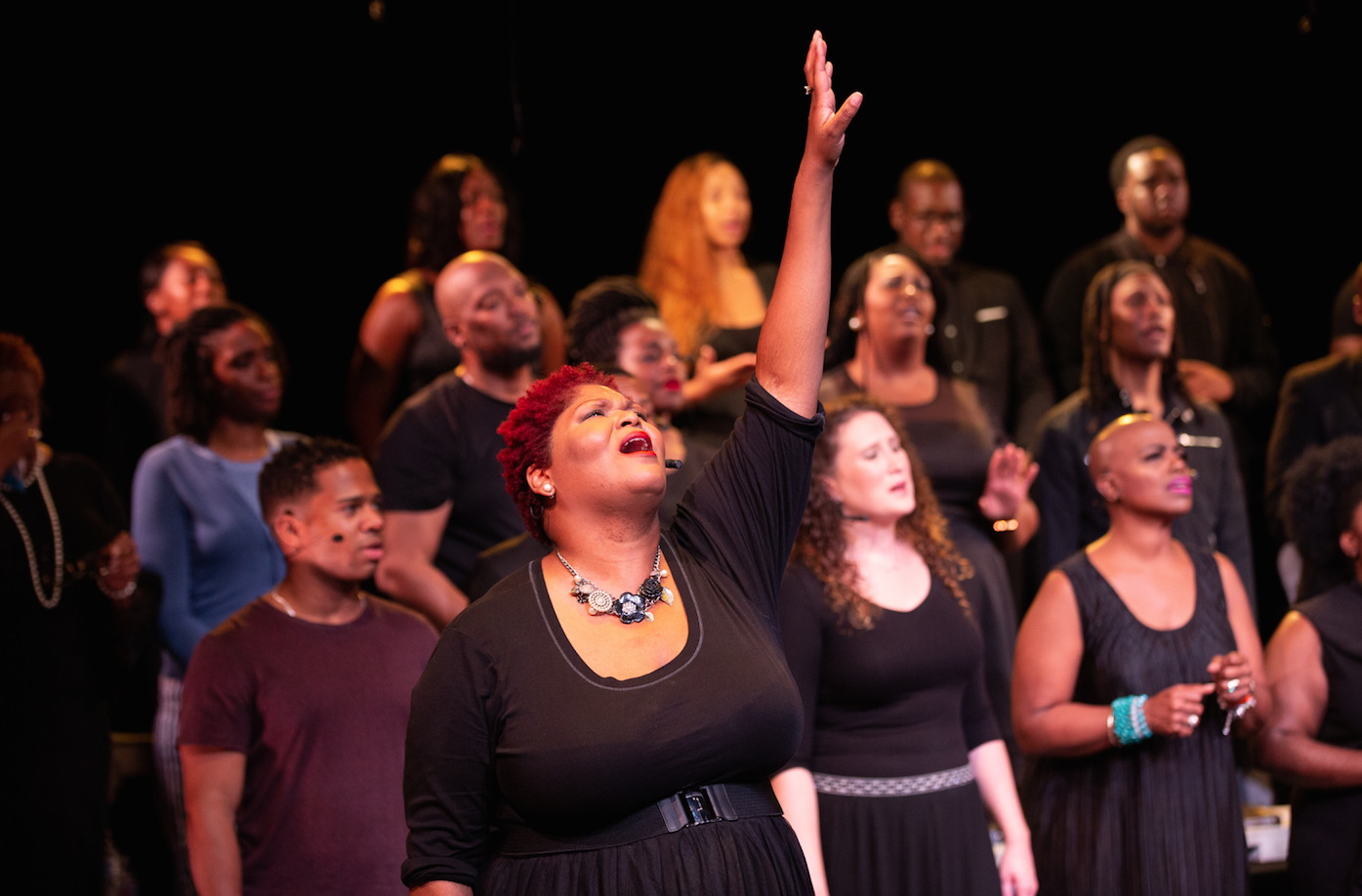
Photo: Gregg Richards, De-Andrea Blaylock-Johnson (center) and choir members 

With so many transgressions of police brutality plaguing African-American communities in our country, daily – it’s quite easy to slip into a path of desensitization. The Harlem Stage in collaboration with Theater of War Productions, the citizens of St. Louis and Ferguson refuse to let that transpire with the production of Antigone in Ferguson. One-part play with gospel chorus inflections; one-part panel discussion and equal parts entertainment, patrons of this unconventional presentation are in store for an eye opening cultural awakening. With scenes from Sophocles’ ancient Greek play, staged readings performed by leading television, film, theater actors and an unusual – yet extraordinarily talented choir – comprised of law enforcement, activists, educators, and counselors – form this experimental show.

At first, I couldn’t fathom staged readings in lieu of customary scenes with verbal and physical components performed against picturesque backdrops to illustrate the highly popularized Sophocles’ play, Antigone – done in past iterations, similar to the Classical Theatre of Harlem Stage production I covered earlier this the summer. The synopis: Antigone, it’s about a young woman who is adamant about burying her brother, Polyneices, whose slain body lays lifeless in the ancient city of Thebes at the end of the civil war, against the wishes of newly crowned King Creon. The courageous Antigone is ready to risk life and limb to honor her deceased brother and seek a proper burial for him even though he was considered an enemy of the state. The parallels, from this more than 2,500-year-old play, couldn’t be timelier, as this rendition focuses on the aftermath of the death of Michael Brown Jr. in 2014 at the hands of a white police officer in Ferguson, MO. The subsequent African-American deaths by white police officers that followed in our country, the lack of action this administration demonstrates, and the perseverance of movements such as Black Lives Matter to affect change.

Screen Shot 2018-09-18 at 9.18.23 PM

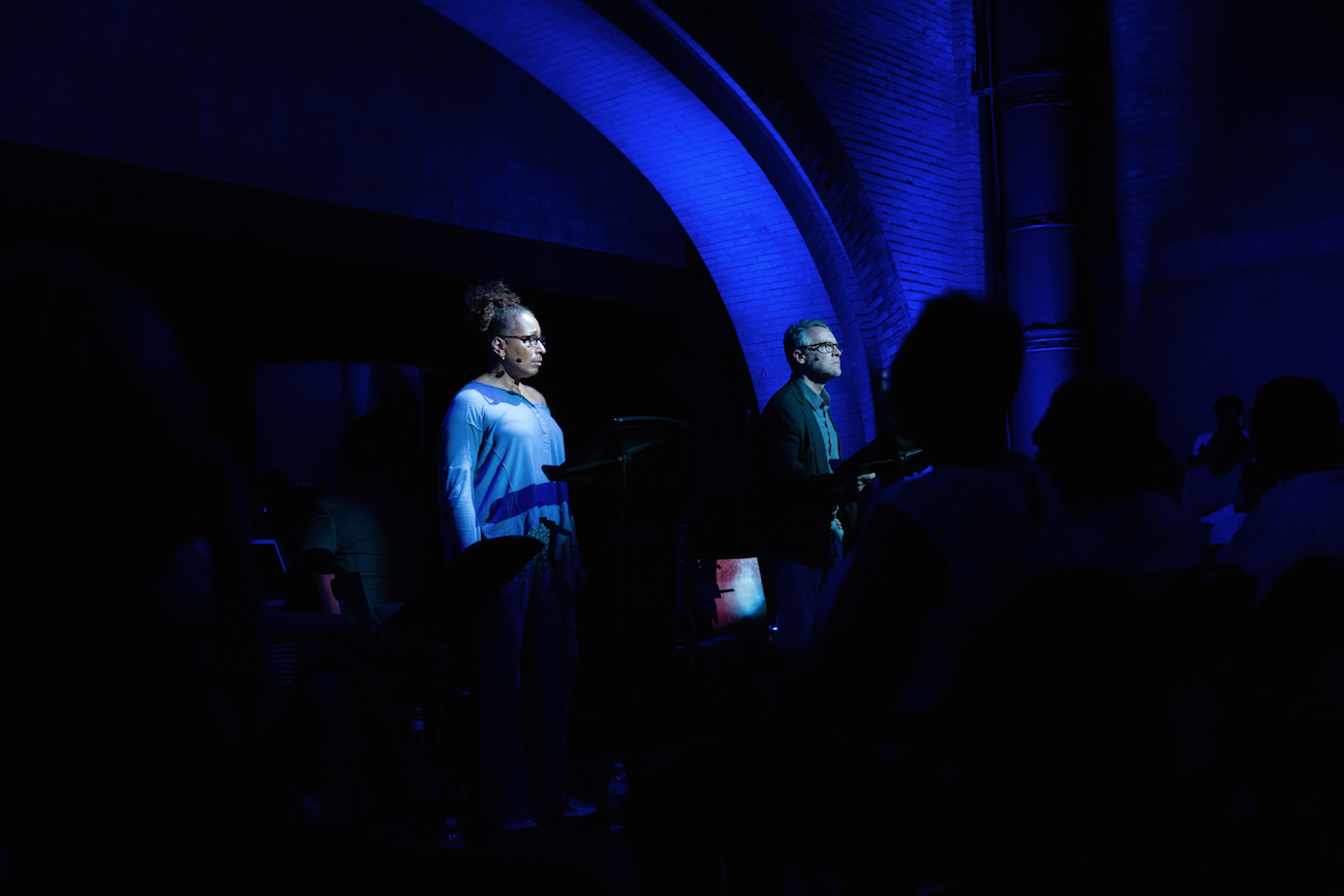
Photo: Gregg Richards, (L to R) Actors Tamara Tunie and Tate Donovan

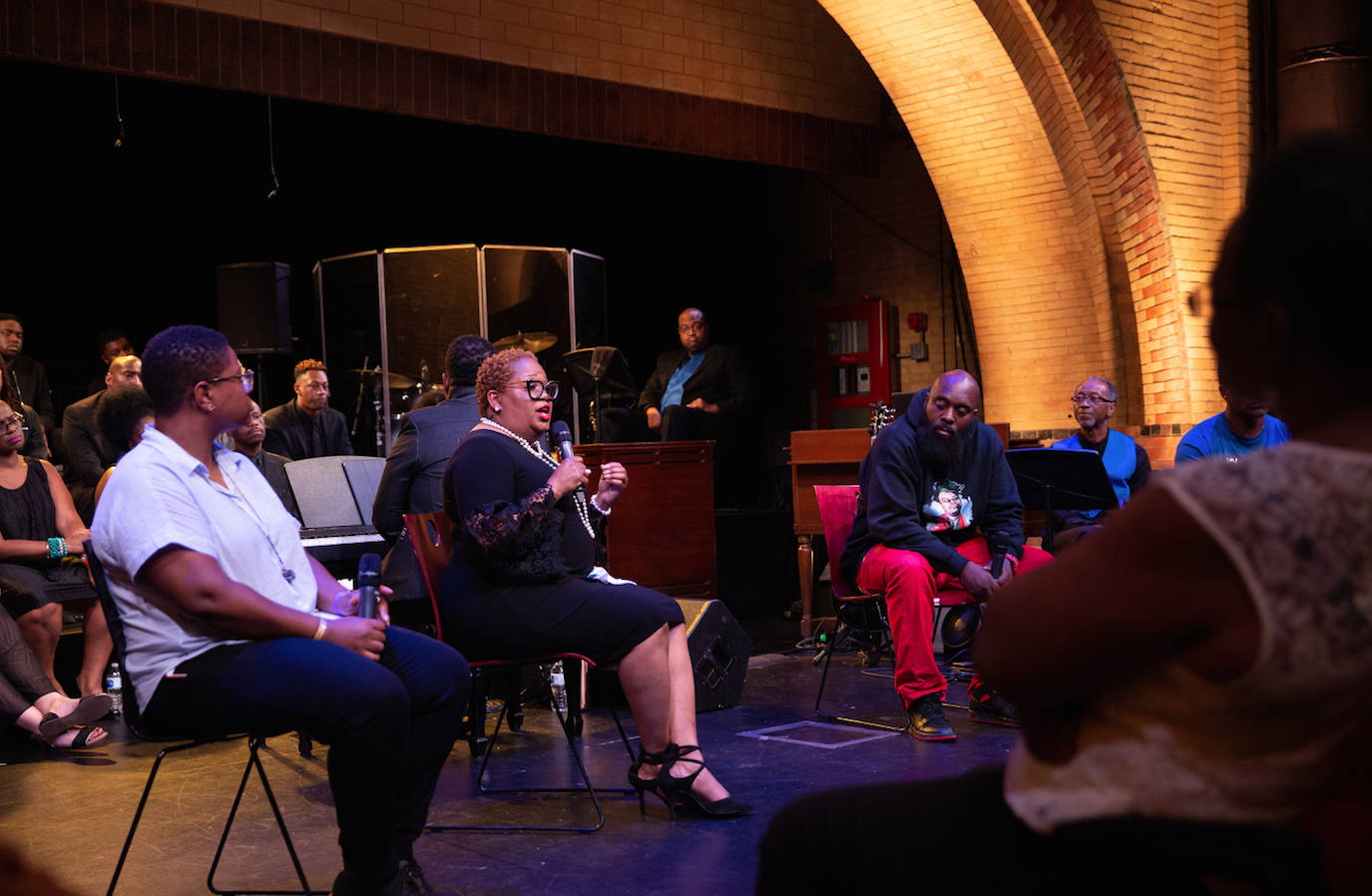
What’s fascinating about this production is that the mix of stage readings from acclaimed actors Tate Donovan (King Creon) from the Damages and The O.C. series, Tony award-winning actress Tamara Tunie (Antigone), Chris Myers from the She’s Gotta Have It and Netflix’s Sneaky Pete series (as Creon’s son, Haemon, among other roles) and Chinasa Obguagu from the Jack Ryan: Shadow Recruit and A Walk Among the Tombstones films (as Ismene, Antigone’s sister, and Eurydice, Creon’s wife) are instrumental in telling the story, yet their performances don’t overshadow the focal point of this production – which is: solutions communities and lawmakers – can and should – come up with to end senseless deaths as a result of police brutality and gun violence across the nation with much needed conversation. Panel discussions with Michael Brown Sr., community members-turned-activists describing first-hand accounts of the night of the Ferguson shooting, members of the Man Up Project, therapists and individuals committed to make an impact and let their voices be heard – moved the audience in the theater that night: including me.

Screen Shot 2018-09-18 at 9.21.13 PM.png

Photo Credit: Gregg Richards, Panel (L to R): Erica Wright, Lt. Latricia Allen, Michael Brown Sr.

Artistic director and moderator of the Antigone in Ferguson production, Bryan Doerries has presented over 60 performances across all five boroughs. Antigone in Ferguson at Harlem Stage marks a departure from the company’s history of nomadic presentations. Having mounted over 700 events at a range of venues around the world, from Guantanamo Bay to a playground in Brownsville, Brooklyn, this extended run (September 13 – October 13) will be the first time Theater of War Productions will embed itself in one location for an extended period of time. Exclusively supported by the Stavros Niarchos Foundation, the 30 free (RSVP required) performances at Harlem Stage will offer expanded opportunities for community participation in this innovative social justice project. Don’t miss upcoming performances by actors: Frankie Faison (Coming to America, The Wire) Chris Noth (Sex and the City franchise, Law & Order), Samira Wiley (Orange Is the New Black), and Kathryn Erbe (Law & Order: Criminal Intent) to name a few. For more information on Antigone in Ferguson and upcoming schedule, click here.

The Rosé Mansion Is Open In NYC: Get Ready For The Rosé Renaissance

Screen Shot 2018-08-02 at 8.13.54 PM.png

Photo: courtesy of the Rosé Mansion

After visiting the Rosé Mansion popup with friends, I was pleasantly surprised after my encounter with the two-foot story space. It will pique the curiosity of not only passerby tourists, situated in the heavily trafficked midtown – but also attract the attention of cynical and jaded New Yorkers, like myself. With its intoxicatingly pink motif consuming the former Charming Charlie’s fashion and accessories retailer, the Rosé Mansion has more to offer than meets the eye. To kick off National Rosé Day, partners Tyler Balliet and Morgan First, opened a first of its kind, Rosé-themed popup in New York City. Wine enthusiasts Balliet and First have been creating popup wine-tasting events for more than a decade with their company Second Glass, founded in 2008.

Screen Shot 2018-08-02 at 8.17.32 PM

Photo: Tyler Balliet (L) and Morgan First (R), courtesy of Tyler Balliet/Instagram

At first glance, the pink décor engulfs your brain with an assortment of pink hues demanding that you to denounce the color, from your life – for good! Yet, as you glide into the inviting and interactive rooms to partake in selfie-dom with the rest of the crowd, each room has a fascinating historical component to it. Upon receiving a rosé plastic wine glass with stickers illustrating popular rosé wine grapes, you can decorate the wall at your leisure and proceed to the rooms labeled: New York, I Love You – which traces the history of how European wine techniques were implemented into the Finger Lakes region and became a huge source for wine production in the U.S. The enchanting and fun-fact filled Sparkling Wine and When in Rome! rooms describe the history of the 6,000 year-old wine industry, and are complemented by colorful and impressionable design. We chatted with Tyler Balliet on his inspiration for the Rosé Mansion and the process it took to launch.

DSMC: What inspired you and Morgan to create a rosé-themed popup experience?

Tyler Balliet: We spent the last 10 years doing educational wine events and large-scale festivals for 6,000 people. We reached a point where it was fun to do these large events but our customers wanted a more intimate experience. At the same time, we could only do so much education and interaction in this large-scale format. We wanted to take the concept of wine-tasting events and reformat it into a place that was more permanent. We looked at bars, places like Eataly, to replicate and instead of focusing on food, we wanted the emphasis to be on beverage. We didn’t want to take over a restaurant because of the logistical challenges. Building out a restaurant is really expensive. Building out a popup bar is much easier and less expensive. There are no ovens or food code regulations involved.

DSMC: I found the historical aspect of the Rosé Mansion fascinating, as most patrons will. Did you partner up with wine historians on the research?

Screen Shot 2018-08-02 at 8.14.16 PM.png

Photo: courtesy of the Rosé Mansion

Tyler Balliet: I’m a wine expert that’s spent 10 years in this business. We’ve received a number of awards, Inc. Magazine’s 30 Under 30 Award and Wine Enthusiast Magazine’s 40 under 40 Award. I love history and for the last 10 years I’ve had the opportunity to fly all over the world. Meet with winemakers and producers in Europe, South America and throughout California. We didn’t come up with this idea in a few weeks – it’s been a career’s worth of education to put together this experience in a unique way. I made sure to consult with winemakers with 15-20 years of experience – learn the process, the logistics.

DSMC: There are 14 rooms throughout the Rosé Mansion. What inspired the décor when you conceptualized the design for each room?

Tyler Balliet: Morgan, my partner, was in charge of the décor. She’s really good at styling and branding. We wanted to make use of what was already in the space. As soon you walk in, we want you to be transported into another place – somewhere you wouldn’t find in midtown. Morgan worked really hard on the look and feel of each room. She was inspired by her travels over the years and the current design trends she reads about and discovers. I stepped in with the education aspect and together we built the Rosé Mansion.

Screen Shot 2018-08-02 at 8.29.17 PM.png

Photo: courtesy of the Rosé Mansion

DSMC: The Rosé Mansion will be operational through October 7th, any plans for other popups throughout the U.S.? Will you go on tour?

Tyler Balliet: We love the concept. We love the idea of taking the education and fun of wine to other places. When we built the first one it was like version 1, to be honest, we didn’t know what the reaction would be. You hope after you build it, people will like it. We’re trying to learn what people respond to, what they want to see in the future. I can tell you this: This won’t be last of the Rosé Mansion popups.

DSMC: Since the launch, have most of the visitors to the popup been women, men?

Tyler Balliet: The overwhelming majority of patrons have been women. From the feedback we’ve gotten, both men and women enjoy it. We market it and put it out there and have gotten a large female response. It’s been tough – it’s been really difficult to explain what the Rosé Mansion is to hundreds of people. But once people see it. They’re like: Oh, I get it. It’s one of the problems we had initially before it was built, before we had photos. The longer we’re open, the more people will document what it is, tell their friends about it, and enjoy the Rosé Mansion experience.

DSMC: Rosé has been associated with luxury. Eataly, The Veuve Clicquot Polo Classics, to name a few. Do you have plans on partnering with influencers to expand the Rosé Mansion brand or do you believe the product speaks for itself?

Screen Shot 2018-08-02 at 8.14.35 PM

Photo: courtesy of the Rosé Mansion

Tyler Balliet: We’ve been working with a lot of different organizations and groups. I’ve been in the business a long time. We’ve had a lot of people with a large Instagram following that have come through. I find that a lot of people think wine is complicated. It’s not. If you don’t spend years learning about it you can’t appreciate it– I don’t believe that to be true. I’m pretty good with color. My mom is an interior designer and when I was growing up, I’d say: Oh, that color’s blue and my mom would say: no, it’s not blue, there’s a special name for it, it’s this kind of blue. I didn’t understand what the word was for that, but I could appreciate it. As much as anyone else that did know the word for the color. And, that’s what wine is. Wine is in this place right now where people think it’s difficult to understand, but it isn’t, it’s really simple. If you taste wine and you want to drink more of it, it’s good, if you taste it and don’t want more of it, it’s not good and it’s your opinion. Nobody could tell you you’re wrong. We’ve had a lot of success over the years working with lifestyle publications, influencers, bloggers, You-Tubers. These people fall more into fashion and lifestyle because that’s what wine is: it’s a luxury product at the end of the day.

DSMC: Would you agree that one of the selling points of rosé is its affordability?

Tyler Balliet: The coolest thing about rosé is that it’s not very expensive. You can go to a retail store and buy really good hand-made rosé bottles – that comes from family-owned wineries for between $12 – $15. That’s pretty amazing. It’s one of the successes of rosé. It’s not just a trend. It’s becoming an entirely new product category for a whole new generation of wine consumers. It’s really high quality. Another great benefit: it doesn’t cost a lot to make rosé. Red wine, it takes 3 – 5 years to make a bottle, whereas rosé can be turned around in 6 months. It’s meant to be more of an everyday, easy-to-drink thing. Americans aren’t used to thinking about wine in this way. They think of it as this high-end, sophisticated beverage. And, all throughout Europe, it’s normal, it’s just something you drink daily. Rosé is the first real movement in the United States to get rid of that snootiness. It’s wine. Just drink it. Have fun, but make sure it’s high quality and it comes from a good place.

I love a good rosé and at the Rosé Mansion popup you’ll have the opportunity to taste rosés from around the globe that will satiate your palate. There’s never a wrong time to have rosé. And, it’s here to stay. Enjoy it with your friends, family or alone with your burger or hummus. The Rosé Mansion will be open through October 12, 2018. To learn more about the Rosé Mansion and get tickets, click here.